What If Every Red Thing Had Its Own Private Red?
The Burning Question: What Exactly Burned You?
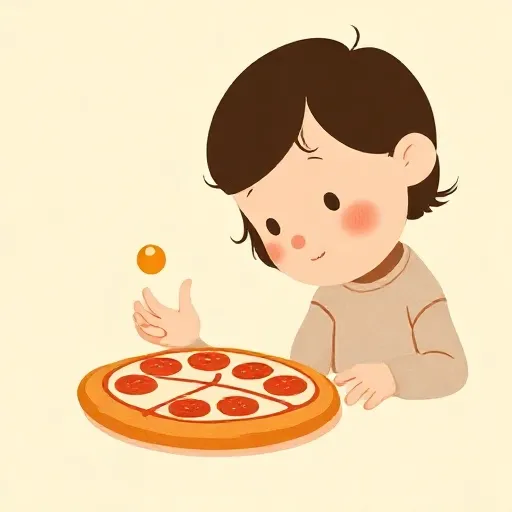
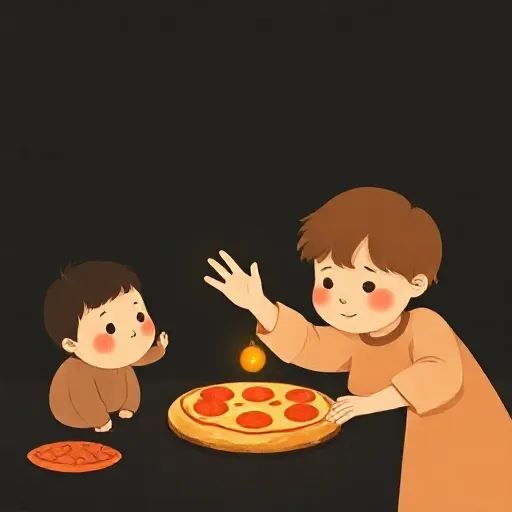
You grab a slice of pizza fresh from the oven. Ouch — the heat burns your fingers. But what exactly burned you? Was it “heat” in general, like some invisible shared stuff, or was it the particular hotness of this slice, right here, right now?
The American philosopher D. C. Williams (1902–1983) would say: it was a particular. He called such things tropes. A trope is a property — like redness, roundness, or hotness — that exists as a single, concrete bit, not as a universal floating above reality. Williams described tropes as abstract particulars. “Abstract” here doesn’t mean outside space and time. It means partial: a redness trope doesn’t fill up the whole region it occupies; it’s only one fragment of that spot’s total character. You can’t point to redness all by itself — you must mentally set aside the apple’s roundness, its sweetness, its shine. So a trope is a real, spatiotemporal building block that is only part of a thing’s full story.
Williams wasn’t the first to think along these lines, but he gave modern trope theory its name and its classic shape. Later, Keith Campbell (born 1934) developed and popularized the view. Their big idea: all the ordinary things around us — apples, stoves, people — are made out of tropes.
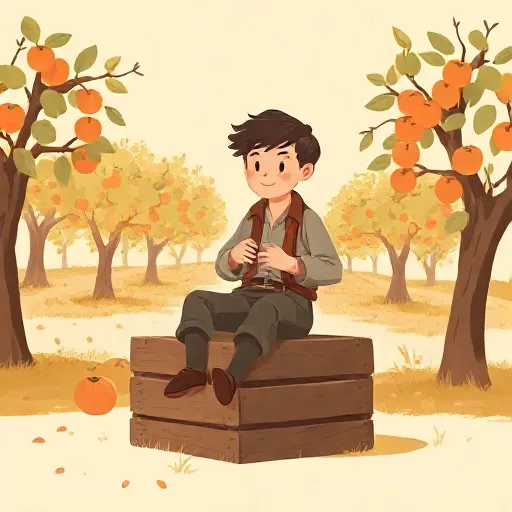
Red Apples and the One over Many
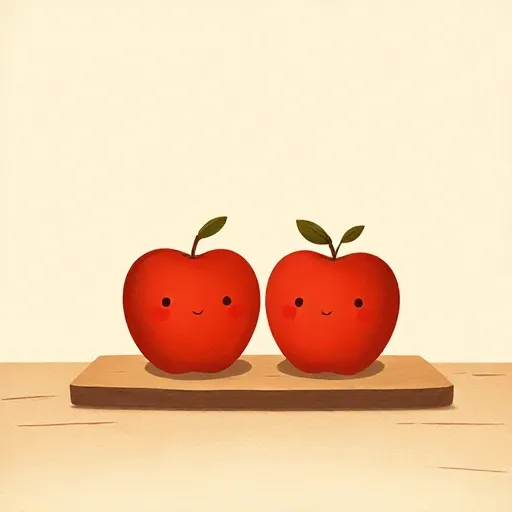
Look at two red apples. They look the same color. Why? One traditional answer is that there is a universal — a single thing called Redness — that can exist fully in many different objects at once. Both apples literally share the same entity. The problem of “the One over Many” asks how distinct things can have something in common. Universals promise a straightforward answer.
Trope theorists reject universals. They say there is no single, repeatable Redness. Instead, each apple has its own redness trope. The two tropes are not identical, but they exactly resemble each other. Exact resemblance is an equivalence relation: if trope A exactly resembles B, and B exactly resembles C, then A exactly resembles C. It partitions all tropes into classes that act a lot like universals. So to say “both apples share the same color” just means that each apple’s specific redness trope belongs to the same resemblance class.
You might worry: doesn’t this resemblance relation itself need to exist as a universal? Some philosophers have pressed this as a regress problem: if resemblance tropes hold between the first redness tropes, those resemblance tropes also resemble one another, and so on forever. But trope theorists reply that this regress is harmless. Exact resemblance is an internal relation: it automatically holds just given the nature of the tropes themselves. It adds nothing extra to the world. The chain never demands a new independent entity; it simply follows from the original tropes. So the resemblance class solution stands without a vicious infinite ladder.
Building an Apple Out of Tropes: The Bundle Theory
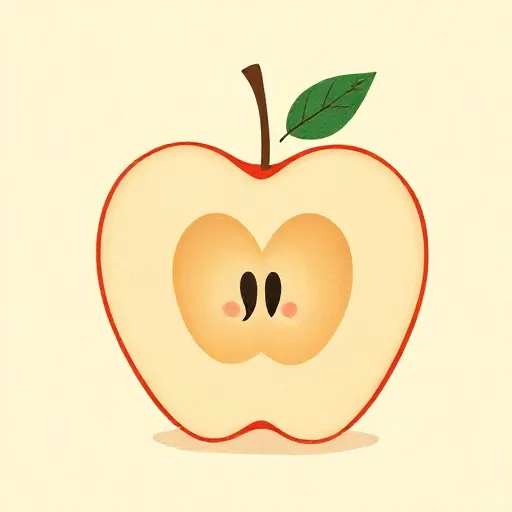
If tropes are the fundamental stuff, how do they make up a whole apple? The most common answer is the bundle theory. An apple is nothing over and above a collection of tropes — a redness trope, a roundness trope, a sweetness trope, a crispness trope — that all happen to be compresent. Compresence means these tropes exist together in the same place, co-occurring to form a single object.
But here’s a stubborn puzzle, often called Bradley’s regress. If compresence is a real relation that glues tropes together, then that glue-trope must itself be compresent with the other tropes. And if it is, you need yet another glue-trope to bind the first glue-trope to the bundle… and so on infinitely. Unlike the resemblance case, this regress looks vicious: you never get a complete bundle, because you always need one more relation.
One way out is to say that compresence is not an ordinary relation but a special kind of relational trope that, by its very nature, relates. If a compresence trope exists, it must connect the tropes it relates — no extra glue needed. Another family of solutions makes compresence an internal, necessary link: the particular tropes depend on one another so that they simply cannot exist as this bundle without each other. Both strategies aim to stop the regress by building the connecting power into the entities themselves.
When Two Red Patches Look Exactly Alike
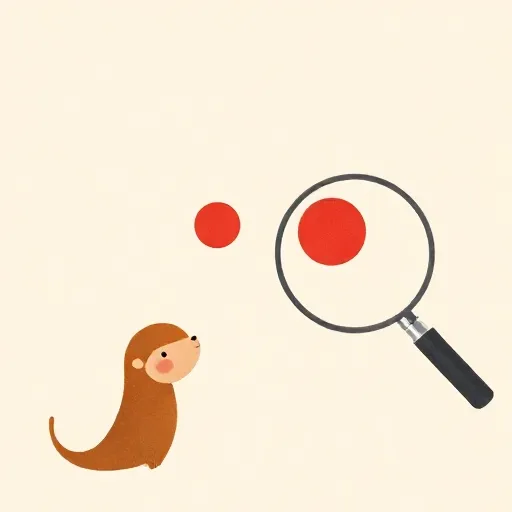
Suppose you paint two perfect red dots on a white wall. They are exactly similar. What makes them two dots rather than one and the same dot? For tropes, this is the problem of individuation. If you have two qualitatively identical redness tropes, why are they distinct?
Some trope theorists say the answer is spatiotemporal: two tropes are distinct if and only if they are at some non-zero distance from each other. This is spatiotemporal individuation. Others prefer primitivism: the distinctness of two tropes has no deeper explanation — it’s simply a brute fact.
The primitive view faces two famous thought experiments. First, swapping. Imagine the redness trope from dot A magically trades places with the redness trope from dot B. You couldn’t possibly detect the difference — no instrument could spot it. If a change is completely undetectable, some philosophers argue it isn’t a real change at all. Yet primitivism allows such a swap to be a genuine difference between worlds, which strikes many as too many empty possibilities.
Second, piling. Could a rose have five, ten, or a thousand exactly similar redness tropes all piled up in the same place? Primitivism doesn’t forbid it. But we could never notice the extra ones, so the idea seems suspiciously cheap. A version of piling called pyramiding — a 5 kg object composed of five 1 kg tropes — seems more plausible. Yet even here critics charge that predication would say the object both weighs 5 kg and weights 1 kg, which is logically awkward.
Supporters of spatiotemporal individuation dodge these problems by banning distinct tropes from occupying the exact same location. However, they then have to explain actual cases from physics, like bosons that do pile up in the same quantum state. Navigating these puzzles keeps trope theorists busy.
Why It Matters: Burns, Pain, and the Color of a Leaf
Why should a twelve-year-old care about tropes? Because they could be behind some very ordinary moments.
Think back to the pizza burn. It makes sense to say that the particular temperature trope of that slice caused your pain. Most philosophers agree that causal transactions happen between particular things, not between universal types. Tropes — localized, non-repeatable — are natural candidates for the basic “pushes and pulls” of the world. It wasn’t heat-in-general that hurt; it was the slice’s own hotness trope.
Tropes also fit how we perceive change. Watch a fresh green leaf touched by a flame. The green vanishes. You seem to see something cease to exist in that spot — not the universal Greenness (other green leaves stay green), but a particular green trope. Philosophers like Jonathan Lowe (1950–2014) argued that this is exactly what perception presents to us: particular instances, not abstract universals.
And tropes may even help with the mystery of how mental states can cause physical effects. Suppose you feel pain and yank your hand away. Your pain seems to cause your movement. Yet mental properties like “being in pain” can be realized by very different physical states in different creatures. Some trope theorists propose that a mental property token — a pain trope — can be identical to a physical trope, even though the mental type isn’t the same as any single physical type. So the pain trope can genuinely cause things without breaking the rules of a physical universe.
So the next time you notice the exact, crisp redness of a strawberry or the precise ache of a stubbed toe, you might be directly encountering a trope: a tiny, particular piece of what makes the world the way it is.
Think about it
- If two apples have exactly resembling redness tropes, does it make sense to say they “share the same color,” or is that just a useful way of talking? Why?
- Imagine you had a device that could instantly swap the redness of one rose with the redness of another, identical-looking rose. Would you have done anything that matters, or would the world be exactly the same afterward?
- Can you think of a property about yourself — like your courage or your sense of humor — that you might describe as a particular, unique thing, or does it only make sense as something others can share?