Could Redness and Roundness Be the Universe's Building Blocks?
The Farm Boy Who Wanted a Map of Everything
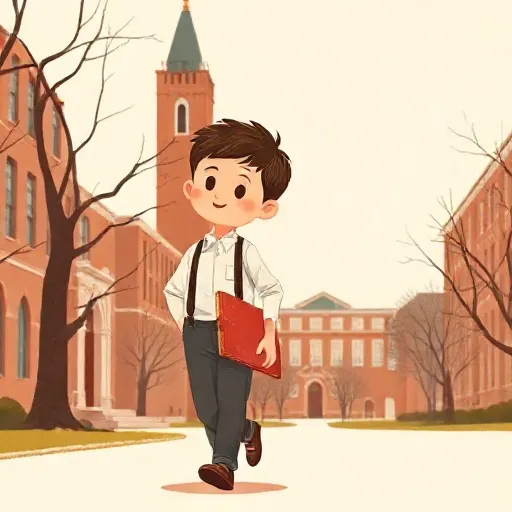
In 1923, a young man from the dusty farm country of California packed his bags for Harvard. He had already published a book of poetry, but what really drove him was an ambition so big it sounded almost impossible: to build a complete, honest picture of how the world really works. That man was Donald Williams (1899–1983), and he thought that during his lifetime, philosophy had become lazy.
Williams called the trendy philosophies of his day “a gospel of relaxation.” Thinkers like the logical positivists, the ordinary-language philosophers, and the existentialists, he said, had given up on philosophy’s main job. Instead of trying to figure out what reality is like, they settled for just describing how things appear to us, or how we talk, or how we feel deep inside. Williams wasn’t having it. He was a Realist — he thought the world is mostly “right out there where it belonged,” independent of our minds — and an empiricist who believed all knowledge starts with what we see, hear, and touch, but doesn’t have to stop there. Legitimate reasoning, he argued, can carry us far beyond what our senses give us.
For the next forty years, from UCLA to a long career at Harvard, he worked on two gigantic projects. First, a cosmology that treats time as a frozen dimension. Second, an ontology that says everything — from a penny to a penguin — is built of tiny, particular property-pieces he called tropes. If he was right, the way we usually think about objects, change, and even guessing the future has to be rebuilt from the ground up.
A Universe Frozen in Four Dimensions
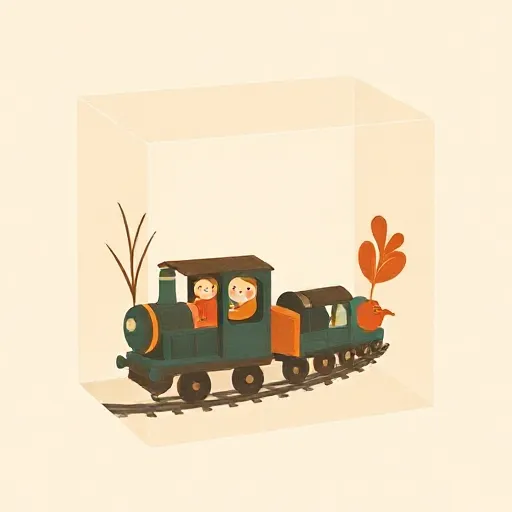
Williams’s Naturalism was unflinching. The natural world of space, time, and matter is the only reality; there are no gods, no supernatural forces, and no purely mental realm floating outside of physics. His Materialism was generous — it didn’t demand that everything be built out of hard little atoms. Any spatiotemporal thing, even a color or a relation like “farther-away-than,” counts as part of the one material world so long as it finds a home in physical theory and develops according to natural laws, without mysterious final purposes.
Even the mind got folded in. Mental events are real, but they’re just tiny, rather insignificant pieces of the same big spatiotemporal whole — dependent on living brains though maybe not reducible to them. You could call his position “Spatio-Temporal Naturalism” more fairly than crude materialism.
Then came the really startling move. Williams embraced the four-dimensional block universe interpretation of Einstein’s special relativity. Time, he insisted, is a dimension just like the three of space. Statements about the future are already timelessly true or false — they don’t have to wait for the event to “happen.” Every point in time is equally real. The feeling that time flows, that the present moment somehow moves forward – that’s an illusion. Williams called it “The Myth of Passage.” Change is not things gaining or losing reality; it’s more like a shape being different at different points along a spatial dimension.
The Alphabet of Being: Tropes
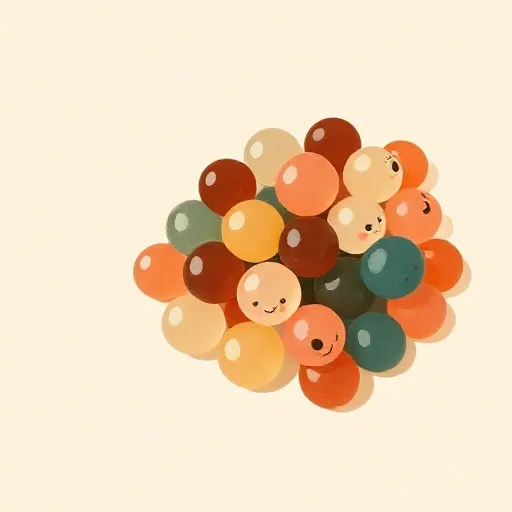
Williams’s most original contribution is his answer to a very old puzzle: what are the most basic building blocks of everything? Most philosophers say there are objects (like a chair) and their properties (like brownness, hardness). Properties are often thought of as universals — one and the same “brownness” that can show up in many different chairs at once. Williams said no: there are no repeatable universals. The world is made entirely of abstract particulars, which he nicknamed tropes.
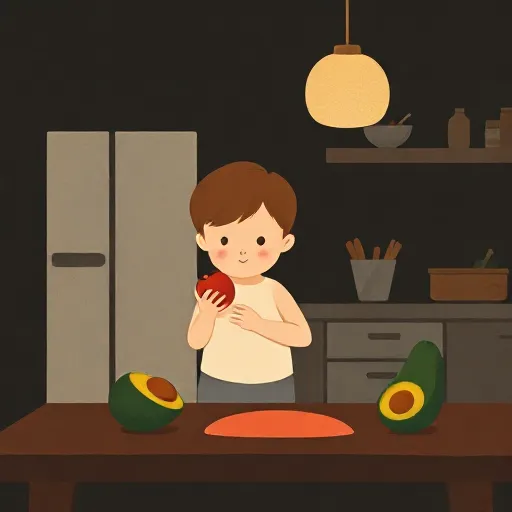
A trope is a particular case of a characteristic. Not “redness” in general, but the specific, unrepeatable redness of this rose at this place and this moment. Not roundness as a one-size-fits-all quality, but the exact roundness of the coin in your hand right now. Tropes are as particular and located in space-time as the rose and the coin. Yet they are the only real things; objects are just compresent clusters of tropes — bundles of shape, size, temperature, acidity, positive charge, and whatever else all sharing the same stretch of space-time. There is no hidden “substance” underneath holding them together.
On this view, universals like “redness” are not extra entities. They are resemblance classes — sets of similar color tropes that happen to match. That makes Williams a Particularist, not a Nominalist (he didn’t deny properties exist; he denied they are repeatable universals). Relations work the same way: each case of “larger-than” is a relational trope, and the general Larger-than relation is just the class of all those particular relational tropes.
But Doesn’t That Mean Everything Is Just a Bundle of Parts?
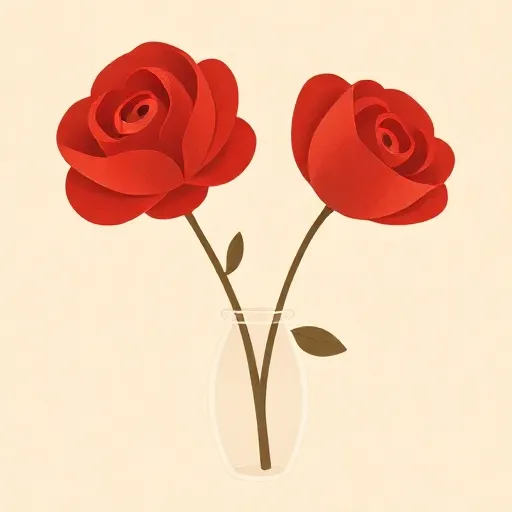
Williams’s one-category ontology is elegant, but it’s faced serious challenges. One famous objection comes from property swapping. If the redness of this rose is a unique particular that happens to be exactly similar to the redness of that rose, then, so the argument goes, it seems the two could be swapped and the world would look exactly the same. Critics like David Armstrong claim that such a swap makes no real difference, so the idea of tropes as distinct particulars collapses. Defenders reply in several ways: maybe swapping does make a causal difference even if we can’t see it, or maybe, on the right theory of identity, a trope simply can’t exist as part of a different bundle.
A deeper worry is the complexity objection. If a trope is both particular and has a nature (say, a specific shade of orange), then doesn’t it have two built-in aspects — a “particularity-maker” and a “nature-maker” — making it complex after all? Keith Campbell answered that the distinction between particularity and nature is not a real division between parts, any more than recognizing an orange trope as both “warm” and “orange” splits it into two things. Others, like Douglas Ehring, suggest switching to a different version of trope theory where a trope’s nature is fixed by its membership in natural classes, not by an inner component.
Bundle theory also struggles with accidental properties. A chair could have been blue instead of red, but if the chair is a bundle of tropes, then changing any of them gives you a different bundle, not the same chair with a new color. Some philosophers dodge this by saying that when we talk about how the chair “could have been,” we’re really comparing it to a non-identical counterpart in another possible world. Others, like Peter Simons, replace simple bundles with a “nucleus theory” — an inner core of essential tropes and an outer band that can shift. Change, on a four-dimensionalist view, is just having different temporal parts with different tropes, much like a movie strip has different frames.
These debates remain very much alive. Trope theory is still taken seriously as a contender among the small handful of possible answers to what the world is made of.
The Radical Bet: Making Induction Pay Off
Every time you assume the sun will rise tomorrow, or that your lunch won’t be poison, you’re using induction — reasoning from what you’ve observed so far to what you haven’t. In the 18th century, David Hume threw down a terrifying challenge: no matter how many sunrises you’ve seen, inductive reasoning gives you no rational reason to expect the next one. This problem paralyzed philosophy for centuries. Williams thought it had a mathematical solution.
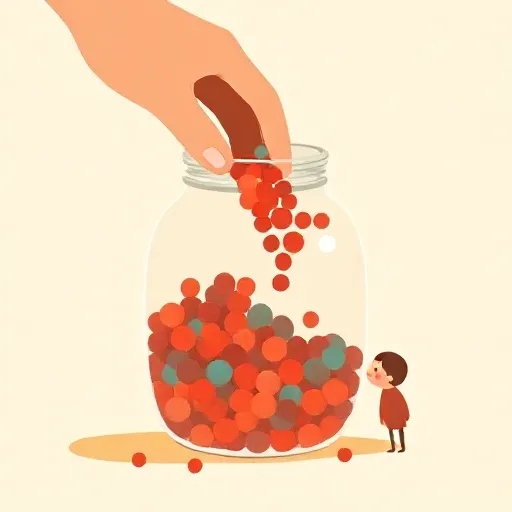
His insight was to treat our observations as a sample drawn from a much larger population of all possible observations. In the 1700s, Jacob Bernoulli proved a remarkable fact: for any population larger than a few thousand, the vast majority of large, random samples closely match the population’s complexion — the proportion of items with a given trait. For instance, if a jar of 10,000 beads is 95% red, over 90% of scoops containing 2,500 beads will themselves be between about 92% and 98% red.
Williams noticed something simple but brilliant: resemblance is symmetrical. If most samples resemble the population, then the population’s complexion resembles the complexion of most samples. So when we observe a large sample — say, thousands of ravens, all black — we can rationally infer that the whole population of ravens (observed and unobserved) is probably mostly black. The inference is a statistical syllogism: given that most large samples are representative, our specific sample is probably representative, unless we have special reason to think it’s a weird one.
Critics like Patrick Maher have worried that the prior probability of a rare trait might derail this reasoning. But defenders point to analogies: if you throw a dart blindfolded at a board where 99 out of 100 spots are the same color, and you then see your hit is blue, you are rationally confident almost all spots are blue — even if you had no idea beforehand that blue was in play. Scott Campbell and D.C. Stove refined Williams’s argument to show that its mathematical core doesn’t depend on knowing the population size or proportion in advance. The mathematics just guarantees that, say, 95% of samples of size 3,020 match the population to within 3% — period. So induction gets a rational, a priori foundation.
Why You Should Care
You’ve never actually seen tomorrow. You’ve never checked every raven that ever existed. Yet you live as if the future will behave like the past. Williams thought this wasn’t a sign of human weakness but a rationally respectable gamble backed by the very mathematics of sampling. His defense of induction doesn’t give you certainty — but it does give you strong odds.
Meanwhile, his trope theory forces all of us to ask: what am I, really? A heap of property-pieces held together by nothing but location? Do you need a deeper “you-ness” beyond your particular shape, memories, and habits? Williams’s answer was that there is no extra ingredient — just the alchemy of compresent tropes. That picture, strange as it sounds, influenced later thinkers like David Lewis (1941–2001) and still feeds live debates in contemporary metaphysics.
Whether or not you’re convinced, Williams shows what philosophy looks like when it refuses to give up. It takes the big, scary questions — the stuff of reality and the logic of guessing — and builds something you can think with. Not bad for a farm boy with a book of poems and a hunger for a map that covers everything.
Think about it
- If you are just a bundle of particular property-pieces, is there anything that makes you the same person from one day to the next?
- Can you think of a situation where trusting a past pattern would be a terrible idea? What do you think Williams’s argument would say about that situation?
- If time does not really flow, why does it feel so powerfully as if it does? Could the block universe still explain that feeling?