
Why Did a 10th-Century Doctor Say That God Is Beyond Words?
A Doctor’s Unusual Promise

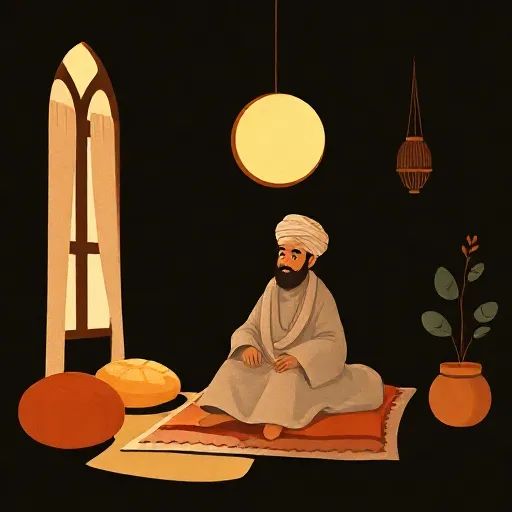
Around the year 910, an elderly Jewish doctor moved from Egypt to the North African city of Kairouan and became the personal physician to the founder of a new dynasty, the Fatimid caliph Ubayd Allah al-Mahdi. That doctor was Isaac Israeli (c. 855–c. 955), and he would live to be roughly one hundred years old — though the exact dates are lost in a tangle of contradictory medieval notes. Biographers record that he never married and never fathered children. When asked about this, Israeli supposedly replied that his books would keep his name alive far better than sons or daughters ever could. More than a thousand years later, scholars still study those books, so his prediction turned out to be true.
Israeli wrote medical works on fevers, foodstuffs, and urine that were prized across the Islamic world and later in Christian Europe. But he also wrote a handful of philosophical treatises that tried to do something bold: to explain how the entire universe came from a single God, and how a human soul can journey back toward its source. He borrowed heavily from the Greek thinker Aristotle and from a mysterious Arabic paraphrase of the ancient Neoplatonist Plotinus that circulated under the title The Theology of Aristotle. Like the Muslim philosopher al-Kindi (d. 873), Israeli wanted to blend Greek ideas about eternal emanation with the monotheistic belief that a willful Creator made the world in time.
How the Universe Unfolds: Light and Shadow

The heart of Israeli’s picture of reality is a chain of emanation — the idea that everything flows out from God in a layered sequence, like light spreading from a lamp. The closer a layer is to the source, the purer and more unified it is; the farther away it sits, the more shadowy and divided it becomes.
Israeli’s chain begins with an act of will. The Creator, whom he calls al-Bari, brings into existence two things: First Matter and First Form. These two are not physical stuff; they are more like the ultimate “whatness” and “thisness” of everything that will ever be. When First Matter and First Form combine, they produce the First Intellect. After that moment, God’s direct action stops. Everything else — all the way down to rocks and rain — emerges in a cascade from that First Intellect.
Beneath Intellect comes Soul, which Israeli divides into three kinds: the Rational Soul, the Animal Soul, and the Vegetative Soul. From Soul arises the Sphere, the crystalline outermost layer of the cosmos, made of a fifth element that never changes. The Sphere’s motion stirs the four familiar elements — earth, air, fire, and water — and their mixing and remixing creates and destroys every object in the world beneath the moon.
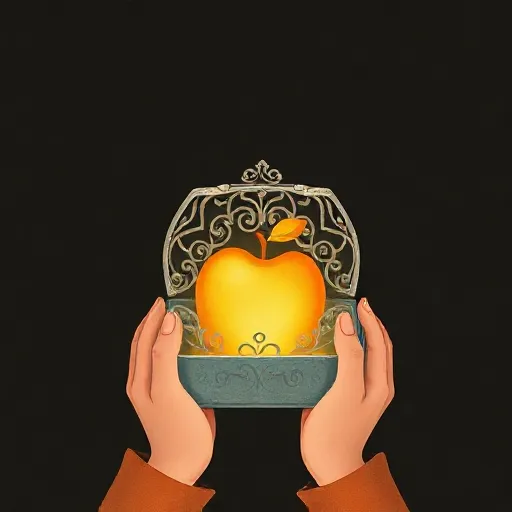
Israeli gives this process a vivid visual metaphor. Each layer of emanation is like a region of light and shadow. A layer receives pure illumination from above, but it also casts a shade downward. The next layer is born inside that shade, where the light is weaker and the shadow denser. Step by step, the universe thickens from pure intellect into solid bodies. God, the source, never dims; no matter how much light pours out, the lamp stays full.
Talking About a God Who Is Beyond Words

If the whole universe pours out of God like light, you might think we could say a lot about what God is like — luminous, powerful, maybe even warm. But Israeli seems to have held a position called negative theology, the view that you cannot honestly pin any qualities onto God at all.
Negative theology grew out of a worry. Suppose you say “God is wise.” Then wisdom would exist alongside God, co-eternal, and God would no longer be a perfectly simple unity — you would have God plus wisdom, a pair instead of a pure One. To protect the radical oneness of the Creator, Neoplatonists like Plotinus argued that the only safe statements are “God is one” and “God exists.” Everything else — goodness, power, love — is a human label that falls short and introduces division.
None of Israeli’s surviving writings spell out negative theology directly. But his student Dunash Ibn Tamim (10th century), who wrote a commentary on the mystical Jewish text Sefer Yetzirah, openly embraced the idea. Scholars therefore think it is very likely that Israeli taught it too. For Israeli, the Creator is not something you can describe the way you describe a horse or a triangle. The Creator is the condition for all description, not a describable thing.
Leveling Up Your Soul: How Philosophy Makes You Free

Emanation is only half the story. For Israeli, the chain runs both ways. Just as the universe cascades downward from God through intellect into matter, a human being can climb back upward. The tool for that climb is philosophy.
The journey has three stages. The first is purification: you reject bodily desires, treat other people ethically, worship God, and — crucially — study philosophy to strengthen your rational soul. The second stage is illumination, when truth fills the soul like light. The third is union: your rational soul becomes so perfectly aligned with the higher intellect that it becomes “spiritual and divine,” though Israeli never claims you can fully unite with the Creator Himself. That final merging was considered too dangerous for a monotheist to assert.
What happens when you reach that state? Israeli makes a striking claim: you become free — not just in the ordinary sense, but totally free from inner struggle. Humans, he says, can hesitate and waver because they have the power of cogitation, the ability to weigh possibilities. A person might know that eating a pile of unhealthy sweets is bad, yet still feel tempted. That inner tug-of-war is akrasia, or weakness of will. But when your soul unites with perfect intellect, you no longer hesitate. You see the truth so clearly that temptation simply vanishes. Israeli thus denies that akrasia is possible for the perfected person. Error is always a result of imperfect knowledge, not a failure of will. One recent scholar has argued that this makes Israeli a defender of the Socratic position: to truly know the good is automatically to do it.
Why Isaac Israeli Still Matters

After Israeli’s death, his medical texts were translated into Latin and read in the famous medical school at Salerno. His philosophical works travelled through the translation hub of Toledo in the 12th century, where the scholar Gerard of Cremona rendered the Book of Definitions and the Book on the Elements into Latin. Christian thinkers like Thomas Aquinas, Albertus Magnus, and Roger Bacon quoted him, sometimes mistakenly thinking they were citing Aristotle or Avicenna. Later, the great Hebrew poet Solomon Ibn Gabirol (c. 1021–1070) likely read Israeli’s work and absorbed his idea of spiritual matter. For a few centuries, Israeli’s voice was alive in conversations across three religions.
Then Neoplatonism waned, and Israeli’s name faded into specialist history. But the problems he tackled never disappeared. Can you describe the deepest reality, or are words always too clumsy? If you train your mind with philosophy, does that make you a better person — maybe even someone who can’t be tempted by petty desires? Is the universe a single flowing thing, or a heap of disconnected objects? Israeli gave one elegant, luminous answer: it all pours out from a One we can barely think about, and the same light that built the cosmos can pull you back home if you choose to follow it.
Think about it
- If studying philosophy could make you never want to do anything wrong, would you want that kind of perfection? What might you lose along the way?
- Can you think of something that truly exists but cannot be described with any words besides “it exists”? How would you talk about it with someone else?
- Israeli believed the universe flows from God without God ever losing any part of itself — like a teacher giving knowledge without becoming less smart. Can you think of other things that can be shared without being divided?