The Philosopher of Two Eyes: How Ibn ‘Arabî Saw Reality
The Boy Who Met the Philosopher
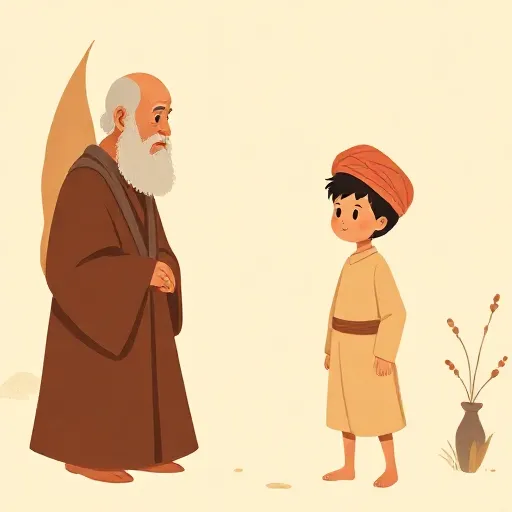
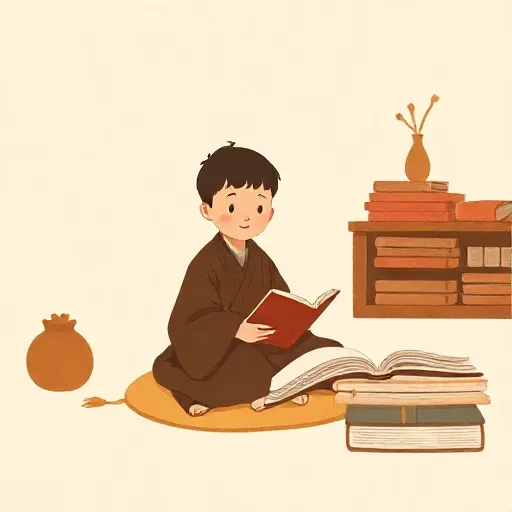
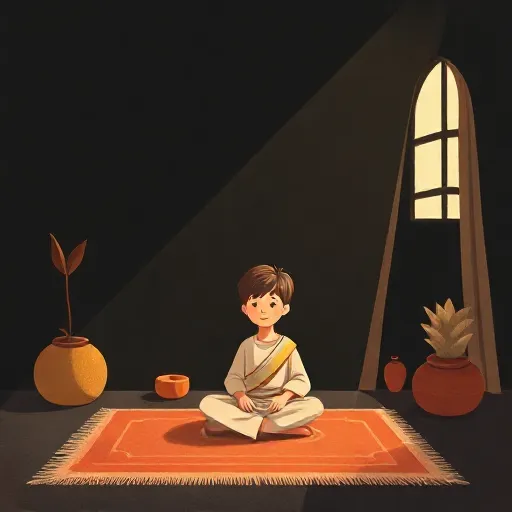
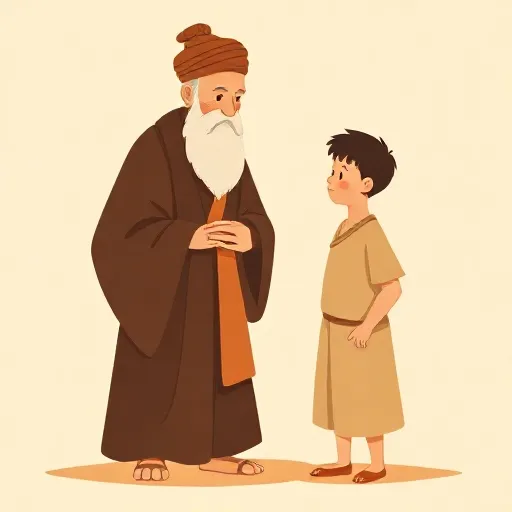
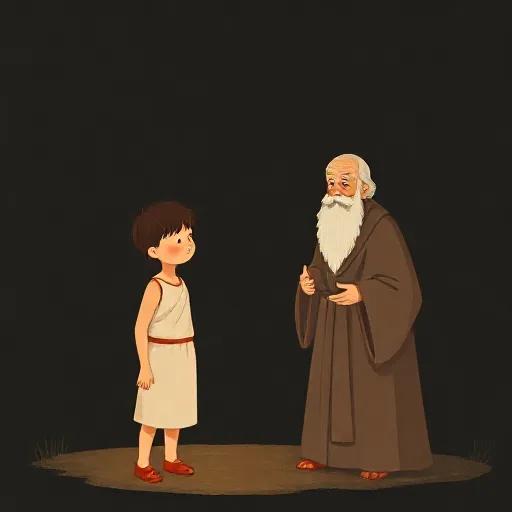
In 1180, in the city of Córdoba, a 15-year-old boy was brought to meet the most famous philosopher of the age, Averroes (1126–1198). The boy’s name was Ibn ‘Arabî (1165–1240). Not long before, he had undergone a powerful spiritual experience that he called an opening (futûh) — a sudden inner awakening that made the divine feel vividly present. When he sat opposite the old philosopher, Averroes asked a deep question about the nature of reality. The boy answered in a way that gently pointed out the limits of logic and reason alone. Ibn ‘Arabî later recalled that even then he knew: the full truth about God and the world could never be boxed in by arguments. It required another kind of seeing — an eye of the heart that reason could not provide.
Some scholars have seen that meeting as a symbolic moment. On one side stood the reasoned philosophy of Averroes. On the other stood a boy who would become one of the most original mystical thinkers in Islamic history. Ibn ‘Arabî did not reject thinking — far from it. But he insisted that reason needs a partner: a properly trained imagination. Together, they form what he called the heart’s two eyes.
The School of Realization: Making Truth Your Own

Ibn ‘Arabî’s entire vast collection of writings circles around one aim: he wanted people to become muhaqqiqûn — “realizers.” The word comes from tahqîq, which means to make something true, real, and right in your own life. Its root is haqq, a crucial Arabic word that means truth, reality, and rightness all at once. A famous saying of the Prophet Muhammad that Ibn ‘Arabî loved to quote was, “Everything has a haqq, so give to each that has a haqq its haqq.” In other words, every thing in the universe — and every situation — has a kind of due, a proper place. The human task is to act rightly and appropriately toward each.
This might sound like simple good manners, but Ibn ‘Arabî dug far deeper. The first and most basic haqq, he said, is the truth that “There is no god but God” — meaning only one Reality truly exists. Grasping that truth not just with your mind but with your entire being is called realization.
To explain what gets in the way, Ibn ‘Arabî contrasted tahqîq with taqlîd, which means imitation or blindly following authority. You can learn a lot by imitation — a language, the laws of physics, a chapter of scripture. But real wisdom, like mathematics or deep self-knowledge, must be discovered inside yourself. It isn’t enough to repeat an answer because a teacher said so. You have to see it for yourself. For Ibn ‘Arabî, that meant following the path of the prophets, who revealed the truth that reason alone cannot reach, until the truth becomes part of your own soul.
The Real Being and the Cosmic Dream

So what is this one Reality that a realizer comes to know? Ibn ‘Arabî used the term wujûd, which means both “being” and “finding.” True Being, he said, is God — the Real, the Light that makes everything visible and knowable. Everything else, the entire cosmos, is like a reflection in a mirror, a dream, or an image. It is not fully real by itself. Yet it is not an illusion either.
His most famous formula is this: every thing is He/not He — it is the face of God, and at the same time a veil that hides God. When you look at a tree, you are seeing something that exists. That existence is a glimmer of the Real. But the tree is also limited, temporary, and defined — so it blocks you from seeing the unlimited Light that gives it being.
To capture this in-between status, Ibn ‘Arabî gave a central role to imagination (khayâl). In his view, the entire universe is the Supreme Barzakh — an isthmus or barrier between sheer Light (the Real) and sheer darkness (the impossible). Like a line separating sun and shade, a barzakh brings together two sides without being either of them. The world, he said, is Nondelimited Imagination: an image that is both real and unreal, both present and vanishing.
He also described a middle realm, the mundus imaginalis, where spirits take bodily form and bodies become spiritual — the world of dreams, visions, and things felt but not seen with physical eyes. And he said that the human soul itself is an imaginal reality. Your soul hovers between your higher spirit and your material body, between light and darkness. That makes you capable of choosing to grow — to travel upward toward wisdom and virtue, or to sink downward into ignorance and harm.
The Heart’s Two Eyes: Reason and Imagination

For Ibn ‘Arabî, the organ that holds these two ways of seeing is the heart (qalb). The Arabic word literally means “fluctuation,” something that turns and changes. A healthy heart, he taught, is always shifting between two eyes: the eye of reason and the eye of imagination.
Reason ( ‘aql ) comes from the same root as “fetter” — it binds, limits, and defines. Reason is essential for telling things apart, for logic, for understanding that the Real is totally beyond physical things. Without it, you would be lost. But by itself, reason never sees more than cold differences. It cuts the world into pieces and says each piece is simply itself.
Imagination sees differently. It perceives how all those pieces are held together in one reality. It recognizes that every form is both a face of God and a veil, that the whole world is a single, flowing act of divine self-disclosure. In a beautiful passage, Ibn ‘Arabî compares the two names of the scripture: al-qur’ân (that which brings together) and al-furqân (that which differentiates). A person who only reads scripture as “bringing together” sees only unity and love. A person who only reads it as “differentiating” sees only laws, limits, and separations. A realizer uses both eyes at once, letting the heart swing between unity and distinction at every beat.
The Perfect Human and the Station of No Station
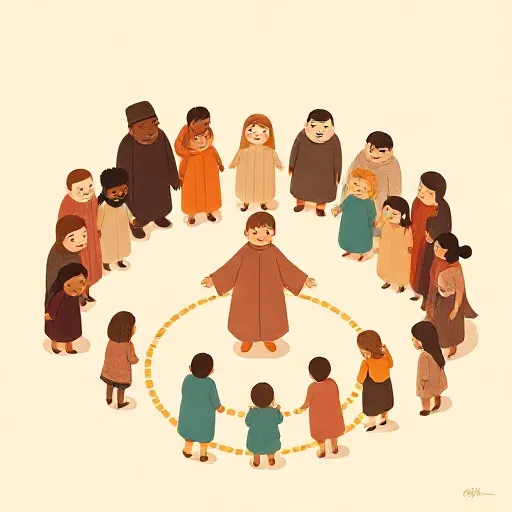
If a person learns to see with both eyes, what do they become? Ibn ‘Arabî’s answer is the Perfect Man (al-insân al-kâmil) — the human being who fully actualizes every divine quality. God, he said, created human beings in the form of the all-comprehensive divine name, which contains the meaning of every other name — mercy, power, justice, knowledge, beauty, life. A perfect human realizes this by becoming a living mirror that reflects all those qualities without being captured by any one of them.
He called this the Station of No Station (maqâm lâ maqâm). Most of us stand in a station — we are defined by our job, our personality, our beliefs, our fears. The realizer passes beyond all fixed identities. Like a point at the center of a circle, she touches every point on the circumference without being locked into any of them. Her very essence is flexible and free.
That may sound mystical, but Ibn ‘Arabî connected it to daily life through his idea that we are “compelled to be free.” God’s creation runs by one command — the natural laws that make a stone fall and a heart beat. But God also gives a second command through revelation: moral guidance that shows the right and wrong ways to act. Because of that moral command, we cannot just drift. We are forced to choose, and our choices carve out who we become. Realization is exactly the long work of shaping your soul so that it freely reflects the Real.
Why Your Two Eyes Matter Today

You have probably been taught to trust reason: the scientific method, evidence, careful thinking. That eye of the heart is vital. But you may also have felt moments when a story, a piece of music, or a friend’s silence showed you something about life that no argument could prove. That is the eye of imagination at work.
Ibn ‘Arabî’s path does not ask you to choose between them. It asks you to develop both, so that you can meet the world with a heart that fluctuates between clear distinction and living unity. His notion of realization is not about collecting facts; it is about becoming more fully yourself — someone who acts with truth and rightness in every situation. That is why his ideas, born in the 13th century, still stir people today. The goal is not to win debates but to see reality with both eyes wide open.
Think about it
- If a scientist could explain every physical fact about a beautiful sunset, would anything important still be left out? Why?
- Can you think of a time when you felt something deeply true that you couldn’t prove with logic or facts? What would Ibn ‘Arabî say about that experience?
- Do you think it is possible to be too attached to a single “station” — like being only the smart kid, or only the athlete? How might that limit your growth?