The Right to Be Let Alone—And the Fight Over What It Means
When the Photographers Got Too Close
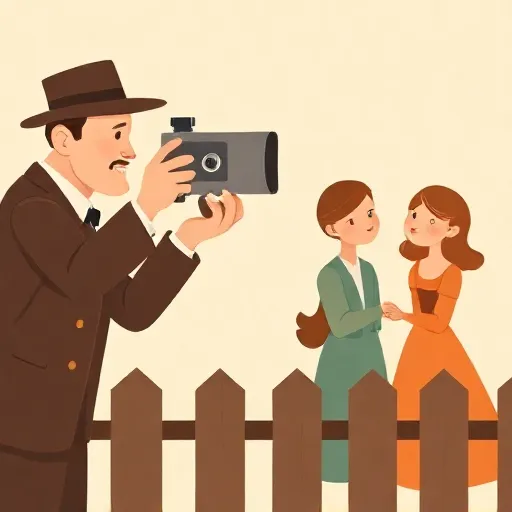
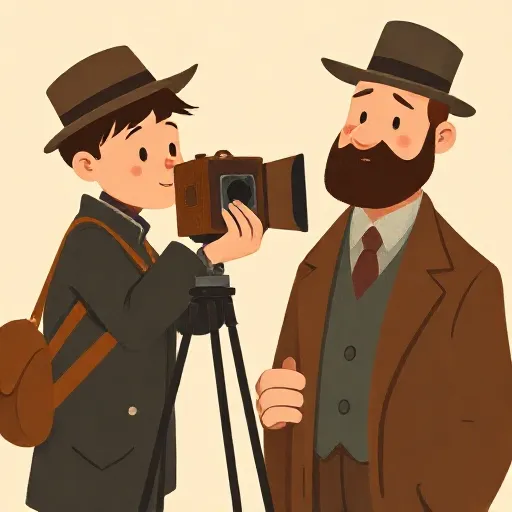
In 1890, a young woman’s wedding plans were splashed across the newspaper. Reporters described her dresses, her guests, even her private letters. She felt violated. Two American lawyers, Samuel Warren and Louis Brandeis, were furious. They wrote an essay that changed the world. They argued that the law already protected your home from trespassers. But new inventions—cheap cameras and sensational newspapers—could invade your life without ever stepping foot inside. They said you have a right to be let alone. This was the first clear statement that privacy is something the law should protect, not just a matter of good manners.
For centuries before that, people had talked about a divide between public life and private life. The ancient Greek philosopher Aristotle (384–322 BCE) described the public square, the polis, where citizens debated politics, and the private household, the oikos, where families took care of daily needs. Much later, the English thinker John Locke (1632–1704) argued that you own your own body and your own labor. That makes your property private—a space where the government should not interfere without a good reason. So the idea of a private sphere was already in the air. But Warren and Brandeis turned it into a personal right: the right to control your own story.
Three Different Privacy Zones

If someone snatches your diary, your privacy is broken. If a classmate peeks through your bedroom window, that is another kind of invasion. If the government tells you what job you must take, that feels like an attack on your freedom. The philosopher Beate Roessler, writing in the 2000s, describes privacy as having three dimensions, like three rooms in the same house.
First, local privacy: the privacy of your physical space, especially your home. You expect to be able to shut your door, be alone, and not be watched. This is not just about comfort. It is about having a place where you can think and be yourself without anyone judging you.
Second, informational privacy: control over what others know about you. Your secrets, your medical records, your text messages. You decide who gets to see them. If a company collects your online searches without asking, that is a violation of informational privacy.
Third, decisional privacy: the freedom to make important personal choices without outside interference. What you believe, whom you marry, whether you have children—these are decisions that should be yours, not the government’s or the public’s. The US Supreme Court famously connected this kind of privacy to abortion rights in the 1973 case Roe v. Wade, a decision that remains fiercely debated.
These three zones often overlap. A secret diary (informational) hidden in your locked room (local) about a decision you are struggling with (decisional) shows how privacy knits together different parts of your life. That is why it can be so hard to define clearly.
When Privacy Hides Harm: The Feminist Challenge
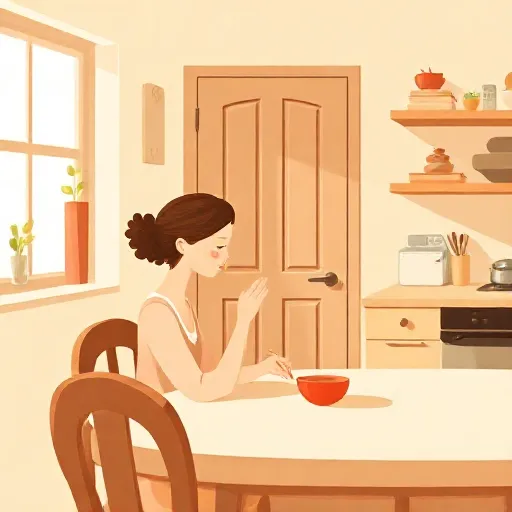
Privacy sounds like a good thing—until you realize that calling something “private” can also hide abuse. For centuries, the home was seen as the natural domain of women, a shelter from the rough public world of men. But that shelter often came with a cost. If the law stays out of the family, who stops a husband from mistreating his wife?
The legal scholar Catharine MacKinnon, writing in the 1980s, argued that the right to privacy can be dangerous for women. It can shield domestic violence and keep the state from intervening. Privacy can become a curtain behind which injustice lives. This is why some feminists were deeply suspicious of privacy talk.
However, the philosopher Anita Allen, also writing in the 1980s, pushed back. She agreed that privacy had been misused, but said the answer is not to throw it away. Without any privacy, the government could poke into your most personal moments. The solution, Allen argued, is to rebuild privacy on a foundation of freedom and equal rights, not on outdated ideas about men’s and women’s “natural” roles. The private sphere should be a space where all people can make their own choices, not a prison dressed up as a cozy room.
Is Privacy Even One Thing? The Bundle Debate
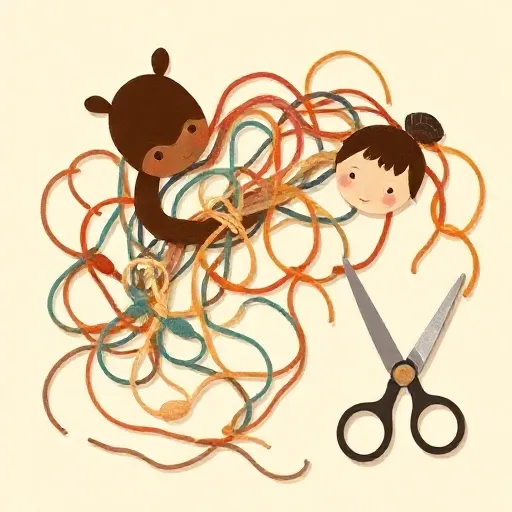
So far we have talked as if privacy is a single idea. But what if it is not? The philosopher Judith Jarvis Thomson, in 1975, dropped a bomb on privacy theory. She examined all the things we call privacy violations—someone eavesdropping, someone stealing your photo, someone reading your mail. Thomson concluded that every single one could be explained by other rights you already have: your right to property, your right not to be harmed, your right to control your own body. There was, she said, no special “right to privacy.” It was just a cluster of other rights, like a handful of grapes that look like one fruit but are really separate.
This is called reductionism: the view that privacy reduces to other, more basic rights. Many philosophers pushed back. Thomas Scanlon (1940–2023) replied that we need privacy because we value being able to present different sides of ourselves to different people. A doctor knows your health secrets; your best friend knows your crushes; your teacher sees only your homework face. Privacy lets you manage these roles. That is not just about property or safety—it is a distinct human need.
Today, many thinkers settle somewhere in the middle. Helen Nissenbaum (born 1954) developed the idea of contextual integrity. She says privacy is not a single rule but depends on the situation. Sharing your health data with your doctor is fine; sharing it with an advertiser feels wrong. The rules change with the context, like different games having different fouls. This helps explain why you might post a silly photo on social media for friends but feel creeped out if a stranger saves it.
Your Phone, Your Data, and the New Fight
Here is the puzzle: surveys show that teenagers (and adults) say privacy is extremely important to them. Yet they share photos, locations, and opinions online every day. Researchers call this the privacy paradox. Some explain it as carelessness, but the philosopher Helen Nissenbaum and her colleague Kirsten Martin offer a different view: people are not inconsistent. They just expect information to flow in certain ways. You might be fine with your best friend seeing your vacation snaps, but not with the app selling your location to an ad company. When you post, you are not throwing all privacy away—you are trusting a specific audience. The problem is that technology often does not respect those boundaries.
Smartphones, smart speakers, fitness trackers: they all turn your daily life into data. Companies collect this data to predict what you will buy, what you will watch, even how you will feel. Governments can use it to track protests or control speech. The European Union passed a powerful law called the General Data Protection Regulation to give people more control over their data. Yet many feel resigned—they click “accept” on privacy policies they have not read because what else can you do? The fight over privacy is no longer about peeping photographers. It is about who gets to write the story of your life from the data you leave behind.
Think about it
- If your school required all students to wear a fitness tracker that monitored their heart rate, sleep, and location, would that feel like a privacy violation even if the data was “anonymous”? Why or why not?
- Suppose a friend tells you a secret but you later find out they are being harmed at home. Does your responsibility to help override their right to keep that secret private? Where would you draw the line?
- Imagine a world where every conversation you have is recorded and stored, but only you can decide who gets to hear it. Would that be perfect privacy, or would something still feel missing?