
Why Can't You Keep People Out? The Fight for Freedom of Association
A Chess Club, a Closed Door

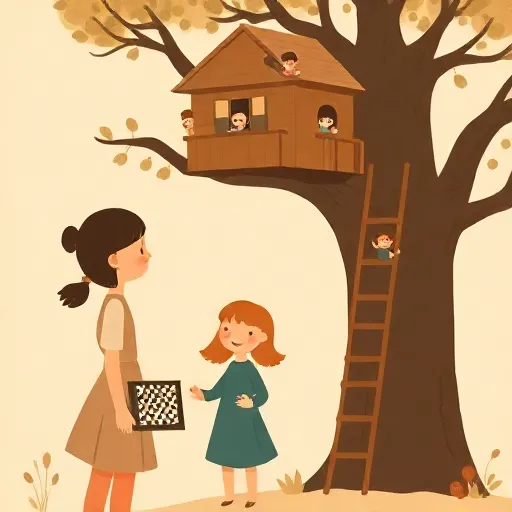
Imagine you start a chess club at your school. You and four friends meet every Thursday. One day, a kid you don’t know shows up. You think she won’t fit in. Do you have the right to say no?
That question sits at the heart of one of the biggest fights in political philosophy: freedom of association. This is the liberty to choose the people you share your life with — your family, your friends, your co-workers, your clubs, even your country. John Stuart Mill (1806–1873) called it a core human freedom. He said we should be free, as consenting adults, to “unite for any purpose not involving harm to others.” But the moment “harm to others” appears, things get messy.
Freedom of association actually bundles together three different powers. There is the right to exclude (you can keep someone out). There is the right to exit (you can leave). And there is the right to organizational autonomy (you get to decide how your group runs itself). Each of these sounds straightforward until you look at what happens when people use them. And not all groups are the same: your family is an intimate association, built around love and care. A chess club, a church, or a nation is a collective association, built around some shared purpose. The debates about who gets to shut the door look a little different in each.
The Right to Exclude: Who You Let In
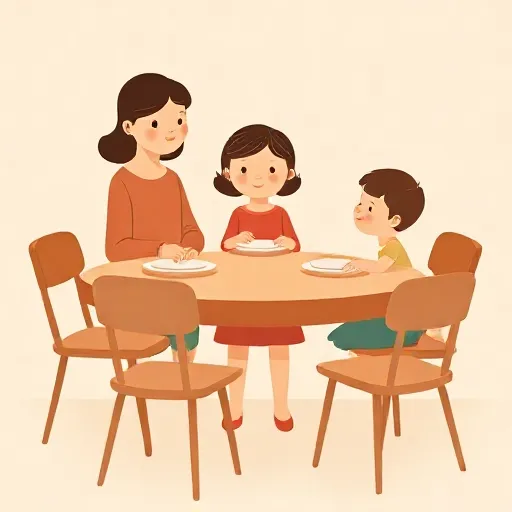
The right to exclude feels natural when you think about your bedroom. You probably don’t want strangers walking in. But even inside a family, the right to keep people out has sharp edges. In many places and times, male heads of household have decided who is welcome — casting out children who didn’t meet their standards, for example. Feminist thinkers have argued that a woman’s right to refuse a marriage, to use contraception, or to divorce are all ways of exercising her right to exclude inside an intimate association. Without that power, she can’t control her own body or her own life.
At the same time, the right to exclude cannot be unlimited. Parents can’t simply abandon their children; children need a loving connection to grow up healthy. More broadly, some philosophers argue that every human being has a basic need to belong to other people. If everyone in a society exercises their right to exclude one lonely person, that person is denied something as vital as food or shelter. A society might therefore have a duty to make sure nobody is shut out entirely — even if that means limiting some families’ or clubs’ freedom to say no.
The stakes get higher with collective associations. A chess club wants to play chess, so it excludes someone who only wants to disrupt games. That seems fair. But what if a club refuses to accept girls, even though no other chess club exists in town? The girl isn’t after friendship; she’s after a good — the chance to learn a skill — that the group controls. In 1957, nine Black students in Little Rock, Arkansas, tried to enter a high school and were blocked by armed guards. Those guards claimed a right to choose their associates. But the students weren’t looking for company; they wanted an education, a resource they couldn’t get anywhere else. The state stepped in and forced the school to open its doors, arguing that the right to equal opportunity weighed more heavily than anyone’s right to exclude.
Commercial life throws up the same tension. In Northern Ireland, the Christian owners of a bakery refused to bake a cake with a message supporting same‑sex marriage. They said they were not rejecting a customer for who they were, only refusing to speak words they disagreed with. A court had to decide: was this a protected choice of expression, or an illegal act of discrimination that uses exclusion to hurt a group’s dignity? And in immigration, nations use borders to exclude outsiders. They say this preserves a political community’s culture and welfare system. But when asylum‑seekers are drowning at sea, their most basic needs almost certainly override a country’s right to keep them out — at least until their claims are heard.
The philosopher John Stuart Mill saw freedom of association as a great shield for human liberty. Groups allow us to try out different ways of living and to stand up to governments. They need the right to exclude, the argument goes, because a group can’t be itself if it can’t decide who belongs. But as soon as exclusion starts to deny people fundamental rights — to learn, to work, to be safe — the state may have a compelling interest to intervene and break down the gates.
Can You Really Walk Away? The Right to Exit
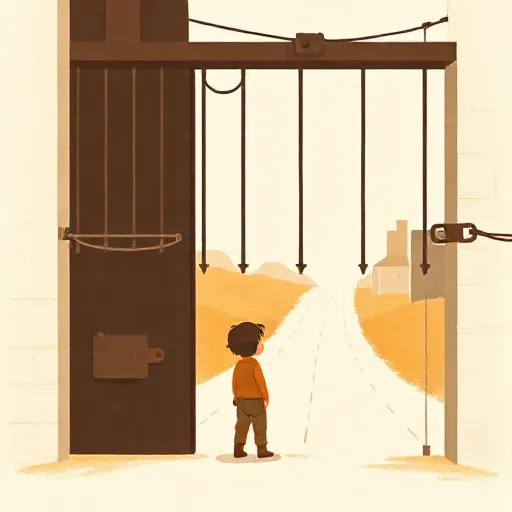
All the talk about exclusion assumes that people can just leave if they don’t like a group. But is leaving always a real option? William Galston (born 1946) argued that a meaningful right to exit requires four things: you must know other possibilities exist, you must be able to assess them, you must be free from brainwashing so you can act on your judgment, and you must actually have somewhere else to go.
Think about a child born into a strict religious community. She knows no other life. She has no money. If she walks out the door, she may lose her family, her home, and her entire social world. Is that a real choice? Some philosophers say yes — as long as nobody is physically restraining her, staying means she consents. Others reply that such a thin notion of freedom makes a mockery of the word. A worker trapped in a terrible job because the alternative is starvation is not meaningfully free to leave. On that view, genuine freedom of association at work requires a society where you can say “no” to any job without falling into desperate poverty.
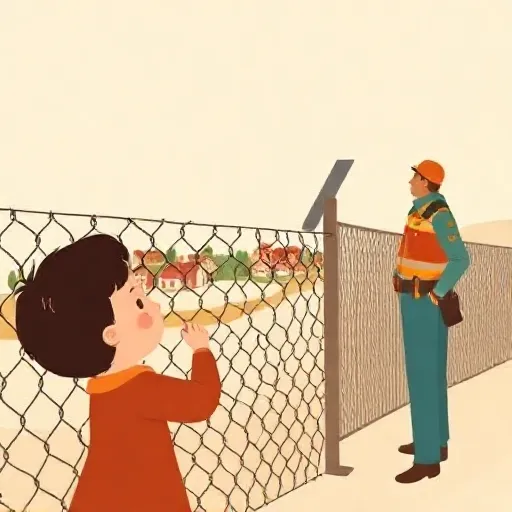
Exit is also limited by our duties to others. A parent cannot simply quit a family, even if they formally hand over care — they still owe financial and emotional support. And nobody can exit the realm of states entirely; if you leave one country, you land inside another’s borders, and to be accepted you must meet that country’s rules.
Sometimes, strengthening people’s voice inside a group is more just than pushing them to exit. Instead of telling a woman to leave her patriarchal church, a society might insist that women get a say in how the church is run. Instead of forcing an unhappy worker to quit, unions can give workers the power to change working conditions from within. Exit is not always the answer; sometimes staying and fighting is what freedom asks of you.
Who Makes the Rules? The Right to Run Your Group Your Way
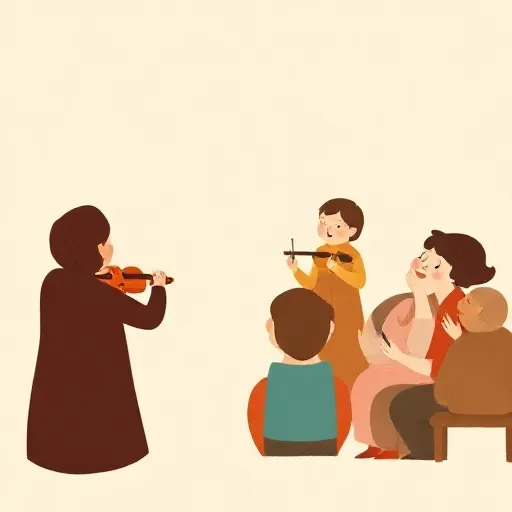
Even when a group is already full of members, the question of who runs the show — organizational autonomy — can be explosive. In many leading orchestras, musicians used to audition in front of a panel that could see them. For decades, the committees, sometimes unconsciously, favored men. Then orchestras began putting a screen between the player and the judges. The result? Far more women were hired. Some traditionalists complained that this changed the orchestra’s character. But the music proved them wrong: what mattered was ability, not gender.
A more painful case unfolded in the United States when the Boy Scouts dismissed a scoutmaster named James Dale because he was gay. The Supreme Court said the Scouts had a right to decide who would be a leader, because allowing Dale to stay would send a message the organization didn’t want to send. Seana Shiffrin, a legal philosopher writing in the early 2000s, suggested we should think about associations as spaces where people can control what influences they are exposed to — places to relax from a world of constant demands. Yet that freedom, if used to exclude on the basis of identity, also entrenches inequality and denies other people a fair chance to participate in public life.
Governments sometimes force groups to reorganize. Norway requires that 40 percent of corporate board members be women. The idea is not just fairness but also integration: mixing people together within powerful institutions can change the whole culture. The same logic has driven efforts to desegregate schools and neighborhoods. Elizabeth Anderson (born 1959) argues that democratic societies need citizens who actually interact across lines of race and class, or else trust breaks down.
Not everyone agrees. Tommie Shelby (born 1967) points out that, in deeply unfair societies, all‑Black neighborhoods can act as survival spaces — places of security and solidarity against a hostile outside world. Forcing residents to integrate into white neighborhoods, he argues, asks the most burdened people to make yet another sacrifice to fix a problem they did not create. Here, the freedom to associate, and the real goods an existing community provides, might matter more than the abstract hope of a mixed‑up future.
The organizational autonomy of a group, then, is always in tension with other values. A choir can choose its own songs; a country can set its own immigration laws. But when a group’s internal rules start to lock people out of education, jobs, or basic respect, the rest of society has a reason to push back — even if it means rewriting the rulebook.
Why This Fight Matters to You

Every time you pick a team for a game, you’re choosing who gets to belong and who stays on the bench. When you block someone on social media, you’re drawing a border around your space. When a friend group seems to have an invisible rope keeping you out, you feel the weight of exclusion — not just as a personal hurt, but as a question about fairness.
The line between “my choice” and “our shared world” is never neat. Freedom of association is precious. It protects the deep connections that make life feel whole. But used without care, it can also leave people hungry for belonging while others bolt the doors. Philosophy doesn’t give a final answer; it hands you the tools to notice when a closed door is a necessary shield and when it’s an unfair wall. And you’re already part of the argument — every time you decide whom to let in.
Think about it
- If a group of friends always leaves you out, do they have the right to do that? Should there be any limits, and if so, who should set them?
- Can someone truly be free to leave a group if all their money, shelter, and family ties depend on staying? What would make exit real?
- Should a country ever force neighborhoods to mix people of different backgrounds, even if many residents prefer to live apart? Where would you draw the line between freedom and integration?