Why Can’t You Just Move to Any Country You Want?
The Border Guard’s Fence
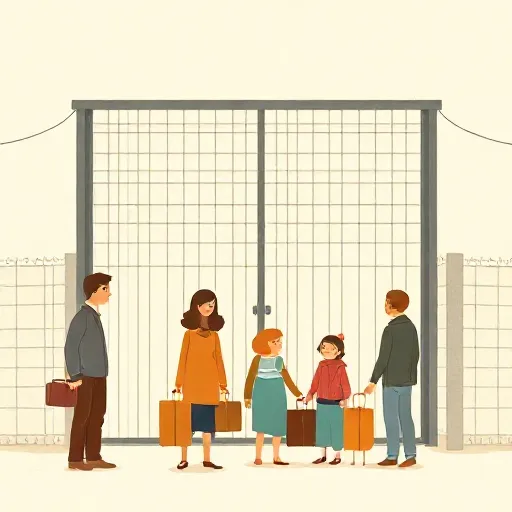
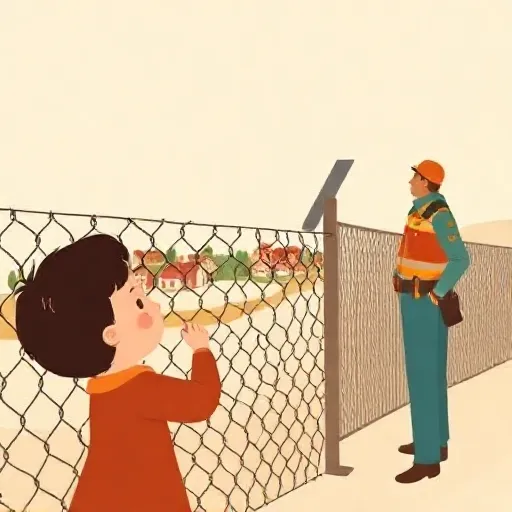
Imagine your family decides to move to another country. You’ve packed your bags. Maybe your parents found better jobs there, or you just want a fresh start. But at the border, an officer says no. The country doesn’t have to let you in. Suddenly, where you were born feels like a locked room.
This situation is happening right now for millions of people. It raises a huge moral question: Do countries have a right to close their borders, or should people be free to move wherever they want? Philosophers disagree sharply. Some believe nations must control who enters to protect their culture, economy, and political life. Others argue that keeping people out is deeply unfair—especially when your birthplace is purely a matter of luck. Let’s walk through the strongest arguments on both sides.
Your Culture, Your Rules?

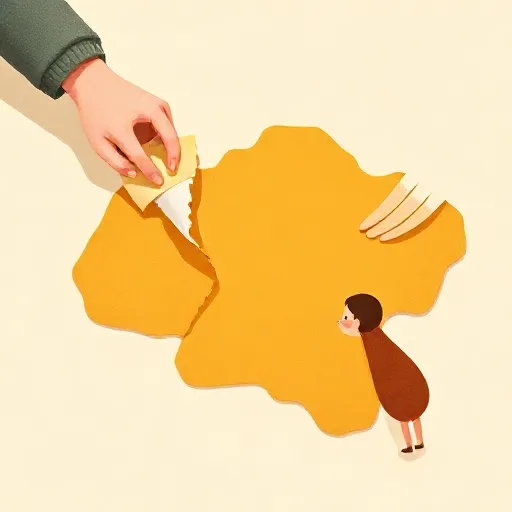
One popular reason for closing borders is cultural preservation. The philosopher David Miller (b. 1946) has argued that people care about the public culture they share—its history, values, and everyday traditions. If a country opened its gates without limits, a flood of newcomers could change that culture rapidly. Many citizens would feel less at home in their own land, and Miller thinks that’s a legitimate worry. After all, you might not mind a few visitors at your dinner table, but you’d be upset if the whole neighborhood moved in and rearranged your kitchen.
Critics point out several problems here. First, it’s really hard to pin down exactly what a country’s culture is—American culture, for instance, is a messy blend of many influences. Second, cultures are always changing anyway; immigration just makes that more visible. Most importantly, even if citizens care about cultural continuity, that doesn’t automatically give them a right to stop others from entering. Outsiders might have powerful reasons to come, like escaping poverty or uniting with family. So even if preserving a way of life matters, it might not outweigh a stranger’s need to build a new one.
A State’s Right to Choose Its Company

Another major defense of closed borders comes from political self‑determination. Philosophers like Michael Walzer (b. 1935) claim that a legitimate country has a right to run its own affairs, including choosing whom to admit. Freedom of association, they argue, is a key part of that. Just as you have the right to decide who you marry or who you invite to your birthday party, a political community should have the right to decide who becomes a member. Forcing a nation to accept anyone who shows up would be like forcing you to marry a person your family picked—an obvious violation of your freedom.
The comparison has punch, but many philosophers resist it. One objection is that countries aren’t people; they’re collections of institutions, and granting them the same kind of rights as a human being is a stretch. A deeper worry is that an immigration decision isn’t just about choosing not to associate—it’s about using force to keep someone out of a territory. If you refuse a marriage proposal, you aren’t physically barring anyone from a piece of land. And even if a country does have some presumptive right to exclude, that right might be overridden by desperate claims, like a refugee fleeing persecution. The door may not be quite as strong as it first appears.
The Luck of Where You Were Born
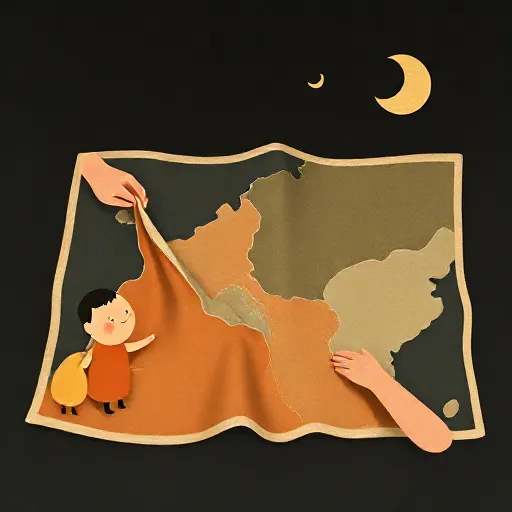
On the other side of the debate, those who defend open borders often start with a staggering fact: your birthplace dramatically shapes your entire life. A child born in Sweden will likely enjoy excellent healthcare, education, and safety; a child born in Chad faces much harsher odds. Neither of them did anything to deserve that difference. The philosopher Joseph Carens (b. 1945) calls citizenship in wealthy democracies “the modern equivalent to feudal privilege.” Just as a medieval serf’s life was fixed by the family he was born into, someone’s chances today are still heavily tied to a passport they didn’t choose.
Egalitarians argue that if we genuinely believe all human beings deserve equal moral consideration, then we can’t just shrug at this lottery. Locking poor foreigners out with guns at the border looks like hoarding an unearned prize. But not everyone is convinced that open borders must follow. One powerful response asks: can’t wealthy countries fulfill their duties to the global poor in other ways? For instance, a rich country could send massive aid to Chad instead of admitting every Chadian. After all, we don’t require billionaire Jeff Bezos to let a stranger move into his house—we only expect him to pay his fair share of taxes. If we accept that logic for individuals, why should the rules be different for whole countries? The debate then shifts to what counts as a fair share and whether money alone can truly make up for locked gates.
Exceptions, Exploitation, and Who Gets Picked
Even staunch defenders of border control usually carve out exceptions. Refugees—people fleeing war or persecution—are widely seen as having especially urgent claims. And yet it’s messy. Some philosophers challenge the narrow legal definition of a refugee: why protect only those targeted for their race or religion, but not someone fleeing a famine or a civil war? And even when we agree a refugee deserves help, does the duty have to come in the form of letting them in? During the 1990s, instead of moving Kurds out of Iraq, a safe‑haven was created inside northern Iraq with a no‑fly zone. So the duty to protect doesn’t automatically equal a duty to open a border.
Tricky questions also surround guest workers—people invited to do jobs but denied full political rights. Michael Walzer condemned the old system in which Turkish workers lived in Germany for decades without ever becoming citizens. He insisted that if a country is unwilling to treat foreign workers as political equals, it shouldn’t invite them. Yet others note that if someone freely agrees to the deal and knows the terms, maybe it’s not unjust. After all, you can accept a temporary job in another country without expecting to vote there.
Then there is the explosive issue of selection criteria. If a country is allowed to pick and choose, can it prefer people of a certain race or religion? Walzer controversially suggested a country like “White Australia” might be permitted to preserve its character—unless the country had spare land that needy outsiders required. Most philosophers recoil from that conclusion. Michael Blake (b. 1976) offers a different angle: even a racially discriminatory policy insults its own citizens of that disfavored group, treating them as second‑class members. But Blake’s fix can’t explain what’s wrong with a nation that is already completely homogeneous excluding outsiders by race. These unsettled threads show that even within the right‑to‑exclude camp, not all fences look the same.
Why It Matters Right Now

Where you were born still shapes what’s possible for you. It determines whether you can visit a cousin in another country, study abroad, or simply escape danger. The arguments about closed and open borders aren’t just about far‑away governments; they’re about fairness that hits the ground right where you live.
The same tension plays out in your own instincts. You probably believe that your country has a right to decide some things for itself. But you also know it’s not your fault—or anyone’s—to be born in one place and not another. Philosophers haven’t settled this. Their work gives us tools to ask sharper questions, not a final answer. And that’s exactly why thinking about the border fence matters: it helps you figure out what kind of world you really want to live in.
Think about it
- If a country’s culture would change dramatically because many new people moved in, should it have the right to limit immigration? What kinds of changes, if any, make a difference?
- Suppose you could press a button that opened all borders worldwide, but experts warned that some local economies might temporarily suffer. Would you press it? Why or why not?
- Why might it be unfair to let countries use race or religion when choosing immigrants, even if a country is allowed to control its borders in other ways?