When Is It Okay for a Group to Walk Away and Make Their Own Country?
A Question That Shapes the World
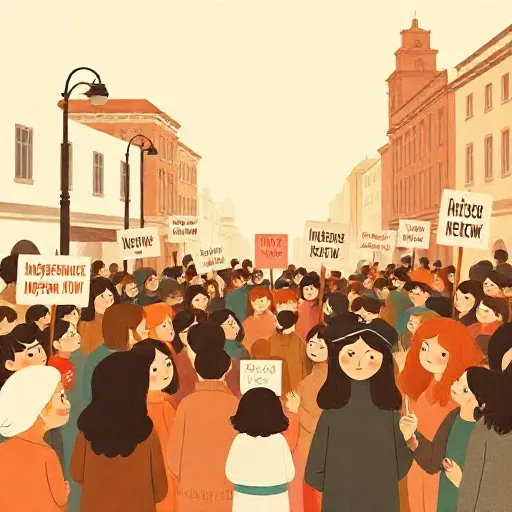
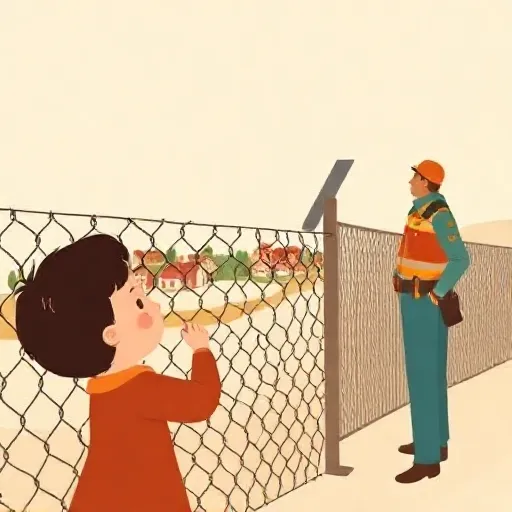
Close your eyes and imagine this. The western province of a country called Valdoria has different traditions, a different language, and a different idea of what laws should be. One day, its leaders announce: “We are leaving. We will govern ourselves.” The government of Valdoria says no. Tanks roll in. People fight. Families are split. Suddenly, a question that might have seemed like a game of map drawing turns into a matter of life and death.
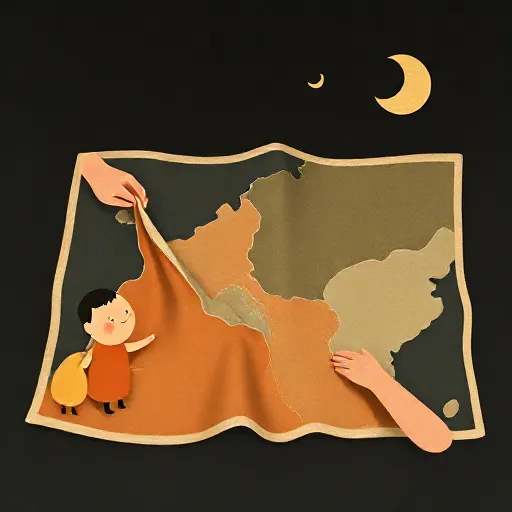
That question is: when does a group have a moral right to secede — that is, to break off a piece of an existing country and create a new one on that territory? And does that right mean the rest of the world should let them go without interference? Philosophers have been thinking about this for a long time, and they have developed three major ways of answering it. Each one has powerful arguments behind it — and each one leads down a very different path.
What Secession Is (and Why It’s Not Just a Breakup)
To understand the disagreement, we need to be clear about what we are talking about. Secession happens when a group that lives on part of a state’s territory tries to take that land and turn it into a separate, independent state — leaving the original state behind, smaller than before. That’s the classic case, like when Norway peacefully left Sweden in 1905.
There are other ways states come apart, of course. Sometimes a whole country dissolves by agreement, like Czechoslovakia splitting into the Czech Republic and Slovakia in 1993. Sometimes a region wants to join a neighboring state rather than stand alone — that’s called irredentist secession. But the hardest, most controversial kind is unilateral secession: the group leaves without permission from the state it’s leaving. That almost always sparks conflict, which is why philosophers focus on it.
Here’s a key distinction the thinkers make. Saying that a group is justified in seceding — that they have a good reason to act — is not the same as saying they have a claim-right to secede. A claim-right means others have a duty not to interfere. If you have a mere permission, I can still try to stop you without wronging you. If you have a full claim-right, then I am obligated to stay out of your way. Most theories of secession try to figure out when a group actually has that strong kind of right, because that changes everything about how the world should respond.
The “Last Resort Against Injustice” View

One big family of theories says that a group has a right to secede only when it has suffered serious, ongoing injustice at the hands of the state — and only when secession is truly a last resort. This is the remedial right only view, sometimes called the “just cause” theory. The name gives away the idea: secession is a remedy, not a free choice.
The philosopher Allen Buchanan (writing in the 1990s and 2000s) has developed one of the most detailed versions. On his account, the kinds of injustice that could give a group a right to unilateral secession include large-scale violations of basic human rights — things like genocide or systematic killings — as well as the unjust taking of territory (as when the Baltic Republics reclaimed independence from the Soviet Union in 1991). Buchanan also argues that if a state makes a formal agreement to give a minority group self-rule within the state and then repeatedly breaks that agreement, that can be a ground for secession. More recently, he has considered whether a state’s outright refusal to even negotiate about autonomy might also count.
Why take this cautious path? Because secession almost always provokes massive violence. It’s not just a political rearrangement; it’s a tearing of the social fabric. So the remedial view sets the bar high: you cannot just walk away because you feel like it. You need a weighty grievance. This view also explains why a state loses its claim to its territory. The idea is that a government earns its right to rule a territory by providing justice to the people living there. If it persecutes part of that population, it undermines the very basis of its own authority. The territory then no longer belongs to the state in the same way.
Critics push back, though. They point out that many groups who want independence are driven by a sense of national identity, not by tales of horrific oppression. The remedial view seems to ignore those strong feelings. Defenders reply: those groups may still deserve various forms of autonomy within the state — perhaps their own parliament or cultural protections — just not a full-blown right to tear the country apart unilaterally. The trick is to argue that self-determination doesn’t always require a separate state.
The “Let the People Decide” View

Now imagine a very different picture. What if a group doesn’t need to prove it has been mistreated? What if the right to secede comes directly from the right to self-determination — the idea that people should be able to choose their own political future? That’s the core of primary right theories, and one of the most direct versions is the plebiscitary theory.
The philosopher Christopher Wellman (another contemporary voice) defends a plebiscitary view. He argues that any group that forms a majority in a portion of a state’s territory has a pro tanto (that is, a strong but not absolute) right to secede, provided two conditions are met. First, a majority in that region must vote yes. Second, the state viability proviso: the new state they want to create must be able to perform the basic functions of a government — protect rights, keep order, provide essential infrastructure — and the remainder state must still be able to function as well. If those conditions hold, Wellman thinks the right to leave exists, even if no injustice has occurred.
This view has obvious appeal. It honors democracy in a very direct way: borders themselves become subject to the will of the people who live inside them. It doesn’t require us to figure out which groups count as real “nations” or “peoples.” A majority is a majority. And it avoids the gloomy conservatism of the remedial view: sometimes the map needs to be redrawn in a way that fits people’s actual wishes.
But there are deep worries. One is the “haves versus have-nots” problem. Suppose a wealthy region containing most of a country’s natural resources votes to secede, leaving the rest of the country impoverished. Would that be fair? Wellman responds that the right to self-determination is powerful, but it doesn’t wipe out obligations of distributive justice. The seceding region might still owe continued support to the poorer remainder state — much like a wealthy spouse might still have to support a less wealthy one after divorce. Critics reply that this is wishful thinking: once a new state is independent, it has little incentive to keep sharing, and no international agency could reliably enforce such a deal. So the plebiscitary view might license a world in which the rich repeatedly dump the poor.
Then there’s the domino worry. If any territorial majority can vote to leave, won’t that trigger a cascade of ever-smaller breakaways, leading to chaos? Wellman points to the viability proviso as a limit: forming a real, functioning state is incredibly difficult, and the smaller a group gets, the less likely it is to succeed. Still, the deeper challenge is territorial. Where does a group get the right to take a piece of land that has belonged to an existing country? Wellman’s answer is based on a functional view of the state: a state’s claim to territory is legitimate only insofar as it uses that territory to do its job. If a breakaway group can do the job independently and the original state doesn’t need that piece to keep functioning, then the original state’s territorial claim weakens — and the group’s vote-based desire for self-government can win the day. Not everyone is convinced.
The “Nations Deserve a Home” View
There is another version of the primary right theory, older and in some ways more explosive. Ascriptivist theories (sometimes called nationalist theories) hold that certain groups — defined by shared traits like language, culture, religion, or a sense of common descent — have a right to self-determination that includes a right to secede. If you are a nation, the argument goes, you are entitled to a state. The nineteenth-century thinker Giuseppe Mazzini championed this idea: every nation should have its own country.
In more recent philosophy, thinkers like Avishai Margalit and Joseph Raz (writing in 1990) and David Miller (writing in 1995) have argued that nations have a deep moral significance. Nations can be “encompassing groups” that shape who people are and how they live; being part of a nation gives people a sense of belonging and membership in an ethical community. Because that identity is so central, nations need political institutions — perhaps even full statehood — to protect their culture and to let members fulfill obligations to each other.
This view resonates with many real independence movements. But critics see a terrifying danger. There is no country on Earth that contains only one nation, and many nations overlap across the same territory. If every nation got a right to its own state, the map would have to be redrawn endlessly, and the process would be soaked in conflict. The fear is not just about numbers; it’s about what happens when you try to carve out an “ethnically pure” state. Historically, that dream has led to forced population transfers, ethnic cleansing, and worse.
Defenders sometimes soften the claim: they say nations have a strong presumption in favor of statehood, but that can be outweighed by other concerns like stability or the rights of other groups. The problem is that no one has yet spelled out, in a concrete way, exactly when the presumption loses. And there’s another irony: the argument that “states need to be mono-national” to achieve democracy or economic sharing (as John Stuart Mill suggested in the 1860s) is often used to justify giving nations their own countries. But history shows that nationalist solidarity can just as easily be used to block redistribution to the poor or to justify conquest of outsiders. The ascriptivist view, charming in its simplicity, remains deeply unsettled.
Why This All Matters Right Now

You might never draw a new border on a map. But the arguments here are not just about dusty philosophy books. Look at the news: conflicts over secession have torn apart regions from the Balkans to East Africa. When a group says “we deserve our own country,” the world has to decide how to react — whether to condemn, support, or intervene. The theory you accept quietly directs those life-or-death choices.
The remedial view tells the international community: defend a country’s borders unless that country is committing atrocities. The plebiscitary view tells us: respect the democratic will of a region, but make sure everyone still gets a fair share of resources. The nationalist view encourages the idea that every people needs its own land — a powerful but flammable notion. Each answer also shapes what a new state must prove before it gets recognized as legitimate. Should we demand that it protect minority rights and commit to sharing? Should we ask whether secession will ignite a regional war? These are not just questions for diplomats; they’re the real-life expression of the philosophical puzzles you’ve just walked through.
And here’s something even more fundamental. All these theories circle around a single massive question: what gives a state a right to its territory in the first place? Until we have a clear answer — until we understand why any country gets to say “this land is ours” — our debates about who can walk away will always hover on shaky ground. Thinking about secession, it turns out, is really thinking about what makes a government legitimate at all. That’s a question that belongs to you, too, the next time you wonder about the borders you were born inside.
Think about it
- Imagine a region has never been mistreated, but its people just want a different kind of government. Should they be allowed to leave peacefully? What if leaving would make the rest of the country much poorer — does that change your answer?
- If a nation has lived on a piece of land for centuries but another group also has deep ties to part of the same area, how should we decide who gets to govern it? Is a vote the only fair way, or are there other values that matter even more?
- Suppose the countries of the world agree on a secession rule. What kinds of institutions — courts, peacekeepers, economic agreements — would be needed to make the rule work without violence, and who pays for that? Is it worth the cost?