Who Gets to Make the Rules on a Piece of Earth?
A Line in the Sand
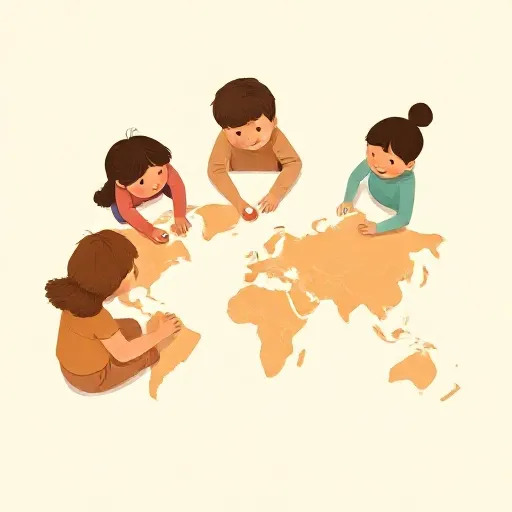
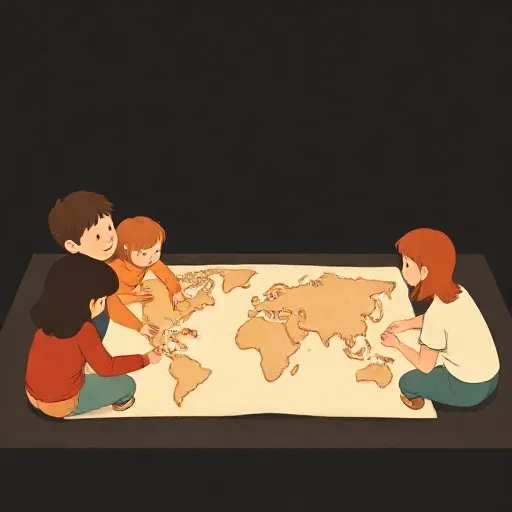
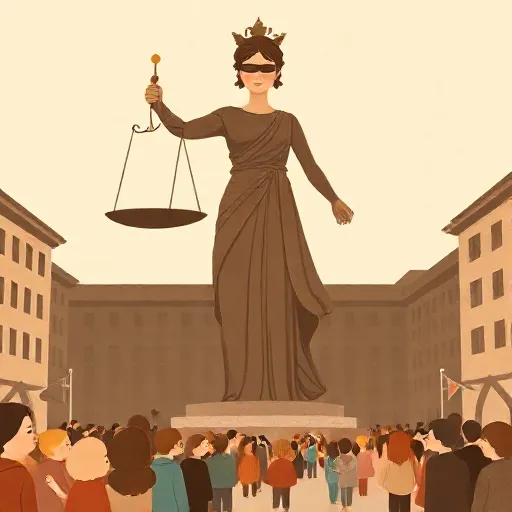
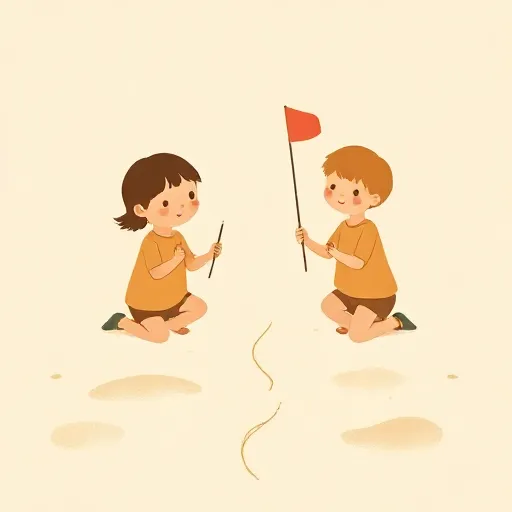
Imagine you and your friends find a perfect spot in the park. You decide to build a fort, make up some rules, and call it your own country. But then another group arrives, points to the same patch of grass, and says “We were here first!” Who gets to decide what happens on that bit of land? Who gets to make the rules — and why?
This is more than a playground argument. It is the question at the heart of territorial rights: the right to make and enforce laws over a particular area of the earth. Every country you see on a map claims that right. Governments set speed limits, run schools, control borders, and decide who can use the minerals under the ground. But where does that authority come from? Why does Germany get to rule the land inside its borders, and not Italy? Philosophers call this the particularity question — the puzzle of how a specific state gets tied to a specific chunk of the planet.
To answer it, thinkers across three centuries have tussled over property, consent, justice, culture, and sheer attachment to home. Their arguments aren’t dusty or distant. They are alive every time a border is drawn, a people is forced to move, or a kid asks “Whose street is this, anyway?”
What We Mean When We Say “This Is Ours”
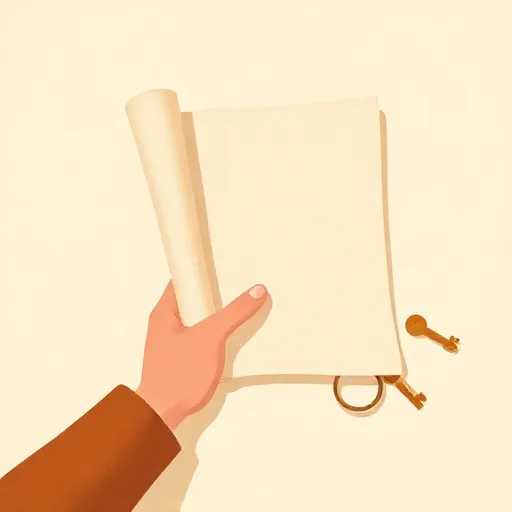
Before picking sides, you need to know exactly what is being claimed. Territory isn’t the same as plain dirt or grass. It’s a space where a government has jurisdiction — the power to create laws and back them up with force if necessary. Think of it as the difference between owning a house and being the mayor of a town. If you own a house, you can repaint the kitchen and decide who visits. But the mayor can set a curfew, organize trash collection, and send police — powers that apply to everyone in town, not just one building.
Philosophers sometimes describe this as a bundle of rights. Imagine a bunch of separate keys that together open up full control over a place. The most important key is jurisdiction, but others hang alongside it: the right to control borders, to decide who can dig for oil, to make treaties with other countries, and to defend the land from attack. These rights don’t always come together. Canada’s provinces have their own laws about schools and hospitals, but there are no passport checks between them. So each key in the bundle needs its own explanation.
Crucially, this bundle is not the same as ordinary property. A government may let you buy and sell land, but it also sets the rules for how you do that. Most philosophers agree that the right to govern is the foundation; property rules get built on top. But a few, as we’ll see, think it’s the other way around: that property gives birth to government. That disagreement sets the stage for a long-running drama.
John Locke Says: “I Mixed My Labor with This Land”
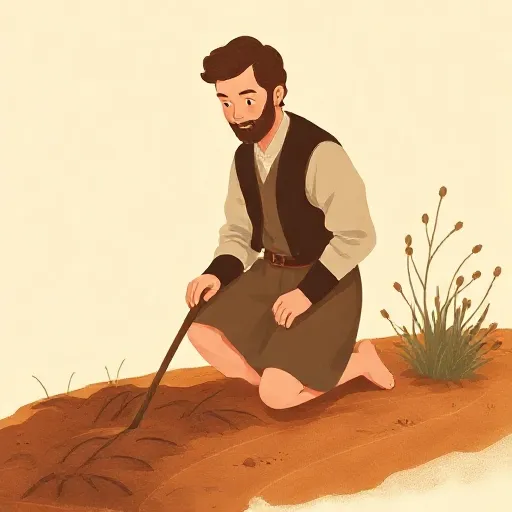
John Locke (1632–1704) stood at the beginning of a powerful idea. He lived in a time of civil war and crackdowns, so he wanted a government that was limited and fair. His solution started not with kings or armies, but with ordinary people and their shovels.
Locke argued that a person who puts work into a piece of land — clearing trees, planting crops, building a fence — makes that land her own. By mixing your labor with the soil, you add something of yourself to it. Nobody else can just take it without wronging you. So Locke saw natural property rights as coming first, before any government existed.
Now picture a wide, unowned wilderness. Different families build farms and workshops. Eventually they realize they need a shared judge and police to protect everyone’s rights. So they gather together, agree to create a state, and — this is the crucial move — they bring their individual pieces of land with them. The territory of the new state is simply the collection of all those private plots. The boundaries of the state are the outer edges of the joined-up properties. Locke could explain how a government gets authority over a particular area: because the people who owned that area freely agreed to pool it.
This story is elegant, but it runs into trouble. What if one farmer on a hilltop refuses to join? Her land would be a hole in the middle, like a piece of Swiss cheese. Real countries don’t look like that; they need continuous, unbroken territory to make roads safe and laws predictable. Some Locke fans answer that once a community is formed, new owners of that land automatically become members of the state. Others say we can accept a world with messy borders. But the difficulty remains: Locke’s picture works well for a tiny settlement, less well for a sprawling, modern nation.
Immanuel Kant Brings Justice to the Courtroom
A century later, Immanuel Kant (1724–1804) flipped the story on its head. He didn’t start with plowed fields; he started with fairness. Kant thought that if you and your neighbor both want the same apple tree, you can’t settle it just by shouting “I saw it first!” Private claims need public rules that everyone can accept. That requires a rightful condition — a state where a single set of laws applies to everyone.
For Kant, the state isn’t born from people who already own land. Instead, the state is necessary for property to even make sense. Before a government, any grabbing of stuff is just one person imposing their will on others. Real property requires a legal system that settles disputes and protects rights. So far, so good: Kant had a powerful reason why we must live under states. Justice demands it.
But now the headache. If you live on a hill between two groups who are each forming a state, which one should you join? Both are needed for justice. Both could compel you to join. Kant’s theory provides no rule for choosing. It justifies state authority in general, but doesn’t tell us how to slice up the map. Kant himself waved at a practical fact: people tend to group with others who share their language or religion. Those natural clusters, he hoped, would mark the edges of the rightful lands. But that is a guess about human habits, not a deep principle. Philosophers call this the particularity problem, and it casts a long shadow. If you believe states exist to serve justice, you still need an extra argument to explain why France is France and not a completely different arrangement.
”Our Homeland”: How a Nation Falls in Love with a Place
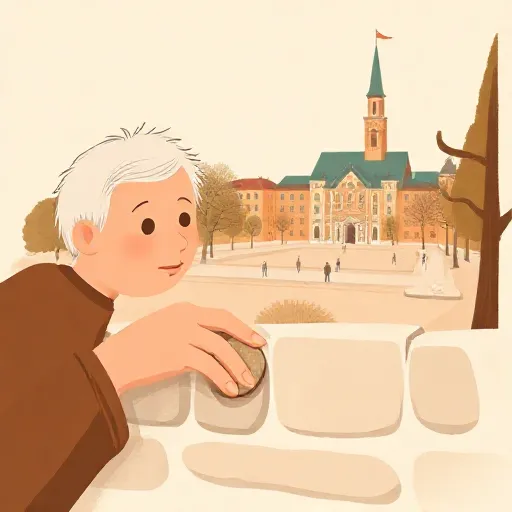
Maybe the missing link is love. Not romantic love, but the deep connection a group forms with a region over centuries. Nationalist theories of territory start here. David Miller (a political theorist active since the late 20th century) and others argue that a nation — a community with a shared history, culture, and sense of belonging — builds a special relationship with the ground it inhabits.
Think about a valley where people have farmed for generations. They’ve built not just houses, but cemeteries where ancestors rest, markets where they trade, and paths that carry stories. The land holds objective value — irrigation canals, bridges, libraries — and subjective value: it becomes the setting for songs, holidays, and a sense of “we belong here.” No other group can make a claim that strong, because no other group shaped the valley in exactly the same way.
From that attachment, the argument takes a further step: to protect all that value, the nation needs jurisdiction. If outsiders could rewrite the laws, the culture woven into the place might unravel. So the group should control the territory, not just live in it. This theory easily explains why conquest is wrong, even if the conquerors are fairer rulers. It murders a relationship, not just a government.
Yet cracks appear. What counts as a nation? If a city neighborhood develops its own distinct culture, does it get a claim too? If two nations feel equally attached to the same city — as in Jerusalem — how do you weigh one set of stories against another? Critics also worry that defining a nation by a shared culture can quietly push out people who don’t fit the picture, even when the theory tries to be open and inclusive.
Deciding Together: Self-Determination and Being Rooted
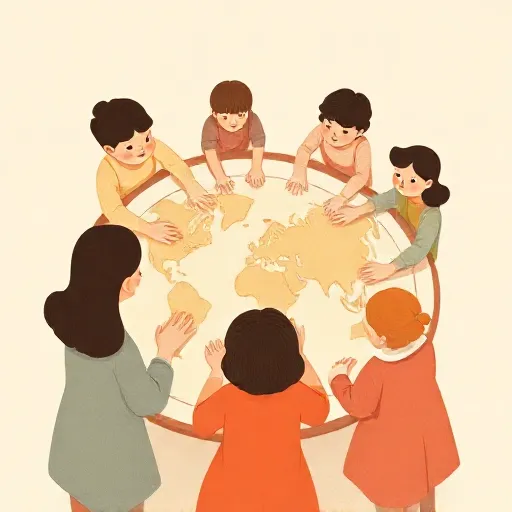
More recent thinkers try to sidestep the nation problem by focusing on self-determination. Margaret Moore and Anna Stilz, two contemporary political philosophers, argue that the right-holder isn’t a cultural nation but a people — a group that lives and governs together on a particular land. Their story has two parts.
First, there is a moral relationship called occupancy. This is more than just being physically present. An individual’s life plans are rooted in a place: where you go to school, where your family is buried, the streets you know like the back of your hand. Tear people away from that location, and you damage their ability to live the lives they value. For Moore, some of that rootedness is also shared — a group project of making a neighborhood, a city, a region function. Second, the value of collective self-determination means that the group should run its own political affairs. The state acts as the vehicle for the people’s choices.
This view tackles the particularity problem by looking at who has actually made a place their home. It also shows why forced relocation is a deep wrong: it rips people from the story they are writing with their land. Yet the boundary-drawing question still nags. People aren’t packed into neat, non-overlapping boxes. Where exactly does the heartland end and the next people’s land begin? Moore admits the theory can point to core areas but needs additional tools — negotiation, shared power — to draw precise lines. Stilz’s individual-based approach might find that one person’s life-plans point north while another’s point south, leaving no single territory that clearly binds them.
And what about a people who desperately want self-rule but lack the capacity — maybe because they have been oppressed and denied resources for centuries? If capacity is required, the theory risks punishing the victim. These are live, moving puzzles that no account has fully solved.
Why a Map Is Never Just a Map
Territorial rights might sound like something for diplomats in suits, but the debate touches your life more than you’d guess. Climate change is now forcing entire communities to leave islands that will soon be underwater. If philosophers are right that people have a moral relationship with place, then losing your homeland isn’t just an inconvenience you can fix with a plane ticket and a new apartment. It’s a tearing-away that money can’t heal. So we need to ask: what does the world owe those who lose their ground?
The same question hits closer to home. When a neighborhood is gentrified and long-time residents get pushed out, are they just losing property, or are they losing the territory of their daily lives? When indigenous peoples demand control over their ancestral lands, they are pressing a claim that runs far deeper than a receipt or a deed. These aren’t just political squabbles; they are arguments about what it means to belong.
Next time you walk past your own street, think about the invisible bundle of rights hovering over it. Who makes the rules there? Why do you have to follow them? And if you and your neighbors decided to try something different, where would you draw the line — and why would it be yours to draw?
Think about it
- If your family moved to a new country and planted a garden, would the land ever feel like yours in the way it did to someone who was born there? Does that matter?
- Imagine a city where two groups both call the same hilltop sacred. Is there a fair way to decide who controls it, beyond just flipping a coin?
- If your favorite park was sold to make room for a new school, would that loss be about missing the grass — or missing the memories you built there? What, if anything, is stolen?