Do We Live Under Laws, or Under the People Who Make Them?
The King Who Had to Obey the Rules

In 1215, a group of angry barons cornered King John of England and forced him to seal a parchment later called Magna Carta. The most radical idea in that document was that even a king must obey the law. They were not inventing something brand new. Over 1,500 years earlier, Aristotle (384–322 BCE) had already asked: is it better to be ruled by the best person, or by the best laws? The Rule of Law is the answer that says law, not any one person, should have the final say. But what exactly does that mean? And is any set of written rules good enough, or do the laws themselves need to be just?
Clear Rules, Fair Courts, and No Secret Decrees
Imagine a game where the referee can change the rules whenever they want, without telling anyone. That would feel unfair and impossible to play. The Rule of Law demands something very different. At its core, it requires that people in power exercise their authority within a framework of well-established public rules, not just by following their own whims.
Legal philosophers often highlight formal requirements. Laws should be general — they must apply to everyone, not single out a particular person. They should be prospective — made in advance, not invented after the fact to punish something that has already happened. They must be public and clear, so ordinary people can find out what the law expects. And they should stay reasonably stable over time, so people can plan their lives.
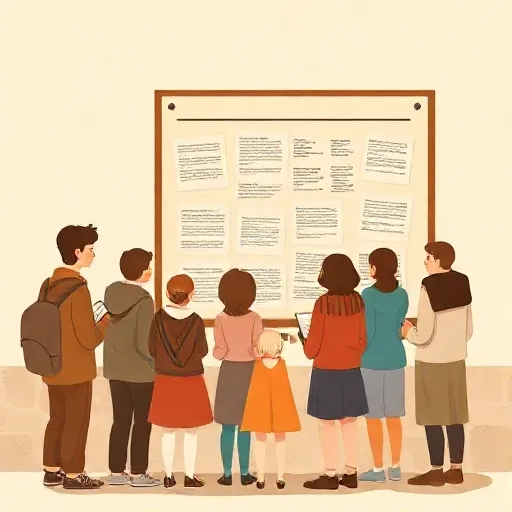
But most people who care about the Rule of Law also think about procedure. If the government accuses you of breaking a rule, you should get a hearing before an independent judge. You should have the right to be represented, to see the evidence, and to hear reasons for the decision. When the American detention camp at Guantanamo Bay was criticized as a legal “black hole,” the protest was precisely about the absence of these procedural rights. The detainees demanded, in the name of the Rule of Law, a proper court and a fair chance to answer the case against them. Procedure is not just a technical detail — it is often what ordinary people mean when they insist on the Rule of Law.
Must the Law Also Be Just?

So far, the picture seems to be about how laws are made and enforced, not about what they say. Many legal thinkers, like Joseph Raz (born 1939), insist that the Rule of Law is a purely formal and procedural ideal. It is one virtue a legal system can have, separate from democracy, human rights, or economic fairness. On this view, a law that says “everyone must wear green on Tuesdays” could still satisfy the Rule of Law if it is clear, public, and applied equally — even if the rule itself is silly.
But others disagree. They argue for a substantive conception of the Rule of Law, one that requires laws to respect certain basic values. Some, like the legal scholar Ronald Cass, claim a society truly governed by law must protect private property rights, because secure property is what makes rules predictable in a market. Others, like the judge Tom Bingham, say a state that savagely persecutes a minority cannot be observing the Rule of Law, even if its cruel rules are published in crystal‑clear language and applied without exception.
John Locke (1632–1704) famously fell into this very tension. He insisted that government should rule by “established standing Laws, promulgated and known to the People,” not by sudden, arbitrary decrees. That sounds like a strictly formal demand. But Locke also said that no law could be valid if it took away a person’s property without consent. Yet people disagreed fiercely about what property rights required — and still do. By adding a substantive rule about property, Locke brought back the very unpredictability he had tried to escape.
The debate is far from settled. Some fear that once we open the door to saying the Rule of Law must include our favorite values — whether property, human rights, or democracy — everyone will rush to stuff their own ideals inside, and the term will stop meaning anything useful.
Why Predictability and Dignity Matter

Even if the principles of the Rule of Law are purely formal, we do not value them for formalistic reasons. They take the sharp edge off power. When rules are general and impersonal, you are not at the mercy of someone else’s passing mood. F.A. Hayek (1899–1992) argued that clear, advance rules give you a kind of freedom: you can use them for your own purposes, like using knowledge of a law of nature, without depending on another person’s will.
The utilitarian philosopher Jeremy Bentham (1748–1832) put it vividly: expectation is “a chain which unites our present existence to our future existence.” Law, he said, creates those expectations, and the security of those expectations is a vital limit on what law can do. When a government surprises citizens with retroactive punishment or secret rules, it breaks that chain.
Lon Fuller (1902–1978) added an even deeper layer. For him, the requirements of legality — generality, publicity, clarity, and so on — form an “inner morality” that respects human dignity. To rule people through law, he said, is to treat them as responsible agents capable of understanding and following rules. To judge someone by an unpublished law, or to demand the impossible, is to insult their ability to steer their own life. This dignity is felt even more sharply in fair procedures: giving a person a hearing acknowledges that they have a point of view worth listening to.
What If Rules Are Stupid?

No honest celebration of the Rule of Law can ignore its critics. Plato (c. 427–347 BCE) imagined that strict reliance on written laws is “like a stubborn, stupid person who refuses to allow the slightest deviation from or questioning of his own rules, even if the situation has in fact changed and it turns out to be better for someone to contravene these rules.” Human affairs are unstable, he said, and no fixed rule can fit every case.
Aristotle himself saw this problem. He introduced the concept of epieikeia (often translated as equity) — the idea that in rare, hard cases, a judge must use wise discretion rather than mechanically applying a general rule. He still thought rules were best for most situations, but he knew they had limits.
The tension appears again in emergencies. Should a government facing a sudden crisis be allowed to set aside normal legal procedures? Some say that is exactly when the Rule of Law matters most. Others argue that modern life is full of emergencies, and allowing constant exceptions can hollow out the whole ideal. Yet even strong supporters of legality admit that some discretion — properly framed and supervised — is unavoidable in a complex state.
Why We Still Argue About This

The Rule of Law sounds like something everyone would support. But the fight over its meaning is alive in the world you inhabit. Think about a school rule that is perfectly clear and enforced equally, but unfairly punishes one group. Does that count as good government, just because it is predictable? Or does real justice require something more?
Countries are ranked and measured by Rule of Law indexes — Norway often scores near the top, while Zimbabwe ranks near the bottom. But the criteria are hardly rigorous, and the rankings sometimes treat mere clarity as if it were the whole story. Meanwhile, authoritarian regimes often practice rule by law — they use legal forms to control citizens while shielding themselves from the same rules. That thin version of legality still provides some predictability, but many would say it misses the heart of the ideal.
Ultimately, the question posed by Aristotle and brought into the modern world by figures like Fuller, Hayek, and Raz is yours now. Does the Rule of Law demand only that the government play by clear, knowable rules? Or does the very idea of “playing by the rules” require those rules to be decent ones? The answer affects how you judge both your school and your country — and what you will demand when you are old enough to shape the rules yourself.
Think about it
- If a school rule is posted clearly and enforced the same way for everyone, but it unfairly targets one group, does it still deserve to be called “fair government”?
- Can you imagine a situation where knowing the rules in advance is more important to you than whether the rules are perfectly just?
- If a country’s president gets a speeding ticket, should she have to pay it just like anyone else? Why does that matter — or does it?