
What Makes a Law a Law? Power, Rules, or Justice?
The King Says, “Do This.” Is It a Law?
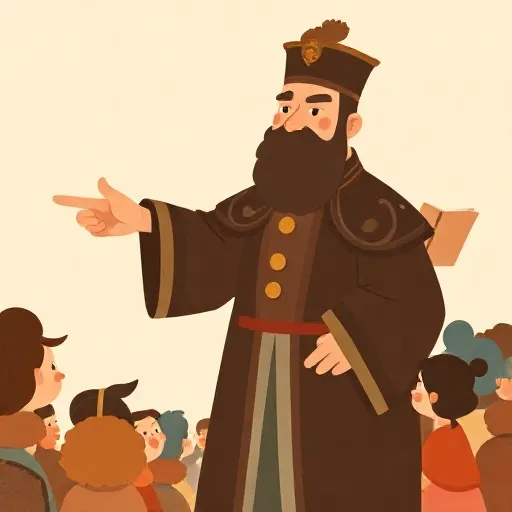
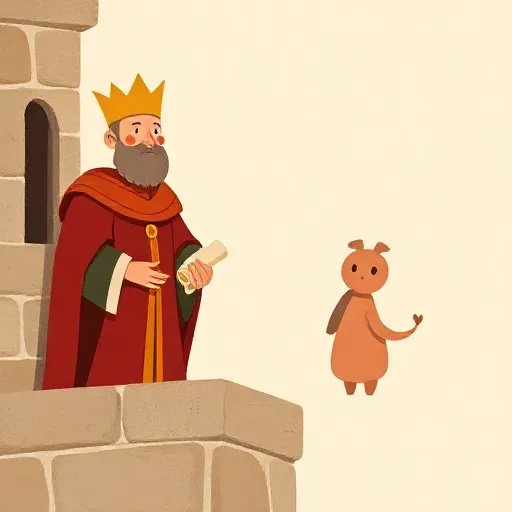
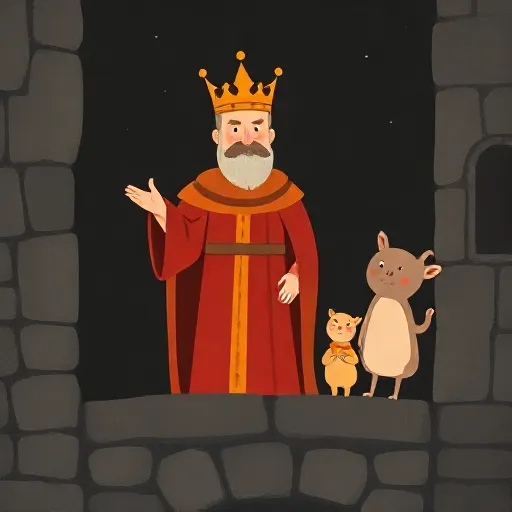
Imagine you live in a kingdom. One morning the king declares that every family must dye their front door purple. If you don’t, soldiers will take away your goats. Is that a law? Most people would say yes—it’s a rule made by the person in charge, with a punishment attached. But is that all law really is?
Two English thinkers, Jeremy Bentham (1748–1832) and John Austin (1790–1859), thought so. They built what we now call the command theory of law. For them, a law exists in a society with a sovereign—a person or group who everyone habitually obeys and who doesn’t obey anyone else. Laws are that sovereign’s orders, directed at everyone, and they carry a threat if you disobey. This idea is the root of legal positivism, the theory that what counts as law depends on social facts—who commands, who obeys—and not on whether the law is good, wise, or fair.
But the command theory soon ran into trouble. Think about rules that give you a power, like the rules that let you sign a contract when you’re old enough or get married if you choose. Those rules don’t command you to do anything; they just set out how to do something if you want. Even in a simple board game, the rulebook doesn’t scream “DO THIS OR ELSE!”—it tells you how turns work. Austin’s theory couldn’t easily explain that. Also, when we say someone has a legal obligation, we don’t just mean they’re likely to be punished. Courts have a duty to apply the law even when nobody is threatening them. Something deeper is going on.
The Secret Rules Judges Follow
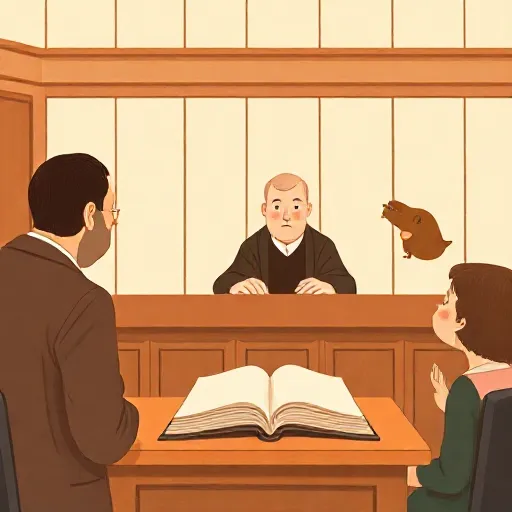
By the middle of the twentieth century, philosophers saw that force alone couldn’t explain what law is. The most influential new voice was H.L.A. Hart (1907–1992). He argued that a legal system isn’t just a pile of commands; it’s a system of rules, and at the bottom is a special kind of rule that officials actually just follow.
Hart called it the rule of recognition. It’s the ultimate standard that judges and legal officials use to decide what counts as valid law. It’s not written in a constitution—it’s a social custom, something people do because they take the “internal point of view”: they treat it as a standard for guiding and evaluating behavior. In the United Kingdom, for example, officials treat whatever Parliament enacts as law. That’s not because Parliament is armed, but because that’s the shared practice. Hart’s picture is not a king shouting orders, but a kind of organised teamwork—law rests on what officials actually accept as the last word.
Hart also saw that in modern societies, law isn’t just for subjects; it sets up a division of labor. Ordinary people mostly just need to obey. It’s the officials who must actively use the rule of recognition when they decide cases or make new rules. This makes law a technical enterprise, and it also means law can drift far from everyday life—something Hart himself worried about.
Before Hart, Hans Kelsen (1881–1973) had already attacked the idea that law could be reduced to brute power. He thought law was a chain of norms, each valid because a higher norm authorized it, all the way up to a “basic norm” we just have to presuppose—something like “the first constitution should be obeyed.” Hart found Kelsen’s solution too mysterious. He replaced the presupposed norm with an observable social fact: the rule judges actually practice.
Can an Unfair Rule Still Be a Law?
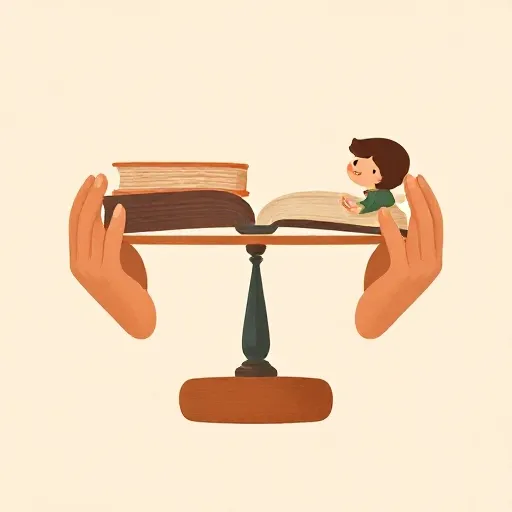
So far, positivism says law is made by social facts—commands, customs, practices—and not by moral goodness. But many people feel that a truly evil rule shouldn’t even count as law. This is the heart of natural law theory, which holds that law and morality are necessarily connected. The most powerful modern version came from Ronald Dworkin (1931–2013).
Dworkin argued that figuring out what the law is always requires moral judgment, not just looking up social sources. He pointed to hard cases where judges openly debate fairness, justice, and individual rights. In those moments, judges aren’t just applying clear rules; they’re constructing the best moral interpretation of the legal system as a whole. For Dworkin, the law includes the principles that best justify the official acts of that system.
Take a difficult example from the U.S. Constitution: the ban on “cruel and unusual punishments.” To decide whether a punishment is cruel, a judge must think about what cruelty means—a deeply moral question. Dworkin would say that when a judge does that, moral principles are not just influencing the law from outside; they are part of the law itself. And if a statute were so monstrously unfair, a proper interpretation might require a judge to rule as if that statute didn’t control the case.
Legal positivists don’t deny that judges use moral reasoning. But they insist that law’s existence and basic content can still be identified by looking at social sources alone. Even when a legal system includes words like “fair,” “reasonable,” or “cruel,” those terms are triggered by the sources—the constitution, the statute—not by morality hovering above them. Moreover, positivists stress that it’s perfectly fine to say, “That is the law, and it’s unjust.” That’s the fallibility thesis: law doesn’t have to be good to be law. In fact, being able to make that split is what lets us criticize bad laws clearly.
A Split Among Positivists: Can Morality Sneak In?

Not all positivists agree about what happens when the law itself uses moral terms. This debate has produced two main camps.
Exclusive legal positivism, defended by Joseph Raz (1939–2022), says that law must be something we can identify without ever engaging in moral reasoning. Raz argued that law claims authority over us, and authority can only guide action if you can understand what it requires without solving the very moral questions it’s supposed to settle. If to know what the law demands you must first work out what’s just, then the law can’t do its job of mediating between you and those deeper reasons. So for Raz, law can never incorporate moral standards; it can only refer to them. A statute might say “contract terms must be fair,” but that just tells officials to apply fairness—it doesn’t turn fairness itself into law.
Inclusive legal positivism disagrees. Inclusive positivists point out that a society’s rule of recognition can explicitly make morality part of the test for legal validity. If the constitution forbids cruel punishment, then a judge deciding whether a punishment is lawful must consider what cruelty means. It is precisely because the source (the constitution) says so that morality is relevant. So, they say, morality can be part of the law, but only because social facts let it in. This means Dworkin was wrong about why morality matters—it’s not because law inherently aims at justice, but because people in a particular system set it up that way.
The two sides have argued for decades, and the debate is still very much alive. It forces us to think carefully about whether law can really do its job of guiding behavior if it’s tangled up with moral controversy, or whether sometimes that tangle is exactly what a society needs.
Why the Fight Matters to You

You might think this is just a dusty argument for professors. But every time you wonder whether a rule at school is fair or whether a law in your country deserves respect, you’re stepping into the same arena.
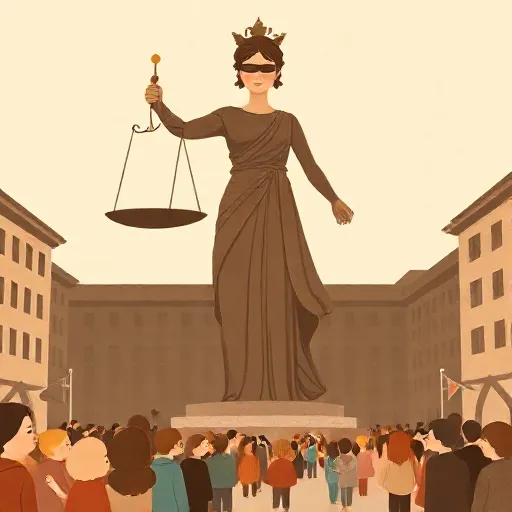
The positivist insight is that law is a human construction, not a sacred given. Its existence comes from what people in power actually do and accept, not from a higher moral order. That doesn’t mean you should disobey every rule you dislike. It does mean you can ask a clear question: “This is the law, but is it just?” And that split is a powerful tool. If law had to be morally good to be real law, you could never plainly call an evil law “law” and demand it be changed. You’d just be arguing about whether it’s really law at all.
Understanding law’s social roots also reveals something sobering. Hart warned that the division of labor between officials and ordinary people can make law remote and alienating. Law is morally risky—it can bring order, but it can also bring new forms of oppression, new hierarchies, and a numbness to injustice. Positivism doesn’t tell you what to do about that, but it forces you to see it clearly.
So the next time you face a rule that seems to have no point, or a law that feels deeply wrong, you’ll know there’s a long tradition of thinkers who took that feeling seriously. And you’ll have a sharper pair of questions: “Where does this rule come from, as a social fact?” and “What moral demands should I make of it?”
Think about it
- If a school rule was made by the principal alone and seems to help nobody, should you still follow it? What would make you decide?
- Imagine a country where every law is written down and perfectly just, but no official ever reads or uses them—no police, no courts. Are those still laws? Why or why not?
- When a judge has to decide what “fair” means in a case, is she just using her personal opinion, or is that actually part of the law? How could you tell?