If a King Makes an Unfair Rule, Is It Still a Law? The Big Debate
The King’s Unfair Tax: A Rule or a Demand?

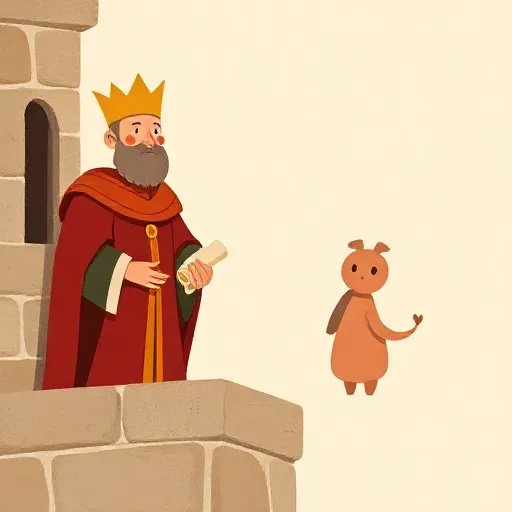
It is the year 1240, and a king in a faraway land summons his people to the palace courtyard. He announces a new rule: every family must hand over half of their harvest each autumn. Anyone who refuses will be dragged to the dungeon. Is this a genuine law? Or is it simply a terrifying demand backed by force?
This is the puzzle at the heart of legal philosophy. What makes a rule a law, rather than just a threat, a custom, or a bad idea? For centuries, philosophers have battled over whether a rule counts as law because it comes from someone in power, or because it satisfies something deeper—like fairness or reason. The fight has consequences that reach from a medieval throne room all the way to your school principal’s office.
The Command Theory: Law as a Gunman’s Threat

One straightforward answer comes from a group of thinkers called legal positivists. Positivists argue that what counts as law depends only on social facts—what people actually say, do, and believe. The simplest version, developed by John Austin (1790–1859), is the Command Theory. It says a law is just the command of a sovereign (a ruler who can make others obey) backed by a credible threat of punishment. On this view, the king’s harvest demand qualifies as law, because he has the power to enforce it and everyone fears the consequences.
Austin’s idea captures something real: laws often involve orders and penalties. But many later philosophers spotted trouble. Not all laws tell you what you must or mustn’t do. Some laws give you powers—like the power to write a will or sign a binding contract. A power-conferring rule doesn’t feel like a command; it just says, “If you do these steps, this result will happen.” Who is being commanded? What happens if you don’t “obey”? Trying to squeeze such laws into the command mold seemed to warp their meaning.
An even bigger worry: the Command Theory pictures law as a gunman’s situation writ large, where people follow only because they fear the punishment. But plenty of people follow laws voluntarily, out of a sense of duty, even when nobody is watching. If a society built a cooperative legal system without any enforcement at all, could that still be law? Austin’s theory would say no—a conclusion many find too narrow.
Hart’s Big Idea: The Rule of Recognition
To fix these problems, H.L.A. Hart (1907–1992) crafted a new version of positivism. He noticed that in every legal system, some rules are more fundamental than others. The ordinary rules that forbid stealing or require paying taxes are what Hart called first-order rules. But what makes them legal in the first place? Hart answered: a community possesses a rule of recognition—a higher-order social rule that tells officials how to identify valid laws. This rule isn’t necessarily written down in a constitution; it exists because judges, lawmakers, and other officials treat it as the correct standard for making and changing law.
Crucially, these officials take what Hart called the internal point of view: they accept the rule of recognition as worth following, not merely as something they’re forced to obey. They use it to criticize departures and to justify their decisions. On this picture, law is a social practice built around shared conventions, not a set of orders backed by guns.
Hart’s framework leads to a bold claim called the Separation Thesis: whether a rule counts as a law does not necessarily depend on whether it is morally good. Positivists do not deny that laws often overlap with morality, or that lawmakers usually aim at just outcomes. They simply deny that a rule’s moral merit is part of the definition of a legal rule. Even a deeply unfair rule can be a genuine law if it satisfies the rule of recognition accepted in that society. This thesis sparked a firestorm.
Dworkin vs. Hart: Can You Separate Law and Morality?
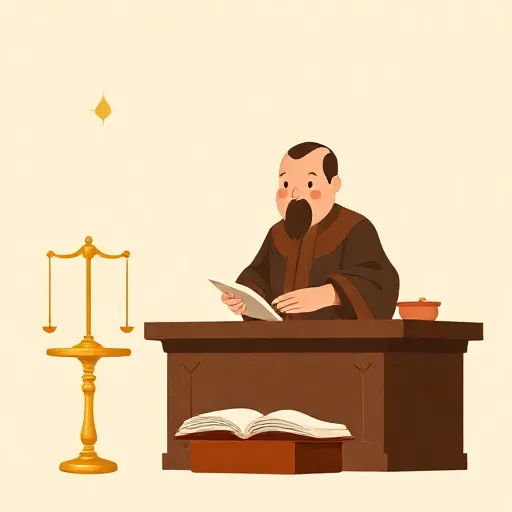
Ronald Dworkin (1931–2013) launched the most famous attack on the Separation Thesis. He pointed out that real judges don’t just mechanically apply a rule of recognition. When hard cases arise, judges often appeal to principles—broad moral standards like fairness, justice, or the idea that no one should profit from their own wrongdoing. Dworkin argued that these principles aren’t captured by something as flat-footed as a social rule. Their content, shape, and role in legal reasoning look thoroughly moral.
He also noticed that in every mature legal system, lawyers and judges frequently disagree about the very criteria that make something law—a phenomenon he called theoretical disagreement. If the rule of recognition were simply a matter of shared social consensus, such deep disagreements would be impossible. Yet they happen all the time. So, Dworkin concluded, Hart’s positivism can’t explain how law actually works.
Dworkin proposed an alternative: interpretivism. To figure out what the law requires, he claimed, you must interpret the community’s legal practices. A good interpretation tries both to fit the established facts (statutes, past court decisions) and to present those practices in their morally best light. The law, on this view, is whatever follows from the set of principles that provides the best constructive interpretation of the whole legal system. This means moral evaluation is baked right into the cake of legal reasoning. For Dworkin, the line between what the law is and what it ought to be is far fuzzier than positivists admit.
Natural Law: When Unjust Rules Aren’t Law at All
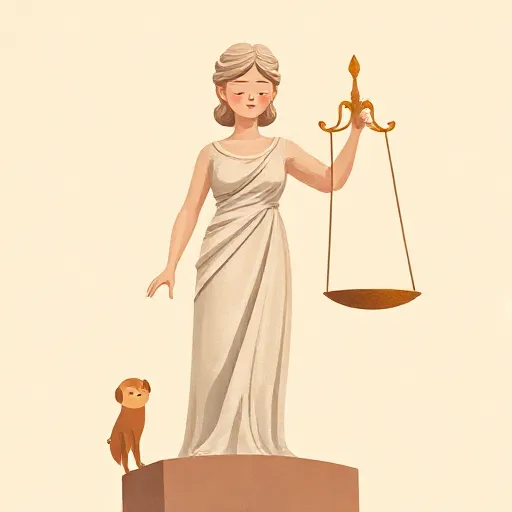
Dworkin wasn’t the first to reject the Separation Thesis. Centuries before him, Thomas Aquinas (1225–1274) defended natural law theory. Aquinas maintained that law is an “ordinance of reason” for the common good, promulgated by someone who has care for the community. A ruler’s command that contradicts fundamental moral truths, he argued, is not law at all but a kind of violence. The famous slogan captures it starkly: an unjust law is no law.
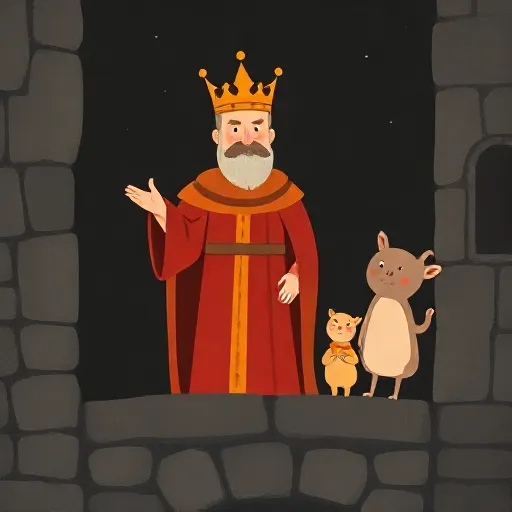
Today, few philosophers claim that every single unjust rule automatically evaporates from the legal code. But natural law thinking has evolved. One influential modern strand focuses on the Rule of Law virtues, explored by Lon L. Fuller (1902–1978). Fuller imagined a king, Rex, who tries to govern by making rules that are secret, constantly changing, retroactive, and hopelessly inconsistent. Fuller argued that Rex’s system fails so badly at being a legal system that it doesn’t really count as one. To be a legal system at all, a set of rules needs a degree of generality, publicity, clarity, and stability. These features form what Fuller called the “inner morality of law.”
Fuller’s point is subtle. A legal system can be wicked—imagine one that is clear, public, and stable yet still terribly unjust. But if a system totally lacks the Rule of Law virtues, it collapses into arbitrary power. Some contemporary natural lawyers go further: they claim that a legal system is better as a legal system when its content is morally good, and that radical moral failures might even undermine a system’s claim to be law at all. Positivists push back, arguing that a malfunctioning law is still a law, just a very bad one. The dispute remains wide open.
Why This Debate Still Matters to You

You probably don’t live under a medieval king, but the question “Is this really a rule?” comes up all the time. Suppose your school announces a new dress code that everyone finds unreasonable, or a teacher enforces a policy that punishes students for things they never knew were forbidden. When you push back—saying “That’s not a fair rule” or even “That can’t be a real rule”—you are taking a philosophical stand. You’re hinting that a genuine norm must have something more than just an authority figure’s say-so.
History offers larger examples. During the American civil rights movement, protestors argued that segregation laws, though passed through official channels, were so deeply unjust that they lacked the true character of law. Their moral conviction demanded a philosophical answer. Similar arguments surface whenever people resist oppressive government actions by appealing to a higher standard of justice.
The battle between positivism and its critics isn’t a dusty academic quarrel. It’s the ongoing struggle to define what law is—and what it ought to be. The answer shapes whether you feel bound to obey a rule that strikes you as wrong, when you owe your community compliance, and how you should design the rules that govern everyone. Next time you hear “because I said so,” remember the king in the courtyard, and ask yourself: is that enough?
Think about it
- If your school principal makes a rule that almost everyone agrees is deeply unfair, is it still a rule you should follow? Where would you draw the line, and why?
- In the past, some countries had laws permitting slavery. Those laws were passed by the correct legal procedures. Would you say they weren’t real laws at all? What makes your answer either forceful or tricky?
- Imagine a country where the ruler announces new laws in secret, punishes people for breaking rules they could not have known about, and changes the rules after the fact. Is that a legal system, or just a dangerous game? What, if anything, is the difference?