Who Gets to Say "Mine"? The Philosophy of Private Property
Stranded on an Island
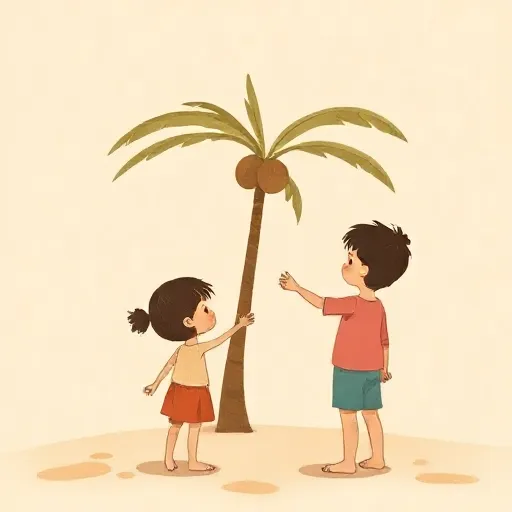
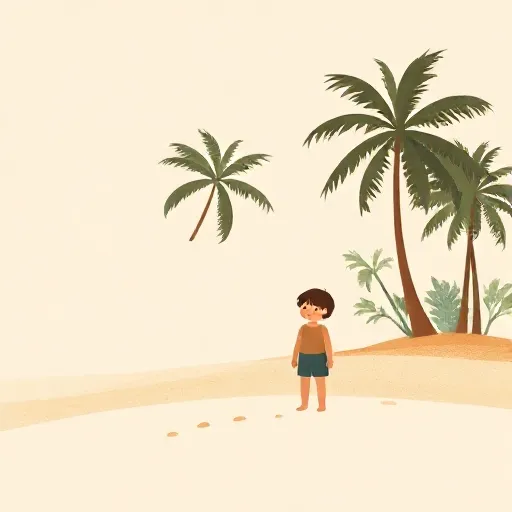
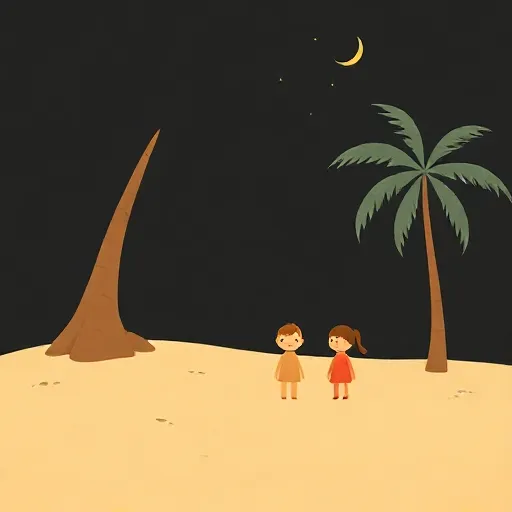
Imagine you and your best friend wash up on an island. You spot a coconut tree heavy with fruit. You climb up, knock down three coconuts, and crack one open. Your friend grabs another coconut from the ground. But then you hear shouting: “Hey, I saw the tree first! All the coconuts should be mine.” Or maybe your friend says, “You climbed, so you get the ones you picked, but the ground around it is ours together.” How do you decide who gets what? Philosophers call this the problem of property—the rules that say who can use, control, and keep things.
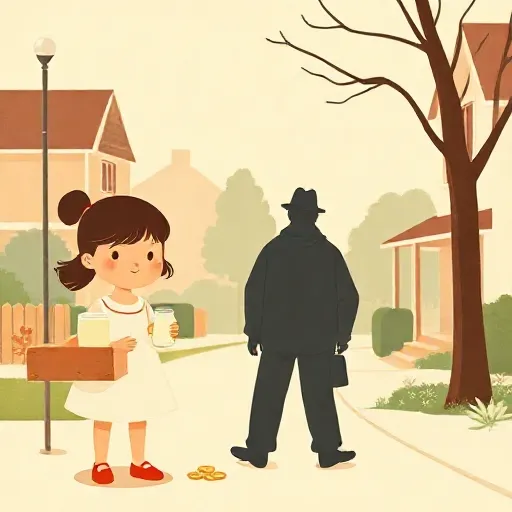
You probably deal with property questions every day. Who gets the last slice of pizza? Can someone take your seat at lunch? Why does your older sibling get a room with a window and you don’t? These seem like small matters, but they point to a huge question that has puzzled thinkers for thousands of years: is private property—the idea that individuals can own things and keep others from using them—something natural, something necessary, or something we invented and can change?
Three Ways to Share (or Not)
Before we argue about who owns the coconut, we need to be clear about what kind of property system we’re imagining. Philosophers usually talk about three big ways to organize access to things that people might want:
- Common property means a resource is open to everyone in a group. Think of a public park: anyone can play there, but there might be rules against digging up the flowers or building a private house. The goal is to keep things available for all without letting one person spoil them for the rest.
- Collective property means the whole community, through some kind of voting or decision-making, controls the resource. A military base is collective property: the government decides how the land and equipment are used, not any single soldier.
- Private property is the idea that a specific person (or family or company) gets to decide what happens with a thing. If you own a bicycle, you can ride it, lend it, paint it, or sell it. You can even say “no” when others want to borrow it. That power to exclude is one of the most important parts of private ownership.
Notice that private property is still a system of social rules, even though it is about individual control. If someone steals your bike, you don’t have to wrestle them for it; you can call the police. The law will back up your right to say “mine.” That’s why private property always needs a public justification: it uses the community’s force to let some people shut others out. And it often does so without asking whether those others might be much worse off because of it. If a factory owner decides to close her plant, hundreds of workers may lose their jobs, but the law says it’s her call—and the police will remove the workers if they try to keep it running. That’s a big power to hand to one person, and it asks for a seriously good reason.
Locke’s Labor: Mixing Yourself into Things
The English philosopher John Locke (1632–1704) gave one of the most famous justifications for private property. He started from a puzzle. Locke believed that God gave the world to all humans in common. So how could any person ever say “this piece of land is mine, not yours”? That seems unfair, at least at first.
Locke’s answer turned on your own body. “Every Man has a Property in his own Person,” he wrote. No one else has a right to your hands or your brain. From that, Locke argued, you own your labor—the work you do with your body. Now suppose you walk into a forest and pick up an apple from the ground. By using your labor to pick it up, you have added something of yourself to that apple. You have “mixed” your labor with it, and because you own your labor, you now own the apple too. The same logic applies to land: if you clear a field, plant crops, and fence it in, your labor has become part of the soil, so the field becomes yours.
Locke knew there was a catch. What if your grabbing leaves others with nothing? He added a crucial limit: you can only take something as your private property if there is “enough and as good left in common” for others. In a world with plenty of unclaimed land and fruit, that seemed reasonable. But Locke also thought labor actually increased the amount of good stuff in the world. A planted field feeds more people than a wild meadow. So even if you take a piece of land, you might actually make the rest of society better off—like a modern farmer whose harvests fill a hundred grocery shelves. This move let Locke say that private property could be good for everyone, even those who end up owning nothing themselves.
Hume’s Idea: Property Is Just a Peace Treaty
Not everyone thought property was about mixing labor with nature. The Scottish philosopher David Hume (1711–1776) looked at the question differently. He didn’t think there was anything natural about one person owning a thing while another went without. Look at the world as it really is, Hume said: people want things, material objects are easy to take and move around, and there is often not enough to go around. The result, in his view, is that humans almost automatically fall into conflict over resources.
Now imagine a long period of fighting—grabbing, stealing, struggling over every goat, sack of grain, or patch of water. At some point, people might realize that constant war is exhausting and dangerous. Hume thought a kind of unspoken bargain could arise: “I’ll leave you to enjoy what you happen to have right now, if you leave me to enjoy mine.” If enough people go along with this, a stable pattern of possession emerges. Over time, that pattern hardens into a set of rules we call private property.
On Hume’s story, the first owners don’t get their things by being virtuous or hardworking. They get them by luck or force. The rules that eventually protect their possessions aren’t about justice—they’re about peace. The great advantage of the Humean view is that it doesn’t pretend our current property arrangements are fair. It just says: this is the deal we’ve ended up with, and messing with it would probably restart the fighting. But that’s also its weakness. If the rules first protected slaveholders or conquerors, should we really keep them forever just to avoid chaos? Hume’s answer might be yes, but many later thinkers found that deeply unsatisfying.
Why Private Property Works (and When It Doesn’t)
So far we’ve asked how private property might have started. But many philosophers think the better question is: is it useful? Does a system of private ownership actually make life better than a system where everything is shared or controlled by the group?
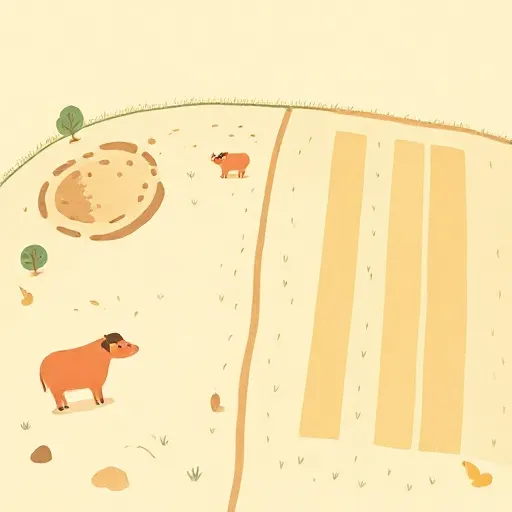
The most famous argument for “usefulness” is called the tragedy of the commons. Picture a village where everyone can graze their cows on a big shared meadow. Each family gets an immediate benefit by adding one more cow, because that cow’s milk and meat belong to them. But the cost—worn-out grass, mud, eventual ruin of the pasture—is shared by everyone. The rational thing for each family is to graze as many cows as possible, as fast as possible. Very quickly, the meadow is destroyed for all. Now suppose the same meadow is cut into private lots, each surrounded by a fence. If you own a lot, you’ll think twice before overgrazing it, because you alone will suffer the damage. You have an incentive to care for it.
This logic applies to many resources. If nobody owns a forest, who will plant new trees? If a factory doesn’t own its machines, who will bother to keep them working? Private property, defenders argue, creates a match between effort and reward. It encourages planning, saving, and taking care of things. But notice the hidden assumption: this argument works only if there are owners at all. It says nothing about the landless person who can’t graze any cow because someone else owns every field. A system that makes the pasture lush for a few while others go hungry may be efficient, but is it fair?
That’s why even good consequences need a second look. Some philosophers say private property is justified only if it leaves everyone better off, or at least no worse off than they were before. In the real world, that’s very hard to prove. A modern worker may own nothing but still earn a living, but is she genuinely better off than if the land were shared? That’s a live debate.
The Big Problem: Haves and Have-Nots
Every argument for private property runs into the same wall: inequality. If the rules simply say “whoever owns a thing gets to keep it, and the police will back them up,” then over time, property can pile up in a few hands. The people who started with nothing may never get a piece of the pie. Is that something we should accept?
This isn’t just about land or money. It’s about the right to exclude, which is often considered the core of ownership. When one person owns a piece of land, she can put up a fence and keep everyone else out—even if someone else is hungry, even if that land is not being used at all. The same power applies to apartment buildings, factories, ideas, and inventions. If a few people own the printing presses, they largely control what ideas spread. If a few companies own the software, they can decide who gets to learn and create.
Some philosophers, following Locke’s lead, argue that so long as the original taking was fair, the resulting inequality is nobody’s fault. Others, inspired by Hume, say that property is a human convention—and like any convention, it can be adjusted when it produces terrible results. Most countries, for example, have rules that let the government take private land for a public school or highway, so long as the owner is paid. But how far can that go? If the government limits what you can build on your land to protect a historic neighborhood, is that a “taking” of your property? The tensions in these debates trace straight back to the big philosophical question: is private property a sacred right, or a flexible tool we can reshape for the common good?
So, Do You Own Your Toothbrush?
After all this, you might wonder: does anyone really own anything in a deep, final sense? The truth is that “owning” is never a single, simple fact. In modern legal thinking, ownership is often described as a bundle of rights—like a bunch of sticks tied together. One stick is the right to use something, another is the right to sell it, another is the right to leave it to your children, another is the right to exclude others. Depending on what you own and where you live, you might hold some of these sticks but not others. You can own a house but not be allowed to knock it down because it’s in a historic district. You can own a song on your phone but not be allowed to share it with a million people online.
That may sound messy, but it’s actually freeing. It means we are always making choices as a society about which sticks to hand out and which to hold back. When you next argue about whose turn it is on the video game console or whether a park should stay open to everyone, you’re doing political philosophy—you’re negotiating the very same questions about ownership, fairness, and the common good that Locke and Hume wrestled with. There’s no single right answer, but learning to see the invisible rules behind “mine” and “yours” is the first step toward making better rules for all of us.
Think about it
- If you and a friend build a treehouse together using scrap wood from both your backyards, who gets to decide who can come inside—and should you ever be forced to share it with someone who didn’t help?
- Some cities have laws that limit how tall a building you can put on your own land, to keep the neighborhood looking a certain way. Is that a fair limit on ownership, or an unfair taking of something that’s yours?
- Imagine a world where no one owns anything individually—everything belongs to everyone in common. Would that world be more peaceful or more chaotic? What would you miss most about having things that are just yours?