Do You Own Yourself? The Libertarian’s Core Idea
Lemonade, Money, and a Troubling Question
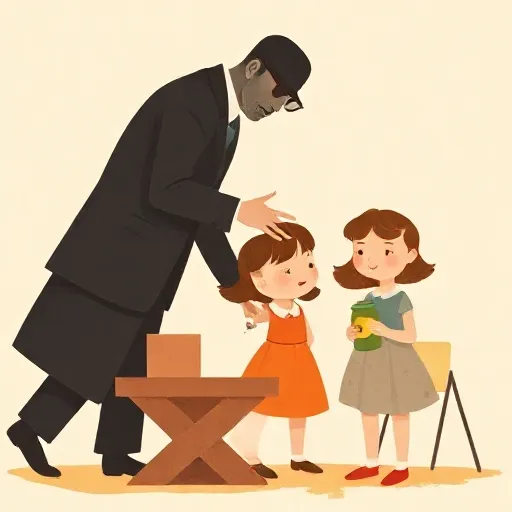
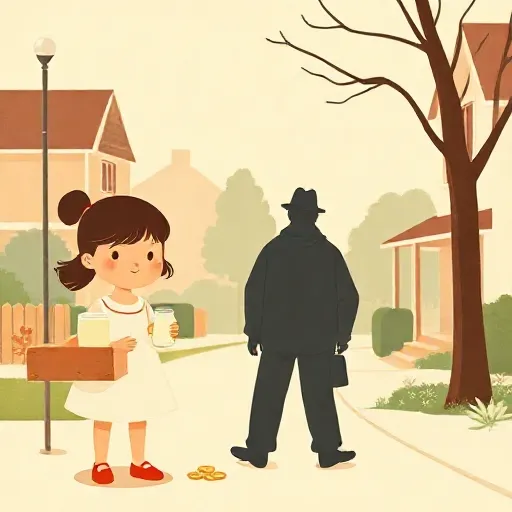
Imagine you set up a lemonade stand on a hot summer day. You squeeze the lemons, stir in the sugar, and pour cup after cup. By the end of the afternoon, you have earned ten pounds in coins. You are about to stash the jar in your room when a neighbour walks up and says, “Half of that belongs to the government — it has to go to someone who needs it more than you do.” Would that feel unfair? Or would it be the right thing to do?
In 1974, the philosopher Robert Nozick (1938–2002) published a book that asked a very similar question. Anarchy, State, and Utopia challenged the idea that a just society can force people to share their earnings with others. Nozick’s answer turned on a single, powerful claim: self-ownership. You own yourself. Your body, your time, and your labour are yours in exactly the same way your bike or your diary is yours. From this starting point, Nozick built a whole theory of justice that many people still argue about today.
The Magic of Saying “Yes” or “No”
Self-ownership means that each person has an extremely strong set of rights over their own body and mind — the same kinds of rights you have over the things you own as private property. Those rights include the freedom to use your body as you choose, the power to stop others from using it without your permission, the ability to sell or give away your rights (for example, by agreeing to work for someone), and the right to be protected if someone tries to take those rights away.
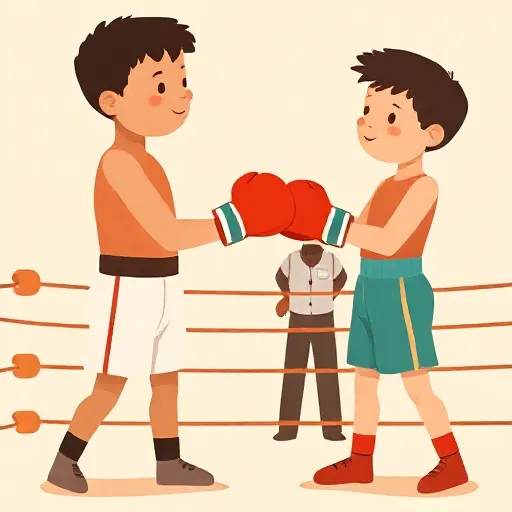
Why is this idea attractive? Think about the difference between a fight and a boxing match. In a street fight, someone hits you against your will — that is assault. But if you and another boxer put on gloves, step into a ring, and agree to the rules, the same punches become a sport. Your consent changes everything. Philosophers call this the “moral magic of consent.” Self-ownership explains the magic: your body belongs to you, so what is done to it is wrong unless you say it is okay.
This principle also explains why slavery is wrong (it treats a whole person as someone else’s property) and why you, not the state, get to decide what to do with your own body. In many everyday situations, self-ownership feels like common sense.
But self-ownership also rules out some things that many people think justice requires. If you truly own yourself, no one can force you to help another person — even if that person is in desperate need. You might choose to help, but being forced to do so would be a violation of your ownership rights. For the government to threaten you with a fine or prison unless you assist someone else would be to take control of your body and your actions without your consent. This is a line that self-ownership does not let anyone cross.
When Helping Means Forcing
Nozick took this line of thought directly to the question of taxes. When the government taxes the money you earn from your job, it is taking part of what your labour produced. But if you own your own labour, then forcing you to work for a purpose you did not freely choose is, Nozick argued, morally the same as forced labour. He knew this was a strong claim. But he wanted to show that theories of economic justice face a hard choice.
On one side, you can treat people as the owners of their own lives. That means letting them work for whomever they want, on whatever terms they agree to, and decide for themselves what to do with the fruits of their work. If you do that, Nozick said, you cannot also demand that the overall distribution of money and goods in society match a particular pattern — for example, that everyone end up with roughly the same amount. People’s free choices will constantly upset any pattern. To keep the pattern, the government would have to interfere all the time, blocking people’s voluntary trades, gifts, and jobs. On the other side, you can try to enforce a pattern. But that, Nozick argued, means claiming the right to redirect people’s work and take what they innocently produce — treating their lives as if they were partly owned by the community. For anyone who believes in self-ownership, the second option is unacceptable.
Nozick also pointed out that giving people things is pointless if you then forbid them from using those things as they see fit. The whole reason we want people to have money and property is so they can improve their lives through their own choices, including trading with others. A theory that takes back what people earn through those choices undermines the very point of giving them anything.
How a Wilderness Becomes Yours
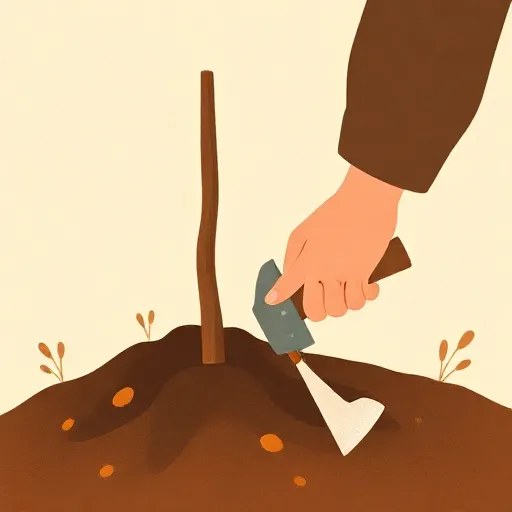
If you own your labour, you might think you automatically own whatever you make with it. But where do property rights over things come from in the first place? For Nozick and many libertarians, this is a historical question. You own something justly if you acquired it in a rights‑respecting way — either by making it from unowned materials, or by receiving it as a gift or in a fair trade from someone who owned it before you.
The most famous story of original acquisition comes from John Locke (1632–1704). Locke argued that when you work on something that belongs to nobody — like picking an apple from a wild tree or clearing a patch of forest — you mix your self-owned labour with it, and it becomes your private property. But critics have spotted problems. Labour is an activity, not a thing you can literally stir into an apple. Nozick himself joked that if you pour a can of tomato juice you own into the ocean, you lose your juice — you do not gain an ocean. And if you work on something that is already owned by someone else, you usually just give away your labour.
Some philosophers defend a labour-based view by saying that when you work, you literally transfer your energy into an object. Others argue that property rights are justified not because of any mixing, but because systems of private property help people cooperate, avoid waste, and create more wealth — and that original acquisition is just part of a framework that makes that possible.
A deeper challenge comes from thinkers influenced by Immanuel Kant (1724–1804). These neo-Kantians argue that property rights cannot really exist without a state. In a state of nature, they say, there would be endless disputes about boundaries and no impartial judge to settle them. Worse, one person claiming ownership over a piece of land would be imposing her will on everyone else without their consent — something that cannot be right among equals. On this view, property rights are created by a public legal system, not by individual acts. That means the government is not violating pre‑existing rights when it taxes property; it is the very source of those rights.
Should the Earth Be Split Equally?
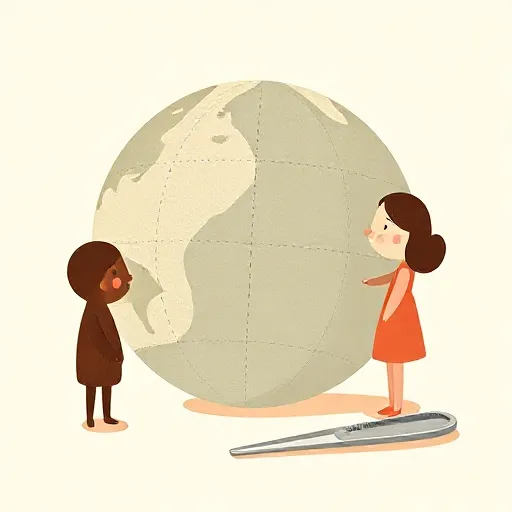
Locke also said that when you take something from the common store of nature, you must leave “enough and as good” for others. Libertarians disagree fiercely about what this Lockean proviso really means.
Right-libertarians — those who do not demand equal ownership of the external world — interpret the proviso in different ways. Some think it means you cannot make others worse off than they were before you took the resource. Others think it only requires that everyone have access to enough to exercise their self-ownership: a place to stand, a chance to work. At the far end, some libertarians argue there is no quantitative limit at all — as long as you genuinely use an unowned resource, you may acquire it.
Left-libertarians take a very different view. Philosophers like Hillel Steiner (b. 1942), Peter Vallentyne (b. 1952), and Michael Otsuka (b. 1961) argue that self-ownership itself requires an egalitarian distribution of the natural world. If everyone owns themselves equally, but one person could claim all the land, the others would have nowhere to exist — and no real self-ownership at all. Because land, air, and minerals are not produced by anyone’s labour, their value belongs to everyone equally. Therefore, anyone who privately owns more than their equal share of natural resources must pay a tax to compensate those who own less. This tax could fund something like a universal basic income, giving everyone a secure share of the world’s value.
This debate is still very much alive. It turns on deep questions: Does a latecomer to an island have a right to half the land if someone else arrived earlier and cultivated it, leaving plenty for the newcomer? Does ownership of yourself really demand equal ownership of the earth? Both sides can appeal to powerful intuitions, and neither has a knock‑down argument.
Can a Tiny State Be Fair?
Nozick himself was not an anarchist, even though his theory starts from the radical idea that no person or group may force you to do anything without your consent. He tried to show that a state — a very limited one — could arise without violating anyone’s rights.
Imagine a world of many private protective associations, like insurance companies that also run courts and police. Each person voluntarily joins one and pays fees. Over time, Nozick argued, one association would come to dominate a territory, because everyone would want to be in the same network to have peaceful, predictable dealings. This dominant association would then be in a position to ban new competitors, turning its de facto monopoly into a legally enforced one. As long as it provided protection to everyone — even non‑members — and did nothing else, it would be a minimal state that had emerged justly. No taxes for roads, schools, or hospitals — only for the protection of rights.
This “invisible hand” argument is clever, but many libertarians — especially anarchists — reject it. They argue that even a de facto monopoly has no right to forbid others from offering competing protection services. And if no one is forced to pay, the state is really just a big private agency, not a legitimate government that can make laws binding everyone.
Other critics say that even if the argument works, it does not give us a public authority — only one more private power, like a feudal lord. And even if a minimal state can begin justly, nothing guarantees it will stay small. Once it has a monopoly on force, it might keep growing, taking on more and more tasks and taxes.
Still, many libertarians think the minimal state is the only morally permissible government. What this state would actually look like — how large its courts and police forces would need to be, and whether it would require democratic checks to stop it from becoming tyrannical — is a live question. Even a state limited to protecting rights might, in a complex modern society, turn out to be surprisingly big. But libertarians insist that its only job should be that one: acting as a referee, never as a player.
Why the Jar of Coins Still Matters
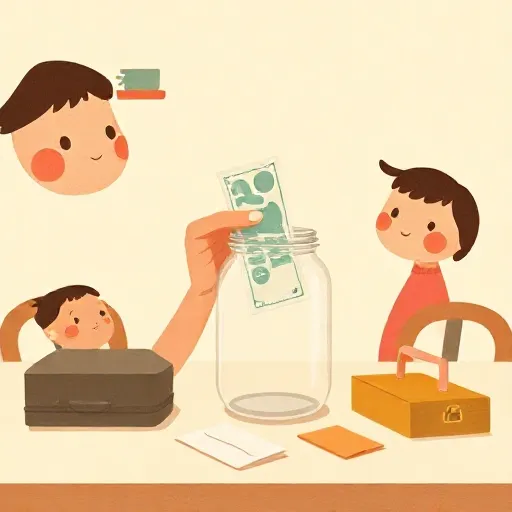
Nozick’s question about your lemonade earnings is not just a story from the 1970s. It is the same question you face whenever a government decides to tax income, or fund schools, or pay for healthcare. In every election, citizens argue about how much of what people earn should be taken and redistributed — and whether those choices respect the fact that each person is a separate individual, with a life to lead and choices to make.
Libertarians do not all agree. Some think justice requires a completely free market with minimal taxation. Others think that because the natural world belongs to everyone equally, a tax on land or natural resources is required. Still others think that while self-ownership is a key part of justice, it must be balanced against other values, or that property rights can be split so that you control what you own but society shares in the income it generates.
What these debates share is an insistence on taking seriously the idea that you belong to you. Before anyone can take a pound from your jar of coins, they need a very good reason — one that does not treat your life and your labour as a resource to be used for other people’s ends. Whether you end up thinking that reason exists or not, the argument is one worth having.
Think about it
- If your parents give you pocket money, do they have the right to force you to spend some of it on a gift for a sibling? What is different — if anything — when a government does the same thing with taxes?
- Imagine a world where no one could own land privately unless everyone had an equal share. Would that world be more fair, or would it make it harder for people to improve their lives through their own work?
- If a minimal state only protects your rights, it won’t pay for schools or parks. Could you and your neighbours organise those things without the government? What might get in the way?