Are You the True Author of Your Own Choices?
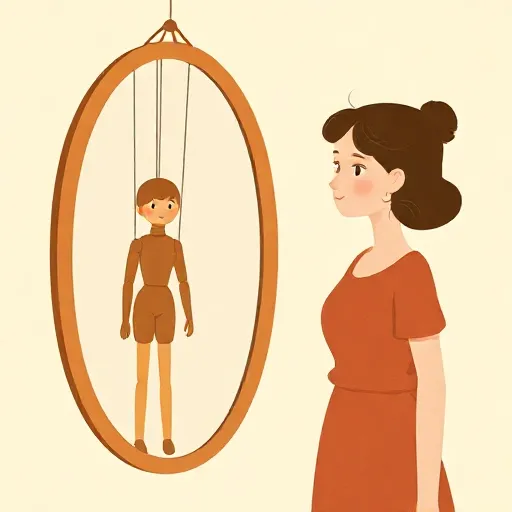
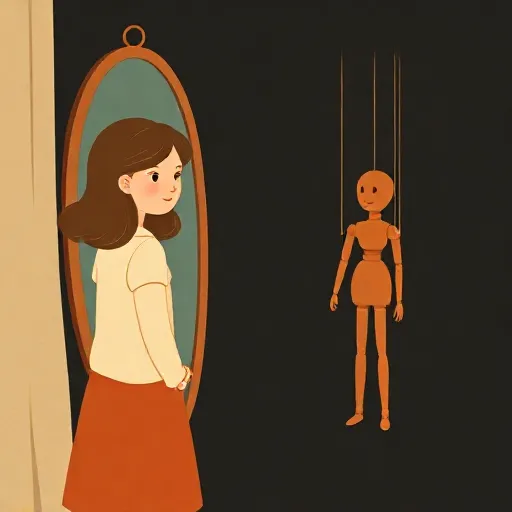
Are You Really the One Choosing?

It’s Saturday morning. You stand in front of your closet, eyeing a blue sweater and a red hoodie. You pick the hoodie. It feels completely free — your choice, made in a split second. But could you have picked the sweater instead? Or was that decision already shaped by everything you’ve ever experienced, your brain’s wiring, even the ads you saw last week?
Philosophers call this puzzle autonomy, from a Greek word meaning “self-rule.” To be autonomous is to govern yourself — to act on motives, values, and desires that are genuinely yours, not just pushed onto you by outside forces. In the Western tradition, treating autonomy as a central moral and political value is a fairly modern idea that grew out of a humanist shift toward putting the individual at the center.
Today, autonomy does heavy lifting in debates about moral responsibility, the limits of government power, medical consent, and even how we educate children. But the deeper you dig, the trickier it gets. What exactly makes a desire mine? And can I really be the author of my choices if I’m shaped by forces I never chose?
Philosophers distinguish personal autonomy — governing your own life in general — from moral autonomy, the special capacity to impose moral laws on yourself (a view we’ll meet in Kant). They also separate basic autonomy from ideal autonomy. Basic autonomy is the minimal status most adults have: being responsible for yourself, able to make your own decisions, and not completely controlled by others. Ideal autonomy is a high bar — being fully authentic and free of any distorting influences, a goal very few if any reach. Basic autonomy must be broad enough that most adults count, because it’s tied to things like the right to be free from meddling by others who think they know better.
What Makes a Desire Truly Yours?

If self-rule is the goal, two ingredients are usually required: competency and authenticity. Competency means you have the rational abilities to think clearly, control impulses, and avoid self-deception. Authenticity means the desires that move you to act are genuinely your own, not planted or forced on you.
The philosopher Harry Frankfurt (born 1929) gave a famous account of authenticity. He said autonomy requires second-order volitions — you not only have desires, but you reflect on them and want a particular desire to actually move you. You must wholeheartedly endorse that desire as your will. For instance, you might crave a second slice of cake but also want your desire for health to win out. If you wholeheartedly throw your weight behind the healthy desire, you’re acting autonomously.
Critics quickly spotted problems. “Identifying” with a desire is slippery. You can identify with an addiction simply by acknowledging it’s part of you, but that doesn’t make you autonomous. Or you might approve of a trait but still feel alienated from it — like a habit you wish you didn’t have. Also, if second-order desires themselves need testing, you could slide into an endless spiral of ever-higher reflections, never finding solid ground.
This debate splits into two broad camps. Procedural views say autonomy only requires that your internal process of reflection is free from certain distortions — the procedure matters, not the content of your final choice. Substantive views add that you must also be free from external domination when forming your desires; otherwise you cannot count as autonomous. For example, imagine a person raised in a strict community who freely chooses to obey all its rules, including rules that treat her as inferior. She reflects and endorses that life. On a purely procedural account, she might look autonomous. Critics insist that’s a mistake — the social pressures have warped her sense of what’s possible, so she lacks true autonomy. This disagreement echoes throughout the rest of the story.
Kant’s Big Idea: You Give Yourself the Law

Immanuel Kant (1724–1804) put moral autonomy at the very center of ethics. For Kant, you aren’t just pushed about by desires or orders; you can give yourself the moral law. That capacity is what makes you truly free. And it’s also what demands respect — from others and from yourself. He captured this in his famous Categorical Imperative: act only on principles that you could will to become a universal law for everyone.
The contemporary Kantian Christine Korsgaard (born 1952) develops this idea. She says we each have various “practical identities” — as a student, a friend, a citizen — that give us reasons to act. The most fundamental identity, being a member of what Kant called a “kingdom of ends,” grounds universal moral duties. Autonomy, for Korsgaard, is the source of all our obligations, moral and non-moral alike.
But these views face pushback. One charge is that they picture moral agents as cold calculators, leaving emotion out. Parents don’t just do the right thing; they act with love and care. If autonomy is reduced to pure cognitive reflection, it misses a huge part of what makes us moral beings. A deeper worry: if moral law is supposed to be self-imposed through reflection, whose reflection counts? The actual, sometimes confused reflection you manage on a Tuesday afternoon, or the reflection of an idealized, perfectly reasonable version of you? If it’s the latter, morality may not be truly self-imposed after all — it might just be a set of objective truths dressed up in autonomy’s clothing.
When Should Others Step In? Autonomy and Paternalism

John Stuart Mill (1806–1873) thought autonomy was a key ingredient in a flourishing life. He argued we should generally let people make their own choices, even bad ones. But what if someone uses autonomy to seriously harm herself? And since people vary in their ability to reason well, can we ever step in for their own good?
This is paternalism — interfering with a person’s choices against her will in order to promote her own best interests. Respect for autonomy is meant to block such interference. If you’re autonomous, it’s your life to lead, even if others think you’re making a mistake. Yet if autonomy comes in degrees, maybe some people are less autonomous and therefore more open to justified interference. The philosopher Sarah Conly argues that because humans systematically make reasoning errors — biases we know about from psychology — some softer forms of paternalism (like mandatory seatbelt laws) can be justified without treating people like children.
But where do you draw the line? If basic autonomy sets a threshold, most adults clear it and deserve to be left alone, even when they stumble. The moment we start judging which choices are “too irrational” to respect, we risk imposing our own values on others. That tension between protecting people and respecting their self-rule runs through medical ethics, law, and everyday life.
Shaped by Others: Can You Still Be Free?

Critics have long charged that autonomy, as usually described, is too individualistic. We are deeply enmeshed in relationships, cultures, and social structures. Our very identity is shaped by these ties. The philosopher Charles Taylor (born 1931) notes that we cannot step completely outside our culture to judge it, because even the language we use to think is a social product. So can we ever be truly autonomous in the sense of standing apart from every influence?
Feminist and communitarian thinkers sharpened this worry. They pointed out that a person trapped in an oppressive environment might reflect on her situation and endorse it — say, believing she is naturally suited to serve others. Calling her autonomous felt wrong. In response, some philosophers developed relational autonomy. On this view, autonomy isn’t a solo inner trait; it unfolds within and through relationships. It requires social support, recognition, and self-trust — the confidence that you can make sense of your own values and act on them.
If society constantly tells you that you’re worthless, that can corrode self-trust and undermine your ability to govern yourself. Yet history offers a puzzle: enslaved people who escaped, against all odds, often displayed fierce self-trust and a burning autonomy, even when the world around them denied their very humanity. So the exact role of social relations remains hotly disputed. Should autonomy merely require a clean internal process, or must it include objective standards, like the ability to recognize your own equal worth? This question — procedural versus substantive autonomy — is still very much alive.
Why Autonomy Matters for a Fair World

Autonomy isn’t just private psychology; it’s a cornerstone of political legitimacy. In the liberal tradition, laws and political power are justified only if all citizens bound by them can, in principle, freely accept those laws. That requires people to be autonomous enough to reflect, endorse, or reject the principles that govern their lives.
The philosopher John Rawls (1921–2002) called this picture political liberalism. In a world of deep moral disagreement, we can still arrive at a fair “overlapping consensus” on basic rules — but only if citizens are capable of free, reflective endorsement. If some groups are systematically denied the education, security, or social standing needed to develop that reflective capacity, then the whole system’s fairness is undermined. Autonomy, then, isn’t a luxury; it’s the hidden engine of a just society.
Democracy itself depends on citizens who can think for themselves and take part in genuine public debate. Without a widespread ability to question, reflect, and speak from what feels authentically one’s own, collective decisions lose their moral footing. So the next time you pick an outfit, you might just be pulling a hoodie off a hanger. But in that tiny moment, you’re already brushing against one of philosophy’s biggest questions: are you the true author of your choices, or are you being written by forces you never signed up for? The jury is still out. But asking the question — honestly, reflectively — is itself a small act of autonomy.
Think about it
- If a scientist could perfectly predict every choice you’ll ever make, would it still make sense to praise or blame people for what they do?
- Think of a time you made a choice just to fit in. Did that choice feel fully yours? What would have to change for it to be truly autonomous?
- Suppose a law limited the amount of sugar in snacks to protect people from unhealthy habits. Would that be a fair restriction on autonomy, or an insult to people’s ability to govern their own lives?