Who Gets to Make the Rules for the Whole Planet?
A Decision That Affects You, But You Can’t Vote
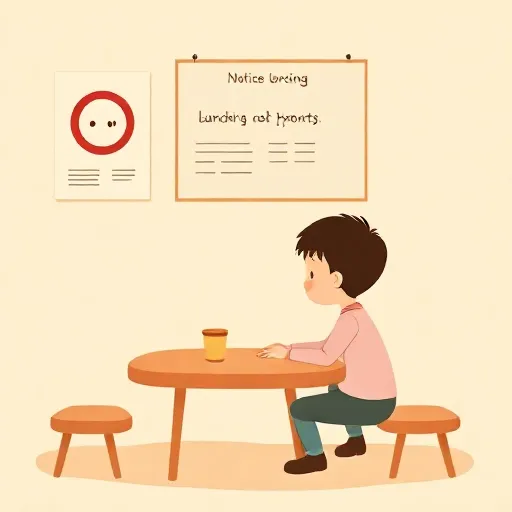
Imagine your school announces a new rule: no phones during lunch. You and your friends are upset—it feels unfair. But then you learn the rule was set by a distant school board. You never voted for any of its members. You had no say.
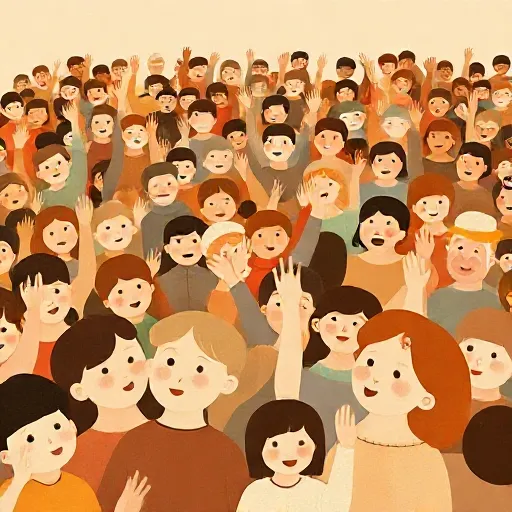
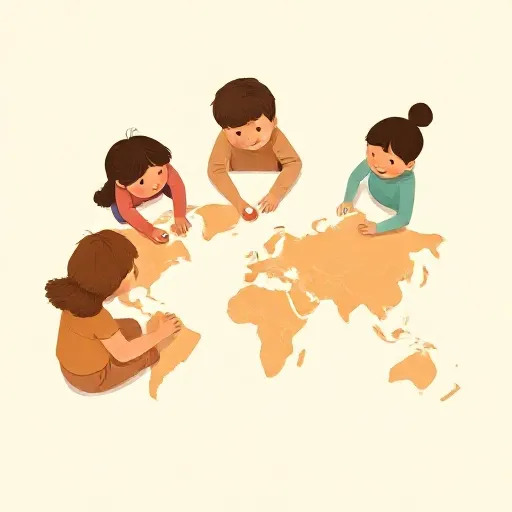
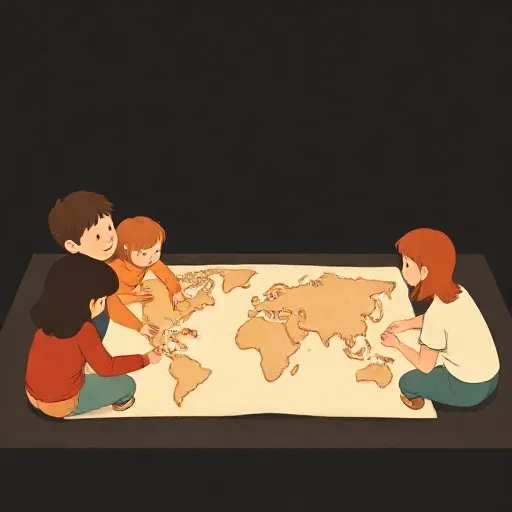
Now stretch that feeling across the whole planet. Many decisions that shape your life—climate policies, internet rules, food safety—are made by global organizations far away. Yet you cannot vote for anyone in those organizations. This is the puzzle of global democracy.
For centuries, democracy meant rule by the people (from the Greek demos, people, and kratos, power). In a democracy, the people who must live with the rules get an equal chance to make them.
Until recently, almost everyone assumed that democracy belonged inside a single country—a nation-state. A nation-state is a country with a government that controls a territory and its citizens. Citizens vote for leaders who write the nation’s laws. But globalization changed everything. Globalization is the rapid increase of cross-border flows of goods, people, money, and ideas. It connects the world tightly. Yet it also means that decisions affecting you leak out of your country’s control. International organizations set rules about trade, health, and security. National governments have to follow them, even if their own citizens never voted on those rules.
The Global Democratic Deficit: Too Far to Reach
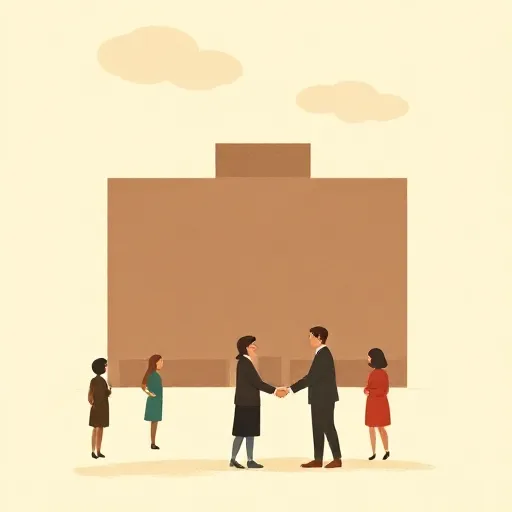
The gap between the people who must follow global rules and the institutions that make them is called the global democratic deficit. Philosopher David Held (1951–2019) and others noticed that as globalization grew, more power moved to transnational bodies. The World Trade Organization (WTO), the International Monetary Fund (IMF), and many regulatory networks now shape your food, your online privacy, and your environment. Yet ordinary citizens have no direct vote there.
At best, you vote for your national government, which may send a representative to an international meeting. But that link is weak. National leaders cannot fully control what international organizations do. Many global rules are made by private groups or informal networks where states have little say.
This deficit also forces us to rethink a basic question: who are “the people”? Democracy needs a demos—a group who get to participate. In a nation-state, the demos is simply all adult citizens. But when rules cross borders, who should be included? This is the boundary problem.
Robert Goodin (born 1959) described two main answers. The first says: everyone who is subjected to a rule must have a say. If a global trade rule applies to your country, you should get a vote. The second says: everyone who is significantly affected by a decision should have a say. That is much broader. A country not a member of the WTO is not subjected to its rules, but its farmers are still affected by world trade prices that the WTO shapes. Should those farmers have a voice?
Philosophers disagree. The choice between “subjected” and “affected” would draw very different lines around the demos. So the boundary problem remains an open puzzle.
Even if we could solve it, you might wonder: why bother making the world democratic at all? One answer is cosmopolitanism—the moral view that every person on Earth matters equally and should have an equal chance to govern shared affairs. Another answer is practical. Research suggests that when people have a voice in making rules, they accept them more, and the rules tend to be smarter because more perspectives are included.
Three Blueprints for a Global Democracy
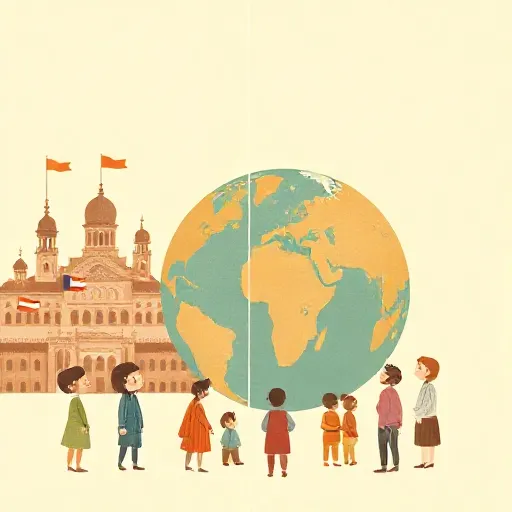
Philosophers have imagined several ways to close the democratic deficit. Here are three leading models.
Intergovernmental Democracy
In this view, world politics is democratic as long as each country is internally democratic. You vote for your national government, and that government represents you in global affairs. The German philosopher Immanuel Kant (1724–1804) proposed a “federation of free states” that would cooperate peacefully while each stays sovereign. John Rawls (1921–2002) added that liberal peoples could agree on basic international laws that protect rights and tolerance. The hope is that democratic states will keep international organizations in check.
The problem? Only about half the world’s nations are democracies, so billions have no democratic link. Even in democracies, international agencies often slip out of government control. And private bodies, like global tech companies setting standards, operate entirely beyond national reach.
Cosmopolitan Democracy
This model says we should copy democratic institutions at the global level. David Held and Daniele Archibugi (born 1958) argue for a directly elected global parliament, international courts, and a world constitution that protects human rights. Just as you vote for your national parliament, you would vote for a global one. This would give every person an equal voice in global laws and create bodies strong enough to tackle climate change.
Critics say this is unrealistic: powerful states are unlikely to give up their influence. Others warn that it assumes Western-style elections are the only right form of democracy, ignoring other traditions of collective decision-making.
World Government
Some thinkers go further. They call for a single world state with a central government, a global constitution, and laws that bind everyone directly. Luis Cabrera (born 1970) argues that a federal world government would give everyone an equal vote and could redistribute resources fairly. Torbjörn Tännsjö (born 1946) contends that only a world state can prevent war and ecological collapse.
Yet many fear a world government could turn into a dictatorship. With billions of citizens, one vote might feel meaningless. And getting there seems nearly impossible without a world war or catastrophic crisis to force countries to unite.
A Newer Approach: Democracy as a Work in Progress
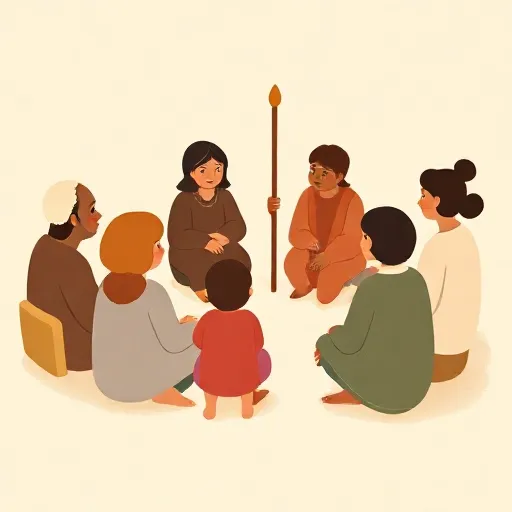
Recently, some scholars have stepped back from grand blueprints. They suggest we stop hunting for one perfect model and instead look for values of democratization—principles like inclusion, transparency, accountability, and deliberation that can be pushed for step by step.
John Dryzek (born 1953) argues that democracy doesn’t need to look exactly alike everywhere. It grows through conversations that let different voices be heard. Kate Macdonald (born 1971) urges us to “democratize” specific areas, like making supply chains fairer by giving workers and communities a say in the rules that govern them. This approach treats global democracy as a process, not an endpoint. It focuses on making existing institutions more open to those they affect.
Even this idea has critics. Without a clear destination, it is hard to know if we are moving forward or just tinkering at the edges. Conflicting values—like efficiency versus participation—can clash, and there is no rulebook to settle the dispute. Still, the process approach meets messy global politics where it is, rather than demanding a perfect world first.
Why This Matters for You
Global democracy might sound like a puzzle for presidents and diplomats. But it touches you right now. The phone in your pocket depends on minerals mined in one country, assembled in another, and sold under trade rules set in Geneva. The climate you will grow up with is shaped by agreements negotiated between governments and influenced by protests and campaigns that ordinary people join.
Every time you care about fairness—who gets to decide the rules of a game, who is left out—you are asking the same boundary problem that philosophers debate about the world. The big questions boil down to a simple challenge: How can we make sure everyone affected by a decision gets a real voice?
Whether in your classroom, your online community, or your family, that challenge never goes away. The models and values philosophers discuss are different answers to the same deep demand: power should be answerable to the people whose lives it shapes. You may not have a vote in the WTO today, but by paying attention, asking questions, and insisting that more voices be heard, you become part of the long, unfinished project of building a fairer world.
Think about it
- If your class is making a rule about what games to play at recess, should kids from other classes who sometimes join in also get a vote? Why or why not?
- Can a group decision be fair if some people who will be affected never even know about it? What would it take to make it fair?
- Imagine a global parliament where every person on Earth gets one vote. Would your voice feel powerful or tiny? Would that matter for whether the system is truly democratic?