Is Democracy Really the Best Way to Decide?
A Pizza Problem: How Does a Group Decide?
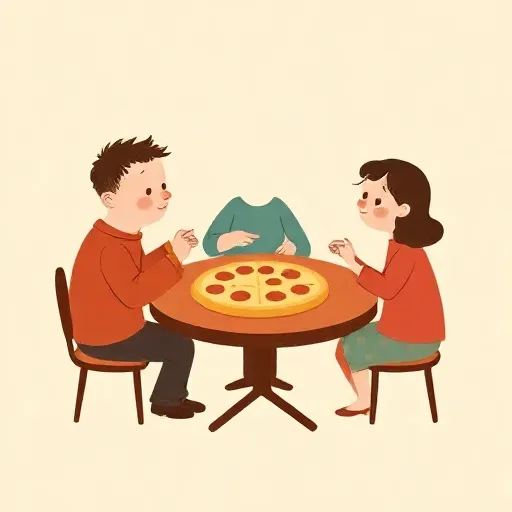
You and your friends want to order pizza. You want pepperoni, someone else insists on mushrooms, a third demands pineapple. After heated talk, someone says, “Let’s vote — majority wins.” That simple rule is a form of democracy, a way of making decisions for a group where everyone has a roughly equal say at a key moment. It doesn’t have to be pizza; families, sports clubs, and entire countries all use democratic methods.
Philosophers use the term democracy for any collective decision process built on a kind of equality among the people involved. The decision could be binding on everyone, like a law or a rule, or it could just be a choice the group makes. Democracy can be direct — citizens vote on every policy — or representative — they elect leaders to decide for them. And calling something democratic doesn’t automatically make it good; a vote can be unfair or produce a terrible outcome. The big question is when and why we should want this method at all.
For centuries, thinkers have split into two main camps. Some justify democracy by the results it produces — the instrumental view. Others say democracy is valuable in itself, because of the way it treats people — the non‑instrumental view. Both sides use sharp arguments, and the fight is far from over. To see why, let’s step into those arguments.
Does Democracy Produce Better Results?
If you had to hand power to one person, would you pick a randomly chosen neighbor or a trained expert? Many defenders of democracy say the crowd, messy as it is, can actually produce better laws and policies. The early utilitarian John Stuart Mill (1806–1873) argued that when every person has a share of political power, decision‑makers are forced to pay attention to far more interests. Evidence backs this up: economist Amartya Sen (born 1933) noted that no major famine has ever happened in an independent country with free elections and a free press. Starving people make demands, and democratic politicians have to respond to stay in office.
There’s also an astonishing mathematical idea. The Marquis de Condorcet (1743–1794) proved his Jury Theorem: if every voter is even slightly more likely to choose a correct answer than a wrong one, and they vote sincerely and independently, then a majority of a large group is almost certain to be right. With just 10,000 voters who are each 51% reliable, the chance the majority picks the correct choice leaps to over 99.9%. The catch? Real voters are not independent — they talk to each other, share biases, and often live in information bubbles. Still, mathematics shows that under the right conditions, sheer numbers can be startlingly smart.
Another type of instrumental argument focuses on cognitive diversity. Thinkers from Aristotle (384–322 BCE) to Hélène Landemore (born 1970) have argued that a large group with different life experiences can solve problems better than even the best experts working alone. A group of farmers, nurses, engineers, and baristas each see a sliver of reality that a narrow elite might miss. On top of that, some say participating in democracy improves people’s character — making them more independent, thoughtful, and attuned to the common good.
But critics push back hard. Plato (c. 428–348 BCE) insisted that ruling is a skill, like medicine, and you wouldn’t let a crowd operate on you. He proposed that society be run by philosopher‑kings — morally wise experts. Thomas Hobbes (1588–1679) feared that democracy breeds endless quarreling because nobody feels responsible for the outcome and politicians win by making wild promises. Modern skeptics add that many voters are woefully uninformed and use motivated reasoning that protects their existing identity rather than seeking truth. So the instrumental case remains a live battlefield.
But Isn’t Democracy Just Fairer?

Some philosophers say democracy isn’t only about results — it’s about treating people with equal respect. One version holds that each person ought to be master of his or her own life. Since laws shape your environment deeply, having an equal voice in making those laws is an expression of self‑government (the philosopher Carol Gould defends this line). Yet a sharp problem pokes through: what if you lose the vote? If the majority passes a law you hate, you are still being ruled by others, not yourself. True self‑government seems to require everyone to agree — and on big issues, that almost never happens.
Another powerful idea sees democracy as a fair compromise when people disagree. Peter Singer (born 1946) put it this way: if two people each demand to be dictator over their shared life, they can’t both have their way. Democracy offers each an equal say, so nobody’s claim trumps anyone else’s simply by force. It’s a way of recognizing that every person’s point of view matters equally when we have to decide together.
A broader version is the ideal of public justification, championed by John Rawls (1921–2002) and Jürgen Habermas (born 1929). Laws and policies, they argue, are legitimate only when they can be justified to every reasonable citizen through free and equal discussion. Democracy sets up a public square where reasons, not threats, do the work. Yet deep disagreements often remain even after we talk. If you still think a law is deeply unjust, it’s not obvious why being outvoted treats you as an equal. Supporters reply that democracy isn’t perfect equality — it’s public equality, a way we can see everyone counts, even when we can’t agree on everything. The debate here is far from settled.
The Messy Reality: Voters Aren’t Experts
Even if democracy sounds nice in theory, a huge practical challenge lurks: most citizens don’t know much about the details of politics — and some say it’s rational not to. Your single vote is extraordinarily unlikely to change an election outcome (some estimates put it at one in 100 million for a U.S. presidential race). So why invest the heavy time needed to become deeply informed? This “problem of participation” was already seen by Plato and Hobbes, and it still drives debates today.
One response has been the elite theory of democracy, most famously advanced by economist Joseph Schumpeter (1883–1950). He thought ordinary people should not try to govern; they should simply vote occasionally to accept or reject rival teams of leaders. The elites actually run things, and mostly that’s fine as long as voters can “throw the bums out” when things go really wrong. A rival picture, interest group pluralism (championed by Robert Dahl, 1915–2014), suggests people join groups — unions, business associations, environmental clubs — that push for their narrow interests. Policy emerges from bargaining among these groups, not from a mythical popular will.
A less cynical answer points to a division of democratic labor. Citizens can set broad goals — dignity, safety, fairness — while experts figure out the details. People rely on “cognitive shortcuts”: they trust news sources, party labels, and conversations with friends to guide them without needing a PhD in policy. But information isn’t distributed equally; a lawyer learns far more free political information through work than a cashier might. So the ideal of equal power over decisions runs into real‑world hurdles. The question isn’t whether democracy is worthless, but how to build institutions that close these gaps.
When the Majority Always Wins — and Voting Loops
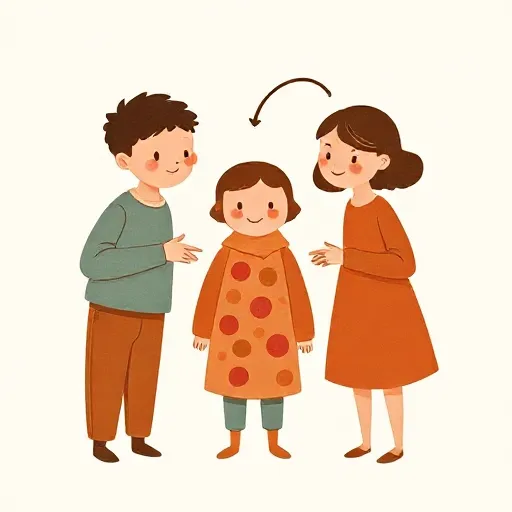
Democracy isn’t just about ignorance; it has structural puzzles too. Imagine a society with a persistent minority — a group that loses every single vote. Even if the majority treats them gently, never being able to shape the world can feel profoundly oppressive. Indigenous peoples inside larger democracies have often faced exactly this. If democracy is supposed to express public equality, a permanent minority that is always on the losing side seems to contradict that very ideal. This is why some argue that democratic authority has limits: a vote that strips a group of its equal standing isn’t truly democratic.
Even the pure mechanics of voting can produce bizarre results. The Condorcet paradox, discovered by the same Marquis who gave us the Jury Theorem, reveals that majority rule can spin in a circle. Suppose three friends — Ava, Ben, and Cam — rank three pizza toppings. Ava loves pepperoni, then mushroom, then olive. Ben loves mushroom, then olive, then pepperoni. Cam loves olive, then pepperoni, then mushroom. A majority prefers pepperoni over mushroom, mushroom over olive… but also olive over pepperoni. There’s no winner — just an endless loop. The economist Kenneth Arrow (1921–2017) later proved that no voting system can satisfy all basic fairness rules when there are three or more options, a result called the impossibility theorem.
These mysteries don’t mean democracy is a sham. But they caution us. Procedures we thought were neutral can be gamed, and majorities can accidentally silence minorities without even trying to. That pushes democracies to design extra protections: bills of rights, independent courts, and voting systems that give a voice to groups that might otherwise be drowned out.
Why This Fight Matters to You
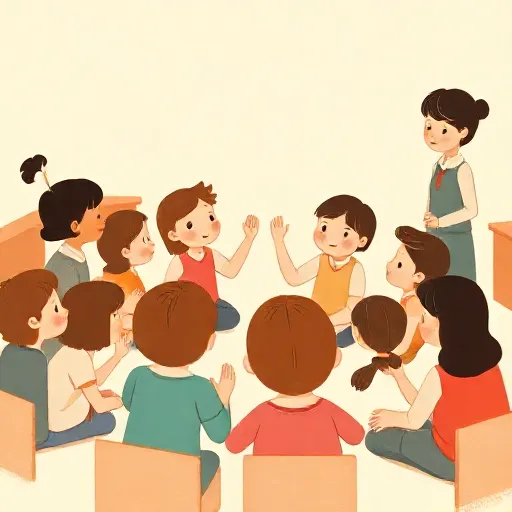
You already live these arguments. Student council elections, a vote on a class trip, a family deciding movie night — every time a group tries to decide fairly, you’re brushing against the same questions that confound philosophers. Should the loudest person get more say? Is a vote fair even when you lose? If only a few kids do all the research, does the outcome still count as everyone’s choice?
And there’s an even bigger puzzle: who gets to be part of “everyone”? If a factory in one country pollutes the air of another, shouldn’t the affected people have a vote? Yet if we include everyone who might be affected by a decision, the voter pool becomes impossibly large. This “boundary problem” has no tidy solution, but it’s urgent in a world where decisions spill across borders.
The fight between instrumental and non‑instrumental justifications, the challenges of ignorance and looping votes, the struggle to protect minorities — none of this ends with a final answer. Instead, it’s a living argument you inherit. The next time you’re in a group trying to decide something, you’re doing philosophy with your hands up. And that’s exactly why the question still matters.
Think about it
- If a vote in your class always goes the same way because one group is larger, would it still be fair to the smaller group? Why or why not?
- If a fair coin flip decided a school rule, would you trust that more than a majority vote? What makes them different?
- Can a decision be arrived at democratically yet still be wrong — and should you follow it anyway?