Why Bother Voting If Your Vote Never Decides the Election?
The Puzzle at the Polling Station
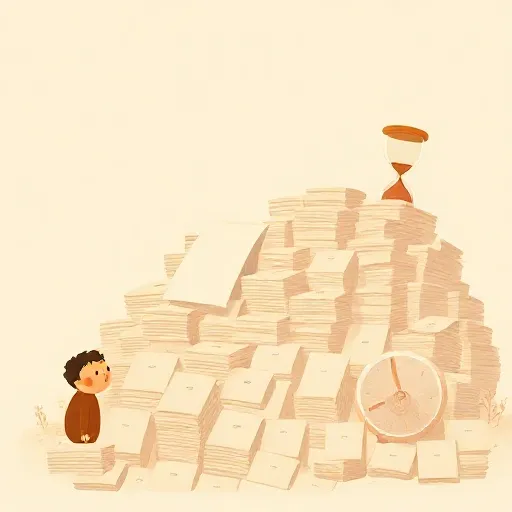
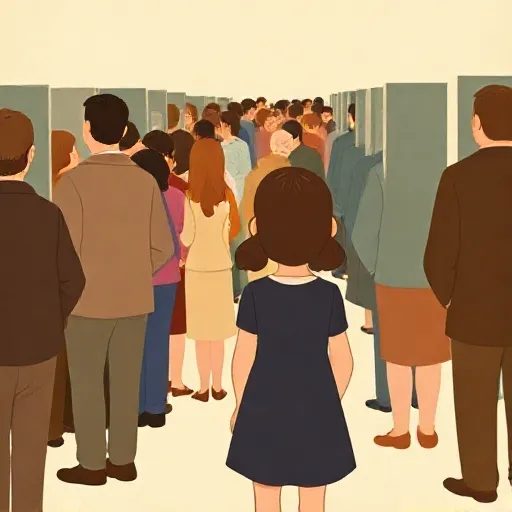
Imagine a woman named Sally. She stands in line at a local school gym, waiting to cast her vote. She is tired. She could be doing other things: finishing a work project, helping at a food bank, or just playing a video game with her friends. Sally spends an hour researching the candidates, driving to the station, and standing in line. That hour has a real cost — an opportunity cost — because it’s time she cannot spend on anything else.
But Sally goes ahead. She checks the box for Candidate D because she believes D would do a trillion dollars more good for the country than Candidate R. Yet deep down, Sally knows a troubling fact: the chance that her single vote will break a tie and actually decide the election is vanishingly small. In most elections, it’s much smaller than the chance of being struck by lightning on a clear day.
Economists call this the paradox of voting. The idea was made famous by Anthony Downs (born 1930) in 1957. If voting costs you time and effort, and your vote almost certainly won’t change who wins, why would any sensible person vote? The puzzle kicked off a long argument among philosophers, political scientists, and economists — and they still haven’t settled it.
Voting Like Buying a Lottery Ticket
Let’s start with the simplest goal: Sally wants to influence the election’s outcome. She hopes her vote will help Candidate D win. To figure out whether that’s rational, she can think like a gambler.
The expected value of her vote depends on three things. First, how much better Candidate D is than Candidate R, in terms of the good they would do (philosophers debate whether you can even put a dollar value on that). Second, the probability that Sally’s vote will be the one that breaks a tie, making her decisive. Third, the cost of voting — everything she gives up by spending time on it.
A useful analogy is a lottery. Suppose a lottery ticket costs $2, the jackpot is $200 million, but your chance of winning is one in 300 million. That’s a bad deal: the expected benefit is less than the cost. Voting works the same way. Sally’s expected benefit equals the value difference between the candidates multiplied by her tiny chance of casting the tying vote, minus her opportunity cost.
So how tiny is that chance? One approach uses a binomial model, treating voters like tossed coins. This model suggests that unless the election is literally tied, a single vote in a national election is worth far less than a millionth of a penny in expected benefit — practically never worth the time. Another approach, using statistical estimates from real elections (developed by economists Edlin, Gelman, and Kaplan), is slightly more optimistic. It finds that in very close “swing” states, a voter might have a one in ten million chance of breaking a tie. If the difference between candidates is huge, even that tiny chance might, just barely, make voting rational for voters in those special places. But for someone in a safe state like California, the chance is so small that it’s still a losing bet.
A philosopher named Aaron Barnett (20th–21st century) offers a different model, arguing the chance is higher — at least one divided by the number of voters — which would make voting rational in many more elections. But many others think his model paints too rosy a picture. And there’s a deeper worry: if your single vote can do a lot of good, it can also do a lot of harm. If voters are badly informed and back the wrong candidate, a vote that actually matters could make things worse. So the lottery ticket model cuts both ways.
Wearing Your Team’s Jersey: The Expressive Theory
If the instrumental story leaves you scratching your head, don’t worry. Many philosophers think voters aren’t really trying to change the outcome. The philosophers Geoffrey Brennan (1944–2022) and Loren Lomasky (born 1951) proposed the expressive theory of voting. On this view, voting is less like building a bridge and more like singing along at a concert.
When you wear a Metallica T‑shirt to a show or paint your face your team’s colors at a game, you don’t believe your cheers will swing the result. You’re expressing who you are and which side you’re on. Voting, the expressive theory says, works the same way. A voter might pull the lever for Candidate X to signal to herself and others that she is a compassionate person, a patriot, or a tough defender of her group. The act feels good because it confirms a social identity.
This theory fits uncomfortable facts about real voters. Studies repeatedly show that most citizens know shockingly little about basic political facts — yet they still vote. Many people also show strong intergroup bias: we irrationally favor our own group and dislike outsiders. If voting is about self-expression rather than steering government, then a person can afford to hold unrealistic or even harmful views and still vote with feeling, because her individual ballot won’t bring those views to life anyway. It’s like cheering for a war in a movie — it feels powerful, but it has no real consequences.
The expressive theory doesn’t say voting is good; it just tries to explain why so many people do it even when their vote seems powerless.
Is It a Duty? Three Arguments and a Big Obstacle
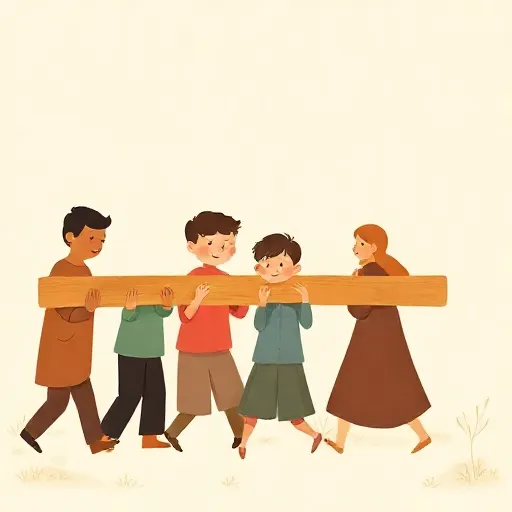
Maybe rationality isn’t the whole story. Surveys show that most people in democracies believe there is a moral duty to vote. They feel they owe it to their country or their community to show up, even if their favored candidate has no chance of winning. Philosophers have tried to back up that feeling with arguments.
The first is the Generalization Argument. It goes like this: “What if everyone stayed home and didn’t vote? The results would be disastrous! Therefore, I should vote.” This sounds compelling until you parodied it: “What if everyone stayed home and didn’t farm? We’d all starve! Therefore, I should become a farmer.” The problem is obvious. It’s important that enough people farm, but that doesn’t mean everyone must farm. Voting might be like that — we just need enough voters, not your ballot in particular.
A stronger version focuses on free riding. If you enjoy the benefits of a stable government but never help provide it — like walking on a newly planted lawn while everyone else walks around it — you seem to take advantage of others’ effort. Voters supply a public good (a functioning government), and non‑voters enjoy it without sharing the work. So perhaps fairness demands that you do your part.
Some philosophers offer a different logic. The complicity argument, defended by thinkers like David Beerbohm (20th–21st century), says that citizens are partly responsible for what their government does, because officials act in the citizens’ name. Even if you abstain, you remain a kind of author of the laws. Failing to oppose injustice at the polls could make you complicit in that injustice, like staying silent while a bully acts in your name.
All these arguments face a serious challenge called the particularity problem. Even if you accept that you have a duty to help your society, why must you vote? You could instead volunteer, donate to effective charities, write opinion pieces, or join a protest. Those actions might achieve more good than casting one nearly weightless ballot. Until a defender of the duty shows that voting is the required way — not just one nice option — the duty remains shaky.
How Should You Vote? Ethics Behind the Curtain
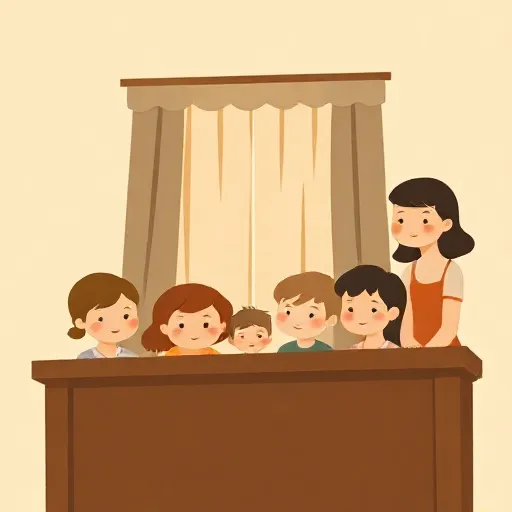
Suppose you decide to vote. Are there rules about how you should vote, not just that you must? Many philosophers say yes.
The expressive theory, again, offers one lens. If you cast a ballot for a racist or cruel candidate, what does that action say about you? Geoffrey Brennan and Loren Lomasky argued that to vote for the Ku Klux Klan’s candidate is to “identify oneself in a morally significant way with the racist policies that the organization espouses.” Even if your vote doesn’t change the result, the act of expression can be wrong — just as it’s wrong to shout a racial slur even if nobody is harmed.
Another approach focuses on epistemic duties — duties about knowledge and good thinking. Think about a doctor making a diagnosis or a juror deciding a verdict. They have to try hard to get the facts right and reason carefully, because other people’s lives hang on their decision. Similarly, when voters decide matters of war and peace, prosperity and poverty, they are making choices that bind everyone, including children, non‑voters, and people in other countries. That seems to require taking the time to become sufficiently informed and to vote in good faith.
But a worry pops up: individual doctors and jurors have a lot of power, so a single mistake can cause terrible harm. A single voter’s mistake almost never changes the outcome. So why does it matter if you vote badly?
A thought experiment called the clean‑hands principle offers an answer. Imagine a firing squad of 100 soldiers about to shoot an innocent child. Each bullet will hit at the same time, and any one shot would be fatal. You cannot stop them. Now they offer you a gun and invite you to join in as the 101st shooter. Your extra bullet won’t make a difference — the child will die no matter what. Most people feel strongly that it would still be wrong to pull the trigger. The reason, some philosophers argue, is that you should keep your hands clean of collectively harmful activities, even when your individual contribution is causally pointless.
Perhaps voting works the same way. When a democracy makes a reckless or unjust decision, it’s a collective act. If you cast a badly informed, irrational, or hateful vote, you join that harmful project, even though your vote didn’t tip the scale. On this view, you have a duty to vote responsibly — or else to stay home and keep your hands clean.
Why the Puzzle Follows You Home
You probably aren’t old enough to vote yet. But you hear adults arguing about it. Some say, “My vote doesn’t matter, so why bother?” Others answer, “It’s your civic duty!” They’re fumbling with the very same questions philosophers have tried to untangle for decades.
The paradox of voting isn’t just a brain teaser. It sits beneath every call to get out the vote, every accusation of “wasted” votes, and every debate about whether we should make voting compulsory or even allow people to buy and sell votes. It forces you to ask what you really want when you take part in a huge group decision. Are you trying to steer history, or just to be heard? Are you doing your fair share, or free‑riding on others’ effort? And if you pick up your ballot with the power to join a giant enterprise — good or bad — does that make an invisible demand on your conscience?
These questions don’t have easy answers. The arguments criss‑cross like strands of a spiderweb, each connected to deep ideas about fairness, responsibility, and what it means to act together with millions of strangers. One day, when you walk into a polling station of your own, you’ll still be tugging at those strands.
Think about it
- If a candidate you dislike wins by one vote, and you stayed home to play a soccer game, would you feel responsible? Should you?
- Imagine a ballot where you could vote for “Same as before” or “Wild experiment” — but nobody will ever know how you voted. Do you vote differently than if your name were printed on it?
- If every citizen got one extra vote for passing a politics quiz, would the government make fairer choices, or would some people be left out? Why?