Why Can’t We Just Vote? The Paradoxes That Haunt Democracy
A Fugitive’s Puzzle

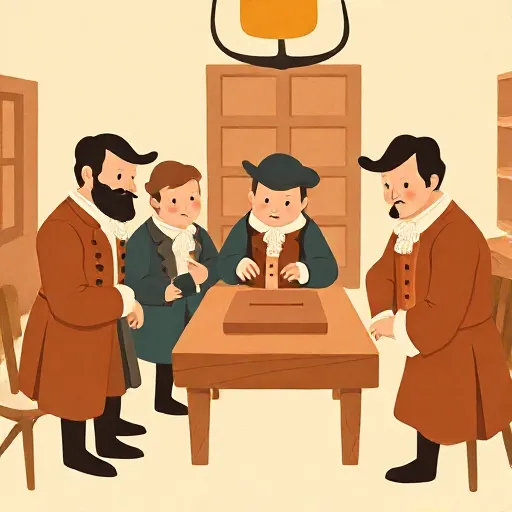
In 1793, the French mathematician and philosopher Nicolas de Condorcet (1743–1794) was on the run. The revolution he once supported had turned against him. Hiding in a friend’s house, he did something odd: he wrote about voting. With no chance to vote himself, he produced one of the most surprising discoveries about democracy.
Condorcet wanted to know how a group of people could combine their different opinions into a single decision. Suppose you and two friends are choosing between three desserts: cake, pie, and ice cream. Each of you ranks them from best to worst. You take the fairest method you can think of — pairwise majority voting : compare every pair of options, and see which one beats the others head-to-head. The winner is the one that wins every contest. Condorcet called such an option a Condorcet winner . So far, so good.
Then he found a crack. Imagine three voters, each with a different, perfectly sensible ranking:
- Voter 1: cake > pie > ice cream
- Voter 2: pie > ice cream > cake
- Voter 3: ice cream > cake > pie
Now take a vote. Cake beats pie, 2 to 1. Pie beats ice cream, 2 to 1. You might expect cake to beat ice cream. But look again: ice cream beats cake, 2 to 1. The group’s preferences run in a circle. No matter which dessert you pick, another dessert is preferred by a majority. The majority’s opinion has become intransitive — it fails a basic requirement of rationality that each person’s own rankings satisfy. There is no Condorcet winner. This is Condorcet’s paradox .
Condorcet also saw a brighter side. In his jury theorem, he showed that if each voter is more likely to be right than wrong on a factual question — say, whether a defendant is guilty — and they vote independently, then the majority is more reliable than any single voter. As the group gets larger, the chance of a correct majority decision gets closer and closer to 100%. Under ideal conditions, majority rule is a superb truth-tracking device.
So Condorcet left a double inheritance: majority rule is both wonderfully reliable and logically fragile. That puzzle sits at the heart of social choice theory, the study of how individual preferences can be turned into collective decisions.
The Impossible Dream of Fairness

Two centuries later, Kenneth Arrow (1921–2017) took Condorcet’s worry and turned it into a proof. He asked a deeper question: is there any method — not just majority voting — that can fairly combine any set of individual preference rankings into a single social ranking, without ever producing the kind of cycle Condorcet found?
Arrow imagined a social welfare function — a rule that takes everyone’s personal preference orderings and spits out a society-wide ordering. He then said the rule should satisfy five conditions that sound impossible to argue with:
- Universal domain — it must work for any combination of personal rankings people could have.
- Ordering — the final social ranking must be rational, with no cycles.
- Weak Pareto — if absolutely everyone prefers A to B, then society must prefer A to B.
- Independence of irrelevant alternatives — the social ranking of A and B should depend only on how each person ranks A versus B, not on how they rank some third option C.
- Non-dictatorship — no single person should always get their way regardless of what others think.
Arrow proved something shocking. As long as there are three or more options, no rule can satisfy all five conditions at once. Every method must break at least one. Majority voting, for instance, fails ordering (it can produce cycles). A dictatorship satisfies the first four, but trivially, by handing all power to one person. Arrow’s result is called Arrow’s impossibility theorem.
For some, this was a proof that populist democracy is logically impossible. For others, like the economist and philosopher Amartya Sen, it was a sign that we need richer information than just people’s rankings — we might need to know how strongly they feel, or how their welfare compares with others’. The theorem doesn’t say democracy is hopeless; it says you can’t have everything you want at once. Every voting system involves a trade-off.
Escapes and Trade-offs
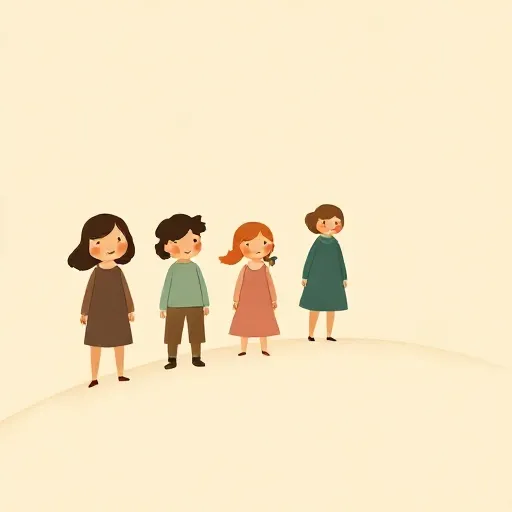
If Arrow’s theorem sounds grim, social choice theorists have spent decades finding ways around it. One of the most powerful is to notice that in many real-life situations, people’s preferences aren’t randomly scattered. They often line up along a single dimension, like left to right on a political spectrum.
The Scottish economist Duncan Black (1908–1991) showed that when preferences are single-peaked — meaning everyone has a most-preferred spot on that dimension and likes options less the farther they are from it — majority voting works perfectly. Cycles vanish, and the most-preferred option of the median voter becomes the Condorcet winner. A group choosing the temperature for a shared room might behave exactly this way: everyone has a personal sweet spot, and they dislike anything too hot or too cold.
Another escape route is to relax Arrow’s independence condition. The Borda count, invented by Condorcet’s contemporary Jean-Charles de Borda (1733–1799), asks voters to assign points based on rank (1st place gets the most points, 2nd place fewer, and so on). It avoids cycles but violates independence: the way you rank a third option can affect the relative scores of the first two, as our ice cream example hinted. That leaves it open to strategic voting — sometimes you can get a better result by lying about your preferences.
This leads to another startling theorem. Allan Gibbard and Mark Satterthwaite showed in the 1970s that any non-dictatorial voting rule with three or more possible winners can be manipulated : there will be situations where someone can vote untruthfully and get an outcome they prefer. In other words, a perfectly strategy-proof system that isn’t a dictatorship doesn’t exist. People can sometimes game the system, no matter how you design it.
And there’s yet another tension. Amartya Sen discovered a conflict between respecting individual rights and respecting the Pareto principle. He called it the liberal paradox : if two people each have a protected personal sphere (like which side of the bed they sleep on), and their preferences in those spheres go against what everyone else wants, you can end up with impossible cycles again. Giving people even minimal rights over their own lives can sometimes force a society to sacrifice some efficiency. The lesson? Collective decision-making is a bundle of trade-offs between fairness, efficiency, and personal freedom.
From the French Revolution to Your School Council
Condorcet wrote his essay in hiding, hoping to make democratic choice more rational. Today, the problems he and Arrow uncovered are everywhere — not just in national elections, but in any time a group of friends, a family, or a school council tries to make a collective choice. Whenever you argue over which movie to watch or where to go on a trip, you’re navigating the same logic of aggregation.
This doesn’t mean you should give up on voting. It means you should notice the hidden architecture. If your group’s preferences seem to run in circles, that isn’t necessarily because someone is being stubborn; it might be the simple math of how tastes combine. Knowing about single-peakedness can help you find a compromise. Knowing about strategy-proofness can make you aware that sometimes people have an incentive to exaggerate or hide what they really want — not because they’re liars, but because the system rewards it.
The message from social choice theory isn’t “democracy is broken.” It’s that fairness is never a single switch you flip; it’s a careful, ongoing search for the right balance of trade-offs. The next time your class vote gets stuck in a loop, you can smile and remember: you’re staring at a puzzle that has kept mathematicians, philosophers, and revolutionaries busy for over two hundred years.
Think about it
- Imagine a class vote where the outcome keeps cycling: pizza beats tacos, tacos beat burgers, burgers beat pizza. Is there a way to break the cycle that feels fair to everyone? What would make a tie-breaker genuinely fair in your eyes?
- If every voting system can be manipulated somehow, does that mean we should stop using votes to make decisions, or is a little bit of manipulation an acceptable price for living together?
- Sen’s liberal paradox shows that protecting personal rights can sometimes conflict with giving everyone what they want overall. Can you think of a situation where respecting each person’s private choices would make the whole group worse off? Would that justify limiting personal freedom?