Can One Country Rule Another? The Fight Over Colonialism
A Friar Who Turned Against the Conquerors

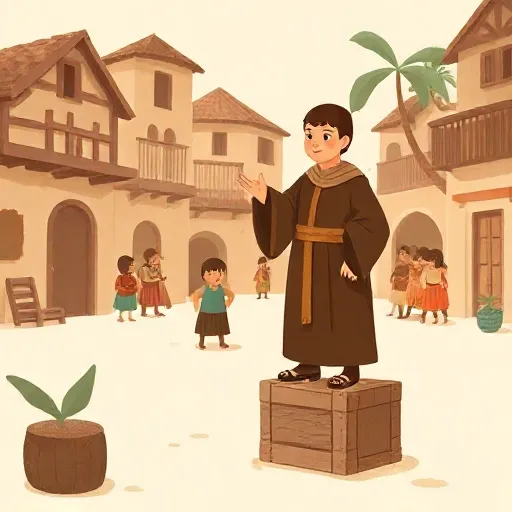
In 1502, a young Spaniard named Bartolomé de Las Casas (1484–1566) sailed to the Americas to seek his fortune. He became a landowner and watched Spanish colonists force native people to mine gold and work plantations. At first, he didn’t question it. But over time, the cruelty he saw — whole villages emptied, families torn apart — made him speak out. He gave up his own enslaved workers and became a Dominican friar, spending the rest of his life fighting the idea that conquest could be justified.
Las Casas was not alone. Other Spanish missionaries and scholars, like Francisco de Vitoria (c. 1483–1546), upended the old rules. For centuries, Europeans had used religion to claim that any land not ruled by Christians was free for the taking. Vitoria, working from the natural law ideas of Thomas Aquinas, argued something different. Natural law is the idea that some rules about right and wrong are built into the world, and any reasonable person can recognize them. Vitoria said the Pope could not simply give Spain the Americas, and unbelievers had real rights to their land and property.
But Vitoria’s argument had a trapdoor. He claimed force was allowed if Indigenous peoples broke a universal Law of Nations — rules necessary for all people to live together, such as the right to travel and trade peacefully. In his view, if a community refused to let visitors pass or prevented missionary work, war could be just. So even a sharp critic of colonial cruelty ended up offering a narrow permission for conquest. The debate over whether a “civilizing mission” justified violence had only just begun.
Progress or Plunder? The “Civilizing” Excuse

By the 1700s and 1800s, French and British thinkers were arguing over a new kind of justification. Many European philosophers had absorbed a stadial theory of history: the idea that all societies move through fixed stages — from hunting to herding to farming to commerce — and that this path tracks a climb from “savagery” to “civilization.” This was not just about technology. It was a moral ladder, with commercial European society at the top.
John Stuart Mill (1806–1873), who worked for the company that ruled British India, used this ladder to defend what he called despotic government over “less developed” peoples. He believed that savages loved freedom too wildly to govern themselves, while peasants in “barbarous” societies were too used to obedience. Only people raised in commercial societies were capable of true self-rule, he argued. So, according to Mill, Britain’s harsh rule over India was not really exploitation — it was a kind of strict fatherly training for eventual freedom.
Other thinkers saw it differently, and some didn’t even pretend to care about training. Alexis de Tocqueville (1805–1859) supported French colonization of Algeria purely because it made France stronger. He admitted the French army fought “more barbarously than the Arabs” and offered no moral justification. The national interest came first; talk of civilization was just window dressing. Meanwhile, thinkers like Adam Smith opposed empire for economic reasons, arguing it distorted free markets and drained taxpayer money. The liberal story of progress was not one story but a battlefield.
The Economic Engine: Marx and Lenin on Empire
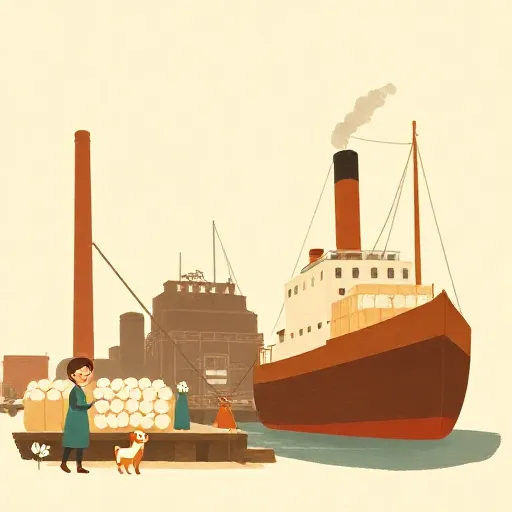
While some philosophers debated morals, Karl Marx (1818–1883) looked at the money. He and those who followed him argued that colonialism was not a well-meaning project but a machine driven by capitalism’s inner logic. Marx’s theory went like this: competition forces factory owners to cut wages, which means workers can’t buy all the products being churned out. That creates a crisis of overproduction. The only escape is to find new markets overseas — by economic pressure or outright conquest.
Marx wrote about British rule in India with a strange mix of disgust and optimism. He saw the terrible suffering caused by cheap British cloth that destroyed local weaving and by heavy taxes. But he also believed the old village system was rotten with caste oppression. British rule, he thought, was a painful but necessary way to force India into a modern, commercial stage — after which it could eventually throw off its chains.
Vladimir Lenin (1870–1924) sharpened this into a flat-out condemnation. In his view, imperialism was the highest stage of capitalism. Big capitalist monopolies, backed by their national governments, competed militarily for colonies that would serve as exclusive markets and sources of raw materials. This, Lenin argued, was a way to delay the revolution at home by exporting economic misery onto weaker peoples. Later Marxist thinkers added that imperialism created a long-lasting system that kept poor regions poor and rich ones rich — an idea that still influences world politics today.
Frantz Fanon and Gandhi: Two Roads to Freedom
Critics from within Europe were important, but the most powerful challenges came from those who lived under colonial rule. Frantz Fanon (1925–1961), a Black psychiatrist from Martinique, wrote searing books about the psychological damage of racism and colonization. He argued that colonial rule was built on violence from the start, so its overthrow would also involve violence — but he warned that this struggle could create a new shared identity and political power among the colonized. Fanon also pointed out that even after independence, a local elite often just stepped into the colonizer’s shoes, keeping the same economic exploitation going.
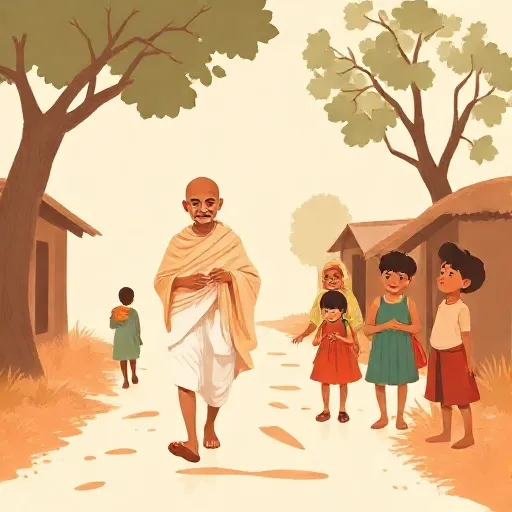
Mahatma Gandhi (1869–1948) offered a completely different path. For him, non-violent resistance, or satyagraha (holding on to truth), was the way to fight British rule in India. His book Hind Swaraj (Indian Self-Rule) turned the “civilizing mission” inside out. Gandhi argued that so-called modern civilization was a soulless sickness of materialism — not progress but a disease. The colonizers, he pointed out, could not even live up to their own supposed ideals, since they ruled through beatings and massacres. True freedom meant more than swapping a foreign ruler for an Indian one; it meant rethinking what a good life actually looks like.
Later, literary scholar Edward Said (1935–2003) showed how even studying the “Orient” was a way of controlling it. In his book Orientalism, he argued that Western experts produced a picture of the East as irrational, lazy, and exotic — an opposite image that made Europe feel superior. This discourse, or organized way of talking, was not neutral knowledge. It was a form of power that lasted long after the last colonial governor left. Meanwhile, philosopher Gayatri Chakravorty Spivak (b. 1942) asked whether the most oppressed people, the subaltern, could ever speak in their own authentic voice when every language and institution was shaped by colonial power. Representation, she insisted, was not a simple problem that could be wished away.
Colonialism Isn’t History: The Settler State Today
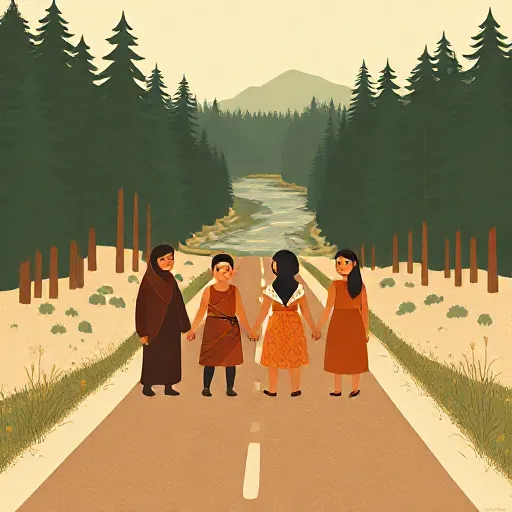
Many people think colonialism ended when countries in Asia and Africa gained independence after World War II. But Indigenous scholars in places like Canada, the United States, Australia, and New Zealand point out that they still live in settler-colonial states. The land was never returned. Their legal systems, schools, and government structures were built to replace Indigenous ways of life, not to coexist with them.
Theorists Eve Tuck and K. Wayne Yang warn that easy-sounding words like “reconciliation” can turn into “moves to innocence” — ways for settlers to feel better without giving up land or power. Glen Coulthard, drawing on Fanon, argues that asking for recognition from the colonial state can be a trap. It can make the colonial relationship look fair while actually keeping Indigenous peoples bound to its rules. Instead, he and thinkers like Leanne Betasamosake Simpson call for Indigenous resurgence. This means rebuilding legal and political traditions from within — grounded not in European ideas of universal rights but in a grounded normativity that springs from the relationships between particular people, their ancestors, and the land itself.
For these thinkers, decolonization is not just a one-time event or an attitude. It is an ongoing struggle to refuse the settler state’s authority and to breathe life back into Indigenous ways of governing and knowing — from the principle of considering seven generations ahead and behind, to the practice of blockading as a form of land-based assertion.
Why This Fight Is Yours

You might never stand in a colonial courtroom or join a protest. But the questions behind this fight are still alive. Who decides what counts as “developed” or “civilized”? When a powerful group says it is helping a weaker one, who gets to define what help means? The language of progress that Mill and Tocqueville used didn’t vanish; it lives on in debates about international aid, education, and even the way some people still talk about Indigenous communities as if they were stuck in the past.
The anti-colonial thinkers remind us to ask harder questions. Gandhi asked whether the modern life we chase is really so healthy. Fanon asked whether we are truly free if the same old economic system just gets a new flag. Indigenous resurgence theorists ask what justice looks like when the land itself is at the center of the story. You might not have a ready answer, but paying attention to these voices is the first step in learning to think — not just about what you are told is progress, but about who benefits from telling that story.
Think about it
- If a powerful country says it is helping a weaker one by taking over, who gets to decide whether that help is actually good?
- Imagine you find a treasure buried in your backyard, but someone says their ancestors buried it there long ago. What would be a fair way to decide who it belongs to?
- Can people truly be free if they agree to follow rules created by an outside power, even if they think those rules are fair? Why or why not?