Is Freedom Just Being Left Alone, or Having Real Power to Act?
Why must anyone prove they have the right to stop you?
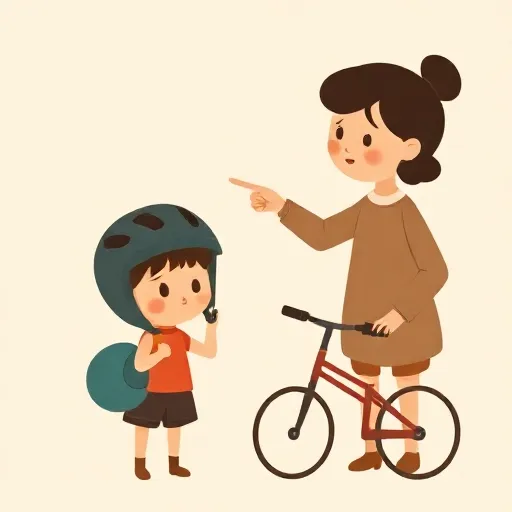
You grab your bike to ride to the park, and an adult says, “Not without a helmet.” You stop. Maybe you think the rule is fair. But what if you don’t agree? What right does anyone have to stop you?
That question — what justifies a rule that limits your freedom? — is where liberalism starts. The word comes from liberty, and liberals have always put freedom first. John Locke (1632–1704) wrote that people are naturally in “a state of perfect freedom to order their actions as they think fit … without asking leave or depending on the will of any other man.” John Stuart Mill (1806–1873) added that the “burden of proof” is on those who want to restrict liberty — not on the person who wants to be free. Modern thinkers like John Rawls (1921–2002) agree: any law or rule that stops you from doing something needs a convincing reason.
That sounds simple, but it’s a radical idea. For centuries, most people assumed that kings and rulers just had authority, and ordinary people were their subjects. Thomas Hobbes (1588–1679), though not a liberal himself, cracked that picture open by asking why citizens should obey at all. If people are not property of the king, then power must be justified from the ground up. The Magna Carta, a set of agreements between English barons and King John starting in 1215, slowly planted the thought that even a monarch is bound by law — and that the people, not just nobles, have rights.
So liberalism begins with a presumption in favor of liberty: the default is freedom, and the state’s basic job is to protect the equal freedom of all citizens. But saying “protect freedom” leads straight to a tougher argument. What counts as freedom?
Two kinds of blocked freedom: locked doors and locked desires
Philosophers split liberty into two main ideas: negative liberty and positive liberty.
Isaiah Berlin (1909–1997) defended the negative version. Freedom, he said, is the area where you can act without other people deliberately stopping you. If someone locks you in a room, you’re unfree. But if you can’t jump ten feet in the air, that’s not a loss of freedom — it’s just a physical limit. For Berlin, only coercion — intentional interference by another person — makes you unfree. The job of a liberal state is simply to stop citizens from coercing each other without a good reason. Think of a rule that says “No running in the hallway.” It restricts what you can do, so the school better have a reason (safety). If no one stops you, you’re free.
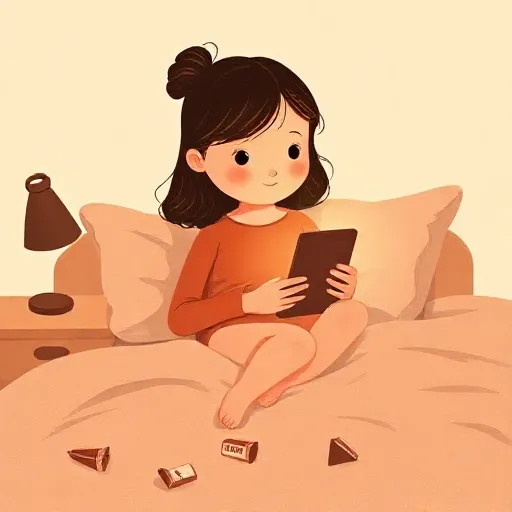
But T.H. Green (1836–1882) pointed out that you can feel completely trapped even when no person is blocking your path. A person addicted to alcohol, Green argued, is “in the condition of a bondsman who is carrying out the will of another, not his own.” He isn’t really doing what he, deep down, wants to do. That’s positive liberty: being truly free means being self-directed, or autonomous. You reflect on your ideals, you don’t just follow custom, and you can resist short-term cravings. On this view, a teenager who can’t stop scrolling her phone at 2 a.m. is not free — even though nobody locked her in her room. Her own impulses are the chains.
Another version of positive liberty shows up as effective power to act. The British socialist R.H. Tawney put it bluntly: freedom is “the ability to act.” A person who isn’t banned from a country club but can’t afford the membership isn’t truly free to join. Here, liberty connects directly to having money, education, and real opportunities — not just the absence of a locked door. Classical liberal F.A. Hayek (1899–1992) pushed back: freedom and wealth are both good, he said, but they are different things. Just because you lack money to fly to Paris doesn’t mean someone has taken away your freedom.
Can you be free if you have no money? The old and new liberals
The negative/positive split matters most when we ask: what does the government owe people? This is where classical liberalism (the “old” liberalism) and social justice liberalism (the “new” liberalism) clash.
Classical liberals from Locke to Hayek believed liberty and private property are deeply tied together. If you can’t own things, make contracts, start a business, or choose what to do with your wages, you aren’t really free. Markets made of private property, they argued, allow each person to live as she sees fit. And there’s a second reason: owning property spreads power around. Hayek noted that if the government owns the only printing presses, there can be no free press; if it owns the only large meeting halls, no free assembly. Private property protects liberty from an overbearing state. Classical liberals welcomed some government — roads, fire safety, even modest help for the poor — but they drew a line: using taxes to make incomes more equal is not a proper job of the state. As the reformer Jeremy Bentham put it, the goal is to make the poor richer, not the rich poorer.
By the early twentieth century, a “new” liberalism began to doubt this picture. The economist John Maynard Keynes argued that markets can get stuck in a rut with high unemployment; government might need to steer the economy. After the First World War, where wartime planning seemed to succeed, faith in government grew — and with democracy spreading, people felt the state could finally work for everyone, not just a ruling class. Most deeply, many thinkers decided that property rights create an unjust inequality of power. Allowing you to own whatever you earn may sound fair, but if you inherit poverty while another child inherits a fortune, your “freedom” can feel hollow. You may be legally allowed to become a doctor, but if you can’t afford the training, are you really free to choose that path? Even Mill, who loved free trade, said it’s an open question whether personal liberty can flourish without private property.
The most famous modern version is John Rawls’s theory of justice. Rawls proposed a difference principle: social and economic inequalities are just only if they make the least well-off people better off than they would be under any alternative. The default, for Rawls, is not liberty — it’s an equal distribution. You can only have more than others if that extra actually lifts the bottom. This is a patterned idea: what matters is whether the overall distribution at any moment looks fair.
The Wilt Chamberlain puzzle: does freedom mess up fairness?

The philosopher Robert Nozick (1938–2002) challenged patterned principles with a thought experiment you can try in your own head. Imagine a society that reaches a perfectly just pattern — everyone has exactly what they deserve by your favorite rule. Then a basketball player named Wilt Chamberlain signs a contract: people who want to watch him play pay a dollar directly into his account. Thousands pay. Wilt gets rich. The pattern is broken. No one complains. Wilt is now far wealthier than before, but no one was coerced, no one was cheated — everyone freely gave their dollar.
Nozick’s point is sharp: if you insist on keeping the original pattern, you must forbid people from spending their money on tickets, or from giving gifts, or even from turning their own talents into extra earnings. Liberty, even the tiniest bit of it, will eventually upset a static pattern. Nozick argued that what really matters is not the snapshot of who has what, but the history — how people treat each other over time. A rule against racial discrimination, for example, restricts how you may act, but it doesn’t demand a specific final distribution. That’s a “weak” pattern, and Nozick thought such rules can be fully compatible with liberty.
Rawls didn’t defend a rigid snapshot either. He insisted that “we cannot determine the justness of a situation by examining it at a single moment.” The basic structure of a society should make life better for the least well-off class as a whole over time — not fix every single transaction. Still, Nozick’s picture of Wilt forced liberals to face an uncomfortable question: if respecting freedom means respecting what people bring to the table (their effort, their skills), then equality can’t just mean everyone gets the same slice.
What this means for your lunch money and your future

You probably don’t spend your days debating negative and positive liberty. But you face its shadow every time someone tells you what you can and can’t do. Your school says you can’t run in the halls (negative liberty, with a safety justification). Your parents might insist you save part of your allowance instead of spending it all on candy (a form of positive liberty — training you to control your impulses and build real options). And if your family decides that a sibling who needs new shoes gets more help than you do right now, you’re in the middle of the fairness-versus-freedom argument that split Rawls and Nozick.
These questions don’t have a single agreed-upon answer. That’s why they’re still alive. When a government taxes people to build a library, it is taking some freedom (your money) to expand positive freedom for everyone (the ability to read and learn). Whether that tradeoff is right depends on what you think liberty really is. And when you decide to give away your favorite pencil to a friend who doesn’t have one, you’re acting like the people in Nozick’s story — choosing to change the pattern, freely. The debate about liberty is not just a dusty museum piece. It’s about what kind of rules, what kind of sharing, and what kind of life we think is worth calling “free.”
Think about it
- If you earn money by mowing lawns, and your sibling gets none, is it fair for a parent to take some of your money to give to your sibling? Why or why not — and what if your sibling really needed it?
- In a video game where everyone starts equal but players who practice more get better gear, should the game reset everyone’s progress regularly so no one falls behind? What would be more free?
- You want to join the soccer team, but you can’t afford the uniform. The school says you are free to join if you can pay. In what sense are you free, and in what sense are you not? What should the school do, if anything?