Why Slaves Without a Whip Aren’t Free
The Slave Who Was Never Whipped
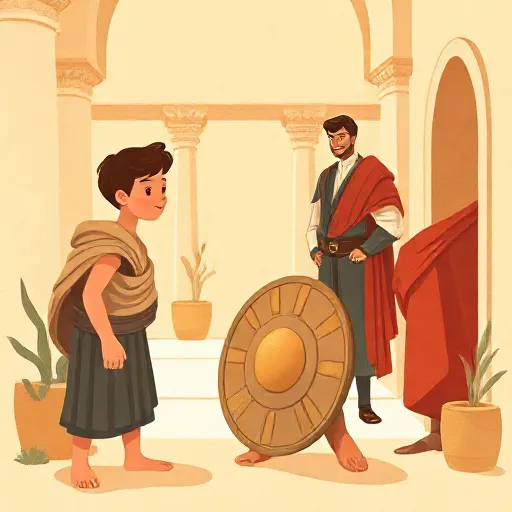
Imagine living in ancient Rome. You belong to a master, but he’s a kind person. He lets you do your own thing most days. He never hits you, never shouts. You come and go as you please — he hardly bothers you. So, are you free?
If you think freedom means nobody interferes with your choices, you might say yes. Philosophers call this negative liberty: you’re free when others leave you alone, when no one blocks you from doing what you want. John Stuart Mill (1806–1873) described it as “the only freedom which deserves the name, is that of pursuing our own good in our own way, so long as we do not attempt to deprive others of theirs”. For decades, this has been the most popular view of political freedom.
But many people have a gut feeling that something’s wrong here. Even if a master never uses his whip, he still has the right to use it. That means you aren’t really free — you’re just lucky that he chooses not to hurt you. As the ex-slave Frederick Douglass put it, “it was slavery — not its mere incidents — that I hated.” This feeling points to a different idea of freedom, one that goes back to the Roman republic and has been revived by philosophers today. They call it republican liberty, or freedom as non-domination.
Left Alone or No Master? Two Kinds of Freedom

The most famous modern defender of negative liberty was Isaiah Berlin (1909–1997). He argued that freedom simply means the absence of interference — no one stopping you from doing something. Berlin also pointed out a dangerous rival: positive liberty, the idea that you’re free only when you are in control of yourself, able to act on your “true” desires. Berlin feared that positive liberty could be used to justify forcing people to do what someone else decides is good for them. So he stuck with negative liberty. But is negative liberty enough?
Republican thinkers say no. They offer a pair of stories to show why. First, return to the kind master. If you compare two slaves — one with a gentle master, one with a cruel one — the non-interference view forces you to say the first slave is freer. But most of us find that strange. Being free shouldn’t depend on your master’s mood. Second, imagine a colony ruled by a distant empire. The empire mostly ignores the colony, hardly interfering at all. Then the colony wins independence and becomes self-governing. The new government makes more laws that affect daily life than the empire ever did. On the non-interference view, the colonists are now less free! That feels backwards. Surely throwing off foreign rule increases political freedom, not decreases it.
These examples drive at a key insight: freedom isn’t just about what happens to you day to day. It’s about the structure of power. Are you in a position where someone else can interfere with you whenever they feel like it, without having to answer to you? That position is domination—being subject to arbitrary power. Republican freedom means not living under anyone’s uncontrolled power. As the contemporary philosopher Philip Pettit (20th–21st century) puts it, you are free when no one has “the capacity to interfere in their affairs on an arbitrary basis”. It doesn’t matter whether they use that capacity; what matters is that they have it and you can’t stop them.
What Makes Power “Arbitrary”? Laws and the People’s Voice
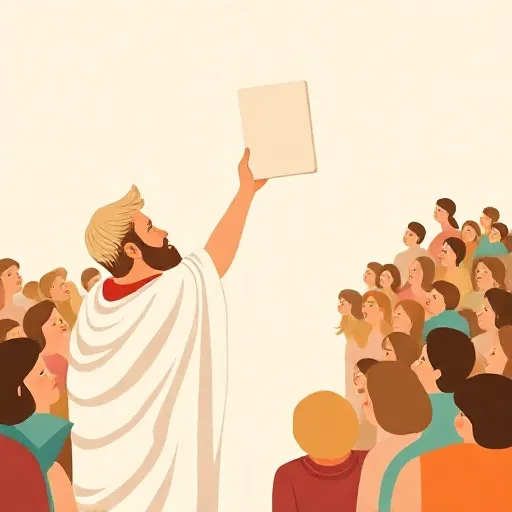
If republican freedom means not being under arbitrary power, we need to know what “arbitrary” means. It’s not just unpredictable — a slave might learn to read his master’s moods and predict when he’ll be whipped, but that doesn’t make him any freer. Power is arbitrary when it isn’t reliably controlled by rules or by the people it affects.
There are two main ways to control power. One is the rule of law: if there are known, stable rules that even the powerful must obey, their power stops being arbitrary. The classic republican slogan, from James Harrington (1611–1677), is that a free community is an “empire of laws and not of men.” If a law is public, applies equally, and cannot be changed on a whim, it can actually increase freedom rather than reduce it. As the English judge William Blackstone (1723–1780) wrote, “laws, when prudently framed, are by no means subversive but rather introductive of liberty.”
The other way to control power is democratic: those who have power must answer to the people they affect. This doesn’t mean that every decision is voted on directly. Instead, institutions should be set up so that citizens can challenge decisions, demand reasons, and appeal to impartial forums. Pettit calls this contestatory democracy. If a public agency can make a rule that affects you, you should have a genuine opportunity to contest it — to ask why, to argue back, and to have your objections heard. When officials know they might have to explain themselves, their power is no longer uncontrolled.
Why Virtue Matters, Without Being the Point of Life

Some older ways of reading the republican tradition suggest that the real goal of life is to be an active citizen — to spend your days in political debate and public service. This civic humanist view treats politics as the highest human good. But many critics point out that in a modern, diverse world, not everyone wants to be a full-time citizen, and that’s fine.
Contemporary civic republicans take a different approach. They argue that civic virtue and the fight against corruption (the use of public power for private gain) are not the point of freedom. They are instruments — tools that help secure republican liberty. If citizens are willing to speak up against domination, support laws that check power, and defend institutions, then the whole community enjoys more secure freedom. A republic doesn’t need everyone to be a hero; it needs enough people willing to do their part. That’s why republicans today support civics education and public cultures that reward fairness without forcing everyone into the same mold.
This instrumental reading also makes republicanism radically more inclusive than its older versions. In the past, many classical republicans restricted freedom to propertied men, but that was a prejudice of their time, not a logical consequence of their ideas. Once you see that domination is the thing to oppose, you can extend that protection to everyone: children, women, workers, minorities. Republican public policies today aim to reduce domination in families, in workplaces, and in markets — for example, by making sure no one is so poor that they must accept a boss’s every demand out of sheer desperation.
From Ancient Rome to Your School Hallway

Why should this old idea matter to you? Think about your own life. Maybe there’s a student who never actually shoves you, but everyone knows they could make your day miserable if they wanted to. That’s domination without interference — you’re not free in the republican sense. Or imagine a school where the rules change every week depending on the principal’s mood. Even if the rules happen to be easy today, you’d feel less secure than in a school where the rules are clear, apply equally, and can be questioned.
Republican freedom helps us ask better questions about power, not just about being left alone. Is a social media platform really giving you freedom if it rarely censors you, but can delete your account with no explanation? Is a workplace fair if the boss never yells, but could fire you on a whim? These are not just grown-up issues — they are about whether you can live without the constant awareness that someone else holds the keys to your life. The republican tradition insists that real political liberty means building a world where everyone can walk tall, knowing that no one has unchecked power over them.
Think about it
- Imagine your parents give you a curfew but always listen to your reasons and sometimes adjust it. Is that different from a curfew that changes randomly whenever they’re in a bad mood? Which situation feels more like freedom, and why?
- If a perfectly kind and wise dictator ruled your country and never interfered with anyone, would you consider yourself free? What could make that situation dangerous even if the dictator stayed kind?
- In your school, are there rules or systems that give some people power over you without a way for you to question them? Would changing those systems make the school a freer place, or just more chaotic?