
Is Freedom Doing Whatever You Want? A Victorian Professor Said No.
Are You Free Just Because No One Is Stopping You?
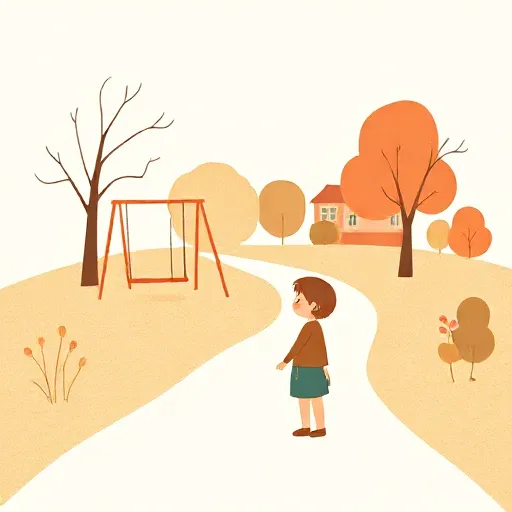
Imagine you have a free afternoon. No parents, no teachers. You could lie on the couch and scroll through your phone for hours. No one would stop you. Does that mean you are truly free? A Victorian philosophy professor named Thomas Hill Green (1836–1882) would say no. He believed that being free is more complicated — and more important — than just having nobody in your way.
Green taught at Oxford University and also served on the town council, fighting for land reform, better schools, and help for workers. He was not just a thinker in a tower; he believed philosophy could change how we live together. And at the heart of his ideas was a three-part vision of freedom.
First, he recognized juridical freedom, which is exactly what most people mean by freedom: no one forcing you, locking you up, or stopping you from acting. This is the freedom prized by earlier liberals like John Locke. Green agreed it is essential. But he said it was only the beginning.
Second, there is moral freedom. This is the capacity to step back from your impulses and decide what to do based on reasons. Think about a time you wanted to yell at someone but chose to speak calmly instead. That ability to pause and choose — even when your emotions are pushing hard — is moral freedom. For Green, this is what makes you responsible for your actions. It does not matter whether the universe is deterministic or not; what matters is that you can reflect and decide.
Third, and most important, Green described real or perfect freedom. This is not just having choices, but actually using your reason to live well — to become the best version of yourself. And for Green, becoming your best self inevitably involves caring about others, not just yourself. Real freedom is growth, a kind of self-rule guided by what is genuinely good. So for Green, someone who does whatever they want without thinking is not truly free at all.
That may sound strange: can other people and even the government help you be free? Green’s answer takes us deep into his ideas about knowledge, reality, and what makes a life worth living.
The World Inside Your Head (and Why It Matters for Right and Wrong)

To understand why real freedom requires self-rule and caring for others, we have to look at how Green thought we know anything at all. He was an idealist. This does not mean he had his head in the clouds. In philosophy, idealism is the claim that reality depends on minds. Green argued that we can never know the world as it is apart from how it appears to us. Every experience — even a simple feeling like “this apple is red” — is already shaped by your understanding. Your mind organizes raw sensations, puts them in time and space, connects causes and effects.
For Green, this meant that the idea of a thing-in-itself (an object that exists completely outside all consciousness) makes no sense. It is like talking about a sound no one can ever hear. He thought the great German philosopher Immanuel Kant (1724–1804) had almost gotten this right but made a mistake by keeping a hidden world of things-in-themselves behind appearances. Green believed that reality is the whole system of appearances, held together by a mind.
You might think that would make everyone’s reality private — your world vs. my world — and lead to confusion. To solve this, Green proposed that there is a single eternal consciousness, a kind of big mind that includes all our individual minds and makes a shared, objective world possible. That idea is called absolute idealism. (Green sometimes connected this eternal mind to God, though his religious views were very unorthodox and focused mostly on moral progress.)
Why does this matter for ethics? Because the same power that lets you know the world also lets you be a moral person. When you know something, you are not just soaking up information; you are actively relating one idea to another, checking for consistency, asking for reasons. This requires self-consciousness — the ability to be aware of your own thoughts and to take a step back and examine them. A dog sees a piece of cheese and eats it; you see the cheese, remember you share the kitchen with your sister, and decide to split it. That pause, that second-level thinking, is self-consciousness. For Green, knowledge and moral responsibility both depend on this capacity. So your mind is not a camera; it is a judge. And that judge is the foundation of a good life.
The Best You: Becoming a Self-Ruler, Not a Pleasure-Seeker

If freedom is not about doing whatever feels good, then what is the ultimate goal? Green argued that the goal of a human life is self-realization — developing and exercising the very abilities that make you a responsible person. This put him at odds with thinkers who said pleasure is the only thing worth pursuing, a view called hedonism.
In the 1800s, many British philosophers, including John Stuart Mill (1806–1873), tried to build morality on the pursuit of happiness. Mill said that some pleasures are higher than others — that an educated person would prefer reading a poem to playing a mindless game, even if the game felt more fun. Green thought this was on the right track but still mistaken. He asked: if a poem is valuable, is it valuable only because it gives pleasure? Or do we enjoy it because we already recognize something valuable about it? Green suspected the latter. For him, we love activities like learning, creating, and caring for others because they develop our distinctively human powers — reason and self-consciousness. Pleasure is a signal that we are achieving something good, not the good itself.
So Green built a different picture. To be a moral agent at all, you must be able to step back and ask what it makes sense to do overall, not just follow the loudest impulse. That very ability gives you a duty, he thought — a duty to live according to that same thoughtful, reason-ruled way in everything. In other words, you should become a person your whole self can endorse. This is a categorical imperative — a command that comes from inside your own nature, not from some outside rule or reward. Green calls it the demand of self-realization. It is not optional like a hobby; it is built into being the kind of creature who can ask “How should I live?”
For a twelve-year-old, that might mean: you could spend all your free time watching videos, but you also have the ability to learn an instrument, help a friend, or write a story. Green would say those latter choices express more of your real self, because they involve your higher capacities — the ones that make you human in the first place.
The Ultimate Team Sport: Your Good Is Everyone’s Good

So far, Green’s picture of the good life might sound like a solo project: improve yourself. But he insisted that you cannot truly realize your potential alone. The fullest human life involves sharing a common good — a good that is not just mine or yours, but ours.
Why? Think about a music ensemble. Each player improves her own skill, but the real joy and growth come from listening to others, blending harmonies, and creating something together that no one could achieve alone. Your personal good gets wrapped up in the success of the group. Green believed that reason pushes you outward: you need permanence, something that outlasts a single desire. Deep friendships, family bonds, teams, and communities provide that. When you care about someone for their own sake, their well-being becomes part of your own good.
For Green, this linking of self-realization to community has a radical conclusion. If your good depends on a shared good that respects everyone’s capacity for self-realization, then the common good should include all rational people. Aristotle (384–322 BCE) and other ancient Greeks championed a community of free and equal citizens, but Green noted they restricted it to a small group of men, excluding women and slaves. Green argued that every person matters equally. He even saw slavery as a violation of natural rights — rights grounded in the common good, not created by any government. This cosmopolitan vision — the ideal that our moral community is the whole of humanity — Green credited partly to the spread of Christianity and to modern thinkers like Kant, who said we must treat every person as an end, never just a tool.
In short, becoming your best self involves wanting everyone else to be their best, too. There is no competition between your real interests and others’. The common good is a good you share.
When the State Is Your Coach, Not Your Boss

If the common good is central, what role should government play? Green helped create a new kind of liberalism: one that was not just about keeping the state out of your business but also about making sure everyone has a real chance to grow.
Earlier liberals thought freedom meant the government must leave people alone — no interference with property, contracts, or personal choices. Green admired that commitment to juridical freedom, but he thought it was incomplete. Imagine a talented girl who wants to be a doctor, but her family cannot afford school, and she must work in a factory at age twelve. Legally, no one is forcing her to work; she is “free” in the negative sense. Yet she cannot develop her abilities. Real freedom, Green would say, requires that society provide opportunities — good public schools, limits on child labor, safe conditions, maybe even scholarships.
That is why Green was active in politics. He fought for state‑funded education, for land reform so poor farmers could own property, for limits on working hours, and for opening universities to women and the working class. He thought the state should act as a kind of coach, not a boss: it should give you the tools and conditions to grow into a thinking, responsible person, but never force you to be good in a way that bypasses your own agency. You still have to do the hard work of becoming yourself.
Green’s ideas inspired many later politicians in Britain who pushed for social welfare laws. This New Liberalism changed the conversation about freedom from “hands off” to “enabling.” And it is still alive in debates about whether government should guarantee healthcare, education, and a safety net.
Your Real Freedom Is Still Your Own Project
So why does T.H. Green still matter? His challenge strikes at the heart of choices you make every day. When you decide how to spend your time, who to be friends with, and what kind of person you want to become, you are really answering the question “What does freedom mean for me?”
You might feel that real freedom is being able to follow every impulse. Green invites you to see that freedom might be something you build, not just something you have. Real freedom is not the absence of obstacles; it is the presence of self-mastery, of living in a way that you can honestly say is yours — a life governed by reasons you accept, not just pushes from inside or outside.
That does not mean you must be perfect. Green’s real freedom is an ideal, a direction. Every time you practice a difficult skill, resolve a conflict by listening, or decide to help someone even when it costs you, you are moving a little closer to that ideal.
In the wider world, his ideas still echo. Ask yourself: Should a country make sure every kid gets a good education, even if it means higher taxes? Should there be laws against child labor, even if parents agree to the work? Green would say yes — because freedom is not just being left alone; it is being equipped to become who you can be.
The next time you wonder what it means to be free, think of T.H. Green. You might be more than just a collection of wants. You might be a project in the making.
Think about it
- If true freedom means ruling your life with reason and caring for others, can someone who only cares about themselves be truly free?
- Is it ever okay for a government to make you do something “for your own good” — like requiring you to stay in school?
- Can you become your best self if the people around you are not given a fair chance to become theirs?