Can You Be Free in a World Where Everything Is Caused?
Hume’s Bold Claim: Freedom and Causation Can Be Friends
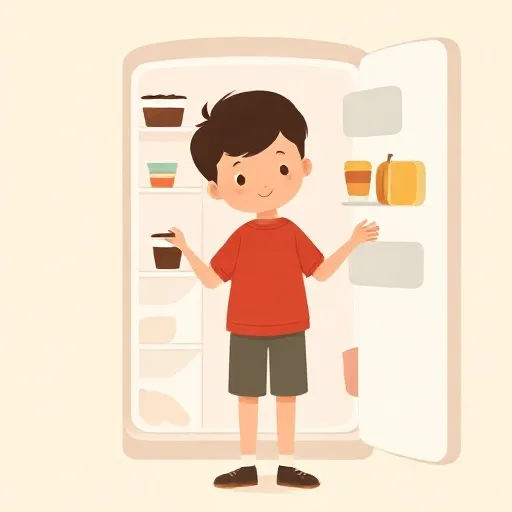
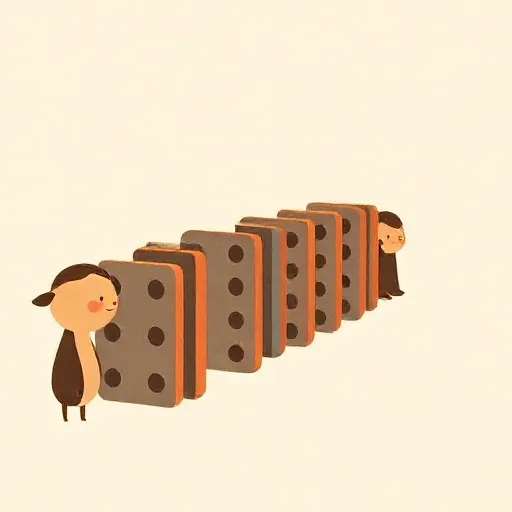
You reach for the ice cream tub—chocolate, definitely. Your friend grins. “You had to pick that. Your brain was already set on chocolate before you even thought about it.” You pause. Did you really choose, or was it all just dominoes falling?
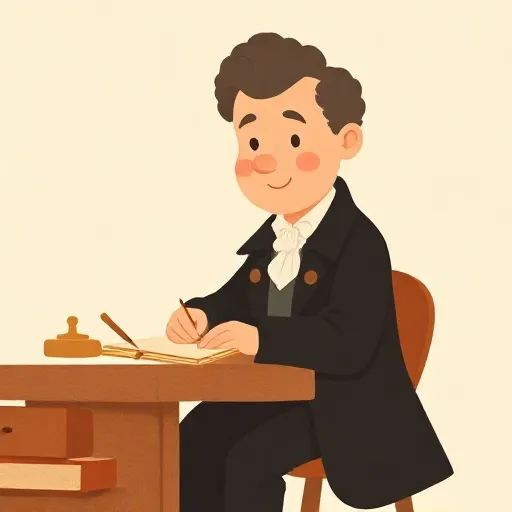
This is the puzzle that David Hume (1711–1776) wrestled with three centuries ago. His answer? Both: you chose, and there were causes for your choice. Hume was a compatibilist—someone who believes that free will and determinism (the idea that every event has a cause) are not enemies. The real question, he thought, was not whether we are caused to act, but what kind of causes are doing the work.
Hume saw that most of us use the word “freedom” in two very different ways. When you say you acted freely, you usually mean nobody forced you—you did what you wanted. He called this liberty of spontaneity: acting according to your own desires, without external obstacles like locked doors or physical threats. The other idea, liberty of indifference, is trickier. It suggests that a free choice must have no cause at all, as if you could have done otherwise in the exact same circumstances, with no reason tipping the scales. Hume thought liberty of indifference was an illusion, and that the only freedom worth caring about is spontaneity.
What Does “Necessity” Really Mean? Hume’s New Rulebook
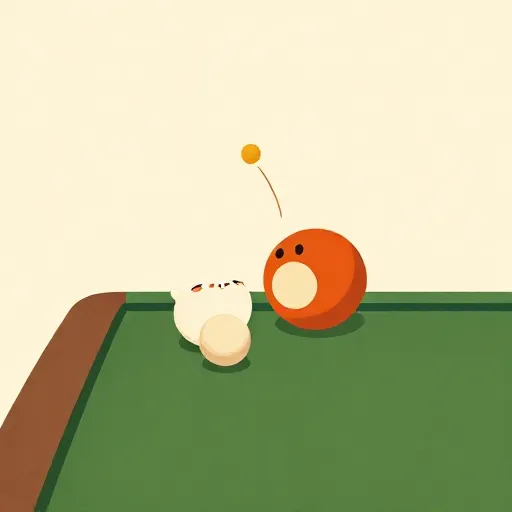
For many people, the word necessity sounds like a threat—something that forces you to act against your will. But Hume redefined it entirely. He argued that what we call necessity is nothing more than two things: constant conjunction (one kind of event always following another) and an inference our minds make (expecting the second when we see the first).
Think of a billiard ball rolling into another. You see the first ball move, you see the second ball jump, and you expect that to happen every time. But you never see some invisible power or glue that compels the second ball to move. The necessity is in the regular pattern, not in a mysterious force. Hume said the same pattern holds for human actions. We notice that certain motives, tempers, and situations are constantly followed by certain choices and behaviors—just as regularly as billiard balls. A shy person in a crowd almost always stays quiet; a cheerful joke often makes a friend laugh. Once you spot these regularities, you can start to predict what people will do.
This was Hume’s clever move. Instead of saying necessity meant being shoved around by invisible chains, he said it simply meant being part of a predictable, lawful world. And, he pointed out, we already live our lives relying on this kind of necessity every single day without panic.
Why We Need Necessity: Predicting People and Holding Them Responsible

If human actions weren’t regular and predictable, social life would be impossible. Hume gave everyday examples: merchants trust that most customers will pay; generals plan battles counting on soldiers’ courage and fear; friends expect each other to show up on time. All of these depend on the fact that motives and circumstances are reliably linked to how people act.
But Hume went further. He insisted that necessity is “essential to religion and morality” Why? Because if an action had no connection at all to someone’s lasting character—if it popped into the world randomly, with no cause in the person’s personality or desires—then it couldn’t tell us anything about who that person really is. A single kind act that comes out of nowhere, with no link to your usual habits of kindness, doesn’t make you a good person. An accidental harm caused by a sudden twitch isn’t something we blame you for. To praise or blame someone, we have to see their action as a sign of something deeper: their character, their settled motives, their durable qualities of mind.
Here Hume’s account of the moral sentiments kicks in. Moral sentiment is the feeling of approval or disapproval we get when we think about someone’s character. It’s like a calm, quiet version of love or hatred. And for this sentiment to fire, we need to infer from an action back to a stable trait in the person. No regularity, no inference. No inference, no moral sentiment. And without moral sentiment, the whole practice of holding people responsible would grind to a halt—not because it would be irrational, but because it would be psychologically impossible. Spontaneity gives us actions that belong to the agent; necessity gives us the reliable link needed to see the agent’s character through the action.
But Wait—Doesn’t It Feel Like We Could Have Chosen Otherwise?

One of the strongest objections to Hume’s view comes from inside your own head. When you stood in front of the ice cream, it felt like you really could have gone either way. You experienced a sense of openness, of not being forced. Hume admitted that this feeling exists. He called it “a false sensation or experience even of the liberty of indifference” From the first‑person perspective, when you are the one choosing, you don’t notice the chain of causes pushing you toward one option. You just feel like a free starter of new events.
But Hume asked us to step outside ourselves and look from a spectator’s point of view. Your friend, watching you hesitate, might already have a pretty good guess that you’d pick chocolate—because she knows your taste, your mood, and how you’ve chosen before. From the outside, your choice often looks connected to your character and circumstances. Hume thought the spectator’s perspective was more reliable: your inner feeling of uncaused freedom might be real as a feeling, but it doesn’t prove that your choice had no cause.
He also offered a softer version of “could have done otherwise.” In his later work, he described hypothetical liberty: you have the power to act if you choose to, and to not act if you choose not to. If you had wanted vanilla, you would have reached for vanilla. The problem, critics say, is that you didn’t want vanilla—and given who you were in that moment, you couldn’t have wanted it. Hypothetical liberty doesn’t give you a genuine open future; it just says your actions follow your will, even if your will was already determined. So the deeper unease remains.
The Deeper Worry: Are We Just Fancy Robots?
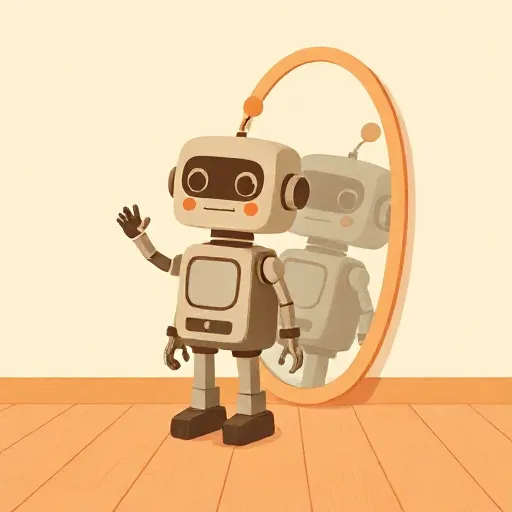
Critics of compatibilism, both in Hume’s time and now, think liberty of spontaneity isn’t enough. The philosopher Immanuel Kant (1724–1804) famously called it a “wretched subterfuge.” If all your desires and character traits were themselves caused by factors outside your control—your genes, your upbringing, your social class—then acting on them still seems like being pushed around by the universe. You might feel free, but you’re really just a link in a long causal chain, like a clock whose hands move by internal gears.
There’s also the problem of inner compulsions. Hume said an action is unfree only when something external forces you—a prison wall, a threat. But what about a person with a powerful addiction? She acts on her own intense desire, yet we hesitate to call her free. Some internal causes—compulsions, brain disorders, overwhelming fears—seem just as freedom‑destroying as chains on your wrists. Once we admit that, the simple distinction between “caused from inside” and “caused from outside” starts to crumble. Which inner desires count as truly yours, and which count as invaders?
Finally, there’s the question of responsibility and luck. Hume himself was strikingly blunt: our character is shaped by age, sex, education, climate, and a thousand other factors we never chose. In his view, you have no more control over the basic fabric of your mind than over the color of your eyes. If that’s true, can anyone really deserve blame or praise? Hume’s answer was that we can’t help feeling moral sentiments anyway—they are part of human nature. But for many, that merely recognizes a psychological fact; it doesn’t show that punishment and gratitude are fair.
Why This Still Matters When You Decide Who to Blame

Hume’s view hasn’t faded into dusty history. In the twentieth century, the philosopher P. F. Strawson argued that our “reactive attitudes”—things like resentment, gratitude, and forgiveness—are the real heart of responsibility. We don’t need a theory that makes us into uncaused miracle workers. What matters is that we care deeply about whether someone meant to hurt us, whether their action came from good will or ill will. Those feelings are woven so deeply into human life that no abstract argument about determinism could make us abandon them.
This means the battle isn’t just about ice cream choices; it’s about how you see yourself and other people. When a friend lets you down, you don’t first run a scientific test on the ultimate origins of her character. You react to what she showed you—the intention, the pattern, the kind of person she is. Hume’s challenge is to take that ordinary experience seriously without pretending that we are little gods who pop decisions into the world from nowhere.
On the other hand, the critics’ worries haven’t gone away. Every time we excuse someone because of a difficult childhood or a mental health condition, we admit that causes do matter for responsibility. The question “could you have been different?” keeps resurfacing in courtrooms, classrooms, and kitchen arguments. Hume gave us a powerful way to think about freedom without magic—but whether that’s really enough, no one has answered for good.
Think about it
- If a scientist could predict every choice you’ll ever make, would blaming someone for a bad deed still make sense to you?
- Can you change your own character over time, or is it set by your upbringing and genes? If you can’t choose your character, are you responsible for it?
- Imagine a friend who always acts on her kind impulses but says, “I had no choice, it’s just who I am.” Would you still feel grateful to her, and should you?