Are You Really Choosing, or Was It Always Going to Happen?
The ice cream choice that started a thousand arguments

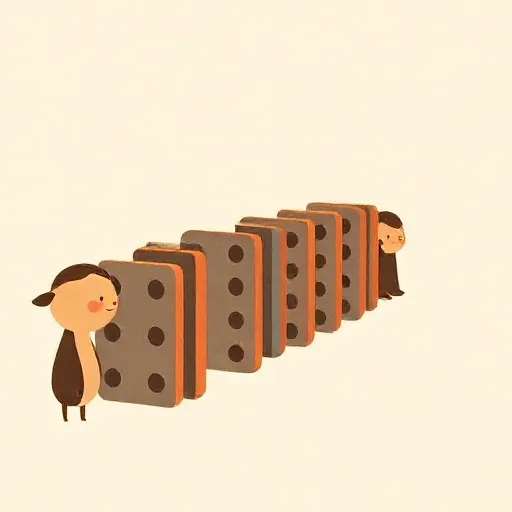
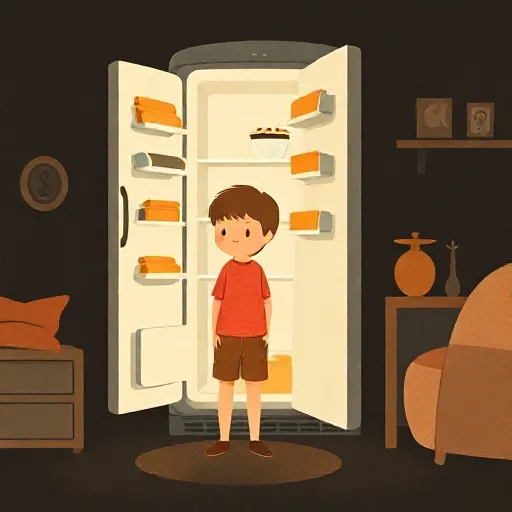
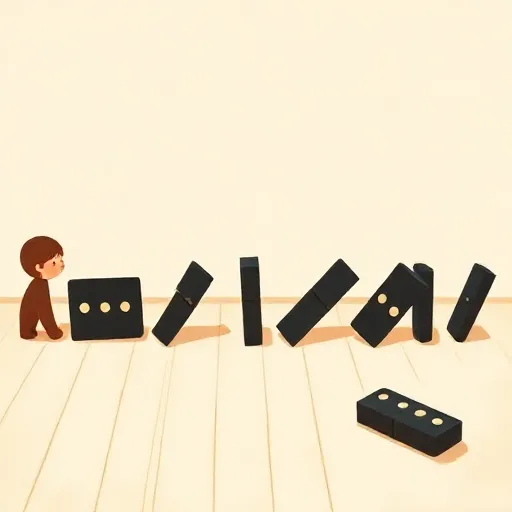
Imagine you’re standing in front of the freezer, deciding between mint chip and chocolate. You pause, think about it, and finally grab the mint chip. It feels like you could have picked chocolate instead. You made a choice. But was that choice truly free? Did you really have the power to pick chocolate, or was the mint chip going to happen all along, like a row of dominoes that started tipping before you were even born?
That’s the question at the heart of free will. For centuries, philosophers have wrestled with whether we control our actions or whether everything is already settled by the past and the laws of nature. And they quickly realized that the answer matters for something huge: moral responsibility. If you couldn’t have done otherwise, is it ever fair to praise or blame you?
What do we mean by “free will”?
At its simplest, free will is the power to be the author of your own actions. When you do something freely, it seems to be “up to you” in two ways. First, you could have done otherwise — just like you think you could have picked chocolate. Second, you are the source of the action; the decision comes from inside you, not from someone pushing your hand.
Most philosophers connect free will tightly to moral responsibility. If you slap your brother on purpose, you deserve blame. But if someone shoves you into him and you couldn’t stop it, you don’t. The difference is control. So when thinkers study free will, they’re often studying the kind of control that makes praise and blame fair. One influential definition: an action is free only if you could have done otherwise, holding everything else fixed — the whole past and all the laws of nature. That is the all‑in ability to do otherwise.
But what if the world is a giant clockwork where every event is caused by earlier events according to strict rules? That idea is called determinism. If determinism is true, then given the past and the laws of nature, only one future is possible. Right before you chose mint chip, was there really another possible world with the same past where you chose chocolate? If not, then maybe you never had the all‑in ability to do otherwise.
The domino‑world and why some said “so what?”
In the 1600s and 1700s, scientists like Isaac Newton showed that the universe seems to follow unbreakable laws. Many philosophers began to worry: if determinism is true, is free will an illusion? A number of them answered: no, there’s no conflict. These thinkers are called compatibilists because they believe that free will is compatible with determinism.
The classic compatibilist strategy was simple. They said the opposite of freedom isn’t determinism — it’s external constraint. Imagine you want to go outside, but your leg is chained to the wall. You’re not free. But if nothing stops you from acting on your desires, you are free, even if those desires were themselves caused by earlier events. Thomas Hobbes (1588–1679) argued that liberty is just “the absence of all the impediments to action.” David Hume (1711–1776) added that you have the freedom to do otherwise if, had your desires been different, you would have acted differently. It’s like a video game character: if the player pushes left, the character goes left; if right, right. The character acts according to its programming, but that doesn’t mean it’s “constrained.”
However, critics spotted a problem. This simple conditional analysis only tells us about free action, not free will. What if you couldn’t have wanted differently? Suppose you have a deep phobia of elevators. Even if you wanted to step inside, you might be unable to even form the desire to do so. The phobia blocks your ability to choose otherwise, not just your movement. In that case, you seem unfree, yet you’d still satisfy the conditional: if you chose to enter, you would. So the simple compatibilist answer felt too weak.
The big hammer: the Consequence Argument
In the late 20th century, philosophers Carl Ginet and Peter van Inwagen formulated a powerful argument that shook compatibilism. The Consequence Argument goes like this:
If determinism is true, then your every action is a consequence of the laws of nature and events in the distant past. But you had no control over what happened before you were born, and you can’t break the laws of nature. So consequences of those things — including your actions — are not up to you.
Think of dominoes. If someone set up a chain and pushed the first one, the falling of the last domino was inevitable. It couldn’t do otherwise. If the universe is like that, then at the moment you chose mint chip, the outcome was already settled billions of years ago. You had no all‑in ability to do otherwise. Therefore, free will and determinism are incompatible. This position is called incompatibilism.
David Lewis (1941–2001) pushed back. He said we should distinguish a weak “ability to break a law” from a strong one. You can’t do something that is itself a violation of a law of nature. But you might do something such that if you did it, a law would have been broken. That weak ability might be enough for free will, and it doesn’t require you to be a miracle worker. The debate over this nuance continues, but the Consequence Argument remains one of the strongest reasons to think determinism kills free will.
Where does the action really begin?
If free will doesn’t require the all‑in ability to do otherwise, maybe what matters is being the genuine source of your actions. In 1969, Harry Frankfurt proposed a clever thought experiment. Imagine a neurosurgeon named Black who wants you to vote for Candidate A. He puts a chip in your brain. If you were about to vote for Candidate B, the chip would activate and force you to vote for A instead. But if you decide on your own to vote for A, the chip does nothing. Now suppose you do vote for A on your own, without any interference. You couldn’t have done otherwise — the chip guaranteed that. Yet many people feel you are still morally responsible, because your action came from you, not from Black. These Frankfurt‑style cases suggest that the all‑in ability to do otherwise isn’t actually necessary for responsibility.
If that’s right, compatibilists have a new path. They can say that what matters is your action’s actual source, not whether the future had multiple possibilities. John Martin Fischer’s reasons‑responsiveness theory says an action is free when it’s produced by a mental mechanism that is sensitive to reasons. If there had been a good reason to do otherwise, the same mechanism would have responded differently. Meanwhile, identification theories say you act freely when the desire that moves you is one you fully identify with — it’s not an alien craving that you hate but can’t control.
But both views face a challenge called the Manipulation Argument. Imagine a goddess named Diana who creates a person from scratch in a deterministic world, designing his genes and environment so that he will commit a crime thirty years later. He satisfies every compatibilist condition — his choice stems from his own reasons and values, and he’s taken responsibility for his character. Yet many find it hard to see him as truly responsible. If all compatibilist accounts can be “met” by a manipulated agent, then perhaps something deeper is missing.
The libertarian bet: undetermined choices

Some philosophers bite the bullet and say free will requires that our choices not be causally determined. These are libertarians (not the political kind). They hold that the future is open, and when you deliberate, several options are genuinely possible, even given the entire past.
Libertarians disagree about how such choices work. Event‑causal libertarians say your reasons cause your decision, but the causation is nondeterministic — like a radioactive atom that might or might not decay, with only a probability, not a certainty. Agent‑causal libertarians go further: they argue that you, the whole person, cause the decision in a way that isn’t reducible to mental events like desires or beliefs. It’s not just your reasons pushing; it’s you steering, adding something extra.
Critics worry that undetermined choices look like luck. If your reasons don’t settle the outcome, and nothing else does either, then how is the outcome yours? It seems no different from a random twitch. Libertarians reply that control happens in the very act of choosing — you don’t need a prior guarantee. Still, this remains a live debate: can an undetermined action be both unexplained and fully under your control?
Why it still matters — in your own life

Every time you say “That wasn’t my fault!” or “She deserves that award,” you’re assuming a certain answer to the free will problem. If determinism is true and we lack the all‑in ability to do otherwise, it’s unclear whether anyone truly deserves blame — a thought that has led some philosophers to become free will skeptics. They argue that holding people responsible is unfair if their actions were inevitable from the start.
Yet most of us go through life feeling as though we make real choices. That feeling might be a clue. Some philosophers argue that the experience of deliberation gives us direct knowledge of our freedom — the same way seeing a tree gives us reason to believe it’s there. Others think that believing in free will is simply a basic starting point, like believing that the world is real, without which we couldn’t function. Even skeptics admit that treating people as if they are responsible might be necessary for a cooperative society.
So next time you face a frozen aisle or a tough question, remember: the biggest minds in history are still arguing about whether that choice was already written. And your own verdict — free or determined — might shape how you see every decision you make.
Think about it
- If a scientist could perfectly predict every choice you’ll ever make, would it still be fair to punish people for bad choices? Why or why not?
- Think of a time you felt you “couldn’t help” doing something. Was your action still yours, and are you responsible for it?
- Imagine a robot that learns from experience and “decides” what to do. Could that robot ever be truly free, or does freedom require something non‑mechanical?