
Are Your Choices Already Set in Stone?
The Garden of Forking Paths
Close your eyes and picture a moment of choice. Maybe it is deciding what to eat for breakfast—cereal or toast. In that moment, it feels like the future is a garden of forking paths. You can go one way, or you can go another. You think about it, and then you pick. But was your choice ever really open?
This is not just a weird question. It is one of the most stubborn puzzles in all of philosophy. If everything that happens has a cause, and those causes have causes, could you have done anything differently than you did? And if you could not, are you really in control of your life?
The debate between thinkers who say yes and those who say no is the problem of free will and causal determinism. Causal determinism is the idea that every event is the guaranteed result of the laws of nature plus the way the world was long ago. This debate is not just about atoms and physics. It is about responsibility, blame, and whether being human means what it feels like.
The Big Threat: Why Determinism Scares Freedom
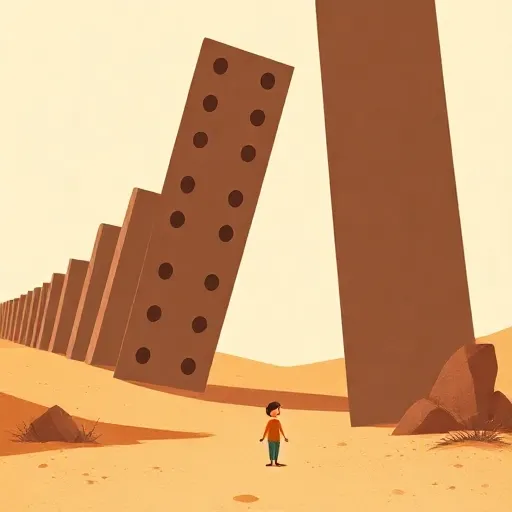
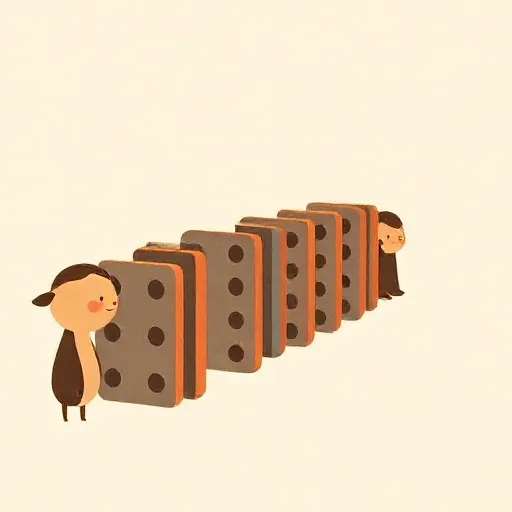
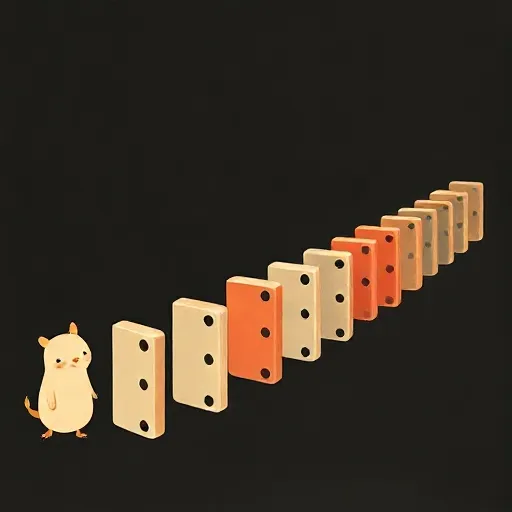
To see the problem, imagine a row of dominoes. If you know exactly how the first domino falls, and you know the rules for how one Domino knocks over the next, you can predict the whole chain. Causal determinism says the whole universe works a bit like that. The state of things a billion years ago, plus the laws of nature, locked in everything that happens—including every single thing you do.
This idea seems to threaten two things you probably believe about yourself. First, it threatens the sense that you could have done otherwise. If the domino chain was always going to lead to you picking the cereal, then the path to toast was never really open. You could not have chosen it. Second, it threatens the idea that you are the ultimate source of your actions. If your decision can be traced back to events before you were even born, then you are not the true starting point of the choice. The real starting point is in the deep, impersonal past.
Philosophers who are incompatibilists think this threat is real. They argue that if determinism is true, the kind of freedom needed for us to be truly responsible for our actions just cannot exist. If your future was fixed before you existed, how can you be praised for your kindness or blamed for your cruelty?
The Classical Reply: Freedom as Getting What You Want
The thinkers who push back against this grim picture are called compatibilists. They believe that free will and determinism can get along just fine. The first wave of these thinkers, the classical compatibilists like Thomas Hobbes (1588–1679) and David Hume (1711–1776), had a very simple idea of what freedom is.
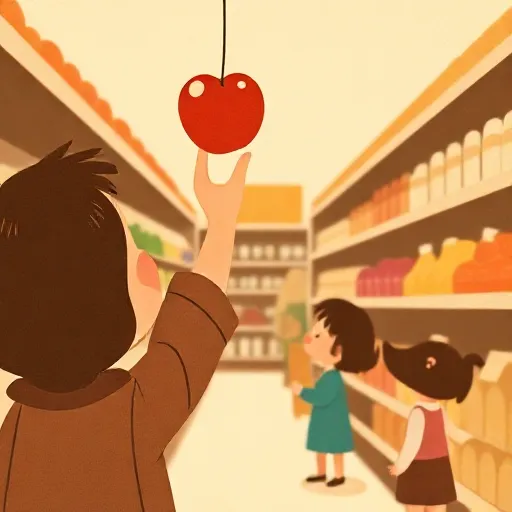
For them, a free action is just doing what you want without being stopped. Hobbes put it like this: your freedom is finding “no stop, in doing what he has the will, desire, or inclination to doe [ sic ]”. If you want to reach for an apple and nobody ties your hands, you are acting freely. It does not matter that your desire for the apple was caused by hunger, and that hunger was caused by your biology, and so on backwards in time. You are the engine right now. Nobody is forcing you against your will.
But a sharp incompatibilist will spot a problem here. This is only “one-way” freedom. It explains why you did the thing you did. But it does not explain whether you really could have done something else. If your wants themselves were determined, then you could not have wanted differently. And if free will requires the ability to do otherwise, this simple picture fails.
The Clever Defense That Fell Apart

The classical compatibilists tried to fight back with a clever fix. They said that “you could have done otherwise” just means something like this: if you had wanted to do otherwise, then you would have. Imagine a girl named Danielle on her birthday. She picks up a black puppy instead of a blonde one. Could she have picked up the blonde puppy? The classical compatibilist would say yes: if she had wanted the blonde one, she would have picked it up.
But there is a fatal flaw here, one that twentieth-century philosophers exposed. Imagine we learn a secret about Danielle. She has a deep, invisible psychological block. She is literally incapable of wanting to touch a blonde dog. When she picked up the black puppy, her ability to choose the blonde one was not just unused—it was completely absent. But the compatibilist’s rule still says, “Ah, but if she had wanted the blonde one, she would have picked it up.” This gives the wrong answer. It says she was free to do something she was psychologically blocked from doing.
This failure was a big deal. It showed that the classical way of defining “could have done otherwise” was not up to the job. It handed a major win to the incompatibilists, who could now argue that being unblocked to do what you want is not yet the real thing we mean by free will.
Three Ideas That Changed the Game

In the 1960s, the whole debate was blown wide open by three powerful ideas.
First, the Consequence Argument, sharpened by thinkers like Carl Ginet and Peter van Inwagen (b. 1942), gave incompatibilists a rock-solid logical weapon. It uses a simple idea: you have no power over the distant past or the laws of nature. And you have no power over the fact that the past plus the laws determine the future. So it seems you have no power over the future. If you cannot change the future even a little bit, you can never do otherwise. The domino chain is locked.
Second, Harry Frankfurt (b. 1929) launched a brilliant attack on the idea that responsibility requires alternatives. He invented a story where a man named Jones wants to shoot Smith. Black, a shadowy figure, wants Jones to do it too, and Black has a device to make Jones do it if Jones wavers. But Jones never wavers. He shoots Smith on his own. In this scenario, Jones could not have done otherwise (Black removed the other path). Yet Jones seems clearly responsible. If this story works, maybe you do not need a garden of forking paths to be free. You just need to act from your own will.
Third, P. F. Strawson (1919–2006) changed the subject entirely. He said we should stop obsessing over the physics of the universe and look at human relationships. When someone hurts you, you feel resentment. When you see someone hurt a friend, you feel a kind of moral indignation. When you yourself do wrong, you feel guilt. These reactive attitudes are the real stuff of holding people responsible. Giving these up would mean giving up on human connection. Strawson argued that is not a real option, no matter what physics says.
A Modern Answer: Being Sensitive to Reasons
Most contemporary compatibilists are not fighting for the old-fashioned ability to do otherwise. They are building theories to show how you can be in control even in a determined world. One of the most important theories, defended by John Martin Fischer (b. 1952) and Mark Ravizza, is reasons-responsive compatibilism.
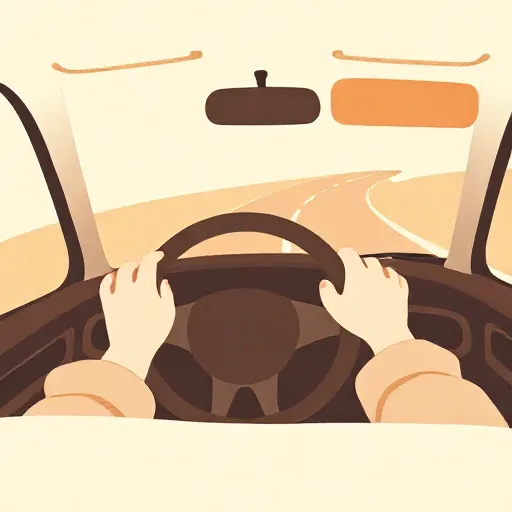
Think about driving a car. You stay in your lane not because you are constantly swerving and correcting, but because you are sensitive to the road. Your steering responds to the curve. For Fischer, a free action works the same way. Your internal decision-making “mechanism” must be sensitive to reasons. A compulsive gambler who bets her savings even when she desperately wants to stop is like a broken steering wheel. A free person is like a well-tuned one. She acts for her own reasons, and if there were strong enough reasons to do otherwise, she would.
Crucially, this view does not insist on the power to do otherwise in the actual world. It just insists that your actual choice-making equipment is healthy and tracks reasons. The freedom is in the quality of the actual sequence of events—how your own reasons steer you—not in the existence of an untaken path. This disentangles free will from the problem of the locked domino chain, even if it means admitting the other path was never really open.
Why This Old Fight Still Matters to You

A scientific picture of the world says every event has a cause. A human picture of the world says you can make a genuine difference. The compatibilist tries to hold these two pictures together without breaking either one. The incompatibilist thinks you eventually have to choose between them—that a determined action by your brain is not your action in the way that counts.
This is not just a puzzle for a philosophy classroom. It matters next time you feel guilty for snapping at a friend. Were you just a domino falling, or were you the author of that sharp word? It matters when a court punishes a criminal. If his brain was a deterministic machine, is punishment for justice or just for protection? The answer you give to the free will problem lives inside every judgment you make about yourself and the people around you. The debate is not settled, and right now, you are the one living it out.
Think about it
- If a friend tells you they “couldn’t help” being mean because they were in a bad mood, is that a genuine excuse or a misunderstanding of their own freedom?
- Imagine a perfect supercomputer could predict every decision you will make, starting from the moment of your birth. Would you still believe you have a free will? Why or why not?
- Does it matter more, for being responsible, that you could have done otherwise, or that the choice you did make really came from who you are?