Do You Truly Choose, or Is Everything Set in Stone?
A Scientist Who Knows Everything

Imagine a supercomputer that knows every fact about the past — every particle, every law of nature — and can calculate with perfect accuracy what you will do next. If such a machine existed, your future would be fixed before you even thought about it. This idea is called determinism. If determinism is true, then every event, including every human choice, was made inevitable by earlier events and the unchanging laws of the universe. There is only one way things can unfold.
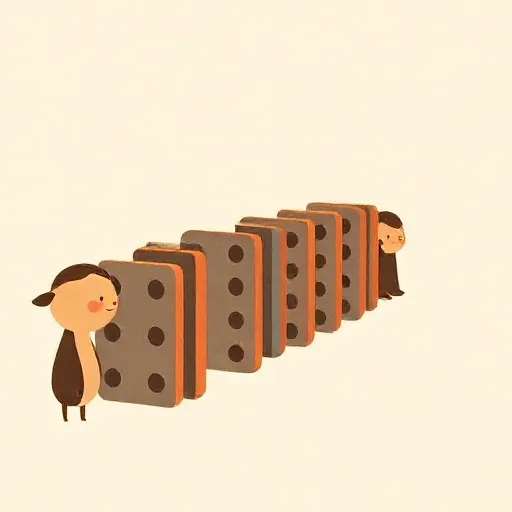
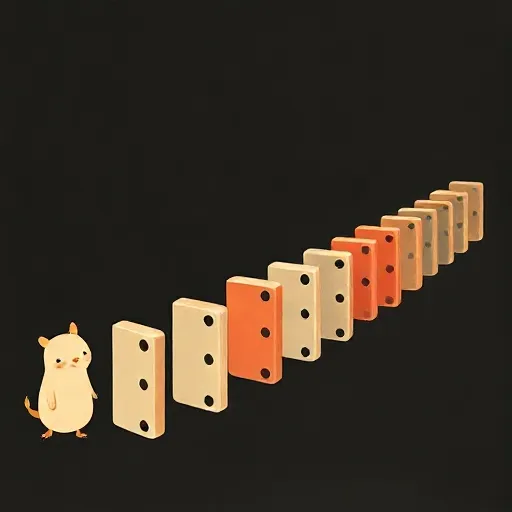
The philosopher Peter van Inwagen (born 1942) captured why this might threaten our sense of freedom. He offered a simple chain of reasoning known as the Consequence Argument. If determinism holds, your actions are the necessary results of the laws of nature and events that happened long before you were born. You had no control over those laws — gravity works the way it does regardless of your wishes — and you certainly had no say over what happened before you existed. So how can your present actions be up to you? They seem to be just as unstoppable as a row of falling dominoes. If free will requires the ability to do otherwise, and determinism removes that ability, then free will may be an illusion.
Freedom as Doing What You Want

Not everyone agrees that determinism cancels freedom. Many philosophers, called compatibilists, argue that free will and determinism can coexist. The twentieth-century thinker Moritz Schlick (1882–1936) put it this way: freedom means the opposite of compulsion. You are free as long as you are not locked up, chained, or forced to act at gunpoint. Inside your own head, even if your desires are caused by past events, you are still doing what you want. A determined choice is still your choice.
Compatibilists also offer a conditional analysis of being able to do otherwise. Even if the past and the laws fixed your actual decision, it is still true that if you had wanted something different, then you would have acted differently. When you pick chocolate ice cream, you could have picked vanilla — meaning you would have done so if you had preferred vanilla. That kind of possibility, they say, is all the freedom that matters.
But objections arise. Imagine a person whose desires were secretly implanted by brainwashing. They act exactly as they choose, and no one is holding a gun to their head, yet something feels wrong. Their choices do not seem truly theirs. This worry — that the source of your wishes matters just as much as acting on them — points toward deeper puzzles about responsibility.
The Mysterious Case of Black and Jones

What if moral responsibility does not require the ability to do otherwise at all? The philosopher Harry Frankfurt (born 1929) invented a clever thought experiment to test this idea. Imagine an agent named Jones who is considering whether to do a certain action — say, helping a stranger. A second person, Black, is watching secretly. Black wants Jones to help, and Black has a device that can make Jones do it if necessary. However, Jones freely decides to help on his own. Black never intervenes.
Jones could not have done otherwise, because Black would have forced him to help if he had hesitated. Yet Jones did choose the action himself, for his own reasons. Frankfurt argued that what matters for responsibility is not having alternative possibilities, but acting from your own reasoning and will. Jones is responsible even though his action was unavoidable. This shift in focus — from alternative paths to the actual causes of behavior — led many philosophers to develop reasons-responsiveness views: you are responsible when your decision-making process is sensitive to reasons, even if, in a particular case, outside forces made the outcome inevitable.
The Anger That Won’t Go Away

The twentieth-century philosopher P. F. Strawson (1919–2006) took a different compatibilist path. He asked us to notice our reactive attitudes — the emotions that naturally arise in our dealings with others. When someone steps on your foot out of careless disregard, you feel resentment. When a friend helps you simply because they care, you feel gratitude. These emotions are responses not to abstract facts about the universe but to the quality of will others show toward us.
Strawson argued that even if we learned determinism were true, we could not abandon these responses. They are too deeply woven into human relationships. He pointed out that we distinguish between excuses — “I didn’t see you there; it was an accident” — and exemptions. Exemptions apply to people who are not fully capable of participating in normal moral life, such as young children or those with serious psychological conditions. Determinism would not show that everyone is in an exempted state; most normal adults would still be appropriate targets of praise, blame, and demanding respect. Thus, responsibility lives in our practices, not in a metaphysical feature of the universe.
The Mad Scientist and the Mirror
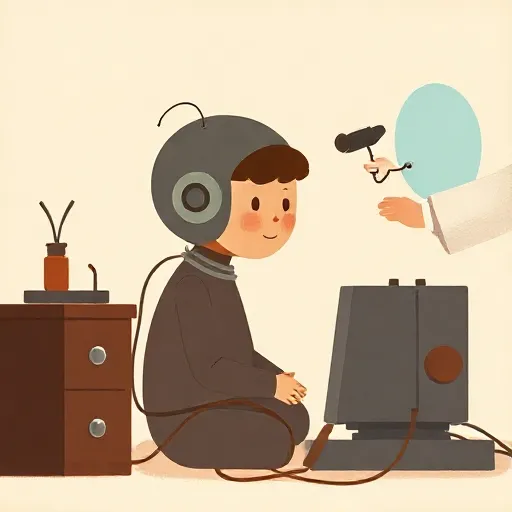
Strawson’s picture is appealing, but a different kind of challenge still lingers. Imagine a neuroscientist team could rewire your brain so that your core values — your very personality — become whatever they choose. Suppose they make you deeply kind, and afterward you happily help others because that desire feels entirely your own. Are you then responsible for your good deeds? Many think not, because those values were forced on you. This suggests that how you came to have your character matters for responsibility.
The philosopher Galen Strawson (born 1952) pushed this worry to its limit. To be ultimately responsible for a choice, he argued, you must be responsible for the way you are — your desires, beliefs, and personality. But being responsible for those traits would require that you chose them in an earlier act, and that earlier choice would itself need you to be responsible for the traits that led to it, and so on forever. Since no one can be their own cause (you cannot create yourself from nothing), ultimate responsibility is impossible. If no one is ever ultimately responsible, then praise and blame in a deep sense may be illusions.
What If Nobody Deserves Blame?

So where does this leave us? The debate is very much alive. Some philosophers, convinced by arguments like the Consequence Argument or the infinite regress, become skeptics about moral responsibility: they believe that in a deterministic universe (and perhaps in any universe), no one ever truly deserves praise or blame for what they do. Others remain compatibilists, insisting that what matters is whether you act from your own reasons in the absence of force, manipulation, or severe impairment.
This is not just an academic puzzle. Our legal systems, our schools, and our friendships are built on the idea that people can be held responsible. If that idea is shaky, we face hard questions: Should we punish criminals because they deserve it, or only because it might prevent future harm? When you feel furious at a friend who broke a promise, the anger assumes they could have chosen differently. The next time that happens, you might wonder — were they really free to do otherwise? The answer is far from settled, but asking the question can change how you see yourself and everyone around you.
Think about it
- If a scientist could predict your every choice with perfect accuracy, would you still feel proud when you do something good? Why or why not?
- Imagine a bully who grew up with terrible parents and never learned right from wrong. Should we hold them responsible for their actions, or is it not really their fault?
- Would you want to live in a world where nobody is ever blamed for anything? What might go wrong?