
Do You Have a Right to Be Left Alone?
A “Right to Be Left Alone”? The Birth of Privacy Law

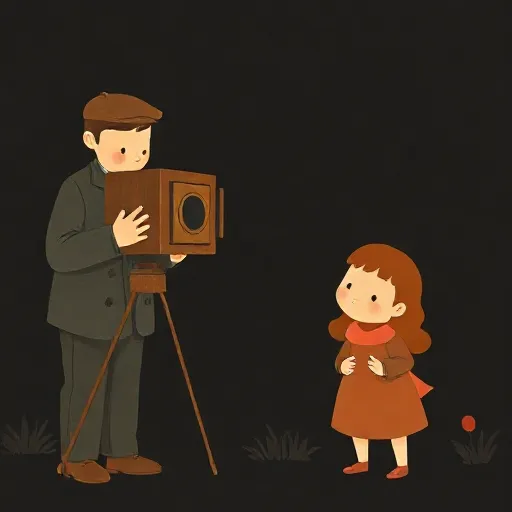
In the fall of 1890, a well-to-do Boston lawyer named Samuel Warren had had enough. The local newspapers were printing lively stories about the dinner parties his family threw, complete with detailed descriptions—and even photographs—of the guests. Warren felt his private life was being stolen and sold for entertainment. So he and his law partner, Louis Brandeis, published a revolutionary article in the Harvard Law Review. They argued that everyone has a “right to be left alone” and that this right comes from a deeper idea: each person has an inviolate personality—a self that others should not be allowed to trespass on without good reason.
Warren and Brandeis were responding to a very real change in technology. Suddenly, cameras could capture a person’s face at a party, and printing presses could spread that image across the city. The pair insisted that the law needed to catch up. Their article started a conversation that has never stopped: what exactly is privacy, why does it matter, and how much should technology be allowed to invade it?
What Does Privacy Even Mean? Two Big Ideas
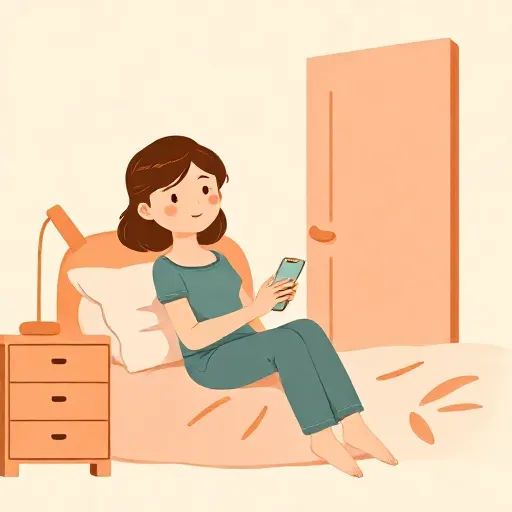
When philosophers and lawyers talk about privacy today, they often separate it into two types. The first is constitutional (or decisional) privacy: the freedom to make your own deeply personal choices without the government or other people interfering. This covers things like whom you marry, what religion you practice, or what medical care you receive. It is about having a zone where you get to decide, not someone else.
The second type is informational privacy, and it is the one you run into every time you go online. It means having control over who gets access to information about you—your messages, your location, your browsing history, your photos. If you post a picture on a social media app and suddenly strangers can see it, that is an informational privacy question. In philosophical language, informational privacy is not just about facts; it is about having some say in the situations where others can learn about you and the tools they use to gather that knowledge. A statement like “my diary should be private” isn’t only describing a fact; it’s making a normative claim—a claim about how things ought to be.
Is Privacy a Basic Good, or Just a Useful Shield?

Now for the big philosophical puzzle. Should we value privacy for its own sake, or only because it helps protect other things that matter?
One camp argues for reductionist accounts of privacy’s value. The idea is that when people say “I want privacy,” what they really care about is something else: safety, property, friendship, dignity, or the freedom to make their own decisions. On this view, the importance of privacy can be fully explained by these other values. If someone steals your banking details, the real harm is theft and insecurity, not the loss of “privacy” as a separate thing. A reductionist might say, “If you have nothing to hide, you have no reason to lock your diary, because locking it is only about protecting something else you might want hidden.”
On the opposite side are non-reductionist views. These hold that privacy is valuable in itself, not merely as a helper for something else. Many human rights documents treat a private life as a basic human right—not reducible to a bundle of other rights. For instance, you might feel that someone reading your old letters without asking is wrong even if no embarrassment, theft, or harm ever results. The wrongness just is the invasion of your private sphere.
A third approach, called cluster accounts, tries to make peace between the two. Cluster theorists say that when people worry about privacy, they are pointing to a real cluster of connected moral concerns—autonomy, dignity, equality, intimacy, and more—but that there is no single, hidden core called “privacy” behind them all. Privacy is the name we give to that whole cluster, much like the word “game” covers chess, tag, and solitaire without having one common ingredient.
Practical lawmaking sometimes tilts toward a different line. In Europe, for example, the discussion is often framed as data protection rather than “privacy.” The idea is that you can get a clearer grip on the problem by asking what counts as personal data and how it should be handled. That legal framing leads to rules about what companies can do with your information, without first having to solve the deep philosophical debate.
Why Your Data Should Stay Yours: Four Reasons
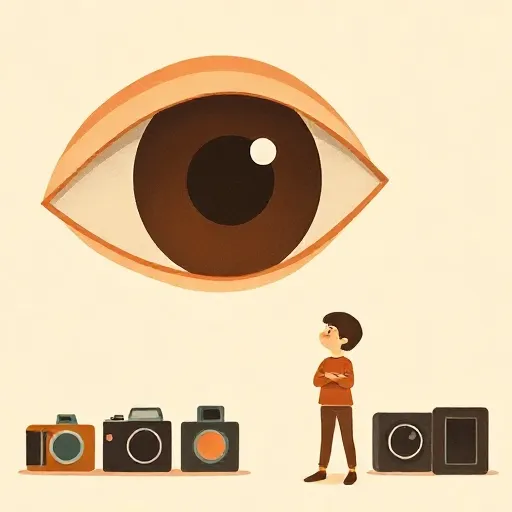
Even if philosophers disagree about why privacy matters, they have offered strong moral reasons for protecting personal data. The following four reasons are taken seriously in debates across the globe.
First, prevention of harm. If someone has unrestricted access to your location, your messages, or your bank account, they can use that information to hurt you—by stalking, stealing, blackmailing, or simply making your life miserable. This is the most obvious reason to put a fence around your data.
Second, informational inequality. Companies know vastly more about you than you know about them. They hold detailed profiles built from your clicks, purchases, and search history, while you know very little about how they operate. That imbalance gives them enormous power to set prices just for you, to nudge you into choices that benefit them, and to design their apps in ways that are hard for you to resist. Data protection laws try to level the playing field so that you aren’t negotiating in the dark.
Third, informational injustice and discrimination. Information that you share in one context can travel to another and be used against you. A health app that tracks your heart rate might sell its data to a company that helps insurers decide who gets a lower premium. A casual “like” on a social media post can feed a profile that labels you a risky kind of person. When data drifts between spheres—from healthcare to commerce, from friendship to policing—you can end up being treated unfairly for reasons you never agreed to.
Fourth, encroachment on moral autonomy and human dignity. When people know they are being watched, their behavior changes. They stop saying what they really think, stop exploring unusual ideas, stop taking small risks. Philosophers call this a chilling effect. Over time, mass surveillance can shrink the space where people feel free to be themselves. There is also a deeper dignity concern: a person is not a puzzle to be solved by someone else’s data crunching. The idea that we could know everything about you by analyzing your digital traces—that we could “figure you out” completely—fails to respect that you have an inner life that no amount of data can fully capture. Respecting privacy means honoring that gap.
Can We Build Privacy-Friendly Technology?
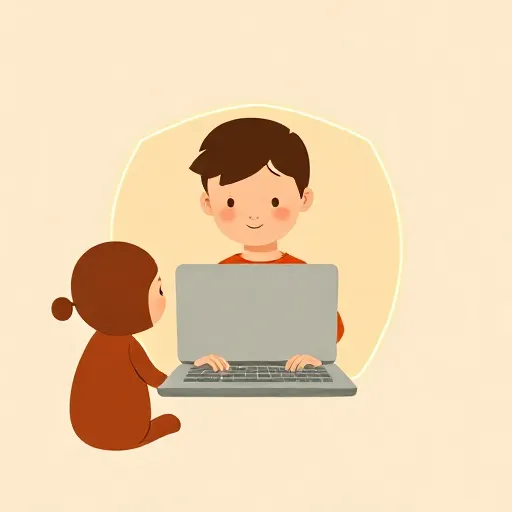
The same technologies that threaten privacy can also be used to protect it. The challenge is to bake protections into the systems from the beginning, not paste them on afterward when damage has already happened.
One family of ideas is called privacy by design. It means that when engineers plan a new app, website, or device, they treat privacy as a core requirement—just as important as speed or battery life. They ask questions like: What is the smallest amount of data we really need? Can we let the user see exactly what is collected? Can we make it easy to correct mistakes? The European Union’s data protection law (GDPR) now requires organizations to take a “data protection by design and by default” approach.
There are also special software tools, often called privacy-enhancing technologies (PETs). Some, like the Tor browser, bounce your internet traffic through several encrypted layers so that no single observer can tell who you are or what you are looking at. Others use clever mathematics. For example, homomorphic encryption allows a company to perform calculations on your data while it remains encrypted, so they never see the raw information at all—like a baker who can make you a cake using a sealed, locked box of ingredients. These tools are powerful, but they are not magic; they have to be configured correctly, and they can be undermined if your own device is infected with spyware.
On the human side, designers sometimes work against your privacy. Dark patterns are interface tricks—a confusing menu, a colorful “Yes, share everything!” button next to a tiny gray “No thanks” link—that steer you into revealing more than you meant to. A related puzzle is the privacy paradox: many people say they care deeply about privacy, but when they download a free app, they click “I agree” without reading the terms. This raises a big responsibility question. If the system is rigged to make it hard for you to choose wisely, who is really responsible for protecting your privacy: you, the company, or the law?
Why This Debate Is About You

It might seem like a dusty argument from 1890 has nothing to do with your life. But Warren and Brandeis were trying to answer a question that every 12-year-old faces today: what part of your life belongs only to you? Every time you open a social media app, every time you accept cookies on a website, every time you let a game access your camera—you are drawing a line between what you share and what you keep to yourself.
The philosophical tangle—whether privacy is a basic right, a bundle of other values, or a cluster of concerns—matters because it changes where we think that line should be drawn. If privacy is merely a shield for safety, then perhaps you only need to worry if someone might actually harm you. But if it also protects your autonomy and dignity, then even being watched by a “friendly” system can shrink who you are free to become. If you never feel unwatched, you might never try on a crazy opinion just to see if it fits, or write a story that nobody else was meant to read.
The fact that technology can both threaten and protect privacy means that the choice is not simply “give up” or “hide.” It is a constant negotiation, and the first step is to see that your inviolate personality is still something worth defending. That is the fire Samuel Warren felt in 1890, and it is still burning inside every screen you hold.
Think about it
- If someone offered you a free phone that records everything you say and everywhere you go, would you accept? Why or why not?
- Is there any reason to care who can read your texts if you aren’t saying anything embarrassing or harmful?
- Imagine you found out that an app you’ve used for a year was quietly sharing your photos with strangers. Even if nothing bad ever happened, would you still feel something was wrong? If so, what?