
What Does It Really Mean to “Have a Right”?
The Four Invisible Shapes of a Right

Imagine walking into a crowded library after school. You see one empty chair, but a card on the seat says “Reserved for the Mayor.” You have no right to sit there. What does that actually mean? Is a right like a ticket you own, a wall around you, or a permission slip the law hands out?
To answer that, philosophers have taken rights apart like a watch. In the early twentieth century, the legal scholar Wesley Newcomb Hohfeld (1879–1918) noticed that the word “right” is used for very different things. He identified four basic kinds of legal position, and each is a relationship between two people — the person who holds the right (the right-subject) and the person the right is held against (the right-object).
The most familiar is the claim-right. You have a claim-right when the law says someone else must do (or not do) something because of you. The other person owes you a directed duty. For example, you have a claim-right not to be punched — everyone else has a duty not to hit you, and that duty points straight at you.
Next, a privilege (or liberty-right) means you are free to do something because the law puts no duty on you to avoid it. In a public park you have a liberty to walk on the grass. That doesn’t mean no one can get in your way — stand-alone privileges are flimsy unless they’re backed up by claim-rights that block interference.
A power lets you change someone else’s legal position. When you sign a contract, you create duties on both sides. That’s a legal power. Even a thief might have the power to sell stolen goods under some weird old rules, but calling that a “right” feels wrong — which hints that something extra is needed.
An immunity means another person is disabled from changing your legal situation. A judge can’t just hand over your bicycle to a stranger. You’re immune from having your property rights wiped away by someone else’s say-so. In Hohfeld’s framework, immunity is the flip side of someone else’s lack of power.
Most legal rights are not just one of these four things. Your right to free speech is a bundle: claim-rights against censors, liberties to speak or stay silent, and immunities that stop the legislature from easily erasing those protections. Breaking a right down this way shows you exactly what you can do, can’t do, and can expect others to do.
What Makes Something Worth Calling a Right?

Not every legal rule gets called a right. A law that says “everyone must brush their teeth after meals” creates a duty, but it doesn’t give anyone a right. So what’s the extra ingredient?
Two big answers have faced off for decades. The Will Theory (or Choice Theory) says a right makes you a tiny sovereign over a part of your life. You get to control the duty. Think of your right to your own bike: you can let someone borrow it, or you can say no. You hold the power to waive, enforce, or transfer the duty others owe you. Philosophers like Immanuel Kant (1724–1804) and H.L.A. Hart (1907–1992) championed this view. It ties rights tightly to freedom and personal control.
The Interest Theory says rights are about what benefits you. You have a right to something because it protects an aspect of your well-being. Joseph Raz (1939–2022), a leading Interest Theorist, argued that you hold a legal right when the law treats your interest as a good enough reason to put someone else under a duty. Your right against being hit exists because your physical safety matters to your life going well.
Both theories hit bumps. Infants and people in comas have legal rights, but they can’t make choices about those duties — a problem for the Will Theory. Meanwhile, the Interest Theory might count as a “right” something that benefits you but feels nothing like one, for example a right to be safely ignored by everyone (no duties owed) which doesn’t sound like a right at all. A third view, the Demand Theory, emphasizes that rights let you stand up and demand what you’re owed, which connects them to dignity. The debate is still very much alive.
When Rights Act Like Super-Shields
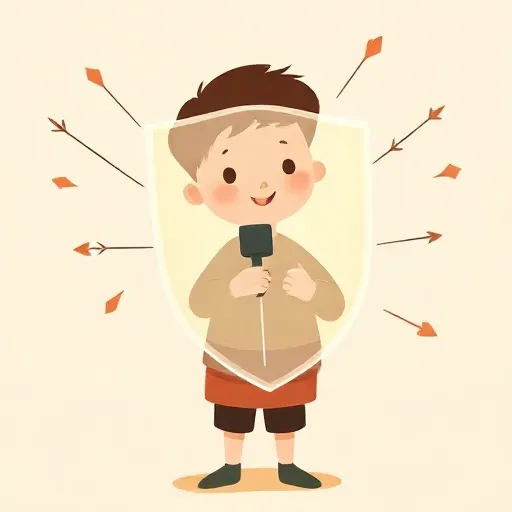
If you have a right to free speech, the government usually can’t ban a book just because lots of people find it offensive. Your right doesn’t simply weigh against the government’s reason on a scale; it often kicks that competing reason out of the room. Philosophers call this preemptory force.
Ronald Dworkin (1931–2013) borrowed a card-game metaphor: rights act as trumps. In the game of bridge, a trump card beats any card of another suit, no matter how high its number. Similarly, a right can override a rule or goal, even if that goal is weighty in everyday arithmetic. Put technically, a right is an exclusionary reason — it counts in favor of doing something and against acting on certain other reasons that conflict.
Very few rights are absolute trumps. Most are defeasible — they can be overridden by especially powerful competing reasons. The measure of how hard a right pushes back is called its stringency. For instance, your right to play music in your home is real, but your neighbor’s right to sleep might limit the volume after midnight. Courts often balance rights when they clash, protecting the most important interests at stake. Even when a right is overridden and infringed (the music must stop), it isn’t erased — it might still earn you compensation later, like paying for damage caused by a necessary trespass.
The Double Life of a Right: Reason or Final Answer?
Rights can wear two different hats in legal thinking. Sometimes a right is the outcome — the conclusion the judge reaches after weighing all the facts and values. In a custody dispute, the court finally declares which parent has “visitation rights.” That right is the bottom line.
Other times a right is a reason inside the argument. When a newspaper claims its right to a free press as a reason not to be censored, the right isn’t the end of the story; it’s one consideration that pushes against security worries or privacy concerns. And the same right can do both jobs. A judge might say a litigant’s interest justifies a right, then use that right as a reason to create a new duty — an “intermediate conclusion.”
Noticing this double life matters. If you mistake a right for a mere reason, you might treat it as just another ordinary factor to be easily outweighed by public convenience. That misses its preemptory punch. But if you treat every mention of a right as the unshakeable final word, you freeze the law and ignore genuine emergencies. Legal systems keep the tension alive on purpose.
Can a Bad Law Give You a Right?

A legal right can be on the books but still be morally terrible. Throughout history, many legal systems gave husbands the “right” to physically discipline their wives. Those rights were legally valid — they came from proper sources of law — but hardly anyone today would say they were morally justified. So what makes a legal right deserve to exist?
Often the answer lies in the right’s function. If a right protects a genuine interest or real personal freedom, that counts strongly in its favor. But having an interest in something doesn’t automatically mean you should get a legal right to it. The common good often bridges the gap. Patent rights, for instance, are given partly because rewarding inventors sparks new ideas that help everyone, not just the creator.
That doesn’t mean rights are always friendly to the public interest. The philosopher Karl Marx (1818–1883) warned that legal rights can dress up economic power and divide people from one another. Others reply that rights become most precious exactly when community ties break down or turn oppressive. The real question, then, isn’t just “do I have a right?” but “ought this to be a right?” — and that’s a debate you’re already part of every time you hear someone say something is unfair.
Why This Matters When You’re Not a Lawyer

You probably bump into the language of rights more than you realize. At school you may have the right to speak in a student council meeting, a right to privacy in your locker, or even a “right” to get a hall pass under certain conditions. Online, the terms of service for a video game often grant you a “license” — a kind of limited right to play, but not to sell your account. Your friendships involve informal rights, like the right to be asked before the group changes plans that affect you.
When you hear the word “right,” pause and ask: what kind of Hohfeldian shape does it have? Is it giving you a real choice (Will Theory), or protecting something good for you (Interest Theory)? Does it act as a shield you can raise when someone tries to push you around, or is it just a label slapped onto a rule that doesn’t really respect you? Paying attention to those questions helps you figure out which rules are worth defending — and which ones are pretended rights that crumble when you actually try to use them.
Think about it
- Can a rule be a real “right” if you are never allowed to give it up or say no to the duty that comes with it?
- If a law benefits you but you can’t complain or demand anything when it’s ignored, do you still have a right?
- When two of your own rights clash — say, your right to speak freely vs. your right not to be slandered — who, or what, decides which one wins?