What Gives You the Right to Say "I Have a Right!"?
The Secret Code Inside “I Have a Right!”

It’s Friday afternoon, and you’re staring at the last chocolate chip cookie. Your brother says it’s his. You fire back, “I have a right to it — I bought the ingredients!” But what does that actually mean? What are you really claiming when you say you have a right?
For centuries, people have argued about rights without knowing what they are made of. Then, in the early 1900s, an American legal scholar named Wesley Hohfeld (1879–1918) cracked the code. He showed that every right can be taken apart into four basic building blocks. Mix them together, and you get everything from a right to free speech to a right to your own toothbrush.
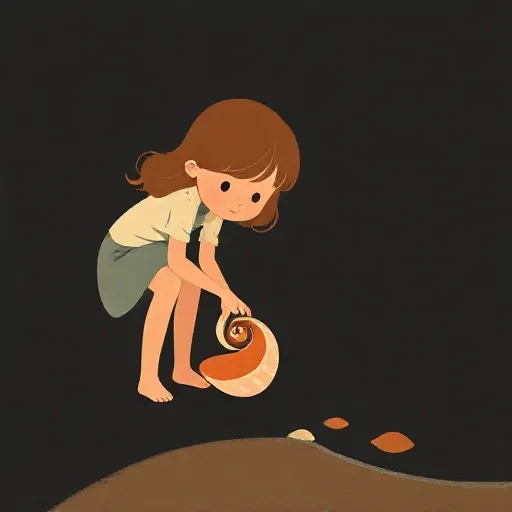
The four ingredients are privilege, claim, power, and immunity. A privilege means there is no rule stopping you from doing something. When you pick up a shell on the beach, you have a privilege — nobody has a duty to stop you. A claim means someone else owes you a specific action. If a friend promises to pay you back a dollar, you have a claim that your friend give you that dollar. A power lets you change the rules. A soccer captain has the power to tell a teammate to take a penalty kick, instantly creating a new duty for that teammate. An immunity protects you from someone else changing your rules. If the school handbook says your right to a lunch break cannot be taken away by a teacher, you have immunity — the teacher lacks the power to remove your break.
Most rights are not just one ingredient. Your right to your computer, for instance, is a bundle: a privilege to use it, a claim that others not use it without permission, powers to lend it or sell it, and an immunity that stops a stranger from simply declaring the computer is theirs now. That bundle is what philosophers call a molecular right.
The Big Fight: Control or Well-Being?
The Hohfeld ingredients explain the shape of a right. But they don’t explain what makes a collection of those ingredients a right in the first place. Take this simple example: your city council has no power to give you a surprise pension. So, by Hohfeld’s logic, you have an immunity against the council giving you a pension. Yet no one would ever say, “I have a right not to be given a pension by the city council.” Not every bundle of ingredients is a right. Something extra must be there — a special function that rights perform for the people who hold them.
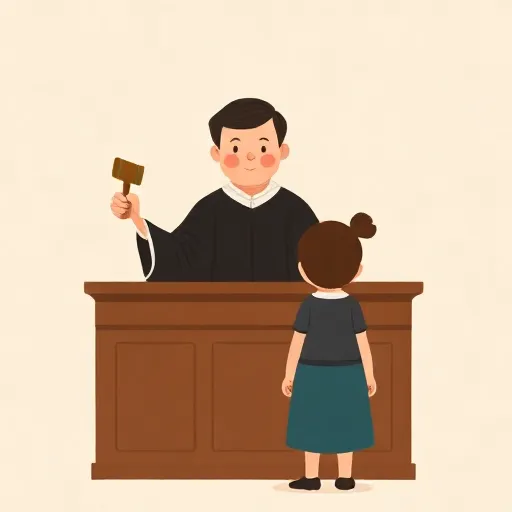
Two rival theories try to answer what that function is. One is the will theory, championed by the British legal philosopher H. L. A. Hart (1907–1992). For a will theorist, a right gives its holder the power to control another person’s duty. You have a right only if you can decide whether the duty is enforced, waived, or canceled. A promise gives you a right, Hart would say, because you have the power to release the promisor from their duty. A property right is real because you can sell it, give it away, or let someone else use it. In short: if you cannot say “yes” or “no,” you do not truly have a right.
The other camp is the interest theory, and its most famous modern voice is the Israeli philosopher Joseph Raz (1939–2022). Interest theorists say the function of a right is not control, but protection: a right serves what is in your interest, what makes your life go better. You have a right to be paid for your work because getting paid is good for you, whether or not you have the power to cancel your boss’s duty.
Both theories look strong until you test them against hard cases. The will theory struggles with rights that cannot be waived. Is it really true you don’t have a right not to be enslaved, just because you cannot give anyone permission to enslave you? And what about babies and animals? They cannot exercise control over anyone’s duties, so the will theory seems to say they have no rights at all — not even a right not to be harmed. The interest theory easily handles these cases: unwaivable rights are still good for their holders, and babies have interests that rights can protect.
But the interest theory has its own blind spots. You might care deeply that your parents win the lottery, but you have no right to their money; your interest alone does not create the right. And what about a judge’s power to sentence someone to prison? That is certainly a right, but it is not justified by what is in the judge’s personal interest — it exists for a larger social role. If rights were always about the holder’s own well-being, many official powers would have to stop counting as rights.
When Your Right Slams Into Mine
Philosophers also ask why rights feel so weighty. The American legal thinker Ronald Dworkin described rights as trumps — they beat ordinary reasons in the game of decision-making. You might have strong reasons to keep a park peaceful, but a person’s right to speak usually trumps those reasons. Still, rights are not unbreakable shields. Sometimes trumps collide with one another.
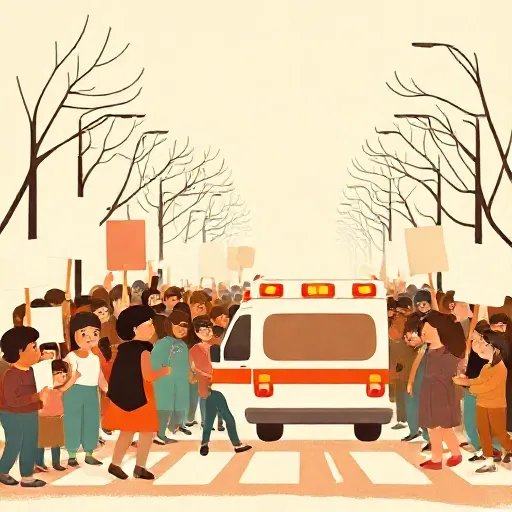
Imagine a protest blocking an ambulance. The demonstrators have a right to free expression; the patient inside the ambulance has a right to urgent medical care. When two rights crash, we have to figure out which one gives way. One approach, called specificationism, says that real rights never truly conflict because each one is defined with a long list of hidden exceptions. The “right to protest,” on this view, includes a clause that it does not apply when it would endanger lives. Many philosophers push back: if rights have endless fine print, they become impossible to pin down, and they lose their power to guide us in new situations.
The rival view admits that rights really do clash. In those moments, one right temporarily defeats another, but the defeated right does not vanish. It leaves a moral residue. If a starving person justifiably takes your sandwich, their right to survive overrides your property right — but you are still owed an apology, and maybe compensation. That lingering duty shows that even when a right is overridden, it hasn’t been erased.
The Critics: Are Rights Making Us Selfish?
Not everyone believes rights are the best way to think about fairness. Some of the strongest objections come from philosophers who worry that rights-language paints each person as a separate, self-interested individual. The nineteenth-century thinker Karl Marx mocked the revolutionary declarations of the “rights of man,” arguing that they pictured human beings as isolated monads, cut off from their communities and always guarding their private interests. More recently, scholars like the Nigerian philosopher John Mbiti (1931–2019) and others working in African communitarian traditions have suggested that the Western focus on individual rights can distort a deeper truth: that a person’s very identity is woven out of family, clan, and shared life.
These critics don’t always deny that people are mistreated or need protection. Their point is that constantly claiming “my right!” can train us to see ourselves as standing alone against the world, rather than as members of groups that give our lives meaning. Some thinkers reply that rights work best as a fallback — a safety net for when relationships break down. You might prefer that your family treats you fairly because they love you, not because you have a right to it. But if love fails, rights are the language you reach for. The debate is far from settled.
What This Means for Your Next Argument
The Hohfeld ingredients and the clash between will and interest aren’t just dusty puzzles. They live inside every playground bargain, every debate about screen time, every protest and every courtroom. Knowing the structure helps you ask better questions: Am I claiming a privilege — or a claim that someone owes me a duty? Does my little brother have a right even though he can’t yet control anyone’s duties? If rights can clash, what’s the fair way to clean up the moral mess afterward?
The next time you face the last cookie, you’ll have more than a shout. You might say, “I bought the ingredients, so I have a privilege to eat it. But if you’re still hungry, I could waive that privilege — and maybe you take out the trash tonight.” That’s not just good arguing. It’s philosophy in action.
Think about it
- If a baby has a right not to be hurt but cannot demand anything or release anyone from a duty, do you still think the baby has a real right? Why or why not?
- Imagine your class decides to run entirely on a “rights” system: every student can claim a right to speak first, to choose a seat, or to a longer break. Would that make the classroom more fair, or would something important be missing?
- Can you think of a situation where doing the right thing for someone else meant your own rights had to give way — and what, if anything, did you feel they owed you afterward?