Why Did Descartes Think a Tiny Gland Holds Your Soul?
A Pinecone in Your Brain
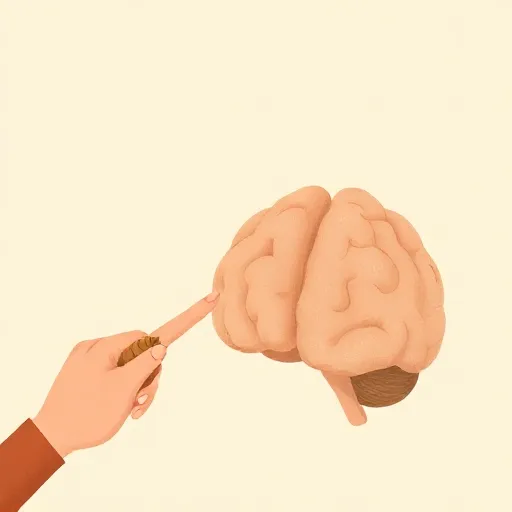
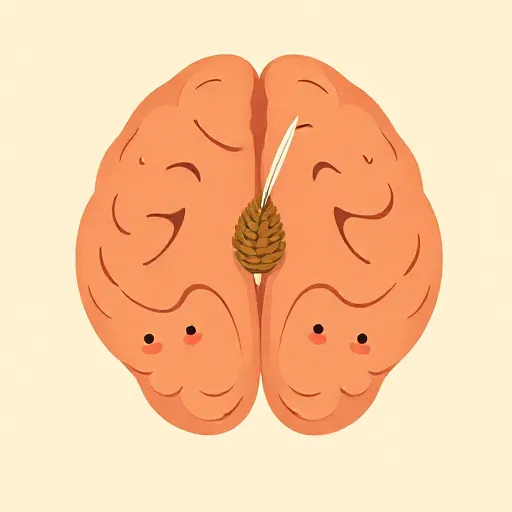
Right now, deep in the center of your head, a small lump of tissue sits between your ears. It is shaped like a pinecone, smaller than a pea, and for more than two thousand years it has been one of the most argued-about flecks in the human body. It is the pineal gland.
The Greek doctor Galen (ca. 130–ca. 210 CE) first described it in a huge book called On the Usefulness of the Parts of the Body. He named it kônarion, Greek for “little pinecone,” because it looked to him like the seeds you pull out of a pine cone. Galen thought the pineal gland was just a support structure for blood vessels, like other glands. He was not impressed by the idea, already floating around, that it might control the flow of psychic air inside the brain. Galen pointed out that it is stuck to the outside of the brain and cannot move on its own. How, then, could it open and shut any passage? He argued a worm-like flap elsewhere in the brain was the real gatekeeper.
But the search for the soul’s headquarters was already on. Doctors and philosophers kept asking: if you could point to one spot and say “I am here,” what would that spot be?
Three Rooms for the Soul
By the fourth century CE, a new story took hold. Nemesius, a bishop in Syria, taught that the brain’s hollow chambers—the ventricles—held the three powers of the mind. The front ventricle housed imagination, the middle one reason, and the hind one memory. This “ventricle theory” spread through the Middle Ages and mixed with Galen’s idea of a gatekeeping worm.
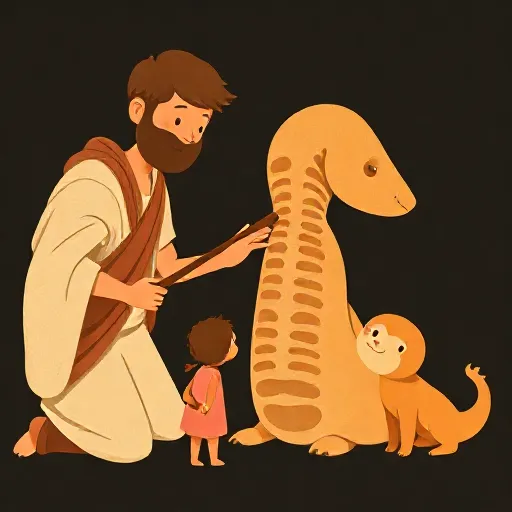
The Arab physician Qusta ibn Luqa (864–923) gave the worm a starring role. He said it could swing up or down to control the flow of animal spirits—a fine, vaporous stuff that ancient doctors thought filled the brain. Want to remember something? You look up. The worm rises, the passage to the memory room opens, and memories stream back. Want to think without distractions? You look down. The worm drops, sealing the reasoning room from memories stored behind it.
For a while, things got messy. Some medieval writers used the word pinea for the worm, mixing it up with the pineal gland. Suddenly the pineal gland itself was being accused of acting like a valve—the very job Galen had said it could not do. By the 1500s, doctors like Niccolò Massa had discovered that ventricles are filled with liquid, not airy spirits, and the great anatomist Andreas Vesalius rejected the whole ventricle theory. The soul’s address was up for grabs again.
Descartes’ Single Point

Into this confusion stepped René Descartes (1596–1650), a French philosopher who loved mathematics, anatomy, and grand solutions. In his Treatise of Man (written before 1637), he imagined a body like a machine—a statue made of earth, with nerves as hollow tubes and the heart as a furnace. No soul was needed for digesting food, pumping blood, or even walking. But something else was needed for thinking. Where did the rational soul plug into the machine?
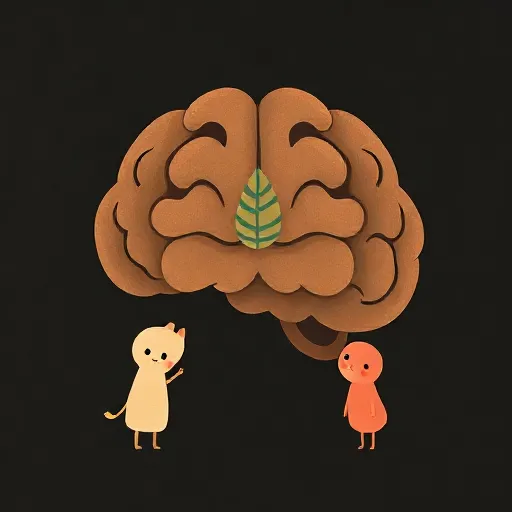
Descartes peered at the brain and made a list. The seat of the soul, he said, must be a single, unpaired part. You see with two eyes but you experience one image. You hear with two ears but you hear one voice. You never think two thoughts at the same time. Therefore, the impressions from your pairs of sense organs must join together somewhere. Almost every brain structure comes in twos—left and right hemispheres, double organs everywhere. Only one tiny part was single: the pineal gland. So he declared it the principal seat of the soul.
The pineal gland, Descartes claimed, was not stuck to the outside as Galen had thought. He pictured it hanging in the middle of the brain’s fluid-filled ventricles, surrounded by fine spirits. He called those spirits “a very lively and pure flame,” a wind that inflates the ventricles like a sail. When you see a tree, nerve fibers tug open little valves in the ventricle walls; the spirits rush out and stamp a low-pressure image of the tree onto the surface of the pineal gland. That image, in turn, causes a sensation in the soul. Memory works similarly: spirits flowing through the brain’s pores widen them, leaving lasting patterns that can be re-traced later. To move your arm, the soul tilts the pineal gland ever so slightly, directing spirits down different nerve tubes, which make muscles contract. Descartes believed the gland is small, light, and easily moved—exactly what the soul needs as its control lever.
Not everyone bought it. But Descartes was convinced he had found the single switchboard between body and mind.
What Went Wrong
Within decades, Descartes’ idea began to crumble. The English doctor Thomas Willis, writing in 1664, noticed a problem: animals like cows and sheep have large pineal glands, yet they seem to lack reasoning souls. Why would a gland be so big in creatures with little need for it? A few years later, the anatomist Niels Steensen (often called Steno) pointed out bluntly that Descartes’ anatomy was wrong. The pineal gland is not suspended freely in the ventricles; it is attached to the outside of the brain, just as Galen had said sixteen centuries earlier. And it is surrounded by veins, not arteries.
The deepest blow came from philosophy and from surprising experiments. Descartes had argued that the soul must be in a single, undivided organ because your experience is undivided. In the 1700s, scientists began cutting the bridge between the two halves of animals’ brains—so-called split-brain experiments. A doctor named Johann Zinn showed in dogs that even with their brain halves disconnected, they still behaved as unified, conscious creatures. The French philosopher Julien Offray de La Mettrie scoffed at the unity argument. The soul did not need a single little nub to be whole.
By the 1800s, only the oddest thinkers still championed the pineal gland as the soul’s home. Meanwhile, real science was uncovering its actual job: it is an endocrine gland that makes melatonin, a hormone that helps control your sleep-wake cycle. That is a big deal, but it has nothing to do with being the headquarters of you.
Why the Pineal Argument Still Echoes
Descartes was wrong about the pineal gland. Yet the question he chased—how does a conscious “I” arise from a lump of physical stuff?—has not gone anywhere. Neuroscientists today search for the neural correlates of consciousness, the patterns of brain activity that match up with your inner experience. They know there is no single magic spot; consciousness seems to be a team effort across many regions. Still, the drive to find a special place where it all “comes together” echoes Descartes’ longing for a single, simple answer.
The pineal gland story is a warning: the most careful thinker can be tripped by a mix of old assumptions and bad anatomy. But it is also an invitation. Whenever you catch yourself wondering where your thoughts live, you are joining a conversation that stretches from Galen’s scrolls to modern brain scanners. The pinecone-shaped speck didn’t turn out to be the soul’s house. But the search for home is far from over.
Think about it
- If you could replace every part of your brain, one tiny piece at a time, with a mechanical copy that works exactly the same, would the final machine still be you? Why or why not?
- Descartes believed looking up helps you remember and looking down helps you focus. Have you ever noticed yourself doing something like that? What does that tell you about how the body and the mind might be connected?
- Suppose a scientist announced she had found a single cell that is the “seat of consciousness.” Would that make you feel more special, less special, or just confused? Explain what might change in how you see yourself.