Is Your Mind a Ghost Hiding Inside a Machine?
Where is your thinking right now?
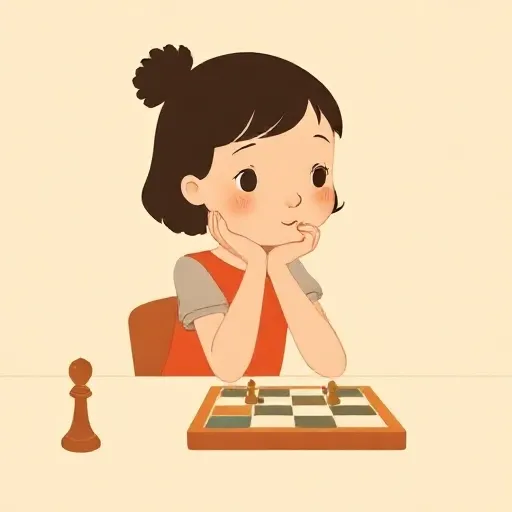
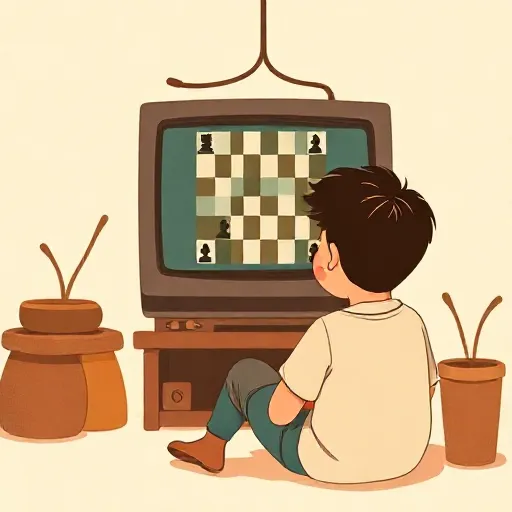
It is a rainy afternoon, and you are trying to beat your friend at chess. You stare at the board, running through possible moves. A thought pops into your head: “If I move my knight there, she’ll take my queen.” Where did that thought come from? Where is it right now? Is it somewhere inside your skull, floating in a mental space? Does it have a location at all?
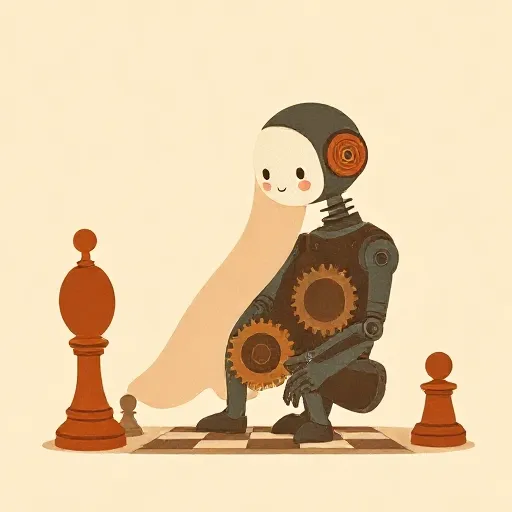
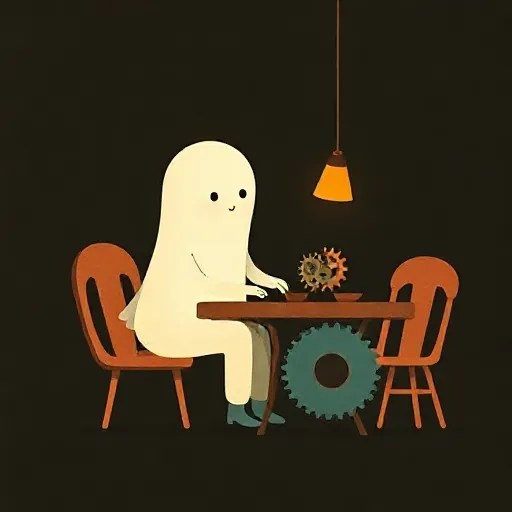
For a long time, many people answered by picturing the mind as a ghost that lives inside the body. Gilbert Ryle (1900–1976), a sharp and witty philosopher from England, thought this picture has fooled us. He called it the ghost in the machine. Ryle believed that once you see through the mistake, you start to understand yourself in a completely different way.
Descartes’ two worlds
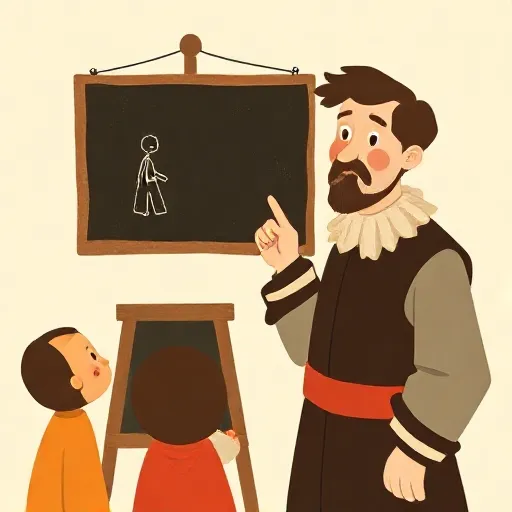
The most famous version of the ghost-and-machine picture comes from René Descartes (1596–1650). He decided there are two completely different kinds of stuff in the universe. Your body is a physical machine, made of flesh and blood, taking up space and following the laws of physics. Your mind, on the other hand, is not in space at all. It has no shape, no size, no location. It is a private thinking thing, known directly only to you.
This view is called substance dualism, because it says two kinds of substance exist: mental stuff and physical stuff. Ryle called it the “Official Doctrine.” The problem is, if the mind and body are so different, how on earth do they affect each other? How can a non-physical thought make your arm move? And how can stubbing your toe cause a flash of pain in your non-physical mind? This is the mind-body problem, and Ryle argued it arises only because we keep making the same logical blunder.
The university that wasn’t there

Imagine you show a visitor around your school. You take her to the library, the science labs, the dining hall, the playing fields, and the classrooms. She nods politely and then asks, “I’ve seen all these buildings, but where is the university?” You’d probably smile. The university isn’t an extra building hidden behind the others. It is the way all those parts are organized — the whole pattern of learning and living. Asking for the university in addition to the buildings is a mistake.
Ryle says we make exactly this kind of mistake when we talk about the mind. We see people talking, laughing, solving puzzles, and then we ask, “Yes, but where is the mind that does all that?” The mind, Ryle insists, is not a secret inner object alongside the behavior. The words “mind” and “body” belong to different logical types. Putting them together as if they were two things of the same kind is a category mistake. Ryle loved exposing category mistakes. Saying “she came home in a flood of tears and a Chevrolet” mixes two completely different sorts of ideas — one emotional, one physical — and the result is nonsense. He thought much traditional philosophy produces nonsense by mixing categories.
Sweet dispositions
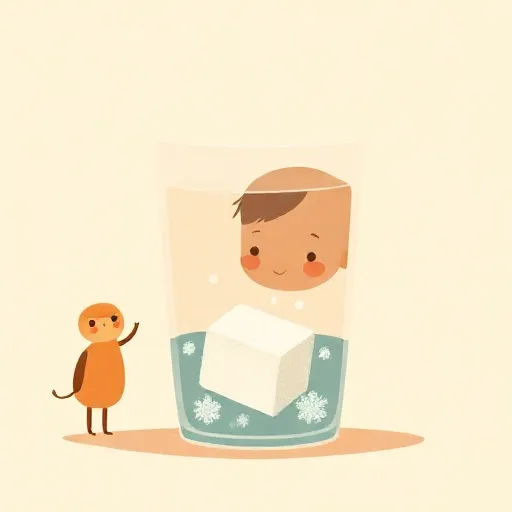
So if mental words don’t name ghostly inner episodes, what are they doing? Ryle suggested that very often they describe dispositions. Think of a sugar cube. You say it is soluble. That doesn’t mean it is dissolving right this second, or that “solubility” is a hidden liquid floating inside it. Rather, it means that under certain conditions — if you drop it in water — it will dissolve. The statement is about what the cube is disposed to do.
Ryle believed many mental concepts work the same way. Saying “she knows French” is not reporting a mysterious object inside her head. It means that in the right circumstances — when reading Le Monde, when chatting on the phone in French — she will understand and respond appropriately. It’s a complex, open-ended set of abilities, not a hidden event. But here’s the twist: some critics claimed Ryle was a behaviourist who wanted to translate all mental talk into plain descriptions of physical actions. That is not quite right. Ryle never said “she feels sad” means exactly the same as a list of behaviors. The list would be infinite, and it would have to include private activities like imagining or daydreaming. Ryle wanted to steer between two extremes: the ghost story (everything mental is a private inner show) and the machine story (mind reduces to muscle movements). He thought both sides missed the logical geography of our everyday talk.
Bike riding without a rulebook
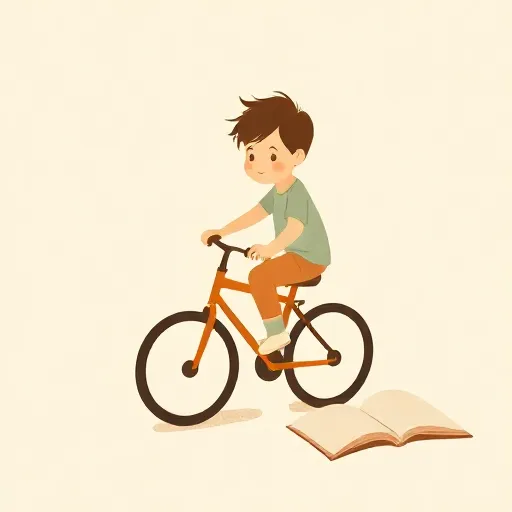
The ghost-in-the-machine picture encourages another mistake. If intelligent behavior comes from a hidden mind, then the mind must be doing some hidden thinking — perhaps quietly consulting inner rules. Ryle called this the intellectualist legend. According to the legend, every clever act is guided by secret theoretical reasoning.
Ryle dug into this with a famous distinction between knowing-that and knowing-how. Knowing-that is knowledge of facts: “Paris is the capital of France.” Knowing-how is skill: knowing how to ride a bicycle, play a tune, or tell a joke. You can be brilliant at riding a bike without being able to state the physics of balance. A chef can cook wonderfully, even if she can’t write down a recipe. Ryle pointed out an infinite regress: if every skill required consulting an inner rule, you’d need another skill to apply that rule, and another skill to apply that one, and so on forever. At some point, you just do it. Rules can be useful later, as a way of describing what you already do, but they are not the engine of every intelligent action. Thinking is often just a more sophisticated doing.
Why the ghost still haunts us
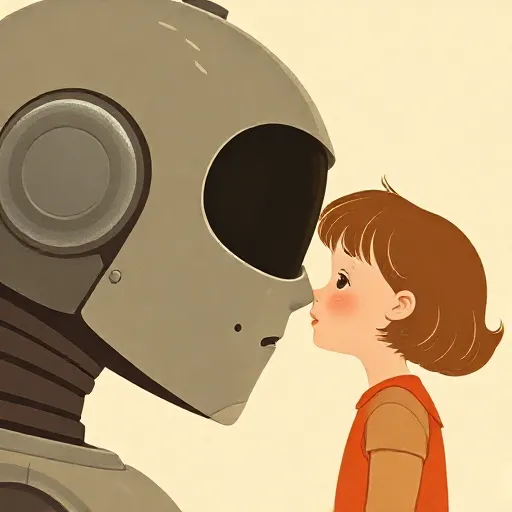
You might think Ryle’s ghost was banished long ago. But consider how we talk today. We often say the brain is like a computer and the mind is like the software — invisible instructions running on the hardware. That still sounds like a ghost pulling levers, even if the levers are neural circuits. The category mistake hasn’t vanished; it has just put on a lab coat.
Ryle’s ideas still matter when you wonder about learning a skill, whether a machine could truly think, or what it means to say you “have an idea.” He invites you to stop peering inside your head for a theater of private thoughts, and instead notice the rich, tangled patterns of what you do and can do. The ghost in the machine is hard to exorcise completely. But once you catch yourself making the mistake — mixing categories, treating “mind” as an extra thing — you start to see your own thinking with fresh eyes.
Think about it
- If you built a robot that behaved exactly like your best friend — laughing, telling jokes, sharing secrets — would you say it has a mind? Why, or why not?
- Think of something you know how to do, like swimming or playing a game. Is there a difference between knowing how to do it and being able to explain to someone else how you do it? Which matters more?
- When you say “I have a thought,” do you picture it as a little object inside you? How would describing it differently change how you understand yourself?