Is There a Little Picture Screen Inside Your Head?
What happens in your mind when you think of a tiger?

In 1619, a young Frenchman named René Descartes (1596–1650) sat in a room heated by a stove in Germany. He wasn’t just warming his hands. He was asking a question that would change philosophy: When I think of a lion, or a triangle, or a friend — what is actually happening inside my head? That mental thing is what Descartes called an idea. But what is an idea, really? Is it a tiny picture? A kind of inner movie? Descartes thought deeply about this, and his answer was surprising. Ideas, he said, are not little images painted on the brain. They are modes of thinking — particular ways your mind works when it thinks about something. To understand that, you need to see how he built his whole picture of the mind.
Descartes turned ideas upside down: they’re the least real things, not the greatest

Descartes used three technical terms to build his world: substance, attribute, and mode. A substance is something that can exist on its own — a mind is a substance, a body is a substance. An attribute is the essential feature of that substance — thinking is the attribute of a mind, extension (taking up space) is the attribute of a body. A mode is a specific way that attribute shows up. For example, a shape is a mode of extension: a body must be extended to have a shape, and shape is just a way of being extended. For the mind, an idea is a mode of thinking: your mind thinks, and an idea is one particular thought, like the thought of a tiger. So ideas depend on thinking, just as shapes depend on extension. In this system, modes are the bottom rung — they can’t exist without substances and attributes. That makes an idea one of the least real things in Descartes’s universe. This flipped an old view. The ancient Greek philosopher Plato (c. 428–348 BCE) believed that ideas (which he called Forms) were the most real and perfect things, and ordinary objects were mere shadows. Descartes, by contrast, said ideas are modest little modes, far less real than the mind that thinks them. That’s a revolution in one paragraph.
Every idea has two kinds of reality: formal and objective
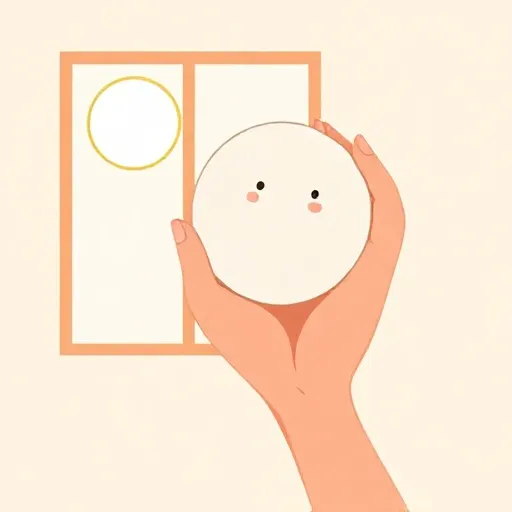
An idea, Descartes noticed, has a double life. First, it’s a real thing happening in your mind: when you think of a sunflower, that very thought exists. Descartes called this the idea’s formal reality — the reality it has simply because it’s an actual mode of thought. Second, the idea points to something else: it represents a sunflower. Descartes called this the idea’s objective reality — the reality it has as a representation. So the idea of a sunflower has both formal reality (it’s a real thought in your head) and objective reality (it’s about a sunflower). Think of a mirror reflecting a tree. The mirror itself is a physical object (like the mind), the reflection on its surface is the idea (a mode). The image has its own existence (light arranged on glass) — that’s formal reality. But the image also represents a tree — that’s objective reality. Without the tree, the image wouldn’t be about anything. Descartes believed that ideas are the only things in his system that have both kinds of reality. And he thought there were levels of objective reality: an idea of God (an infinite substance) contains more objective reality than an idea of a finite mind or a stone. Why does this matter? Because it leads directly to where ideas come from.
Innate, adventitious, or invented: where do your ideas come from?
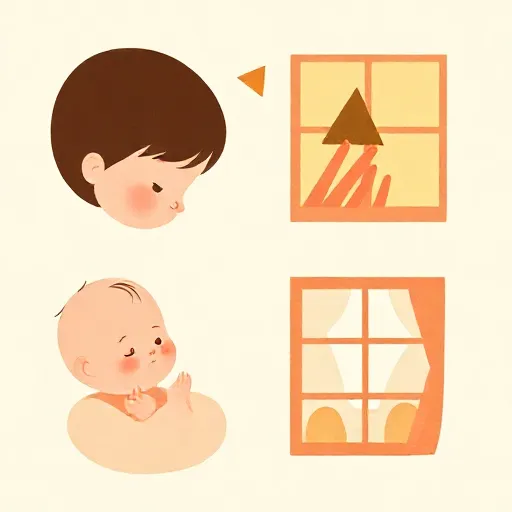
Early in his Meditations, Descartes sorted all his ideas into three boxes, based on where they seem to come from. The first box holds innate ideas — ideas that are already in you, part of your nature as a thinking thing. You didn’t learn them from experience. For Descartes, the idea of what thinking is, the idea of extension (space), and the idea of God are all innate. The second box holds adventitious ideas — ideas that seem to come from outside, through your senses. When you feel the warmth of a fire or see the bright disk of the sun, those ideas arrive whether you want them or not. That’s why you naturally suspect they come from real objects. The third box holds factitious ideas (from a Latin word for “made”) — ideas you build yourself by mixing other ideas. Think of a unicorn or a hippogriff: you’ve never seen one, but your mind combines the idea of a horse and the idea of a horn or wings. Even though this sorting seems neat, Descartes noticed a puzzle. Some innate ideas (like God) and all adventitious ideas seem to point beyond your mind — they represent something real. This led him to a powerful rule about what makes an idea truly represent its object.
The sun, the senses, and the test of clarity

Descartes believed that some ideas are clearer and more trustworthy than others, and he gave a method for telling them apart. Here’s his test: an idea is clear when you can see how its parts are necessarily connected. An idea is distinct when it includes only parts that belong to one single kind or class — never mixing mind-stuff with body-stuff. Let’s try it with the idea of the sun. The ordinary adventitious idea of the sun comes from your senses: it presents the sun as a bright round disk that also feels warm. That idea is confused — it mixes shape (which belongs to bodies, to extension) with heat-sensation (which belongs to the mind, to thinking). Shape and heat don’t belong together in a single clear framework, because heat as you feel it isn’t a property of extended things; it’s a feeling in you. By contrast, an astronomer’s idea of the sun — a huge sphere of fire moving in space — is distinct: it includes only geometric and mechanical properties (size, shape, motion) that all belong to the category of extension. And it’s clear because those properties hang together: shape requires extension, motion requires shape and time. Descartes claimed that whatever you perceive clearly and distinctly must be true. So the astronomer’s sun is more trustworthy than the felt sun. Behind this rule lay a principle that linked ideas to reality: a primary idea — an idea that comes from a real thing — gets its objective reality from the formal reality of that thing. The idea of the real sun in your mind represents the actual sun because the sun’s own formal reality is what produces that objective reality, just as a mirror image of Socrates gets its “about-Socrates” quality from Socrates himself. Innate ideas like extension, mind, and God work the same way, according to Descartes. They aren’t just made up.
Why sorting your own ideas still matters

Descartes’s toolbox — innate vs. adventitious, formal vs. objective reality, clear and distinct ideas — isn’t just a dusty museum piece. It’s a set of questions you can apply to your own thinking. Next time you daydream an impossible animal, you’re playing in the factitious box. When you feel a cold wind and instantly believe something real caused it, you’re leaning on the adventitious box. And when you see that a triangle’s angles always add to 180 degrees — and you know this isn’t something you learned by touching triangles or measuring them — you’re brushing against what Descartes called an innate idea, something your mind just “gets.” His hunch was that our minds come equipped with a few basic shapes of thought, and that we can trust the thoughts that survive the clarity-and-distinctness test. That doesn’t mean you should never doubt. Descartes himself famously doubted everything he could before trusting his clear and distinct ideas. But he gave our ordinary hunches about truth a kind of training manual. So the next time you’re unsure whether your picture of something is accurate, try Descartes’s move: ask where the idea came from, whether its pieces hang together, and whether you’re mixing categories. It won’t answer every question, but it will make your thinking sharper.
Think about it
- If a newborn baby has an innate idea of shape, how could we ever find out, since babies can’t talk?
- When you imagine a new animal by combining parts — a winged snake, a talking tree — does your mind truly create something new, or just rearrange old pieces?
- Suppose a computer could show you a perfect, detailed image of a place you’ve never seen. Would that count as a “clear and distinct” idea? Why or why not?