Are You Seeing the World, or an Idea in God’s Mind?
What Exactly Do You See When You Look at a Tree?
You’re walking in the woods. You stop before an old oak. Sunlight catches the rough bark and the flutter of leaves. It feels like you’re directly seeing a real, solid tree. But the French philosopher Nicolas Malebranche (1638–1715) insisted you don’t. He claimed that when you look at that oak, you are really seeing an eternal idea inside God. The real tree out there? Your mind never touches it directly.
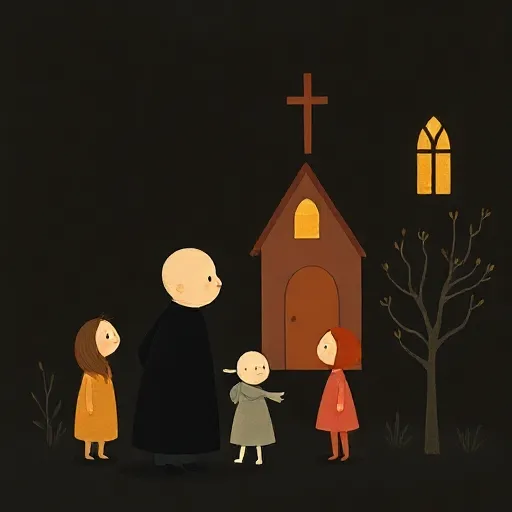
Malebranche was a Catholic priest and a follower of René Descartes (1596–1650). Like Descartes, he believed the world contains two kinds of things: minds (which think and feel) and bodies (which take up space). Bodies, including trees, are made of extension — sheer spatial dimension, with shape, size, and motion. But Malebranche added a startling twist: material bodies are utterly unintelligible by themselves. A piece of matter cannot enter your mind or give you a thought. To be known, a material thing needs something spiritual to represent it. And the only spiritual things vast enough to contain the ideas of every possible tree, rock, and star? God.
So Malebranche’s strange answer: you see all material things in God. Not that the oak tree lives inside God’s head. Rather, God holds the archetypes or blueprints of all things. When you perceive a tree, your mind directly encounters a divine idea — a spiritual pattern — and through it, you indirectly know the physical tree. The view is called Vision in God.
Ideas in God and Sensations in You

If you’re going to see a tree in God, you need to split your experience into two parts. Malebranche calls them ideas and sensations.
An idea, for him, is not a picture inside your head. It is a real, spiritual entity that represents something. The most important idea in visual perception is intelligible extension — the pure, general idea of space itself, with all its geometric properties. Imagine a perfect, transparent wireframe of shape, size, and motion, with no color, smell, or sound. That’s intelligible extension. It exists in God and is “coeternal” with God — it never began and never ends.
Your sensations are different. When you see the green of leaves or feel the warmth of sunlight, those qualities are not in the tree. They are modifications of your own mind, produced by God in you. Colors, sounds, tastes are not representations; they don’t resemble anything out there. They are the way your soul feels when God touches it in a certain way.
How do these two parts combine? Malebranche says you “project” your sensations onto intelligible extension, like an artist painting colors onto a transparent canvas. The colors “particularize” the general idea. Without the sensation red, you would only see a colorless geometric shape; with it, you see a specific apple. Sensations also let you tell one object from another — you distinguish a hand from a coat by the different color sensations they produce. So every act of seeing blends a timeless divine idea with a personal, private feeling.
Why Must Ideas Live in God?
Malebranche didn’t just dream this up. He had arguments meant to force you to accept that ideas cannot be in your own mind.
His strongest appeal, called the Argument from Properties, starts from what ideas are like. Think of a circle. You cannot make the idea of a circle have unequal diameters, no matter how hard you try. The truths of geometry — that twice two is four, that a triangle’s angles add to two right angles — are necessary, eternal, and immutable. They are the same for you, for someone in another country, and for any thinking being anywhere. They didn’t begin to exist and won’t stop.
Now, Malebranche asks: can such ideas be just temporary wrinkles in a finite human mind? Your thoughts flicker and change. Your mind gets tired, forgets, grows. A passing mental state is too small and too unstable to hold something that never changes and never ends. Only an infinite, eternal being can contain infinite, eternal ideas. So the ideas we encounter in thinking about geometry — and about any material thing — must be lodged in God. In fact, Malebranche says they are one with God’s own substance, seen in a limited way.
He adds a second reason: cognitive capacity. You can think about an infinite number of shapes — triangles, squares, pentagons, and on forever. Your mind can’t hold an actual infinity of ideas; it’s finite. Yet whenever you want to think of a particular shape, you must already have a dim grasp of where to look among all possibilities. Malebranche says this is only possible because your mind is continually united with God’s infinite being, which contains all things in a single, simple whole.
A third argument invokes God’s own style of creating. God always acts in the simplest way, because wisdom and power show themselves by doing the greatest things with the simplest means. If God had to stuff every human mind with its own endless set of innate ideas, he would multiply things needlessly. It is far simpler for God to let all minds share the same set of eternal ideas that already exist in him. Simplicity demands Vision in God.
But Doesn’t That Make God into a Giant Blueprint?
Malebranche’s critics squirmed. The harshest attacks came from fellow Cartesians, especially Antoine Arnauld (1612–1694). Arnauld accused Malebranche of confusing vision in God with vision of God. If you see ideas that are identical with God’s substance, aren’t you seeing God’s very essence? That would be a dangerous claim for a Christian: God’s essence is supposed to be beyond our reach.
Malebranche replied that we don’t see God as he is in himself. We see God only “as participable” — that is, only insofar as his perfections can be imitated in limited, material ways. When you look at a tree, you’re not staring at God’s own infinite nature; you see a finite expression of what God can produce. God is being in general — not any one thing, but the fullness from which specific beings draw their reality. So you see a determinate shape, not the infinite.
That answer stirred a new worry. God is perfectly simple — he has no parts. But intelligible extension seems to have “intelligible parts” when we focus on one region or another. Doesn’t that split God? Malebranche admits this is a deep puzzle. He often appeals to divine incomprehensibility: we can’t fully understand how God’s simplicity contains the variety of ideas. The ideas are God’s own being, grasped in a partial way by limited minds. He trusts that the theory is true even if the details outrun us.
Another puzzle: how can a general idea like intelligible extension represent a particular tree? Malebranche’s answer uses sensations again. The idea itself is universal. But God applies it to your mind “in a thousand different ways” — causing color sensations and other feelings that make you see the same idea as this particular oak tree right now, and later as a different pine. The particularity comes from how God touches your mind, not from a change in the idea. Still, critics wanted to know exactly how sensations and a pure geometric idea can mix. That remains a live issue.
Why This Still Matters: Seeing and Knowing

You might never have worried about whether you see the world directly. Most of the time, you trust your eyes. But Malebranche pushes you to ask: How is it possible that my mind, which is private and immaterial, can reach out and know a material world? If you reject his answer, you still need some story about what’s happening when you perceive.
Malebranche thought rival theories, like Descartes’s, encouraged skepticism — the doubt that we can know anything at all. If your ideas are just temporary modifications of your own mind, how can you be sure they match real trees? Maybe your mind distorts everything. But if the ideas you see are the very blueprints God used to create the world, then your knowledge of the essences of things is absolutely solid. The world must match the idea, not the other way around.
His theory also shrinks the power of your own mind. You are not a self-contained knower; you depend on God for every glimpse of reality. As the Augustinian tradition held, the human mind is not a light unto itself — it borrows light from a “universal Reason.” That idea still echoes in debates about whether truth is something we discover or something we make.
Next time you glance at a tree, or at your own hand, try a Malebranchean thought experiment. What if the tree you see isn’t the physical object out in space, but a perfect, eternal pattern shining into your awareness from something infinite? The question “What do I really see?” has no easy answer. But asking it is the beginning of epistemology — the study of knowledge. Malebranche’s vision in God reminds us that the most ordinary act of looking can hide a universe of mystery.
Think about it
- If Malebranche is right, you and a friend looking at the same tree are both sharing a single idea in God’s mind. Does that change how you understand disagreement about what you see?
- You can dream of a unicorn, even though no unicorn exists. According to Malebranche, this means the idea of a unicorn is in God. Does that make sense? What does it say about possible things?
- If you could be absolutely certain that your ideas come from God’s own blueprints, would that free you from ever doubting your senses? What about optical illusions?