Is Your Mind Something More Than Just a Brain?
Imagine Floating in Empty Space
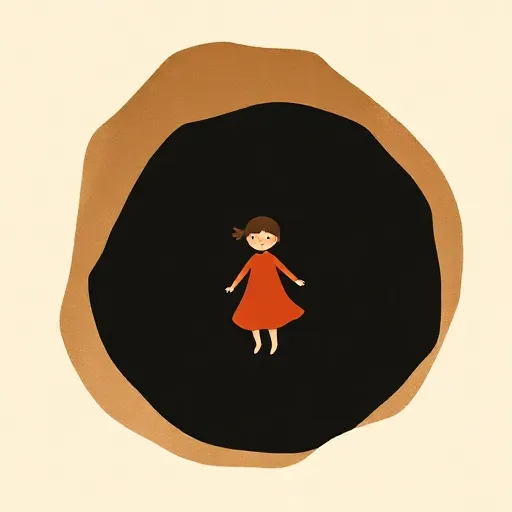
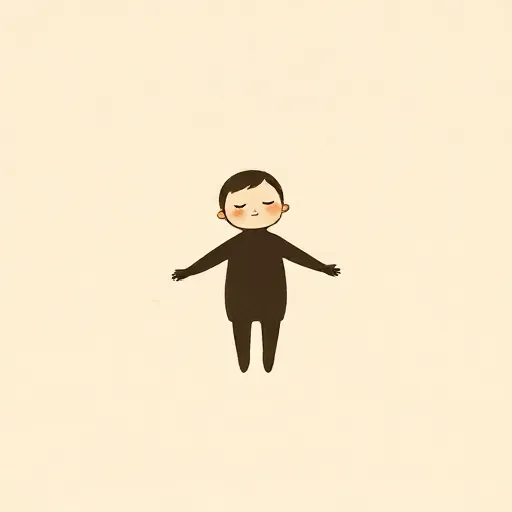
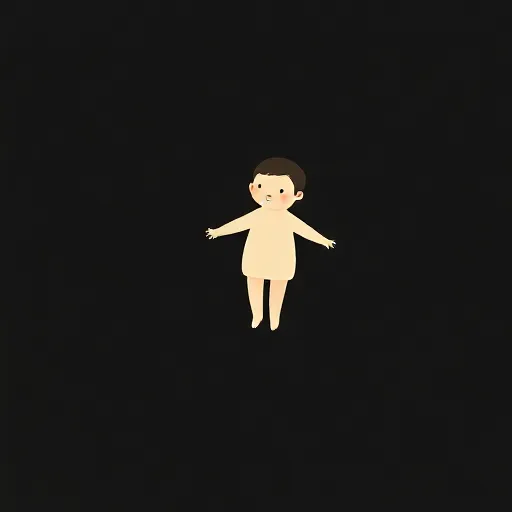
Close your eyes. Pretend you have no body at all—no hands, no heartbeat, no feeling of sitting in a chair. You cannot see, hear, or touch anything. It is just empty darkness. Would you still know that you exist?
The Persian philosopher Avicenna (c. 890–1037) asked people to imagine exactly this. He called it the “floating man.” His answer was yes: even without any bodily sensations, you would still be aware of your own self. That little thought experiment suggests something bold: the “you” that thinks and feels might be different from your physical body.
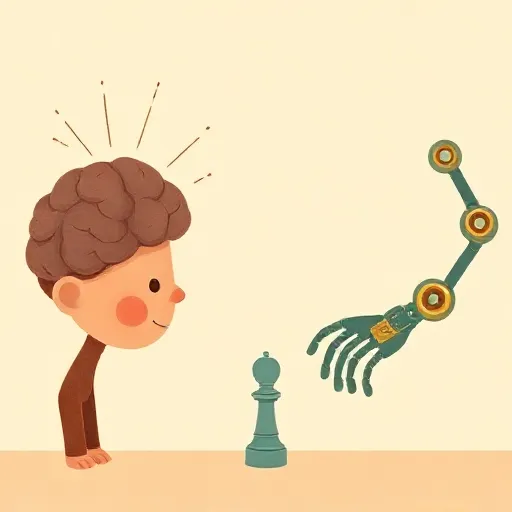
This is the start of the mind–body problem. How do thoughts, colors you see, and pains you feel fit with the brain, the nerves, and the stuff of the physical world? Are they just brain processes, or is the mind something extra? The problem has puzzled philosophers for over two thousand years.
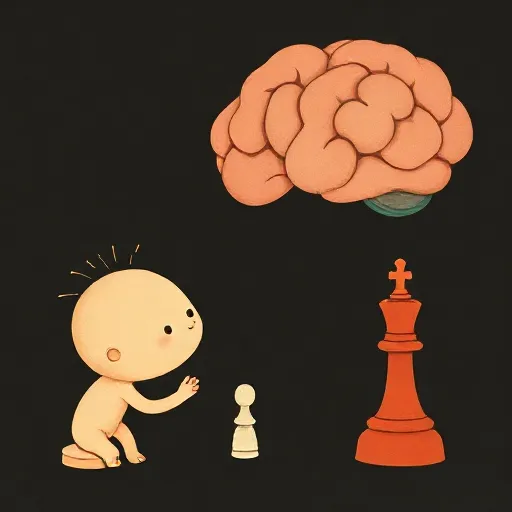
One of the oldest and most famous answers is dualism. Dualism says that mind and body are two fundamentally different kinds of things. Materialism, by contrast, says that the mind is ultimately physical—nothing but the brain at work. This article explores why so many people have found dualism attractive, what arguments support it, and the serious challenges it faces.
Descartes’ Big Idea: The Mind as a Thinking Thing

The thinker who put dualism at the center of modern philosophy was René Descartes (1596–1650). He wanted to build knowledge only on things he could not doubt. So he imagined a powerful evil demon deceiving him about everything—the sky, his own hands, even the existence of his body. Yet one thing survived: the very fact that he was doubting. If he was being deceived, he had to be thinking. And if he was thinking, he had to exist. That is the famous insight that if you are thinking, you must exist.
From there Descartes argued that the mind is a substance—a thing that can exist on its own—whose whole nature is thinking. The body, by contrast, is a substance whose nature is simply being extended in space. Minds do not have size, shape, or location. Bodies do not feel or understand. They are totally different kinds of stuff.
Descartes did not stop there. He believed the mind could survive the death of the body, because it is an independent thing. But he also faced an immediate puzzle. If mind and body are so different, how do they interact? Everyday life seems to prove they do: you stub your toe and feel pain; you decide to raise your hand and it rises. Descartes suggested that the mind and body meet in a tiny gland deep in the brain, the pineal gland. That idea satisfied almost nobody.
The Tug-of-War Between Mind and Body

Princess Elisabeth of Bohemia (17th century) wrote to Descartes with a sharp question. If the mind has no size or location, how can it push the body around? And if the body is made of physical stuff, how can it produce a thought? She wasn’t being difficult—she was pointing out a crack at the heart of dualism.
This is the interaction problem. If you picture causation like billiard balls knocking into each other, an immaterial mind seems to have no way to hit a material brain. And modern physics adds another worry: the law of conservation of energy says that energy doesn’t disappear or appear out of nowhere. If a thought makes neurons fire, isn’t that extra energy coming from outside the physical system?
Defenders of dualism reply that the brain isn’t a completely closed physical system if minds interact with it, so the conservation law doesn’t forbid mental influence. Some even look to quantum physics, where events are not fully determined, as a possible doorway for the mind to act.
Other philosophers, however, give up on the idea of the mind influencing the body at all. This view is epiphenomenalism: physical events in the brain cause mental experiences, but those experiences never cause anything physical. Your pain doesn’t make you cry; the brain state causing the pain also causes the tears, and the pain is just a side-effect. To many, this feels totally wrong—as though your entire inner life is pointless. But some argue that if the physical world is “causally closed” by the laws of physics, we might have to accept it.
Mary and the Color Scientist

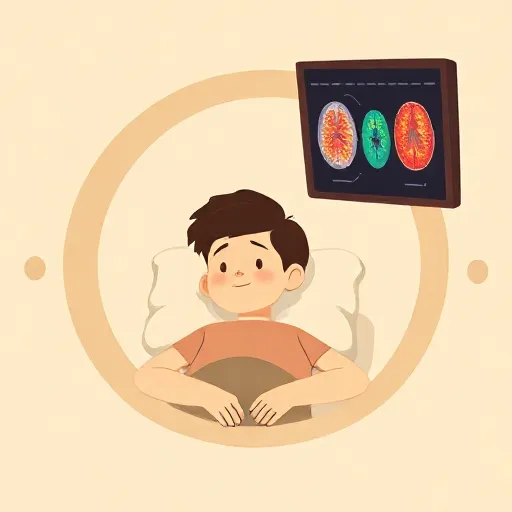
In 1982, philosopher Frank Jackson (born 1943) offered a thought experiment that has become a landmark for dualism. Imagine a brilliant neuroscientist named Mary. She has spent her whole life in a black-and-white room, even looking at her own body only through a black-and-white monitor. She knows absolutely everything there is to know about color vision—every detail of how light waves hit the retina, how signals travel to the brain, and what brain regions light up when people see red. But she has never actually seen color.
One day Mary walks out of the room and sees a red rose. Does she learn something new? Jackson and many readers think she obviously does: she learns what it is like to see red. Since she already knew every physical fact, what she learns must be a non-physical fact. So there are qualia—the raw, felt qualities of experience—that escape the net of physical science.
This position is called property dualism. It says the world contains two kinds of properties: physical ones (like mass and electrical charge) and mental ones (like the taste of chocolate or the ache of a stubbed toe). Property dualists often stop short of saying the mind is a separate substance that can exist without the body. But they insist that no amount of physical description will ever fully capture what it feels like to be conscious.
Not everyone agrees. Some philosophers argue that Mary doesn’t gain a new fact; she only gains an ability—the ability to remember, imagine, and recognize colors. Others say she gains a new way of thinking about facts she already knew, a bit like learning that “now” is the moment you are living through. The debate is still very much alive.
If Zombies Could Walk Among Us

Another powerful modern argument for dualism comes from David Chalmers (born 1966). He asks you to imagine a philosophical zombie. This is not the groaning monster from horror movies. It is a creature atom-for-atom identical to a conscious human being, with exactly the same behavior—talking, laughing, writing philosophy—but with no inner experience whatsoever. Inside, it is completely dark.
The fact that we can even conceive of such a zombie seems to show that consciousness is not automatically included in the physical facts. If a perfect physical copy of you could lack feelings, then your feelings must be something extra. Chalmers then argues that if something is conceivable in this detailed way, it is genuinely possible, which would mean consciousness does not logically follow from brain states.
Opponents push back by pointing out that conceivability doesn’t always mean possibility. People once thought they could conceive of water not being H₂O, but we now know water is H₂O in any possible world. Chalmers replies that the cases are different: water is defined by its hidden chemical essence, but pain is defined by how it feels. There’s no hidden essence that could turn out to be absent while the feeling remains. So if you can imagine the physical stuff without the feeling, the feeling really is something non-physical.
This battle over what we can truly conceive—and what that tells us about reality—is one of the liveliest corners of philosophy of mind today.
Who Are You, Really?

Why does any of this matter to you? Because how you answer the mind–body problem affects some of the deepest questions you will ever ask.
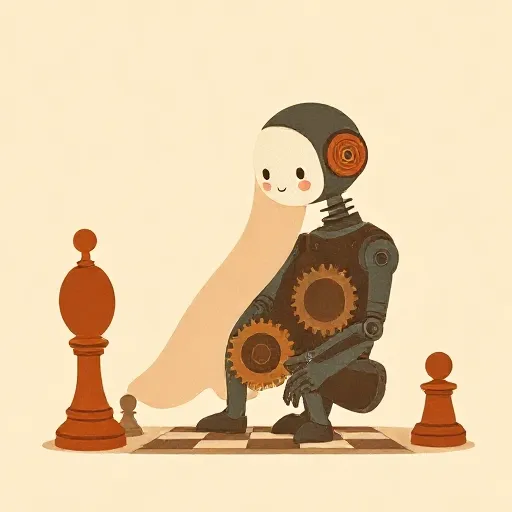
If materialism is true, then every thought, every hope, every moment of joy is the activity of brain cells. That would mean your mind stops when your brain stops. It would also mean that a sufficiently advanced computer might, in principle, be conscious—maybe even a person. If dualism is true, consciousness is something beyond the physical, so a machine might never be a genuine mind, and some version of you could survive the body’s death.
The issue also touches personal identity. Are you the same person you were at age five? If you are just a pattern of brain signals, then your identity might be vague—a matter of degree. But many dualists argue that being a conscious self feels like an all-or-nothing fact, which suggests you are not merely a complicated physical object.
Scientists have not settled this debate, and neither have philosophers. In a 2020 survey, 22% of professional philosophers leaned toward dualism, while 51% favored materialism. That is not consensus—it is a living argument that has been running since Avicenna and Plato. Even those who reject dualism admit it feels deeply intuitive. The “meta-problem” of consciousness asks why we so easily believe in a separate mind, even if that belief turns out to be false. That puzzle, too, is far from solved.
So the next time you feel a cold breeze or remember a dream, notice how strange it is: you have a private world of thoughts and sensations that nobody else can ever directly see. That mystery is exactly what makes the mind–body problem matter—and why it will keep provoking the curious for centuries to come.
Think about it
- If scientists built a robot that acted exactly like a human in every way, would you believe it had a mind like yours? Why or why not?
- Mary knew everything physical about color but still learned something new when she saw red. Does that prove that feelings are not physical, or could it just be a new way of knowing something she already knew?
- Imagine you could upload your consciousness into a computer. Would that still be “you”? What would it take for you to survive?