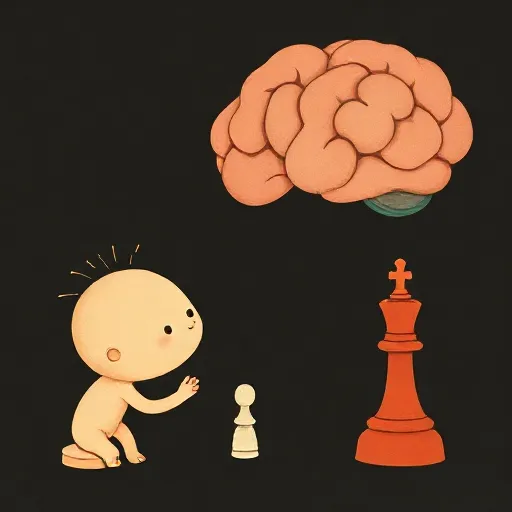
Is Everything Made of Matter? The 300-Year Battle Over the Mind
A Clockwork Universe and a Thinking Soul
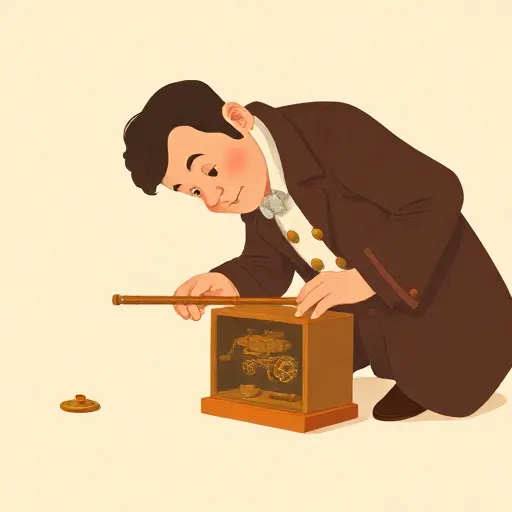
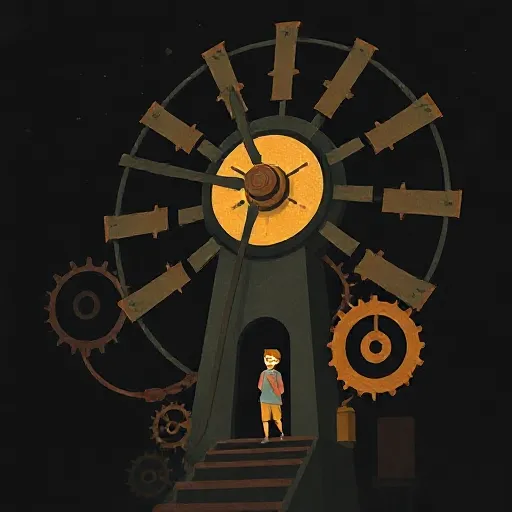
In the 1640s, a skilled craftsman could build an automaton—a clockwork figure that played music or moved its limbs. When René Descartes (1596–1650) watched such machines, he arrived at a bold idea. The human body, he argued, is itself a kind of machine. Blood pumps, muscles pull, and nerves carry signals like pipes and wires. Yet Descartes insisted the mind is not physical at all. It is a thinking soul, a non-material substance, that briefly interacts with the body through a tiny gland in the brain.
The problem was hiding in plain sight. The physics of Descartes’s day, called the mechanical philosophy, said that every physical change was caused by one particle bumping into another. There was no room for an invisible soul to push matter around. Gottfried Wilhelm Leibniz (1646–1716) spotted the trouble immediately. If the mind has no mass, no shape, and no location, how could it possibly knock a single nerve cell into action? Leibniz did not conclude that the mind must be physical. Instead, he proposed pre-established harmony: God arranged the mind and body to run in perfect sync from the start, like two clocks set to the same time. Few people found that satisfying, but the question had been asked. Can something non-physical really make a difference in the physical world?
Newton’s Looser World: Forces Without Touch

Then Isaac Newton (1642–1727) changed the rules. His physics welcomed forces that acted at a distance. Gravity pulled the planets without any visible particles doing the pushing. Suddenly, invisible mental forces did not seem so impossible. Throughout the 1700s, many thinkers happily believed that special mental or vital forces existed alongside gravity, magnetism, and chemical attraction. A decision to raise your arm could be a genuine mental cause, operating entirely within the laws of Newton’s open-ended universe. For more than a century, there was no urgent scientific reason to doubt that the mind could act on the body without being made of matter.
Energy Must Go Somewhere: The Conservation Law

The picture tightened in the middle of the nineteenth century. Physicists established the conservation of energy: you can convert energy from one form to another, but the total amount never changes. If a mental force moves your arm, the energy for that movement must come from somewhere, and the transfer must follow strict, lawlike rules. Some thinkers still imagined a “nervous energy” that the mind could store and release, as long as the mind obeyed deterministic laws. So a weaker kind of naturalism took hold. The mind might still be something special, but it was now part of a law-governed, scientifically investigable world. It could no longer pop up spontaneously.
Causal Closure: The Brain Alone Runs the Show
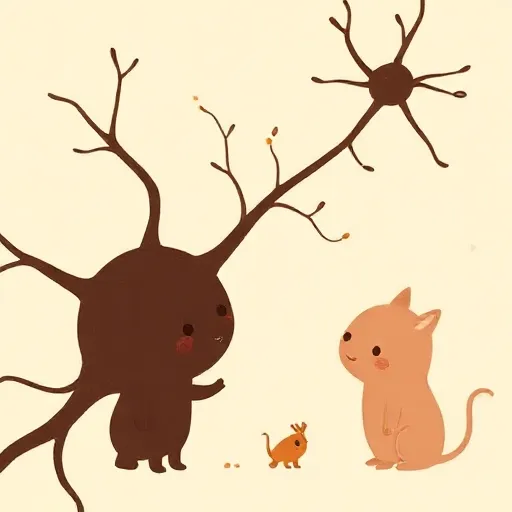
The final piece fell into place during the twentieth century. Researchers studying nerve cells, especially how they fire and transmit signals, found no trace of anything that could not be explained by ordinary physical forces. Every twitch of a muscle, every electrical spike in a motor neuron, had a complete physical cause. This led to a thesis called the causal closure of the physical: every physical event has a fully physical cause.
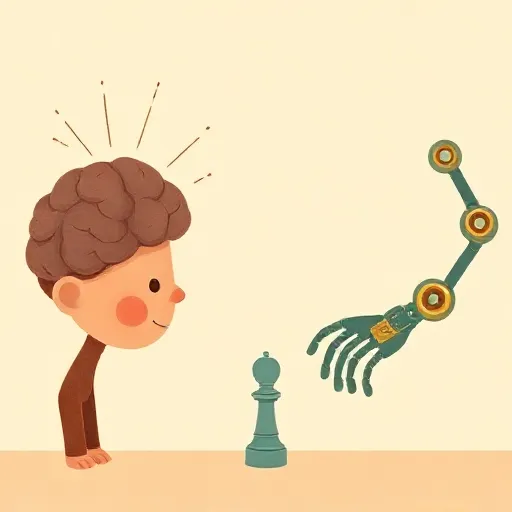
Now the old worry returned with full force. If your arm rises because of a chain of physical brain events, and your mental desire to wave also seems to be responsible, are we saying there are two separate causes for the same movement? That would be overdetermination—too many causes doing the same job. To avoid that, many philosophers concluded that mental events must themselves be physical, or at least be constituted by physical events. This is the core argument for physicalism, the view that there is nothing over and above the physical.
In the 1950s, thinkers like J.J.C. Smart (1920–2012) spelled it out clearly. If mental states were not physical, they would be “nomological danglers”—things that hang around with no job to do in explaining behavior. To be causally effective, they had to be part of the physical world. Some philosophers even pointed out that quantum physics, which introduces chance, does not open the door for non-physical causes. The chances themselves are fixed by prior physical circumstances, leaving no room for an independent mental influence to nudge the odds.
One Thought, Many Brains: Reductive or Not?
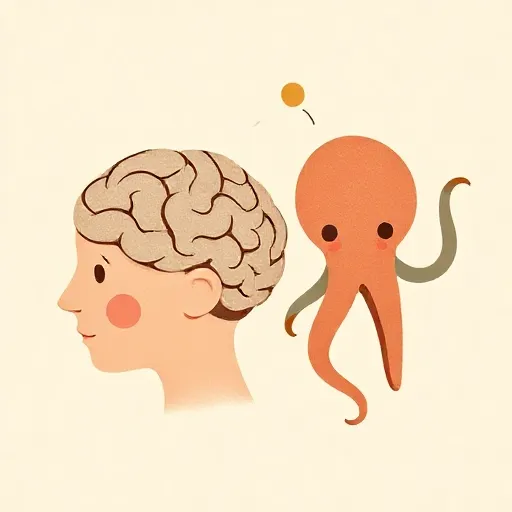
Once physicalism became the dominant view, a new argument broke out. One side, called reductive physicalism, holds that every type of mental state is strictly identical to a type of physical state. The property of thinking about the square root of two would be exactly the same as some specific neural property. But this seems too strong. Different human brains probably handle that thought in slightly different ways, and an intelligent octopus or a future android might do it with completely different physical wiring. This is the variable realization argument.
The rival camp, non-reductive physicalism, says mental properties are realized by physical properties without being identical to them. Any creature that has a thought must have some physical properties doing the work, but those properties can vary from case to case. This is often expressed using the idea of supervenience: if two beings share exactly the same physical properties, they must share the same mental properties—but the same mental property can be carried by quite different physical bases.
A worry immediately arises: if the brain state and the mental state are not strictly identical, then aren’t we back to two causes for the same action? Non-reductive physicalists reply that this is a harmless kind of overdetermination. The mental cause is not a separate, independent thing; it is grounded in the physical cause. Nothing extra is required beyond the brain state to get the mental state, so there is no spooky duplication. The debate continues.
Consciousness: The Stubborn Mystery
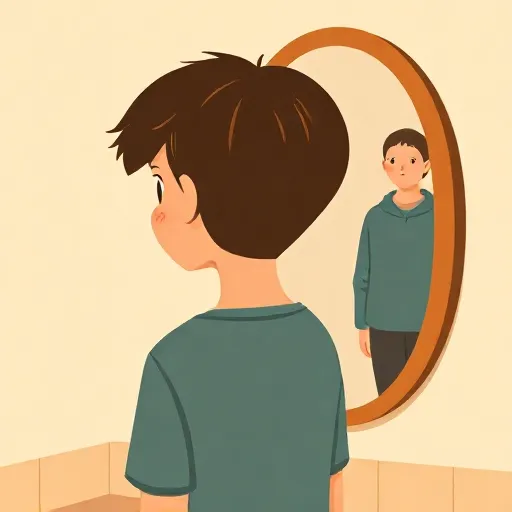
Not everyone is convinced that physicalism can capture consciousness. Try imagining a zombie—a being physically identical to you in every way, down to the last atom, but with no inner experience at all. No feeling of cold glass, no taste of chocolate, no sense of worry or joy. It moves and talks exactly like you, yet inside it is dark. If such a zombie seems possible, then consciousness might not be fully physical.
If that is right, three uncomfortable paths open. You could say consciousness is epiphenomenal—it is real, but it has no influence on anything physical, a sort of side-effect that never itself causes a muscle to move. You could accept that every physical effect is overdetermined by two independent causes, a physical one and a conscious one. Neither option is very attractive, because we don’t see those patterns anywhere else in nature. A third, more recent idea, called Russellian monism, suggests that consciousness is the hidden inner nature of the physical stuff itself—so it is not an extra ingredient, just the “what it is like” side of the physics. Whatever the answer turns out to be, nearly all contemporary views still accept causal closure. Outright interactive dualism, where the mind freely pushes physical events around, has few defenders today.
Why This Fight Matters to You

You are not a robot—or maybe you are, but physicalism does not mean you are a puppet. Even if your choices are realized by brain states, those brain states are you. Understanding that the mind runs on physical laws does not make your joy, your curiosity, or your friendship any less real. It just makes the story of how you raise your hand, solve a math problem, or argue with a friend even more astonishing.
At the same time, the centuries-long debate about physicalism matters for big questions. If your mental life is purely physical, what does that say about free will? Can we hold people responsible for actions that were determined by physical causes? And what about the possibility of building machines that genuinely think and feel? This is not a settled argument. It is a live, breathing puzzle—one you are already part of every time you wonder what is going on inside your own head.
Think about it
- If a scientist built a robot that acted exactly like your best friend, down to every word and laugh, would you be able to tell whether it has real feelings? What extra test would you trust?
- Does it matter for moral responsibility if your choices are completely caused by brain events, as long as you still feel like you are choosing freely?
- Imagine we discover an alien life-form whose thoughts are caused by a non-physical “mind-stuff.” Would that change how you think about the universe, or would you still prefer a physical explanation?