Can Brain Science Explain Your Mind? The Neurophilosophy Challenge
The Day the Brain Scanner Saw a Thought
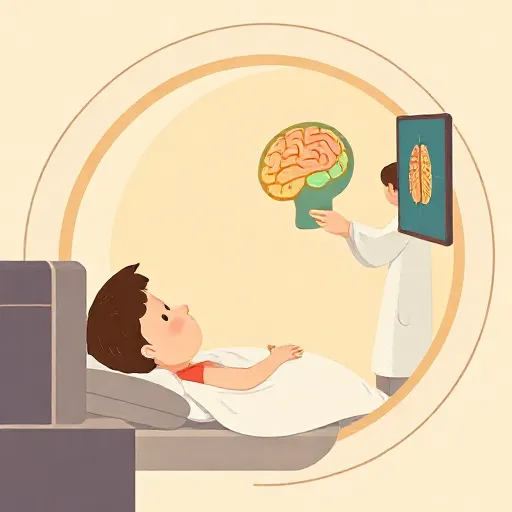
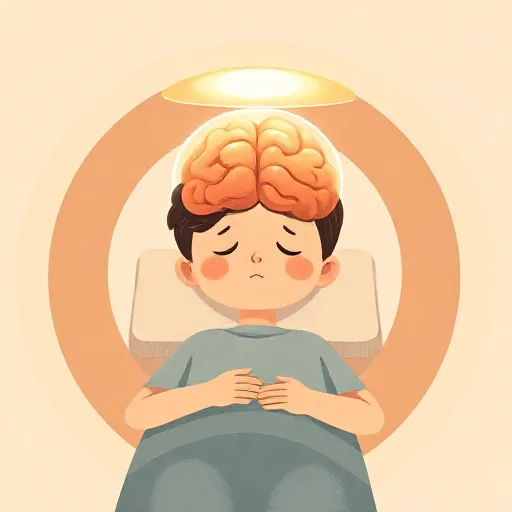
Imagine you lie inside a giant donut-shaped machine. A technician says, “Think about chocolate cake.” On a screen, a blob of color glows near the top of your brain. “There,” she tells you, “that is your thought.” But is it? Does that colorful spot really hold the hunger, the memory of taste, the quiet wish to eat cake? For centuries, philosophers have asked what a thought really is. In the late 20th century, a small group of them started to argue something bold: the brain itself holds all the answers. To understand the mind, you must look directly at neurons, synapses, and brain scans. They called this approach neurophilosophy.
Patricia Churchland (born 1943) gave the movement its name and its manifesto. In her 1986 book Neurophilosophy, she insisted that philosophy could no longer do its big work — What is consciousness? What is a choice? — without knowing how the brain actually works. She proposed a co-evolution of philosophy and neuroscience, like two species adapting together. Philosophers would keep asking the deep questions, and neuroscientists would supply the real, physical details. Before her, even philosophers who believed the mind is purely physical (no ghostly soul) rarely consulted real brain science. They used placeholder terms like “C-fibers firing” to stand for pain, without knowing which fibers or how. That was no longer enough.
If you take Churchland seriously, you end up with a huge claim: once we understand the brain well enough, we might throw out all our everyday talk about “beliefs” and “desires” and replace it with brain-talk. That claim is the heart of eliminative materialism.
Your Brain on Beliefs — Do “Wants” Really Exist?
Think about why you helped your friend with homework. Most likely you say, “I believed she needed help, and I wanted to be nice.” This is folk psychology — the everyday, common-sense way we explain behavior using beliefs, desires, hopes, and fears. Patricia Churchland and her husband Paul Churchland (born 1942) argue that folk psychology is a deeply flawed, false theory. They compare it to the old idea of phlogiston. Three hundred years ago, scientists explained fire by saying that a substance called phlogiston escaped from burning wood. Later, chemists discovered that burning actually adds oxygen — phlogiston does not exist. The Churchlands predict that a future brain science will show that beliefs and desires don’t exist either. They will not be reduced to brain states; they will be eliminated, just like phlogiston.
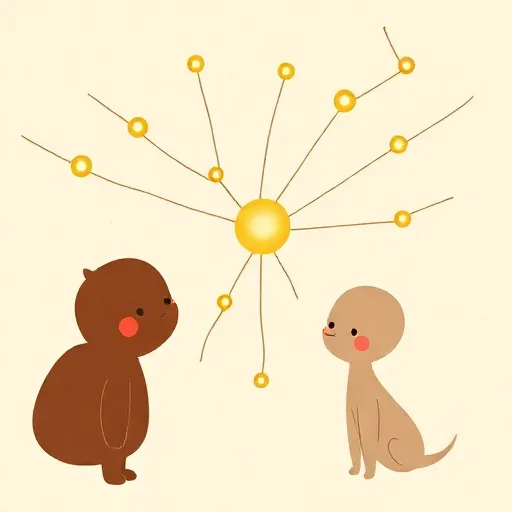
Why would anyone think that? In the 1980s and 1990s, computational neuroscientists built a new way to model how brains process information. Instead of a mind full of silent sentences like “I want cake,” the brain could be understood as a network of neurons that transform patterns of activity. Picture a huge web of tiny switches. Each neuron receives electrical blips from many others, adds them up, and fires its own blip if the total crosses a threshold. The strengths of the connections between neurons can change with learning. Mathematically, this network acts as a vector-to-vector transformer: a pattern of inputs (for example, signals from your eyes) turns into a pattern of outputs (commands to your muscles). Representations are not sentences; they are points in a high-dimensional vector space.
The cerebellum — a brain structure that helps you move smoothly — works something like this. As you learn to throw a ball, the connection weights in the cerebellum adjust, and the output pattern gets closer and closer to the perfect throw. No inner sentence says, “I want to throw this ball.” Learning happens as the system slides down an error landscape, searching for the best combination of connection strengths. Paul Churchland argued that this vector-based picture is so different from folk psychology’s logic-like beliefs and desires that folk psychology will eventually be replaced entirely. If thinking is really pattern transformation across millions of synapses, then there is no separate “belief” box in the brain.
But Wait — Can’t the Same Thought Happen in a Completely Different Brain?
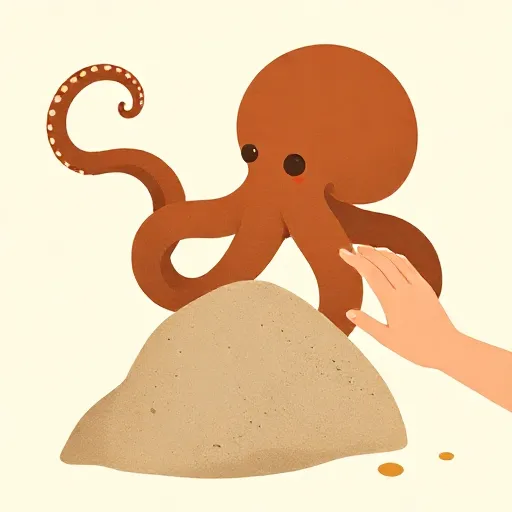
Not everyone was ready to hand the mind over to neuroscience. In the 1960s and 1970s, philosophers like Hilary Putnam (1926–2016) and Jerry Fodor (1935–2017) reminded everyone that the same mental state can be multiply realized. Pain, for instance, feels roughly the same to you as it does to an octopus — but an octopus has no C-fibers and a very different brain. If a silicon-based alien winced when injured, we would probably say it feels pain too. So pain is not identical to any one specific kind of brain state. This led to functionalism: mental states are defined by what they do, by their causal roles in a system, not by what they are made of. A computer can play chess without being made of neurons; the mind could be like software, running on different hardware. If that is right, psychology does not need to study brains at all.
Neurophilosophers pushed back. William Bechtel and Jennifer Mundale pointed out that when neuroscientists actually map brain functions, they rely on psychological categories — such as recognizing faces or remembering locations — and find that those categories map onto fairly specific brain regions. If the same mental function were realized in a huge variety of brain structures, brain mapping would be hopeless. Yet it works remarkably well. Perhaps pain in humans and pain in octopuses share deeper neural patterns than we first assumed. The fight over multiple realizability is far from over. It shows why neurophilosophy forces us to test big claims against real brain data.
What Is It Like to Be a Bat? The Consciousness Puzzle

Even if we can explain how the brain moves your arm or stores a memory, can it ever explain the most intimate part of your mind — what it feels like to be you? Thomas Nagel (born 1937) sharpened this worry in 1974. He asked us to imagine being a bat, navigating by echoes in the dark. No amount of scientific knowledge about a bat’s brain, he argued, can tell us what it is like to be a bat. That subjective, first-person experience — which philosophers call phenomenal consciousness or qualia — seems to escape objective science completely.
David Chalmers (born 1966) later turned this into the hard problem of consciousness. Even if we map every neuron that fires when you see the color red, we still don’t understand why that firing feels like the redness you experience. Chalmers says we can imagine a zombie twin of you who has identical brain activity but no inner experience at all. If that is conceivable, then brain activity alone cannot explain consciousness.
The Churchlands reply with a surprising move: the more you learn about the real brain circuits that generate conscious experience, the harder it becomes to imagine them running without consciousness. Paul Churchland points to thalamocortical recurrency — looping connections between the thalamus, deep in the brain, and the cortex, the wrinkled surface. This recurrent activity seems to support attention, short-term memory, and even vivid dreaming. When you grasp how these loops bind information across the brain, the idea that they could happen without any experience at all begins to feel less conceivable. It is like learning how a rainbow works: once you understand light and water droplets, you can’t really imagine a rainbow forming without them.
Neurological cases also complicate the picture. People with blindsight, caused by damage to the visual cortex, report being blind in part of their field of view. Yet they can guess the location or shape of objects in that blind region with surprising accuracy. This suggests that some visual processing zooms along without conscious experience. Cases like this force philosophers to ask: is “consciousness” really one thing, or several things tangled together?
Why Your Brain Scan Still Doesn’t Settle Everything
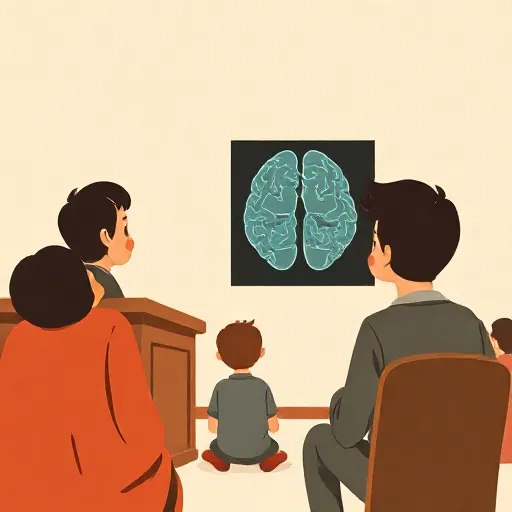
Brain scans are everywhere now. Functional MRI pictures show which brain areas light up when you think, feel, or make a decision. We know that language production often depends on Broca’s area in the frontal lobe, and that memories pass through the hippocampus. But philosopher Adina Roskies cautions that a colorful brain image is not a simple photograph of a thought. It is a careful statistical map of blood flow, and guessing what someone is thinking from a scan is risky business. Images can be misleading if they aren’t interpreted with care.
The technology raises huge practical and ethical questions. If a brain scan could predict violent behavior, should courts use it to decide guilt? If your brain’s state already determines your choices before you are aware of them, are you really free? The new field of neuroethics tackles exactly these worries. It asks both how the brain knows right from wrong and how we should responsibly use brain science.
Philosophically, brain data also push us to rethink our basic categories. Michael Anderson has argued that brain regions are reused for many different tasks — there is no single “face area” that only does faces. This “neural reuse” suggests that our neat psychological labels might need a radical overhaul. The mind might not be carved up into the neat boxes our language gives us.
Patricia Churchland’s call still echoes: philosophy and neuroscience must keep talking to each other. The colorful blobs on a screen are not yet thoughts, but they keep the conversation alive. Understanding the brain will not end the mystery of the mind, but it can make the mystery more interesting.
Think about it
- If a scientist could predict every choice you’ll ever make by looking at your brain, would it still be fair to punish people for bad choices?
- Suppose we could perfectly explain what happens in your brain when you taste chocolate. Would that explanation capture everything important about the experience?
- Imagine a world where everyone describes their actions using only brain states — “my dopamine levels dropped” instead of “I felt sad.” Would anything be lost?