Why Does Your Brain Feel Like You? The Hunt for Consciousness
A Voice Trapped Inside
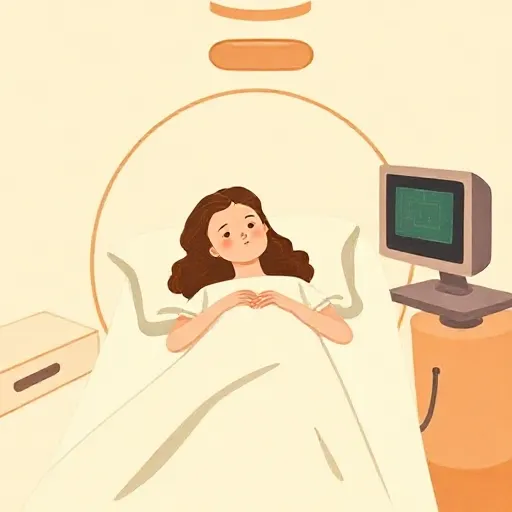
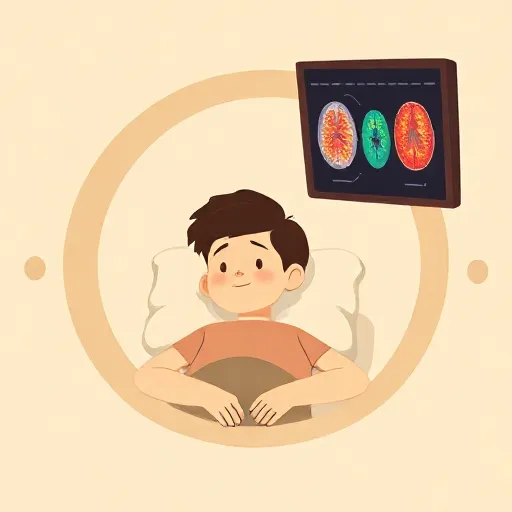
In 2006, a young woman lay in a brain scanner, unable to speak or move. Doctors had diagnosed her as completely unconscious. Yet when they gave her instructions through headphones — “imagine playing tennis” — her brain responded in a way that matched a healthy, fully aware volunteer. She could not twitch a finger, but inside her skull, a group of neurons lit up just as they would if she were actually on a court.
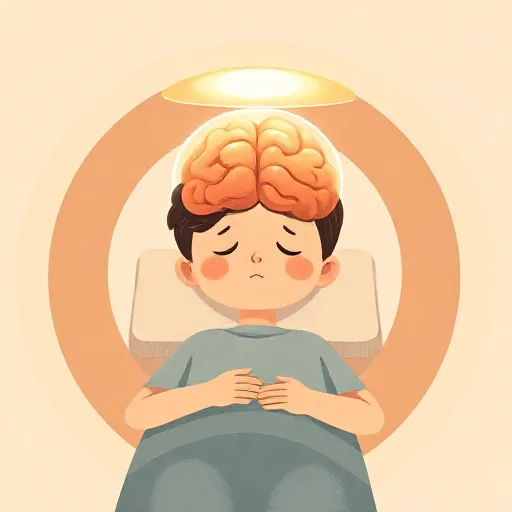
This moment rattled the tidy line between seen and unseen, between people who seem present and those who seem gone. It also sharpened the big puzzle that neuroscientists and philosophers have been chasing for decades: how does a lump of gray tissue, no heavier than a bag of flour, conjure up a private inner world — the taste of watermelon, the sting of embarrassment, the sheer what-it’s-like of being you?
Scientists call that raw, first-person feel phenomenal consciousness. The hard question is why it exists at all.
The Hard Problem: Why Do Brains Feel?

Think about your own mind right now. You hear sounds, you see shapes and colors, maybe you feel hungry or curious. None of these experiences feel like the firing of cells. Philosopher David Chalmers (born 1966) called the gap between brain activity and experience the hard problem of consciousness. Science can track which regions buzz when you see a face or recall a song. But it still cannot explain why that buzzing should feel like anything at all. Why aren’t we all just biological robots, processing information in the dark?
Some philosophers even imagine a philosophical zombie — a creature exactly like you, with the same brain cells and behavior, but with no inner life. The fact that you can picture such a creature, they argue, shows that mapping brain circuits won’t on its own close the gap. Most neuroscientists set that deepest puzzle aside. They ask a more manageable question: what special kinds of brain activity make the difference between being conscious and not? They hunt for the brain’s “on switch” — a neural correlate of consciousness (NCC).
To chase an NCC, scientists need a way to tell when someone is having a conscious moment. Often they rely on access consciousness — when you can report what you experience or use it to guide your actions. So they look at brain scans while you describe a picture, press a button when you spot a dot, or rate how confident you are. But this introduces a tricky snag: is access the same thing as the raw feeling, or does some rich experience float beyond what we can report? That question splits the field in two.
The Brain’s Spotlight: Competing Theories
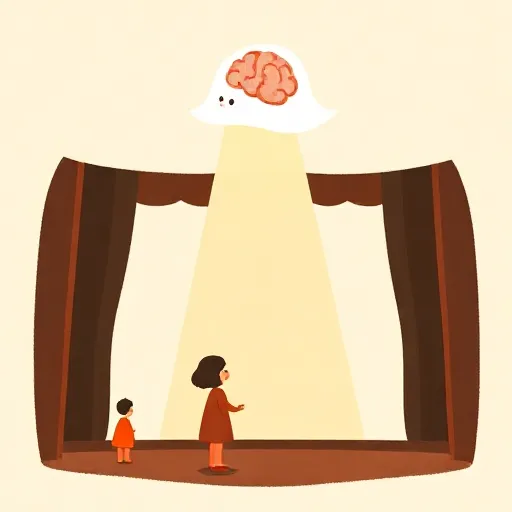
Three big ideas compete to explain what pushes a piece of brain information into the light of consciousness. All agree that different parts of the brain handle different jobs — the back of the brain processes raw sights and sounds, the front helps with planning and self-checking. The fight is about which part plays the starring role.
One camp, led by psychologist Bernard Baars (20th–21st century) and neuroscientist Stanislas Dehaene (born 1965), defends the global neuronal workspace theory. They picture consciousness as a stage in a theatre. Many actors (thoughts, sensations) crowd the wings, hidden in darkness. But when a stagehand shines a powerful spotlight on one actor, that piece of information is “broadcast” to seats all over the cortex — memory stores, speech systems, action planners. Only the broadcast content becomes conscious. In their view, if the spotlight isn’t on, the mental state stays unconscious.
A second camp, the higher-order theory, argues that a brain state becomes conscious only when the front of the brain watches it. Philosopher David Rosenthal (20th–21st century) put it this way: you are in a conscious state if you represent yourself as being in that state. It’s like an inner eye. Your prefrontal cortex, the seat of self-monitoring, must point at a sensation and tag it as “mine” for it to feel like something. Without that tagging, even a vivid picture in the back of the brain stays in the dark.
A third camp, championed by neuroscientist Victor Lamme (20th–21st century), insists that the spotlight isn’t needed. According to recurrent processing theory, consciousness springs from feedback loops inside the sensory brain itself — the back, not the front. When visual areas talk back and forth, looping signals through layers of neurons, the information becomes conscious. The global broadcast and the inner eye, they argue, may come after the feeling has already flared up. This is a bit like saying a flame produces light the instant the fuel and oxygen react — no audience required.
The debate can be boiled down to “front versus back.” Higher-order and global workspace theories lean on the front — especially the prefrontal cortex. Recurrent processing says the back alone can do the job. Who is right? Experiments are hard to design because you can’t ask a brain “are you feeling this now?” without also activating the very access systems that might create the feeling. Researchers have developed clever no-report tricks — tracking tiny eye movements or pupil changes instead of verbal answers — but the argument is far from settled.
Blindsight: When Your Brain Sees Without You
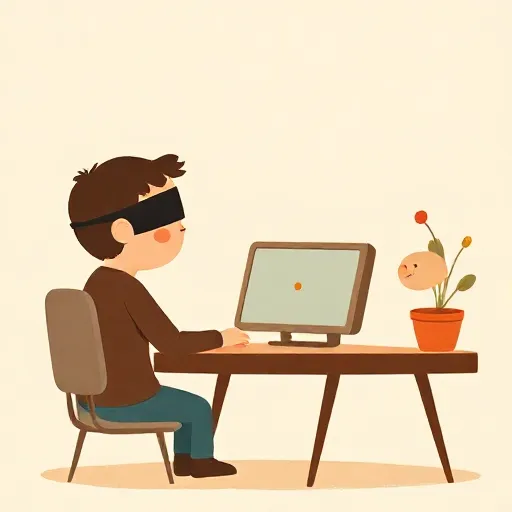
Sometimes a broken brain teaches more than a working one. In the 20th century, neurologists discovered a strange condition called blindsight. It happens after damage to the primary visual cortex (V1) — the first stop for visual signals at the back of the brain. Patients report a blind spot: they see nothing at all in one part of space. But if you flash a dot or a stripe in that blind area and ask them to guess where it is or which way it moves, their answers are often startlingly accurate. They insist they are just guessing, yet their behavior betrays access to visual information.
Does blindsight prove that vision can happen without consciousness? The evidence is messy. Critics point out that patients might have a tiny, degraded scrap of conscious vision that they are too unsure to report. Using signal detection theory, scientists can tease apart two things: how sensitive your brain really is to a signal, and how willing you are to say “I saw it.” Some blindsight patients seem to adopt a super-strict rule: “Unless the signal is blazingly obvious, I’ll say I saw nothing.” In careful experiments, the difference between blind guessing and faint seeing sometimes disappears.
Still, the blindsight puzzle strengthens one idea: V1 plays a necessary role in normal conscious vision. Without it, something essential breaks, even if other ancient pathways — like those going through the superior colliculus in the midbrain — can still steer your hand. The case reminds us that a whole lot can happen inside your skull without you feeling a whisper of it.
Why It Matters: Coma, AI, and the Right to Be

The same methods that try to find the brain’s on switch are already changing medicine. Patients diagnosed with unresponsive wakefulness syndrome lie in a bed with open eyes, sometimes cycling through sleep and wakefulness, but show no outward sign of awareness. The case from 2006 proved that some of these patients are conscious — fully locked inside a body that refuses to obey. By asking a patient to imagine playing tennis or walking through the rooms of their house, scientists can watch the brain light up and confirm that a person is still there. That changes everything: how families speak to the patient, whether comfort care is continued, whether the person is included in decisions.
This science also reaches into questions about animals, artificial intelligence, and even rights. If a system shows the same global broadcasting or higher-order monitoring that we think makes our own feelings flicker on, should we assume it has an inner life? No one knows the answer yet, but the debate won’t stay inside the lab. The hunt for the brain’s secret recipe is not just a philosopher’s daydream. It’s about who we count as a self — and how we treat those who cannot speak for themselves.
Think about it
- If a brain scanner could tell that someone is fully conscious but completely paralyzed, should the law treat that person differently from someone in a permanent coma?
- Could a computer that broadcasts information globally, like the global workspace describes, ever actually feel happiness or pain — or would it always be a fake?
- If you discovered that a close friend could see perfectly but was conscious only of faces and never of places, would you think of them as having one huge blind spot, or just a different way of being a person?