Why Is It So Hard to Say What a Woman Is? Freud’s Big Riddle
A Doctor Asks an Awkward Question
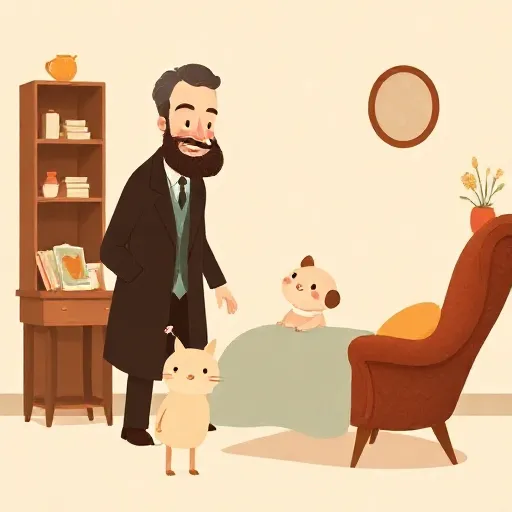
In the 1890s, a doctor in Vienna named Sigmund Freud (1856–1939) began seeing strange symptoms in some of his women patients. They lost their voices, developed unexplained paralyses, or suffered fits — yet there was nothing wrong with their bodies. No infection, no injury. Freud began to suspect that the cause was hidden from the patients themselves. Something inside them that they could not see was twisting itself into physical suffering.
This was the beginning of psychoanalysis, a method of listening to people’s slips of the tongue, dreams, and fantasies to uncover what lies in the unconscious — the part of our minds that works below the surface, shaping how we feel and act without our knowing it. But as Freud listened, one question kept nagging at him: Why do little girls, who once loved their mothers fiercely, turn away and grow up to become women? He called this the riddle of femininity. The riddle turned into a century-long argument that would change how we think about boys, girls, and the masks we wear every day.
Your Inner Battlefield: Eros, Thanatos, and Three Tyrants
Freud believed that all human life is pushed and pulled by two powerful drives. The first is Eros, the love drive, which pushes us toward building bonds, creating things, and uniting with others — not just romantic love, but friendship, self-love, and devotion to ideas. The second is Thanatos, the death drive, which brings aggression, hostility, and a pull toward destruction. Civilization, Freud said, is a constant wrestling match between these two.
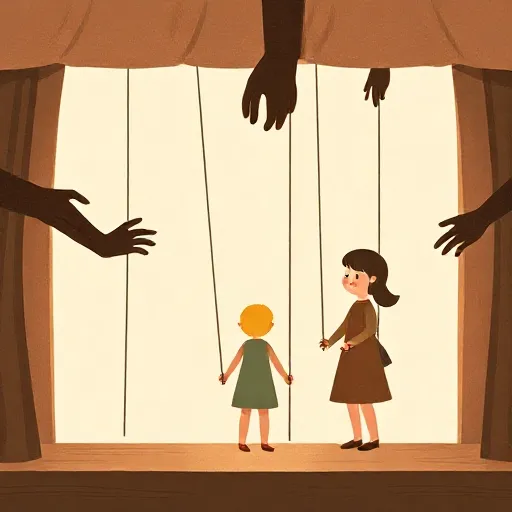
To keep the death drive from tearing society apart, the mind builds a kind of inner police officer. Freud called it the superego. The superego watches, judges, and punishes your ego (your ordinary conscious self), demanding that you follow the rules. But the ego also has to satisfy a wild underground reservoir of desires — the id, the unconscious home of your most powerful drives. The ego is like a tightrope walker balancing three masters: the superego, the id, and the outside world. No wonder it wobbles.
Because the superego is part of you that criticizes the rest of you, Freud saw the mind as split. You are never a single, stable “I.” You are an observer and an observed, a scolder and a scolded, all at once. This split subject is one of Freud’s most unsettling ideas — and it becomes crucial when we ask what makes someone a girl or a boy.
Why the Girl Switches Love: The Oedipal Complex Under the Microscope

Freud’s riddle gets personal in his account of the Oedipal complex. He said that children start out in a bisexual phase: they do not yet think of themselves as wholly boy or girl, but as a mix of both. In this pre-Oedipal stage, the little girl loves her mother passionately and even fantasizes about bearing the mother a child. She is, in Freud’s words, “a little man.” Her pleasure comes from her clitoris — what Freud calls a “little phallus” — and her desires are active, seeking, striving.
To become a woman, the girl must switch her love from mother to father, shift her pleasure from the clitoris to the vagina, and accept a more passive position. Why on earth would she do that? Freud was genuinely puzzled. His answer turned on castration. The girl realizes that her mother lacks a penis, concludes that she has already been castrated, and turns to the father hoping to receive a baby as a substitute for the missing organ. The mother now becomes a rival. For girls, castration does not end the Oedipal complex — it launches it, which is why, Freud thought, women never fully outgrow it and form a weaker superego.
Crucially, Freud did not think anatomy was destiny. He insisted that “what constitutes masculinity or femininity is an unknown characteristic, which anatomy cannot lay hold of.” Sexual identity is a fragile achievement, not a biological fact. Yet his story still painted femininity as a loss of masculinity, a theme that feminist thinkers would soon tear apart.
Feminists Push Back: From Horney to Irigaray

Even in Freud’s circle, not everyone agreed. Karen Horney argued that women are not just defective men; they have their own natural feminine core. Simone de Beauvoir (1908–1986) went further: she insisted that if girls envy boys, it is not because of the penis but because of the social power and privilege men enjoy. In her view, becoming a woman meant being forced to choose between full subjectivity (agency, independence) and femininity (as defined by men). The two seemed incompatible.
The French philosopher Luce Irigaray (born 1932) aimed a sharper blade at Freud. She claimed his whole account was built on matricide — the killing off of the mother-daughter relationship. Freud never truly saw the mother as anything but a mirror for sons. The pre-Oedipal bond between mother and daughter is “inexorably repressed,” left outside the symbolic order of language and law. Because we have no words or images to honor that loss, it stays buried, unmourned. For Irigaray, Western culture itself is a hom(m)osexual order — a world ruled by hommes (men) and homo (the same), where women are only the objects that men exchange to seal their own relationships. Sexual difference, she said, has not yet happened; we must create it.
Lacan Twists the Tale: The Phallus Is a Sign, Not a Body Part

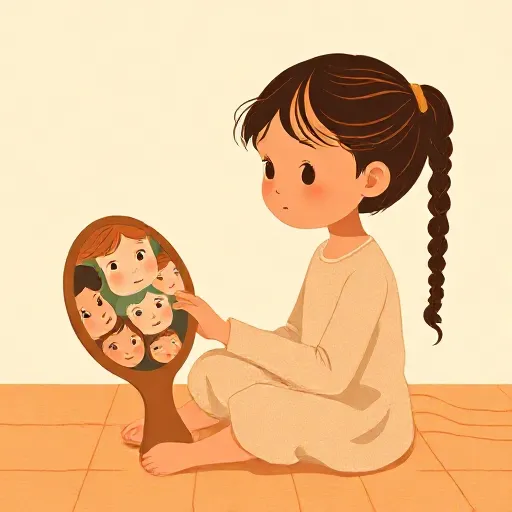
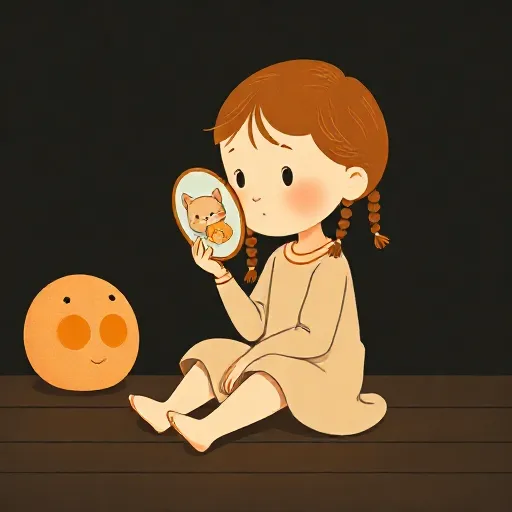
The French psychoanalyst Jacques Lacan (1901–1981) returned to Freud with a twist. He took the focus away from actual body parts and placed it on language. Lacan divided experience into three orders. The imaginary is the realm of images, where we first glimpse ourselves in a mirror and mistake that whole image for who we really are — an illusion that creates both identification and aggression. The symbolic order is the world of language, rules, and the law of the father, which says “no” (incest prohibition) and gives the child a name and a place in society.
In this symbolic order, the key player is the phallus. Crucially, the phallus is not the penis. It is a signifier — a word-like marker that stands for what we all fundamentally lack. Everyone is castrated in Lacan’s sense: no one has the phallus, because it represents a wholeness that can never be achieved. Sexual difference, then, cannot be pinned down by any set of traits (active/passive, etc.). He even declared “there is no such thing as a sexual relationship,” meaning there is no formula to define what being a man or a woman really is. Yet Lacan still associated the phallus with masculinity, leaving a ghost of the same old story.
The Body’s Secret Language: Kristeva and the Power of Abjection
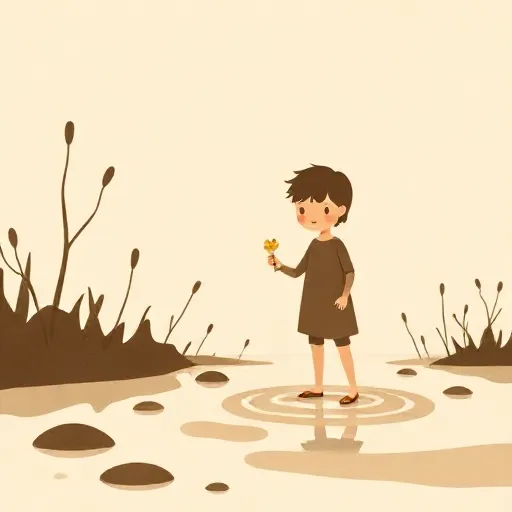
The writer Julia Kristeva (born 1941) took things deeper. She introduced the semiotic — the bodily, rhythmic, tonal layer of language that comes before fixed meanings. Long before a child says “I,” the infant lives in a flowing space of sounds and drives, not yet distinct from its mother’s body. Kristeva called this the chora.
Becoming a self means violently breaking away from that union. The mother’s body must be rejected, cast out. Kristeva calls this process abjection: the horror and fascination we feel toward things that blur boundaries — sweat, blood, milk, the inside of the body, and above all the maternal body. Abjection is how we build a border between “me” and “not-me,” but that border is always fragile. Racism, sexism, and homophobia, the political philosopher Iris Marion Young later argued, partly run on abjection. When we turn away from older people, disabled bodies, or sexualities different from our own with an irrational disgust, we may be trying to protect a shaky self from dissolving.
Why This Old Riddle Still Knocks on Your Door

So why does a Viennese doctor’s riddle from 1900 matter to a twelve-year-old today? Because the questions haven’t gone away. You are still being told, in a thousand tiny ways, what a “real” boy or girl should be like. You may feel a mismatch between who you are inside and the roles you are handed. Fast’s research suggests that children once believed they could be anything — strong and soft, pregnant and beard-wearing — until society told them to cut themselves in half. The loss still aches in art, dreams, and the feeling that something is missing.
The far right, as Claudia Leeb explains, hooks people by offering them a temporary high. When a leader or a movement lets you replace your own ego ideal — your inner picture of who you should be — with an idealized figure, your failures and anxieties vanish. You feel “whole” again, at the price of giving up your critical thinking. And Freud’s theory of jokes shows that a snarky, sexist comment can bribe a listener into joining the aggression, undermining their sense of right without them even noticing.
These thinkers do not hand you a final answer about what a woman or a man really is. Instead, they hand you a map of the hidden forces inside you and around you. They show that sexual identity is never a done deal — it is a restless, half-finished symphony that you get to question, reshape, and maybe even rewrite.
Think about it
- If you could be born again, would you rather be a boy or a girl, and why? What does your answer reveal about the hidden rewards and costs our culture attaches to each?
- Can you think of a time you laughed at a joke that made fun of someone because of their gender, body, or background? Did your reaction feel like a free choice, or did something inside you feel “bribed”?
- Imagine a society where no one ever said “act like a man” or “that’s not ladylike.” Would the riddle of femininity disappear, or would some puzzle about gender remain?