Are You Born a Boy or a Girl — or Do You Become One?
A Strange Idea from 1889: Women Are Like Plants, Men Like Animals?
In 1889 two biologists, Patrick Geddes and J. Arthur Thompson, made a bold claim. They said every difference between women and men — from who raises children to who runs a country — could be explained by how bodies use energy. Women, they argued, conserve energy (they are “anabolic”). That makes them passive, steady, and uninterested in politics. Men, by contrast, burn extra energy (they are “katabolic”), which makes them eager, passionate, and naturally suited to rule.
This is a classic example of biological determinism: the idea that your biology — your chromosomes, hormones, or metabolism — decides your personality, your talents, and your place in society. According to Geddes and Thompson, trying to give women the vote would be pointless. Parliament cannot change what was “decided among the prehistoric Protozoa,” they wrote. Biology is destiny.
For a long time, many people thought like this. In the 1970s, some argued that women could not be airline pilots because monthly hormone changes would make them unsafe in the cockpit. Even in the 1990s, magazine articles claimed that women’s brains — specifically the corpus callosum, a bundle of nerves connecting the two halves — made them worse at reading maps and better at “women’s intuition.” Feminist thinkers pushed back hard against these ideas, and that fight gave birth to a powerful distinction.
The Split: Body vs. Role
The philosopher Simone de Beauvoir (1908–1986) famously wrote in 1949: “One is not born, but rather becomes a woman.” She meant that the expectations, behaviors, and feelings we call “feminine” are not programmed by our anatomy. They are learned from the culture around us.
By the 1960s and 1970s, feminists turned this insight into a two‑part system. Sex would name the biological features: chromosomes (XX or XY), reproductive organs, hormones. Gender would name the social side: the roles, behaviors, clothes, and identities that a society labels masculine or feminine. The motivation was clear: if gender is social, it can be changed. Biology is not destiny after all.
The anthropologist Gayle Rubin gave this picture a vivid spin in 1975. She called it the sex/gender system — “a set of arrangements by which the biological raw material of human sex and procreation is shaped by human, social intervention.” In other words, every society takes bodies and builds a gender order on top of them. Because that order is made by people, Rubin argued, it can be remade. Feminism should aim for a “genderless” world — one where your anatomy does not dictate who you are, what you do, or whom you love.
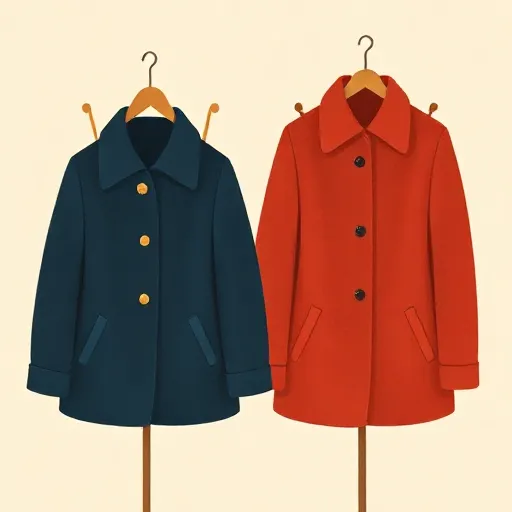
This view sometimes got called the “coat‑rack model.” Your sexed body is the rack; gender is the coat each culture hangs on it. The rack stays the same, but the coat can be swapped. Yet even this tidy picture soon got messy.
How Society Teaches You to Be a Girl or Boy

If gender is learned, how exactly does that learning happen? Gender socialization is the process by which we absorb the rules of masculinity and femininity from the people around us. And it starts astonishingly early.
Researchers have found that when parents describe their newborn babies — just 24 hours old — they use different language for boys and girls. Boys are “strong” and “alert”; girls are “tiny” and “soft.” Those words shape how adults hold, talk to, and expect things from a baby from day one. Later, children are dressed in pink or blue, given dolls or trucks, and told — sometimes directly, sometimes by a raised eyebrow — that rough‑and‑tumble games are for boys, while crying is “unmanly.” Even well‑meaning parents who buy gender‑neutral picture books often read the animal characters as “he” and make the caring one “she” without realizing it.
Some thinkers, like Nancy Chodorow (b. 1944), thought simple social learning could not explain the deep, gut‑level feeling that being a woman or a man is part of who you are. Chodorow pointed to the fact that, in most families, mothers or other female relatives do most of the early childcare. Because a mother identifies more closely with a daughter, she unconsciously encourages the girl to stay enmeshed with her, creating blurry boundaries of the self — a tendency to feel emotionally connected to others. A son, by contrast, is nudged toward independence and crisp ego boundaries, which can show up later as emotional detachment. Chodorow’s proposal had roots in Freudian psychoanalysis, but it was also a call to action: if men and women shared parenting equally, she argued, the deep psychological grooves of gender would soften.
But does every woman really learn the same lessons? Many philosophers began to doubt it.
The Problem of “Woman” as One Box
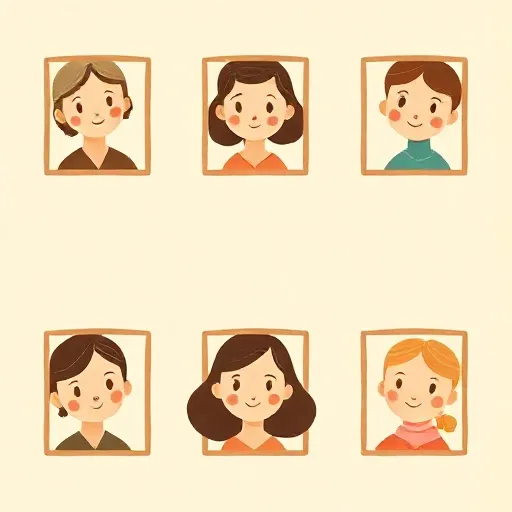
Elizabeth Spelman (late 20th century) noticed a hidden trap in early feminist thinking. Many white, middle‑class Western feminists wrote as though all women everywhere experienced gender the same way. They assumed, Spelman said, that “the womanness underneath the Black woman’s skin is a white woman’s.” She called this white solipsism — the mistake of treating your own cultural experience as the universal truth.
The history of racist oppression makes the point starkly. Under American slavery, Black women were “hypersexualised” and treated as always available, while white women were painted as pure and virtuous. For those women, sexual objectification — which some theorists had proposed as the common thread tying all women together — meant something completely different. As Spelman put it, females do not simply become “women”; they become particular kinds of women: working‑class white women, wealthy Black women, poor Jewish women, and so on. If feminism wants to speak for all women, it cannot act as though one story fits everyone.
Judith Butler (b. 1956) took this worry even further. Butler argued that whenever feminists try to define woman — even with socially constructed traits like a nurturing personality or a specific kind of sexuality — they accidentally create a rule about who counts as a “real” woman. Butler said that any definition operates as a policing force. It tells some people they are doing gender “wrong” and pushes them out of the category. For Butler, identity terms like “woman” are never purely descriptive; they always carry a hidden ideal. That ideal tends to reflect what is normal for the most socially powerful — often white, heterosexual, middle‑class people — and it makes life harder for everyone else.
Bodies That Surprise Us: Intersex and the Collapse of Sex
You might think that while gender is messy, sex is straightforward: you’re either male or female, and biology decides. But that turns out to be far from settled.
The biologist Anne Fausto‑Sterling (b. 1944) gathered research showing that roughly 1.7% of people have sex characteristics that do not fit the standard male‑female boxes. Some intersex individuals have chromosomes that are neither simply XX nor XY; others have a mix of ovarian and testicular tissue, or genitals that look ambiguous. The tidy “two‑sex model” — the belief that everyone is either clearly male or clearly female — is a relatively recent idea. Before the late 1700s, many scientists used a “one‑sex model,” thinking of female and male bodies as versions of the same basic plan, with female organs simply turned inward. Our categories, Fausto‑Sterling argued, are shaped by culture as much as by nature.
A famous case drove the point home. The Spanish athlete Maria Patiño had female genitalia and had always lived as a woman, but she was discovered to have XY chromosomes and was banned from women’s competitions. She fought back, arguing that chromosomes alone do not tell the whole story. Incidents like this show that deciding who counts as “female” or “male” involves human judgment, not just a simple reading of a biological meter. Some philosophers therefore propose that sex is a cluster concept: you don’t need to satisfy every trait on a checklist; you just need enough of the features that tend to travel together. And even those features can be altered by social factors, from nutrition to exercise opportunities.
Butler’s Big Question: Is Sex Itself Just a Performance?
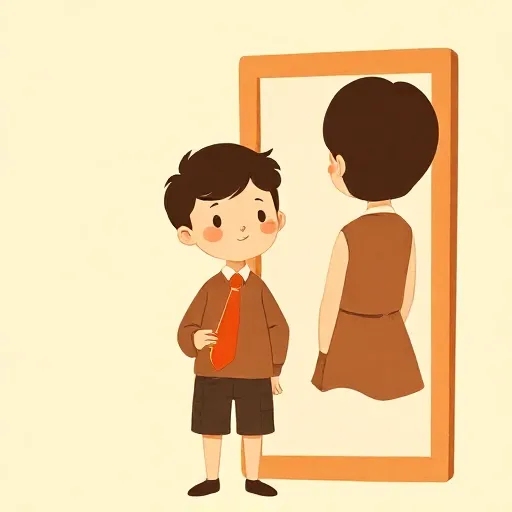
Judith Butler pushed the argument to its most provocative edge. If culture shapes what we think of as “male” and “female” bodies, is sex also a social construction — not a pure biological fact? Butler’s answer was yes. For Butler, sexed bodies “have no ontological status apart from the various acts which constitute their reality.” That does not mean bodies disappear. It means that the way we understand and label bodies is always wrapped up in language and power.
When a doctor declares “It’s a girl!” at birth, Butler argued, that is not a neutral report. It is a performative speech act — it helps make the baby into a girl by launching a lifetime of gendered nudges, rules, and expectations. Over time, performing femininity (through clothing, gestures, ways of speaking) or masculinity (through posture, stoicism, certain kinds of play) becomes so habitual that we mistake the performance for a deep truth. Gender, Butler wrote, is “a stylized repetition of acts.” It is something we do, not something we are.
This view can feel unsettling. But it also opens a door: if gender norms are repeated performances, they can be disrupted. A male‑to‑female trans person, on Butler’s view, is not “really” a man disguised as a woman. Their gender is just as real as anyone else’s, because all gender is created through doing. Not everyone agrees that sex simply collapses into gender. The philosopher Alison Stone has cautioned that claiming sex traits often carries hidden gender norms, but that does not make sex identical to gender. The debate remains live, but Butler’s challenge forced everyone to take seriously the idea that the body is not a blank slate outside of culture.
Why Does This Still Matter for You?
These old arguments are not just museum pieces. They are at the heart of conversations you hear right now — about who gets to play on which sports team, which restroom someone uses, and whether a person who says “I am not a boy or a girl” deserves to be taken seriously. When feminists in the 1960s first split sex from gender, they wanted to prove that girls are not naturally programmed to be passive or uninterested in science. Today, many people use that same split for a different purpose: to explain that your inner sense of who you are can differ from the sex you were assigned at birth.
But as Butler and others showed, the line between body and culture is far blurrier than it first seemed. Some thinkers now argue that even biological sex is a conferred social status — something doctors and legal systems give us, not a label that nature simply hands over. Others push back, insisting that terms like “woman” pick out adult human females and nothing more, and that the sex/gender distinction causes confusion rather than clarity.
The deeper question for you is this: what does it mean to say someone is a girl, a boy, both, or neither? And who gets to decide? The feminist thinkers you have just met do not all agree. They give you sharp tools to question the labels you inherited, the rules you feel pressured to follow, and the stories you tell about your own body. What you do with those tools is up to you.
Think about it
- If a grown‑up tells you “you can’t do that because you’re a boy” or “because you’re a girl,” is that claim about biology or about social rules? How could you find out?
- At the exact moment a doctor announces “It’s a girl!,” is that statement describing something already true, or helping to create that truth? Why might the difference matter?
- Picture a world where no one ever told you which toys, clothes, or hobbies fit your body. Would you still have a gender? Why or why not?