Becoming Woman, Becoming Free: Simone de Beauvoir's Philosophy
Imagine being told, from the moment you’re born, that you are the “second” version of something. That there’s a real, original kind of human being—and then there’s you, the lesser copy. That your body makes you weaker, more emotional, less capable of serious thought. That your purpose is to serve, to please, to be pretty and quiet. That the world was built by and for the other kind of person, and your job is to fit yourself into the spaces they leave you.
This isn’t a science fiction story about aliens. For most of human history, this is what it meant to be born female.
Simone de Beauvoir, a French philosopher who lived from 1908 to 1986, spent her life trying to understand how this situation came to be—and whether it had to stay that way. She wrote novels, plays, essays, and a massive book called The Second Sex that changed how people thought about women, freedom, and what it means to be human. Her ideas are still fought over today.
But Beauvoir wasn’t just writing about women. She was asking a deeper question, one that applies to everyone: What does it mean to be free when you live in a world that tries to trap you?
The Strangest Fact About Being Human
Beauvoir started with a puzzle. Human beings are weird. We are both physical objects—bodies with bones and blood and hormones—and something else: a consciousness that can think about itself, imagine possibilities, and choose what to do. We are, as she put it, ambiguous. Not confused, but both things at once.
Most philosophers before Beauvoir had tried to get rid of this ambiguity. They said we were really just minds trapped in bodies, or really just complicated animals. Beauvoir thought this was a mistake. The ambiguity is the point. To be human is to be both free consciousness and limited body, at the same time, forever.
This creates a problem. As conscious beings, we want to reach out into the world, make things happen, shape our futures. Beauvoir called this transcendence—the movement toward an open future, toward new possibilities. But the world pushes back. Our bodies get sick. Other people say no. The future never arrives the way we planned. We get stuck in the present, repeating the same routines, unable to break out. Beauvoir called this immanence—being trapped in the here and now, closed off from new possibilities.
Here’s the thing: all human beings experience both. Everyone gets sick, everyone has boring days, everyone feels stuck sometimes. But Beauvoir noticed something disturbing. Some groups of people are forced into immanence more than others. Their transcendence is blocked, not by fate or biology, but by other people.
The Invention of Woman
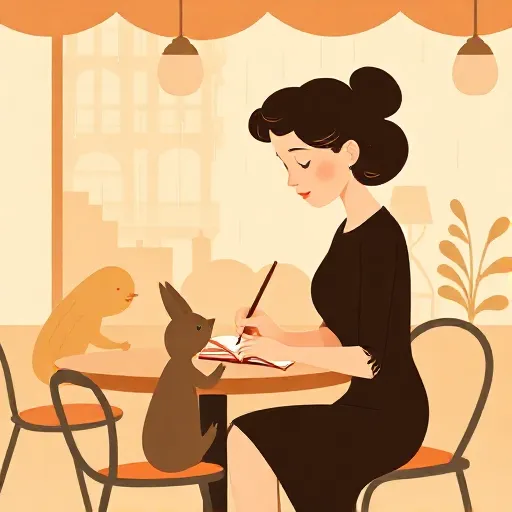
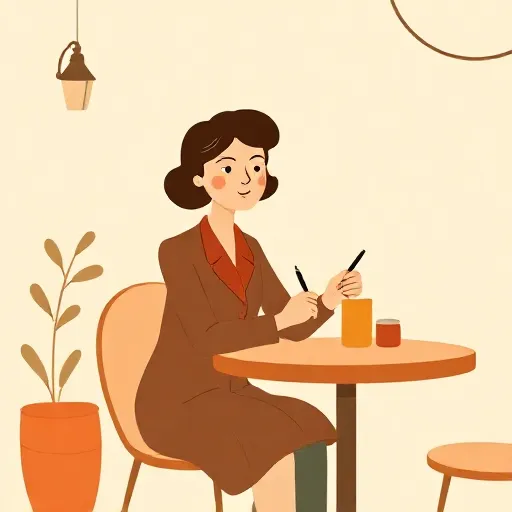
The Second Sex begins with a question Beauvoir asked herself one day in a café: “What has it meant to me to be a woman?” At first she thought it didn’t matter. But then she realized something. The world she lived in was a masculine world. Men were the default human beings. Women were the exception, the other, the second sex.
This led to the most famous line Beauvoir ever wrote: “One is not born, but becomes a woman.”
She didn’t mean that bodies don’t exist. Of course they do. She meant that being a woman isn’t just a biological fact. It’s something you learn to be. Society hands you a script—how to walk, talk, dress, what to want, what to fear—and you gradually learn to perform it. You become a woman the way an actor becomes a character. Except you’re not acting. You’re living it for real, and the script was written before you were born.
For Beauvoir, this is where the trap begins. The script says women are the Other—not the main character of human history, but a supporting role defined by their relationship to men. A man is a person who happens to be male. A woman is defined by being female. She is “not-man.” She is relative to him, the way left is relative to right.
This isn’t just unfair. It’s a kind of theft. Women are robbed of their transcendence, their ability to reach out and shape the world. They are pushed into immanence: domestic routines, child-rearing, beauty work, emotional labor—all the repetitive, life-sustaining tasks that keep the world running but don’t let you change it. Men, meanwhile, get to be the ones who build, invent, govern, explore.
The cruelest part? Women often go along with it. Not because they’re weak or stupid, but because it’s easier. Being the Other means you don’t have to take responsibility. You don’t have to make hard choices. You get to be taken care of (in exchange for your freedom). You get approval and attention. Beauvoir called this bad faith—pretending you’re not free when you really are, because freedom is scary.
The Appeal: Why We Can’t Be Free Alone
So far this sounds like a book about women’s problems. But Beauvoir’s philosophy goes deeper. She was asking a question that applies to everyone: How can any of us be free, when our freedom depends on other people?
Here’s the problem. Imagine you want to change something in the world—stop bullying at school, say. You can try really hard, but you can’t do it alone. Your project only succeeds if other people join you. And you can’t force them. You can’t reach inside their minds and make them want what you want. Freedom, Beauvoir thought, is something internal. Even a slave has a free consciousness—they can choose how to respond to their situation, even if their options are terrible.
So you’re stuck. You need others, but you can’t control them. The only way forward is the appeal: you call out to other people, in their freedom, and ask them to join you. You try to persuade them that your project is worth taking up. But whether they join is up to them.
This means our freedom is fragile. It depends on others recognizing us and choosing to help. And here’s where the ethics kicks in. If I want others to take up my projects, I have to create the conditions where they can. I can’t appeal to someone who is starving, or enslaved, or silenced. They can’t hear me. So I have to fight for material equality—enough food, safety, education, leisure—so that everyone has the basic capacity to respond.
But this creates another problem. What if the people blocking equality won’t listen? What if they use violence to keep things as they are? Beauvoir thought about this a lot. She lived through World War II in Nazi-occupied Paris. She saw what happens when power runs wild.
Her answer was uncomfortable. Sometimes violence is necessary to stop worse violence. But it’s always a failure. When you kill or hurt someone, even for a good cause, you are treating them as an object, not a free person. You are doing the very thing you’re fighting against. Violence, she said, is “the mark of a failure which nothing can offset.” It’s sometimes unavoidable, but it’s never good. We are, she wrote, “condemned to violence”—not because we love it, but because the world is messy and other people’s freedom gets in the way.
How We Escape Freedom
If all this sounds heavy, that’s because Beauvoir thought being human was genuinely difficult. Most of us try to escape the difficulty.
She described several ways we do this. The sub-man refuses to even acknowledge their freedom. They just drift through life, following orders, never deciding anything. The serious man pretends that some value—money, country, God—is absolute and unquestionable. They submit to it completely and never have to choose. The nihilist sees that nothing is absolute and concludes that nothing matters at all. They give up.
None of these work. They’re all forms of bad faith—denying your real situation as a free being in a world without guarantees.
The ethical person, Beauvoir thought, does something harder. They accept that the future is open and uncertain. They know no one will save them. They take responsibility for their choices, including the ones that hurt others. And they embrace their bond with other people—not as a way to escape freedom, but as the only place freedom can actually live.
She found this ideal embodied in artists and writers. Why? Because artists create meaning without pretending it’s absolute. A novel doesn’t claim to be the final truth. It offers a vision and appeals to you to respond. It opens possibilities without closing them down. For Beauvoir, this was what ethical life should be like: a generous offering, an appeal to others, a reaching out across the gap between selves.
The Body and Death
One thing that makes Beauvoir different from many philosophers is that she took bodies seriously. Not just as abstract “embodiment,” but as actual, messy, vulnerable, aging flesh.
She watched her mother die of cancer and wrote about it in A Very Easy Death. She watched Sartre, her lifelong partner, lose his sight and his memory, and wrote about his last days in Adieux. She wrote a whole book about old age, The Coming of Age, arguing that elderly people are made into Others just like women are—treated as a different species, pushed out of meaningful projects, robbed of their humanity.
The point was not to be morbid. The point was that our bodies are part of our situation. We are not pure spirits. We get old, we get sick, we die. Pretending otherwise is another form of bad faith. But using these facts to justify treating people as less than human—that’s a crime.
Beauvoir wanted a world where difference didn’t mean hierarchy. Where women and men, young and old, could recognize each other as free beings while also honoring their differences. Where the bond between people was based on generosity, not control. Where the appeal could be heard.
She knew this world was a long way off. She lived through two world wars, the occupation of her country, the torture of Algerians by the French army. She knew what humans were capable of. But she also thought the truth of our freedom, and our need for each other, gave us a reason to keep trying.
Beauvoir’s Challenge to You
One of the things that makes Beauvoir hard to read is that she refuses to give easy answers. She doesn’t say “just be yourself” or “follow your dreams.” She says: you are free, whether you like it or not. You can’t escape responsibility. The world is not fair, and you are part of making it unfair or less unfair. Other people need you to be free so that you can answer their appeal. And you need them for the same reason.
This is not comforting. But Beauvoir thought comfort was overrated.
So here’s a question she might leave you with: What are you going to do with your freedom? Not in some big, dramatic way. But today, with the people around you, in the situation you’re actually in. Are you going to hide? Are you going to pretend someone else will fix things? Are you going to accept the scripts you were handed without question?
Or are you going to reach out, make an appeal, and see what happens?
Key Terms
| Term | What it does in this debate |
|---|---|
| Ambiguity | Names the fact that humans are both free consciousness and limited body at the same time |
| Transcendence | The movement toward an open future, creating new possibilities |
| Immanence | Being stuck in the present, trapped in repetition and closed-off routines |
| The Other | A person or group defined as inferior or secondary relative to a dominant group |
| Bad faith | Pretending you’re not free when you really are, to avoid responsibility |
| The appeal | Calling on other people, in their freedom, to join your projects |
| Situation | The concrete circumstances (body, history, society) that constrain but don’t determine your freedom |
| Serious world | The world of childhood, where values seem fixed and authorities are unquestioned |
Key People
- Simone de Beauvoir (1908–1986): French philosopher, novelist, and feminist who refused to be defined by her famous partner Jean-Paul Sartre and developed her own original ideas about freedom, the body, and oppression.
- Jean-Paul Sartre (1905–1980): Beauvoir’s lifelong intellectual partner and lover; he developed a philosophy called existentialism, but Beauvoir’s work both influenced his ideas and criticized them.
- The Marquis de Sade (1740–1814): A French nobleman who wrote about cruelty and sexual violence; Beauvoir studied him as an example of someone who chose freedom but used it to dominate others, showing that freedom alone isn’t enough for ethics.
Things to Think About
-
Beauvoir says we “become” women (or men) rather than being born that way. Think about your own life. Can you identify moments where you learned to act “like a girl” or “like a boy”? Were those moments chosen, or were they expected?
-
Beauvoir thinks violence is sometimes necessary but always a failure. Can you think of a situation where using force might be the right thing to do, but still feel like something has gone wrong? What would a “successful” resolution look like instead?
-
The appeal requires that others be able to respond to you. What happens when someone is so exhausted, hungry, or scared that they can’t hear your appeal? Who is responsible for changing that situation?
-
Beauvoir says childhood is a “metaphysically privileged” time because children experience freedom without responsibility. Is that a good thing? At what point should someone start taking responsibility for their choices? What if someone never does?
Where This Shows Up
- Debates about gender today: When people argue about whether gender is “biological” or “social,” they’re wrestling with Beauvoir’s claim that one becomes a woman.
- Social justice movements: The idea that oppressed groups are made into “Others” is used by activists for racial justice, disability rights, LGBTQ+ equality, and elder justice.
- Ethics of power: Beauvoir’s warning that even justified violence is still a failure appears in discussions about war, police, and protest.
- Everyday life: Any time someone says “that’s just how things are” to avoid changing an unfair situation, they’re practicing the bad faith Beauvoir identified.