Are You Born a Woman, or Do You Become One?
“One Is Not Born a Woman” — A Strange Idea

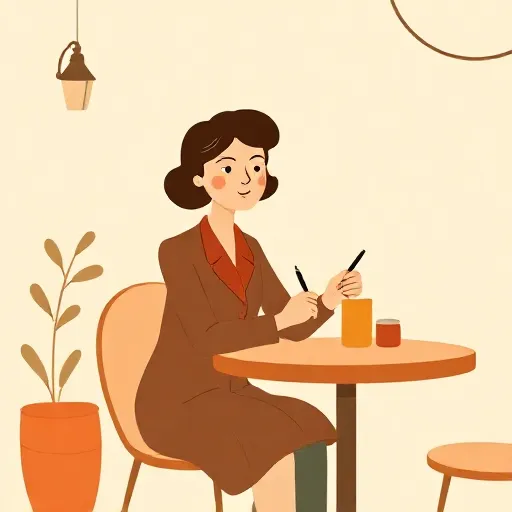
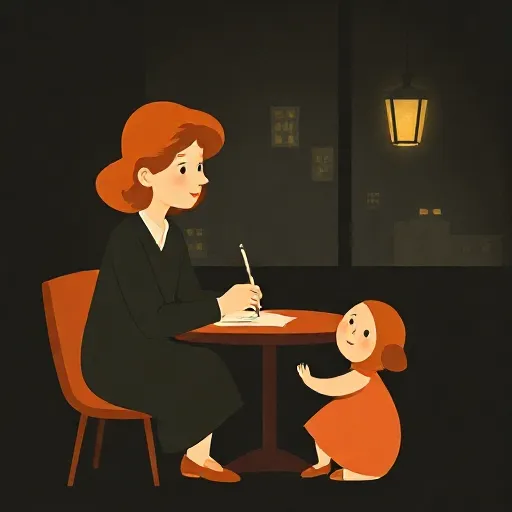
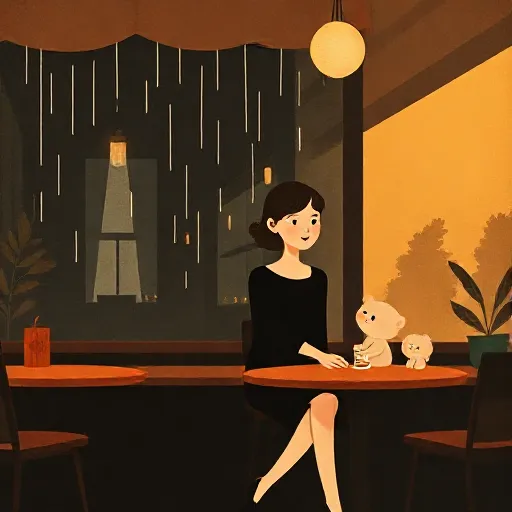
Step into a smoky, rain-soaked café in 1940s Paris. The philosopher Simone de Beauvoir (1908–1986) leans over a table, scribbling a line that will shake up the world: “One is not born, but rather becomes, woman”
This sounds confusing. If you have a uterus and a vagina, aren’t you simply born a woman? Not according to de Beauvoir. She noticed that societies everywhere take people with what we think of as “female” bodies and push them into certain roles—caretakers, supporters, objects to be looked at—while people with “male” bodies get pushed toward leadership and action. Because these roles feel so old and familiar, we forget they are a choice. We mistake a social construction for a natural fact.
De Beauvoir’s key insight is that we build gender through shared habits, expectations, and laws. Just like money is just paper until we all collectively agree it has value, genders are categories we construct and give meaning to. The point is radical: if a system is built by us, we can rebuild it.
The Traffic Intersection at the Center of Identity

But asking “what makes a woman?” gets complicated fast. Imagine a Black woman in the 1980s trying to sue her employer for discrimination. She couldn’t do it, and philosopher Kimberlé Crenshaw (1959–present) wanted to know why.
The problem was a trap in the law. To win a case for race discrimination, she had to show that the company also treated Black men unfairly. To win a case for sex discrimination, she had to show that the company also treated white women unfairly. But what if the company only targeted Black women in particular? The law had a gap, Crenshaw wrote, where that person should be.
Crenshaw used the metaphor of a traffic intersection to explain intersectionality. If a car hits you at an intersection, you can’t always separate whether it hurt you because it came from the north, the east, or both at once. In the same way, racism and sexism often crash together in ways that cannot be pulled apart into separate pieces. This idea changes metaphysics by showing that we cannot understand what it means to be a woman by just thinking about sexism alone—race, class, and disability all tangle together to shape a person’s reality.
Designing a Better World — The Philosopher as Engineer
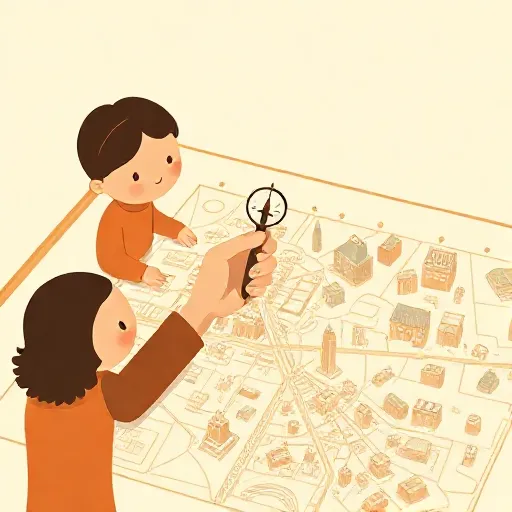
Faced with unfairness, some philosophers want to cure it. Sally Haslanger (1950s–present) asks a dangerous question: instead of asking “What is race?” or “What is gender?”, what if we asked “What should gender be?”
This is called ameliorative inquiry. Haslanger noticed that the concept we say we use (the manifest concept) often differs from the one we actually operate by (the operative concept). Think of a school that says a parent is a “biological relation” but sends emergency forms to any guardian who raises the child. So, Haslanger argues, if our current ideas cause harm, why not build a new one, like an engineer designing a bridge?
She argues that we should see a woman not as someone with a certain body type, but as someone who is systematically positioned as “lower” in a social hierarchy that favors men. This is a sharp, political version of a definition. For Haslanger, a concept isn’t a dusty museum piece; it is a tool. And a broken tool needs replacing.
The Container, the Cat, and the Baby
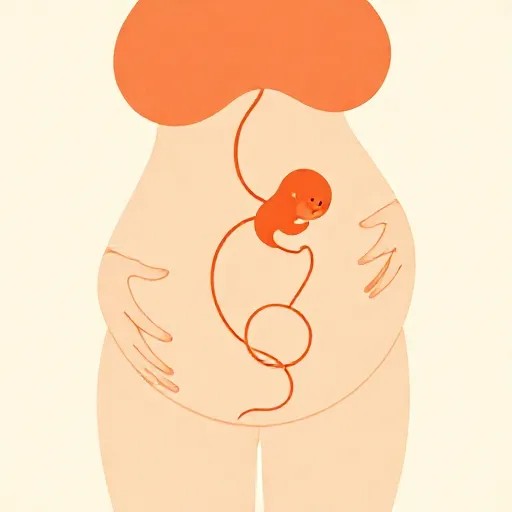
Now let’s look at the body itself through a different lens—the puzzle of pregnancy. When someone is pregnant, what is the metaphysical relationship? The most common view is the Container Model. As de Beauvoir described it, people often think of a pregnant person as a passive jar holding a separate little being—like a yogurt cup in a refrigerator.
The philosopher Elselijn Kingma (present) thinks this is completely wrong. She argues for a Parthood Model: the fetus is not a separate object inside a container but a part of the pregnant person, much like a tail is part of a cat, or a liver is part of a dog.
How can she be so sure? Think about your own body. Your immune system does not attack your own parts. During pregnancy, a person’s immune system usually tolerates the fetus—it doesn’t treat it as a foreign invader. Also, if you look at a diagram, there is an unbroken physical connection (topological continuity). There is no empty space around the fetus; it is connected through the umbilical cord until that cord is cut at birth—just like a tail is connected to a cat until it is severed. If you are a part, rather than a container, questions about bodily rights and identity become much more complex.
Why We Should Doubt What’s “Natural”
Why does any of this matter? Because calling something “natural” is a powerful way to stop people from trying to change it. For centuries, women were kept out of universities, careers, and public life with a simple excuse: “It’s just nature.”
Feminist philosophers engage in a debunking project. They point out that many things we assume are “natural facts”—like the idea that women should be the primary caregivers—are actually social kinds, kept alive by our choices and rules. The philosopher Louise Antony uses a brilliant analogy: being near-sighted is natural, but we don’t just shrug and accept a blurry life. We build glasses. We do laser surgery. We change nature when it doesn’t suit us. If a society is unjust, the fact that it feels familiar does not make it necessary.
Philosophers like Haslanger, Crenshaw, and Kingma don’t just explain why things are the way they are. They ask if reality could be different—and if it should be. Metaphysics is not about leaving everything as we found it; it’s about figuring out what is truly real so we can change the world for the better.
Think about it
- Think of a rule at your school or in your family that everyone follows. Is it a necessary fact of nature, or is it a social construction? Who would benefit if the rule changed?
- If a scientist proved that a fetus is purely a part of the mother’s body, just like a kidney, how would that change the way we think about rights and choices?
- You walk through an intersection every day. What different parts of your identity (your age, your friendships, your language, your body) “crash” together at once in ways that you can’t easily separate?