Are You Born a Girl, or Do You Grow Into One?
One Is Not Born a Woman

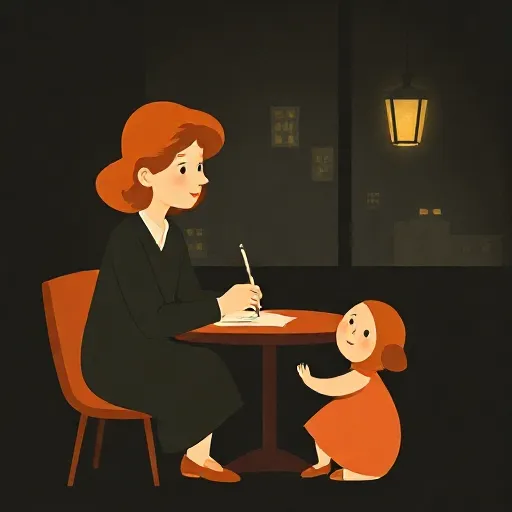
In 1949, the French philosopher Simone de Beauvoir (1908–1986) sat in a Paris café and wrote a sentence that still rattles people today: “One is not born, but rather becomes a woman.” She was drawing a line between sex and gender. Sex refers to the biological features of a body — chromosomes, hormones, anatomy. Gender, she argued, is something different: the behaviors, attitudes, and roles that a society teaches you are “feminine” or “masculine.” You learn to be a woman the way you learn a language.
But Beauvoir’s own book, The Second Sex, twisted in two directions. The American philosopher Elizabeth Spelman (born in the mid‑20th century) noticed this. Sometimes Beauvoir wrote as if all women were a single, united group, equally crushed by a single form of male power. She compared women to enslaved people and the working class, as if women were not also enslaved or working class themselves. Yet elsewhere, Beauvoir admitted what was obvious: women are not one big team. She wrote that women “live dispersed among the males,” attached to fathers or husbands by class and race, often feeling more loyalty to the men of their own group than to other women.
This contradiction poses two problems that philosophers now call the commonality problem and the normativity problem. What on earth does a displaced woman in a war zone share with a queen? And if we talk about “women” as if they are all middle‑class, white, and European, we silently make that picture the norm for everyone — erasing the lives of millions.
When “Woman” Hides the Crossroads
The intersectionality problem pushes this further. The legal scholar Kimberlé Crenshaw (born 1959) showed that anti‑discrimination law often protected Black people or women, but not Black women specifically. Imagine standing in the middle of an intersection where cars are speeding from two directions — racism from one street, sexism from the other. The law might see each street separately, but it misses the person hit by both cars at once. Crenshaw argued that domestic violence against Black women gets suppressed: civil rights groups don’t want to feed stereotypes about Black men, and feminist groups don’t want the issue to look like it only affects women of color. Black women’s particular vulnerability vanishes.
Crenshaw was not the first to raise this alarm. In 1974, the Combahee River Collective, a group of Black feminists, insisted that liberation could not come by ignoring race, class, or sexuality. Writers like bell hooks (born 1952) and anthologies with titles like All the Women Are White, All the Blacks Are Men, But Some of Us Are Brave hammered the point home. Any definition of “woman” that leaves out these intersections ends up excluding the very people it claims to represent.
A Definition to Fight Oppression
Given these traps, can we even define “woman” in a way that helps feminism? Sally Haslanger (born 1961) offered what she called an ameliorative definition — one meant to fix a social problem rather than capture ordinary language. Her idea: you are a woman if you are systematically subordinated along some dimension (economic, legal, social) and you are “marked” for this treatment because of observed or imagined bodily features linked to reproduction. In plain English: society views you as female and treats you worse because of it.
The definition is powerful in some ways, but it stumbles. It excludes extremely privileged women whose bodies don’t get them subordinated. And, as Katharine Jenkins (a contemporary philosopher) pointed out, it can exclude many trans women. If a trans woman is consistently seen as a woman, she might be treated well, not subordinated. To Haslanger’s definition, she isn’t a woman — which feels wrong. Jenkins suggested that we also need to think about gender identity, the inner sense of one’s own gender, alongside social treatment.
If Gender Is a Performance, Who is the Actor?
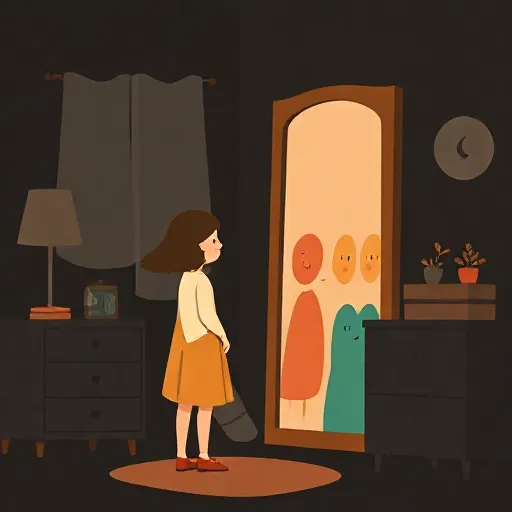
Across the philosophical aisle, Judith Butler (born 1956) takes a more radical view. In her 1990 book Gender Trouble, she asked: if Beauvoir says you become a woman, who or what is the “you” that does the becoming? Butler’s answer: there is no “you” before the becoming. The very idea of a stable, inner subject is an effect of language and power. Gender, she argues, is performative — it is something you do, like a speech act, not something you simply are. Saying “I pronounce you man and wife” creates the marriage; performing the gestures, clothes, and desires that culture labels “feminine” produces what we call a woman.
This does not mean you can wake up and casually choose your gender like a breakfast cereal. Butler points to what she calls compulsory heterosexuality — a powerful social machinery that demands people fit into two opposite sexes, two opposite genders, and one approved direction of desire. Institutions like schools, medicine, and the law enforce these categories. The problem is, if subjects are wholly produced by power, how can anyone rebel against that power? Butler thinks opportunities for resignification — twisting the meaning of the norms from inside — can open cracks in the machine. But critics like Nancy Fraser (born 1947) reply: isn’t some resignification dangerous, not liberating? And mere wordplay cannot replace fighting for wages, housing, and healthcare.
A Bus Stop Without a Single Bus
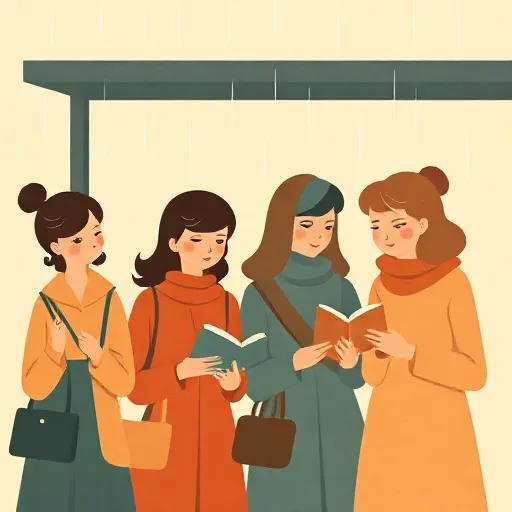
Another way out of the tangle comes from Iris Marion Young (1949–2006). She borrowed an idea from Jean-Paul Sartre: a series. Think of strangers waiting for a bus. Each person wants to travel along the same route, but they don’t know each other, and they relate to the bus — a practico-inert reality — not to one another. They are a loose collection, not a team. Young says women are like that. They are united by the objects and expectations a society throws at them: clothes, toilets, pronouns, divisions of labor, all shaped by the same bus — the system of gender. This explains why women share certain pressures without all thinking or acting alike. But crucially, a series can become a group: the moment bus riders start complaining together about delays, they transform into a conscious collective. Women, too, can become a political force without a single, permanent definition.
Why the Definition Still Matters
You might wonder: why does a twelve-year-old need to care about a philosophical definition of “woman”? Because the answer shapes real life. When a school decides which locker room a trans student can use, it leans on some definition of womanhood. When a doctor takes — or dismisses — a girl’s pain, assumptions about women’s bodies and credibility are at work. When movements try to fight for “women’s rights,” they must decide whose rights count.
Philosophers have not solved the puzzle, and the debate remains as live as ever. Beauvoir’s sentence launched a conversation that now includes Black feminists, trans theorists, disability activists, and many others. The goal is not to find one magic label that sticks to everyone forever. It is to build a thinking tool that is honest about differences, useful against injustice, and big enough to let people breathe.
Think about it
- If a scientist could build a perfect list of all the traits that every woman in history shares, would that list capture what “woman” really means, or might it still miss something important?
- Imagine a school rule that says only “girls” can join a certain sports team. How should the school decide who counts as a girl, and who should get to help make that decision?
- Can a word be useful even if it has fuzzy edges and exceptions, like “game” or “friend”? Or does a word like “woman” need a sharp, clean definition to be fair?