Are You Born a Boy or Girl? How Philosophy Questions Gender Itself
What Happens When the Label Doesn’t Fit?
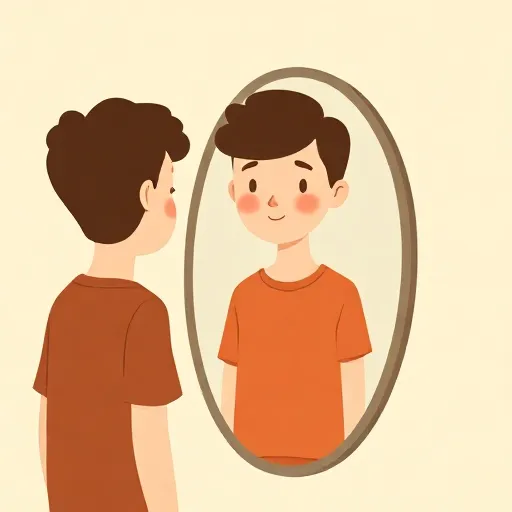
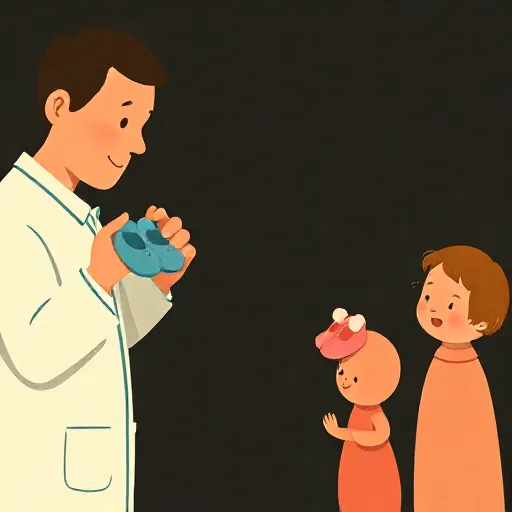
Imagine a baby is born, and the doctor announces, “It’s a girl!” Everyone uses she/her pronouns, buys pink clothes, and expects the child to grow up feeling like a girl. But years later, that person finds the label doesn’t match how they feel inside. They might call themselves transgender, or trans for short. Philosophers ask: what does it mean to be a boy or a girl in the first place? And who gets to decide?
Trans philosophy takes these experiences seriously — not as a problem to solve, but as a starting point to question the very idea of gender. According to a common definition in trans studies, transgender refers to any movement away from an assigned, unchosen gender position. That includes any kind of variation from gender norms and expectations. Already, though, tricky questions appear. If someone never uses the word “trans” but still breaks gender rules — like an Indian hijra or an Indigenous Two‑Spirit person — does that term fit them? Does putting everyone under one umbrella hide important differences? Trans philosophy is not just about defining a word; it’s about thinking critically about all the ways we sort people into “man” and “woman.”
The Umbrella That Keeps Growing
In the 1990s, the term trans expanded quickly. Early trans organizing was often led by people who described themselves as transvestites, cross‑dressers, or transsexuals, and there were strict rules about who counted as “real.” For instance, transsexuals were expected to have had genital reconstruction and hormone therapy, and they had to pass as a gender different from their birth sex. Frustrated by these gatekeeping standards, a wide range of gender‑nonconforming people began proposing their own words — bigender, intergender, metagender, third gender, and eventually transgender. That last term stuck. It became an umbrella, welcoming anyone who wandered from the sex they were assigned at birth, without demanding any specific set of practices or looks.
Around the same time, the word cisgender was coined to name the experience of having your gender “match” the sex you were assigned. Activist Julia Serano helped popularize the idea that cis people are those whose subconscious and physical sexes feel aligned. But the term soon drew criticism. Some argued it makes assigned sex the central authority again, erasing intersex people. Others pointed out that being a man or a woman is not a simple, natural process for anyone — it is something you become. Still others worried that cisgender presumes whiteness and ability, and that very few people actually fit it perfectly. Trans philosophy digs into all these cracks.
A later term, nonbinary, refers to genders that are neither man nor woman. It caught on in the early 2000s, but it too sparked debate. Some treat nonbinary as a radical step beyond the binary, while others note that even saying “nonbinary” depends on the idea of a binary. Some philosophers suggest everyone should use they/them pronouns because gendered pronouns reinforce a restrictive system. Critics counter that transgender people often find specific pronouns deeply important, and a blanket rule could erase that. The umbrella that shelters also sometimes pinches.
Inside, Outside, and the Realness of Gender
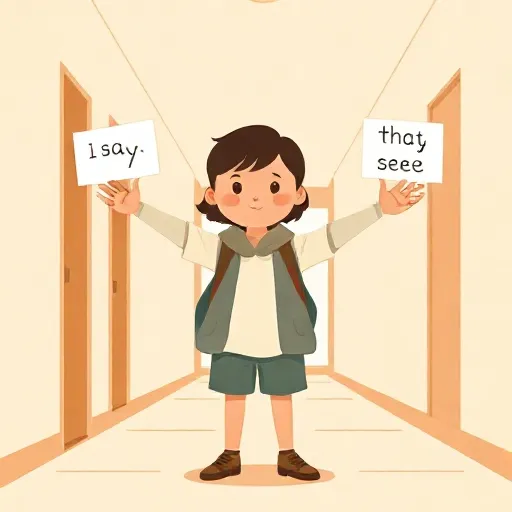
So what is gender, really? One of the biggest philosophical debates is between external and internal accounts. Early feminist philosopher Sally Haslanger defined gender by what a society thinks about your body’s role in reproduction — are you treated as a man or a woman based on perceived biological features? That is an external picture: your gender is something others confer on you. But trans people often report that their true gender doesn’t match what anyone sees from the outside.
Philosopher C. Jacob Hale, writing from a transsexual queer position, listed over a dozen characteristics that could make someone a woman — body parts, clothing, self‑identification, legal documents, and so on. None of them, alone, is necessary or sufficient. Hale’s point wasn’t to give a tidy formula; it was to show how flimsy the whole category is. Later thinkers pushed further. Some, like Katharine Jenkins, suggest there are multiple layers: large‑scale social kinds (the patterns of privilege and subordination we grow up in), small‑scale interpersonal kinds (how people treat you face‑to‑face), and identity kinds (the way you categorize yourself). You might be one kind of gender in one setting and another kind in another.
Then again, a growing number of trans philosophers challenge the very idea of gender identity — the phrase that implies you have an internal feeling that “matches” a category. For some, that framing is itself cisnormative; trans people simply have the genders they describe, without needing to identify into them. As a result, trans metaphysics is still a lively, unsettled field. The common thread is the insistence that trans people are real — not confused, not faking — and that their existence forces us to rethink what “real” even means when it comes to gender.
Is “Trans” a Western Word That Traveled Too Far?
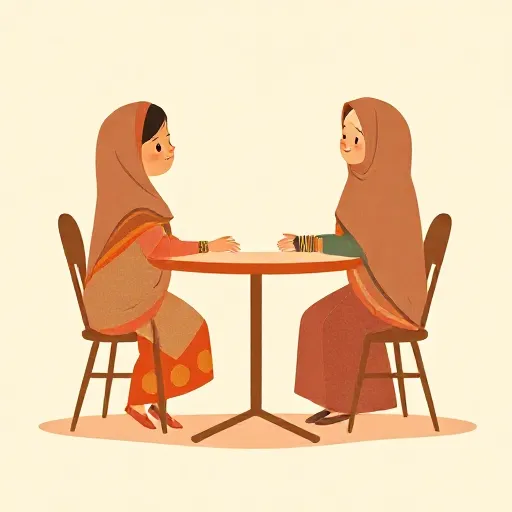
The word transgender was born in the English‑speaking United States. Yet books like Leslie Feinberg’s Transgender Warriors (1996) used the label to claim a whole global history of gender disruptors — Indian hijras, Indigenous Two‑Spirit people, Samoan fa’afafine, and many more. That move made a powerful political point: gender variation is everywhere. But it also drew sharp criticism.
Filipina writer b. binaohan and Indigenous scholars like Qwo‑Li Driskill have argued that extending “trans” to other cultures is colonial. It takes a Western concept and pastes it over people who already had their own, deeply contextual ways of understanding gender. A Two‑Spirit person is not simply a Native version of “trans”; they carry a whole cosmology that the Western term erases. So too, Latin American activists like Marlene Wayar and Lohana Berkins have insisted that the figure of the travesti — who breaks the logic of sex‑gender correspondence — belongs to a specific Latin American history that the US‑centric label flattens.
Philosopher María Lugones (1948–2020) pushed this further. She argued that the binary of man/woman is itself a colonial invention, imposed on Indigenous peoples who had far more elastic gender systems. Under settler colonialism, colonized people were marked as male or female but denied the full status of “man” or “woman.” From this viewpoint, gender is a tool of empire, and even a liberating word like “trans” can replicate that domination if it isn’t handled with care.
At the same time, Black trans studies has stressed that blackness and transness are inseparable. Hortense Spillers (b. 1942) wrote about how slavery “ungendered” Black flesh, stripping Black people of stable manhood or womanhood. Building on that, Marquis Bey argues that failing gender and white coloniality opens access to both transness and blackness. These debates show that the meaning of “trans” is not settled — it is tied up in race, empire, and history.
Living in a World That Says You’re Wrong
Trans people routinely face a painful double bind, as philosopher Talia Bettcher has shown. If they disclose their history, they are seen as frauds — “not really” a man or a woman. If they don’t disclose, they are considered fakes, living in a delusional fantasy. Either way, society denies them moral integrity and sanity. This transphobia is not just individual meanness; it is baked into institutions.
Medicine, for instance, has long required trans people to tell one standard story: “I always felt like the other gender, and I want to fix my body to match.” Only by performing that narrative could they get hormones or surgery. Many trans activists and theorists — like Sandy Stone already in 1987 — have pushed back, celebrating gender as a creative project, a genre you write, not a disease you cure. Some embrace the label of monster or cyborg to claim bodies that don’t fit neat boxes.
Law and policy are equally ambivalent. Bathroom bills, identity document rules, and sports regulations all rest on assumptions about what makes someone a man or a woman. Trans legal scholars argue that simply adding a “nonbinary” option to forms can create a three‑tier system that still limits freedom. Others note that visibility is a trap: the more trans people are seen in media, the more they are surveilled, counted, and targeted. Drawing on the idea of a right to opacity, some theorists suggest that refusing to be fully named or categorized may be the strongest form of resistance. Trans philosophy helps us see these tensions not as side issues, but as fundamental questions about justice and selfhood.
Why It Matters for Everyone (Even If You’re Not Trans)
You might never have questioned whether you are a boy or a girl. But chances are you have heard things like “Boys don’t cry” or “That’s not ladylike.” These daily scripts are the same machinery that trans philosophy takes apart. By asking how gender is made, enforced, and resisted, trans philosophy reveals that no one fits perfectly into the boxes — and that the boxes themselves were built by people, with power, over centuries.
When we debate bathroom access or pronoun use, we aren’t just talking about politeness. We’re grappling with deep philosophical questions: Who gets to say what is real? Whose experience counts as knowledge? Does freedom mean adding more categories, or removing them altogether? Trans philosophy doesn’t hand out easy answers. Instead, it insists that we listen to the people living at the edges, because that is where the whole shape of the system becomes visible.
And it’s not only about gender. By standing with disability activists, decolonial thinkers, and anti‑racist scholars, trans philosophy questions the very habit of sorting human beings into “normal” and “strange.” It asks you to consider that the strangeness might be in the walls we build, not in the people who cross them.
Think about it
- If someone says “I am a girl” but the doctor announced “boy” at their birth, who should have the final say — the person, their parents, or their doctor? Why does it matter who decides?
- Many schools have separate boys’ and girls’ bathrooms. If a student doesn’t feel like either label fits, what would be the fairest solution? What would be the hardest part of changing the rule?
- When we look at people from other cultures or other centuries who broke gender rules, is it fair to call them “trans” if they never used that word themselves? What might we lose by doing so?