Why This Ancient Thinker Said You’re Born Bad—and How You Fix It
The Boy Who Walked to Qi
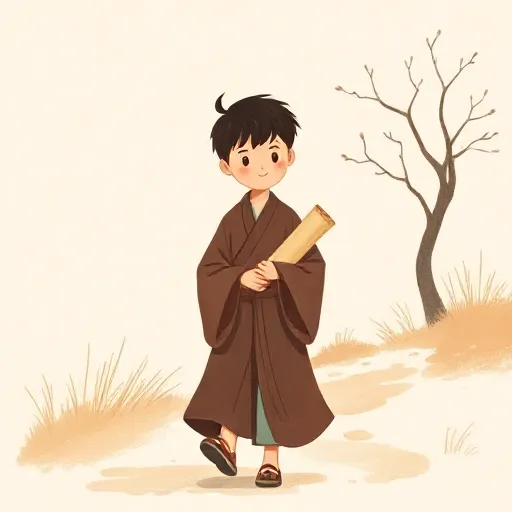
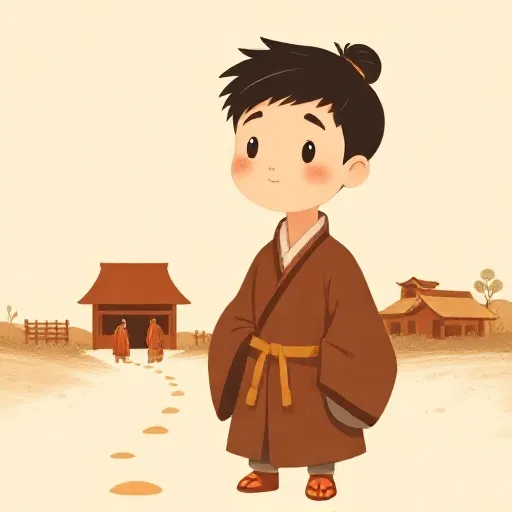
Around 310 BCE, a lanky thirteen-year-old named Xun Kuang walked east toward the city of Qi. He carried little more than a bundle of bamboo scrolls and a head full of questions. Qi was the buzzing heart of Chinese philosophy, filled with schools that argued about everything from government to human feelings. The boy would grow up to become Master Xun—Xunzi—and his ideas would rattle the foundations of Confucian thought.
The most famous Confucian before him was Mencius (c. 372–289 BCE), who had argued that human nature, or xing (性), is good. Mencius meant that all people are born with sprouts of kindness, like a sense of compassion or a gut feeling against doing wrong. If you water those sprouts, you become a good person. Xunzi (c. 310–after 238 BCE) looked at the same world and reached the opposite conclusion. The chapter that carries his most explosive claim—probably not titled by him—opens with the line: human nature is detestable; what is good comes from conscious effort.
What “Human Nature” Really Meant
The fight between Xunzi and Mencius sounds like a simple good-versus-evil story. But they were using the same word, xing, in two different ways. Mencius used xing to mean the ideal state a person reaches when properly nurtured—the best you can become if given the right conditions. Xunzi used xing to mean the raw material you have at birth. “What is so by birth is called xing,” he wrote. That inborn package includes a hunger for profit, comfort, and getting your way.
Here’s his snapshot of untamed xing: at birth there is a fondness for profit in it. If you chase that, people start fighting over things and stop being courteous. Without reflection, your natural urges lead you to harm others and yourself. Notice he isn’t calling you a villain. He’s saying your raw engine runs on a fuel that, left unsteered, is dangerous.
That’s where artifice, or wei (偽), enters the picture. Artifice is anything you deliberately do to reshape yourself—the traits and habits you build through your own conscious actions. Xunzi’s formula was simple: xing is detestable; what is good in people is their artifice. You don’t destroy your nature; you transform it. The word he uses for moral self-cultivation is huaxing (化性)—“transforming the xing.”
If that sounds hopeful, it is. Both Mencius and Xunzi believed every person can become good. The difference is that Mencius thought you find the guide inside yourself, while Xunzi insisted the guide has to come from outside. You need a map made by people who already walked the difficult road: the sages of the past.
How Rituals and Music Tame the Wild Impulse
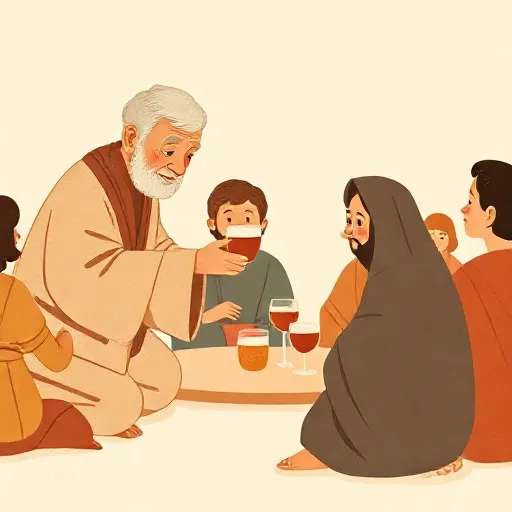
The map, for Xunzi, is a set of practices called rituals, or li (禮). He didn’t mean just religious ceremonies. Li are the patterned forms that shape life: how you greet an elder, how you mourn a parent, how you share a meal. They were created by ancient sage kings who saw that unbridled competition would tear society apart. One passage says the Former Kings “restrained” people and “established for them ritual and morality in order to divide them into classes.” That sounds cold if you picture a distant authority issuing rules. But Xunzi had a much warmer reason for trusting these forms—they fit what makes humans human.
He points to a village wine-drinking ceremony as an example. The host fetches the chief guest himself but expects everyone else to arrive on their own, making the difference between noble and ordinary clear. Each participant toasts the next in order of age, so nobody is left out and seniority is honored. When the guest of honor leaves, the host bows and escorts him out, and the occasion ends with dignity. By physically doing these things, you start to feel the moral principles the sages wanted you to embody. The ritual rewires your emotions from the outside in.
Mourning customs do similar work. Xunzi observes that a three-year mourning period for a parent is a form designed to match the depth of your pain. “When a wound is colossal, its duration is long,” he says. Without that structure, the emotion might overwhelm you or turn into something ugly. Ritual gives it a shape that is bearable and shared.
Music gets the same treatment, under the name yue (樂). Xunzi thought emotions are like a river: you can’t dam them up, but they can flood. The sages left behind songs and poems—especially the old collection called the Odes—that let you express every human feeling in an orderly way. He pushed back against critics who called music a waste of money, arguing that it’s a tool for steering the whole society in a calm and unified direction. When music is “centered and balanced,” he wrote, “the people are harmonious and not dissipated.” Even an army works better when its spirit is shaped by the right sounds.
Learning from the Seasons and the Stars
If rituals are the map, what is the territory they chart? Xunzi called it the Way, or dao (道). The Way is like a deep pattern running through the universe. It doesn’t change from one century to the next. The seasons follow their cycle. The sun, moon, and stars revolve with a steady rhythm. Xunzi noted that these rhythms were the same under a wise king as under a tyrant. The sky doesn’t play favorites.
He drew a sharp line between trying to know Heaven (tian 天) itself and knowing the Way. To know Heaven—to understand why the cosmos works as it does—is impossible, he said, and therefore a waste of time. But knowing the Way is open to anyone. Think of gravity: you don’t need to know why gravity exists. You can watch how it works, measure it, and use that knowledge to build bridges. In Xunzi’s view, you study the “constancies” of nature—the reliable order of things—and then respond to them with the right human actions.
This is why he had zero patience for portents (yao 祅). In his time, many people believed that shooting stars or strange animal births were messages from Heaven, warning of disaster. Xunzi called them “shifts in Heaven and Earth, transformations of yin and yang, material anomalies.” They come and go in every age. A well-governed state weathers them. A poorly governed one destroys itself even if the sky stays perfectly clear. He coined the phrase human portents (renyao 人祅) for the real danger: short-sighted acts like poor plowing, weeding at the wrong season, or cruel rule that drives people away. Those are the disasters we build with our own hands.
He even extended this idea to religious ceremonies. If you hold a rain sacrifice and then it rains, what of it? “Even if there had been no sacrifice, it would have rained,” he said. The noble person takes these ceremonies as beautiful embellishments that bind the community. The foolish treat them as magic. Xunzi’s point is gentle but firm: the ceremonies matter because they cultivate us, not because they yank the universe’s strings.
The King Inside Your Chest
All this learning and ritual must be processed somewhere. For Xunzi, that processor is the heart-mind, or xin (心). In ancient China, the same word meant “heart” and “mind” because thinkers saw the organ in your chest as the seat of both feeling and thinking. Xunzi gave it an astonishing job description: it is the only organ that can command all the others, and the only one with self-awareness. “The mind is the lord of the body,” he wrote. “It issues commands but does not receive commands.”
The heart-mind is also the tool by which you discover the Way. He said it has three powers you can nurture. Emptiness (xu 虛) means it can store a limitless amount of information—you never have to erase one fact to make room for another. Unity (yi 壹) means it can blend separate observations into a single, meaningful picture. Tranquility (jing 靜) means it can tell the difference between fantasy and calm, rational thought. Using these gifts, you sift through what your senses report—the look of ripening grain, the feeling of a steady pulse in music—and infer the pattern of the Way.
Because the heart-mind can override every other impulse, even the instinct to save your own life if that conflicts with a moral principle, you are always responsible. When you do something harmful, you can’t blame your emotions or your upbringing. Your heart-mind knew better and could have chosen otherwise.
Xunzi draws a striking parallel. A kingdom’s natural features—its size, its hills, its rivers—don’t decide whether it prospers. What decides is the lord who rules it: does he adopt the sages’ rituals or discard them? In the same way, you are made of two parts: a detestable starting condition (xing) and your conscious conduct (wei). The ruler of your inner kingdom is the heart-mind. It can follow the rituals and gradually turn a chaotic self into a well-ordered one, or it can let raw impulse win. For Xunzi, it’s not where you start; it’s where you finish.
Why You’re Still Asking This Question

Xunzi’s ideas were powerful enough that he became the leading teacher of his generation. Among his students were men who helped shape the future of China, including Li Si and Han Fei. But after his death, his reputation took a beating. Later thinkers blamed him for his students’ harsh politics and condemned his claim that human nature is detestable. For centuries, he was pushed to the margins of Confucian tradition, sometimes called a dangerous heretic.
Today that verdict has flipped. Scholars across East Asia rediscovered that Xunzi’s argument is more careful than it first looked. He never said people are doomed to be selfish. He said they start with dangerous impulses and can choose a better path. That makes him startlingly relevant to your own life.
Every time you pause before snapping, practice a habit like making your bed or greeting someone calmly, or decide to learn the rules of a game so everyone can enjoy it, you are doing something Xunzi would recognize. You are using conscious effort—artifice—to shape a nature that doesn’t always steer straight. The debate between Xunzi and Mencius lives on whenever we ask whether a child is born kind or becomes kind through nurture. The ancient answer, from a dusty road to Qi, is that you aren’t trapped by your starting point. You carry a king in your chest, and it wakes up the moment you begin to train it.
Think about it
- Xunzi thought that habits like bowing or saying “please” can change how you feel inside. Can you think of a small daily habit that has made you more patient or kind—even when you didn’t want to do it?
- If a baby has a strong instinct to grab toys from other children, do you think that baby can grow up to be generous? What would it take for that shift to happen?
- Xunzi believed that a ruler who follows rituals can keep a country safe even during a famine or storm. Is that realistic, or are some things just out of a leader’s control?