
Are You Born Good? Mencius and the Seeds Inside You
The Child by the Well: A Surprise About You
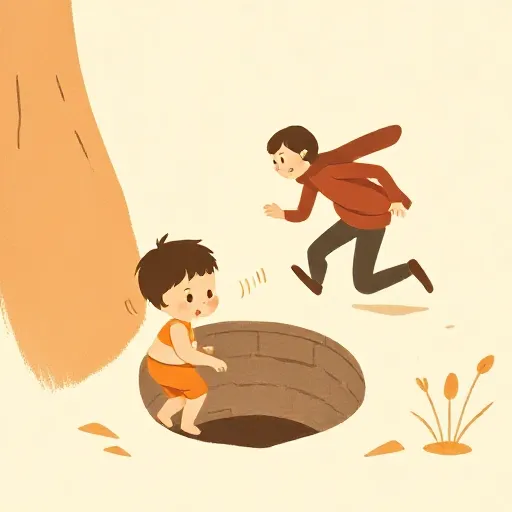
Imagine walking past a quiet yard. You hear a small child laughing, then suddenly a stumble, a gasp. You spin around and see a toddler wobbling right at the edge of an open well. Before your brain can even form a thought, your heart lurches. Your body wants to lunge forward, grab, save. You feel it before you can explain it.
That’s exactly the scene the Chinese philosopher Mencius (c. 372–289 BCE) asked people to picture. He didn’t think this reaction came from wanting the parents to thank you, or hoping neighbors would praise you. He thought that flash of alarm and compassion shows something universal — that every human is born with the seed of goodness inside them.
Mencius lived in a chaotic age of warring states and hungry peasants. He studied the teachings of Confucius (551–479 BCE) and spent his adult life traveling from ruler to ruler, trying to convince them to lead with kindness — not with swords. He believed the only way to heal a broken world was to water the moral seeds already inside every person. That idea starts with a single, startling claim: human nature is good.
But what does that really mean? And why did Mencius’s rivals call him dangerously naive?
Four Little Sprouts in Every Heart
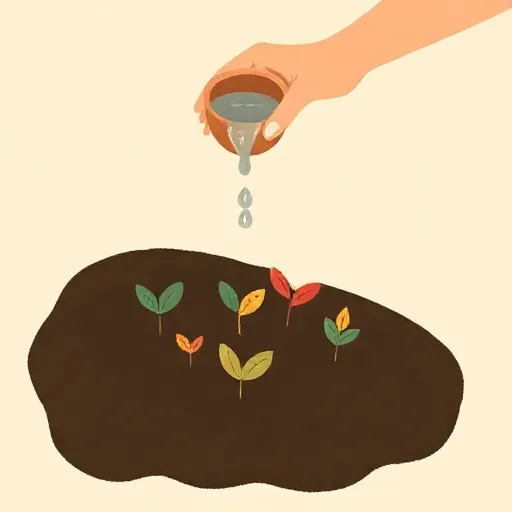
Mencius said our capacity for goodness isn’t a finished product we’re born with. It’s more like gardening. Inside every human heart are four sprouts — tiny, fragile beginnings of four core virtues.
The first and most famous sprout is compassion. When you see a child about to fall, you feel a twinge of alarm. That’s the sprout of benevolence (rén), the virtue of caring deeply for others. The second sprout appears when something feels disgusting or shameful — cheating at a game, letting someone bully a friend. That’s the sprout of righteousness (yì), an inner sense of what’s honorable and what isn’t. The third sprout is the small pang of respect you feel toward a kind elder or a fair teacher. Mencius called that the root of propriety (lĭ), the virtue of acting with appropriate courtesy and self-restraint. The fourth sprout is the quiet voice that tells you this was a good move and that was a bad one. That’s the beginning of wisdom (zhì), knowing right from wrong.
These sprouts are real but tiny. They can be watered or trampled. That’s why the same ruler who once spared a terrified ox being led to slaughter ignored his own starving subjects. The king felt a genuine flicker of compassion for the ox — he even said it looked like “an innocent going to the execution ground.” But he never extended that feeling to the people he ruled. Mencius told him: you have the heart that cannot bear to see suffering. Now stretch it.
Extension is the mind’s work. You notice how one situation resembles another, and you let the same moral feeling light up again. Compassion moves from the ox to the overtaxed farmer, from your little brother to the new kid at school. Without extension, the sprouts stay shriveled.
Why Do We Mess Up? The Battle Inside
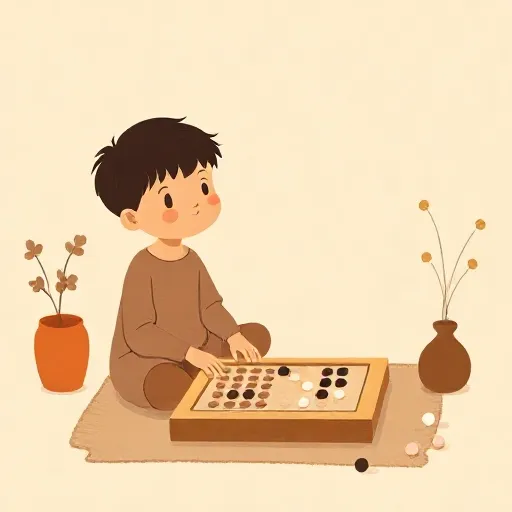
If we all have sprouts of goodness, then why do people lie, steal, or hurt? Mencius gave a surprising answer: the sprouts get ignored, not because they’re weak, but because we don’t pay attention to them.
He taught that the human heart has a special power called reflection (sī). Your ears and eyes react automatically to whatever looks or sounds good — a shiny phone, a plate of dumplings. They’re like things bumping into other things. But your heart can step back and think. When it reflects, it activates the ethical motivations; when it doesn’t, the sprouts wither and you follow whatever your senses demand.
Mencius illustrated this with a story about learning the board game go. Imagine you hire the best go teacher in the world to train two students. One student focuses completely on the teacher’s every move, letting nothing distract her. The other sits at the same board but spends the whole lesson daydreaming about hunting swans — picturing the bow, the arrow, the flight. They learn side by side, but the second student never improves. It’s not because she has less intelligence, Mencius said. It’s because she didn’t direct her heart.
The same thing happens with virtue. A person can have the raw equipment to become good but never develop it if they don’t reflect.
Mencius also knew that a hungry or terrified person struggles to reflect at all. He argued that a just government must first make sure people have enough to eat and live without fear. Then education — learning the rituals, practicing respect, discussing classic stories — can water the sprouts. Most people, with those basics, won’t become cruel. But to become a truly great person, a sage, you must make a fierce individual effort. That’s the work of a lifetime.
The Fight Over Human Nature: Mencius vs. the Egoist and the Impartialist
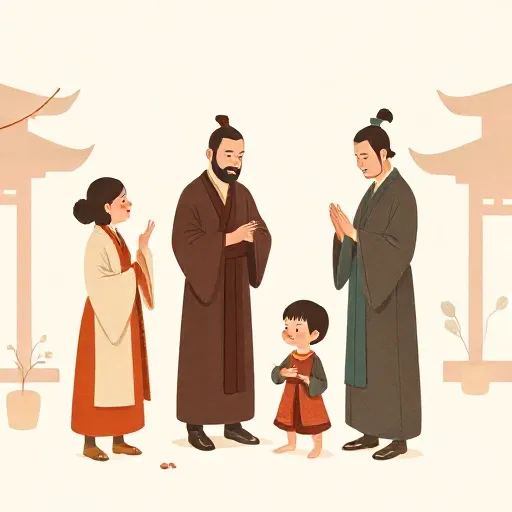
Mencius wasn’t just a gentle gardener of the heart. He was a fierce debater who took on the two biggest philosophical movements of his day.
The first rival was Yang Zhu (5th–4th century BCE), who argued that our deepest nature is pure self-preservation. Nothing is more natural than saving your own skin. Yang Zhu believed that following that instinct is actually the will of Heaven — so any teaching that asks you to sacrifice yourself is unnatural and wrong. Mencius agreed that we follow our Heaven-given nature. But, he said, Yang Zhu had a ridiculously thin picture of what that nature includes. The child at the well proves we have unselfish impulses too. If your view of human nature can’t explain why a stranger’s heart lurches for a falling toddler, it’s not a complete picture.
The second rival was Mozi (5th century BCE) and his followers, the Mohists. They argued for impartial caring: you should care about every person exactly the same, because that’s what produces the most profit and harmony for everyone. Mozi believed humans are like putty — they can be reshaped by rewards and punishments into loving everyone equally. He pointed to a king who loved slim waists: soon his courtiers ate almost nothing and could barely walk, all to please him. If hunger can be overridden, Mozi said, so can partial love.
Mencius fired back from two directions. First, partial caring is woven into us. He asked a Mohist, “Do you truly believe your affection for your own nephew is exactly the same as your affection for a stranger’s baby?” Second, preaching impartial profit backfires. Mencius once rebuked a ruler who asked about profit. If the king chases profit, then the ministers will chase profit, then the commoners, until everyone grabs what they can and the state collapses. Instead, Mencius said, talk only of benevolence and righteousness. Paradoxically, by not chasing profit, you’ll create a society where everyone flourishes.
Tending the Garden: What It Takes to Grow a Sage
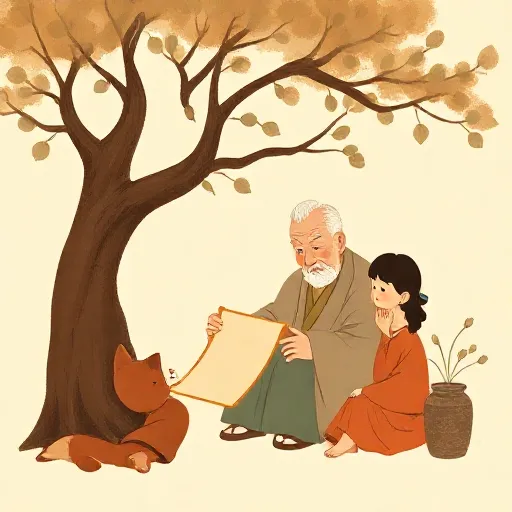
So how do you go from a fragile sprout to a wise, decent person? Mencius offered three essentials.
First, the soil must be right. If people are starved and terrified, they’ll steal and hurt just to survive. A government that punishes them for it is, Mencius said, like a trap. So a ruler’s first job is to make sure the granaries are full.
Second, you need a guide. Left alone with a full belly, humans “come close to being animals,” he warned. You learn by practicing rituals — not as stiff rules, but as training for the heart. Greeting a guest respectfully, comforting a friend who’s grieving, even knowing when to break a ritual out of compassion (like grabbing your drowning sister-in-law’s hand, even though etiquette usually forbids touching) — all of this teaches the sprouts to respond.
Third, you need personal effort. No teacher can do the reflecting for you. Mencius constantly used startling questions and stories to trigger reflection in his students. When one official asked if he could postpone stopping a wrongful tax until next year, Mencius shot back: that if a person steals a chicken every day and, when told it is wrong, asks to reduce it to once a month and stop next year, then knowing it is wrong means stopping immediately The shock was meant to wake up the heart.
The goal is timeliness — a wisdom that doesn’t follow a fixed checklist but knows what a situation really calls for. Different sages acted differently, Mencius noted. But if they had traded places, each would have understood the other’s choice. That’s wisdom that goes beyond memorized rules.
Why a 2,300-Year-Old Garden Debate Still Touches You

Mencius’s view didn’t stay in ancient China. Later thinkers like Xunzi (3rd century BCE) pushed back hard, arguing that human nature is bad and goodness must be hammered in from the outside, like straightening crooked wood over steam. Even today, the tension lives on: are we born fair and kind, or are we selfish creatures who need civilization to rein us in?
When you watch a toddler comfort a crying friend without being taught, you might see a Mencian sprout. When you see someone share their lunch on instinct, you might think of rén. Neuroscientists now study empathy circuits in the brain. Psychologists debate innate moral grammar. The language has changed, but the disagreement — nature or nurture, sprout or blank slate — is a direct descendant of Mencius’s battle.
And it’s not just a lab debate. It seeps into how you treat your own mistakes. If you believe deep down you have the seeds of goodness, then a rotten decision isn’t proof you’re broken — it’s a sprout you didn’t water that day. You can always reflect and start again. That’s a remarkably hopeful way to walk through life, and it came from a philosopher who saw a child wobble near a well and trusted the lurch of his own heart.
Think about it
- Think of something you would never do because it would feel shameful or unfair. Can you imagine a time or a place where that same action wouldn’t feel shameful? Where does your inner “sprout of righteousness” come from?
- If you had to choose between saving your own sibling and saving five strangers, which path would you take? Do you think your answer proves something about human nature, or just about how you were raised?
- Mencius believed that with enough effort, anybody could become a truly great person — a sage. Do you agree, or are some people just born without the right stuff? What could change your mind?