You're Already Good — Why Can't You See It?
The Mirror Under the Dust

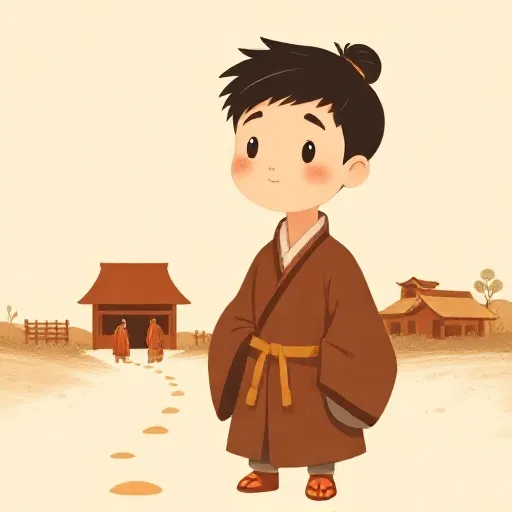
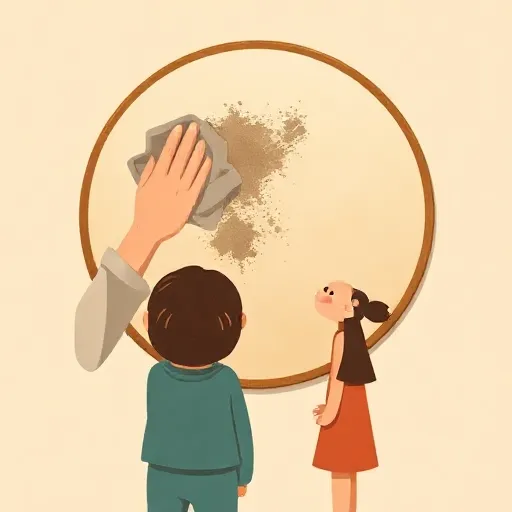
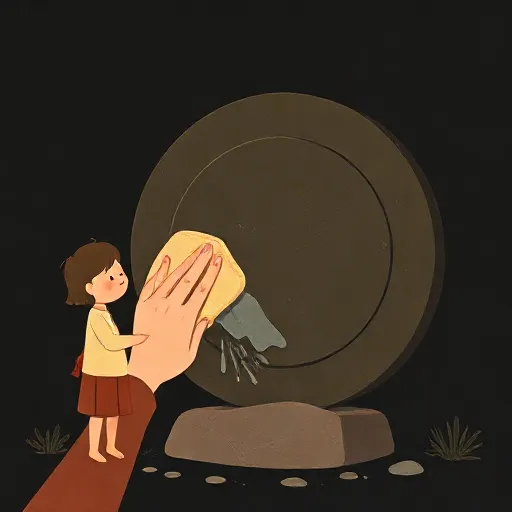
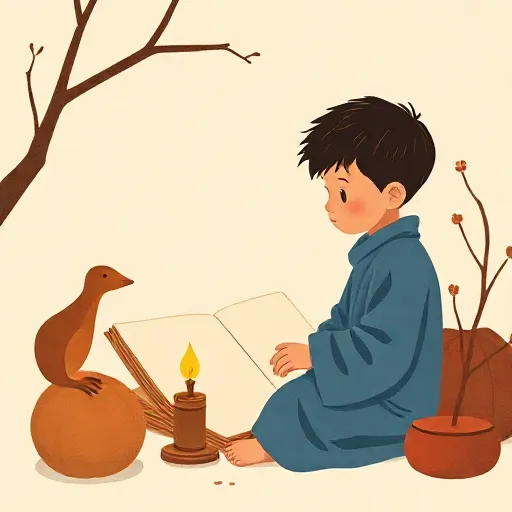
A twelve-year-old boy named A-Yuan lived in China during the Song dynasty. One afternoon, he found an old bronze mirror in his grandmother’s chest, coated in dirt so thick he couldn’t see his face. As he polished it with a cloth, the golden surface slowly appeared beneath the grime. He wondered: was the mirror still whole and bright underneath all that filth, or had it been ruined?
That question echoed a much bigger debate among Chinese philosophers of the Song, Yuan, and Ming dynasties (roughly 960–1644). They faced a world where Buddhism and Daoism were hugely popular. Many Buddhists taught that the everyday world of families, jobs, and feelings is full of suffering. The wisest path, they said, is to detach from those attachments and seek personal liberation. But a group of Confucians — now called Neo-Confucians — pushed back. They argued that ordinary human life is valuable, not an illusion to escape. Relationships, rituals, and moral emotions are the very stuff that makes us good.
And then they made a startling claim: every human being is born good, right from the start. Your core nature isn’t something you have to build bit by bit. It’s already perfect — like A-Yuan’s mirror — just covered by layers of selfish, self-centered desires. The Neo-Confucians called this deep inner goodness Pattern (li, 理), a term they borrowed from Buddhism but filled with new meaning. While Buddhists had said the ultimate Pattern of things is emptiness, Neo-Confucians insisted it is ceaseless life-generativity — the way seasons, plants, and families work together to create and sustain life. This Pattern, they believed, exists in everything and also in your own heart. So why can’t you feel it? Because of the “mud”: a polluted inner state they described as turbid qi (vital stuff) and selfishness (si). They often pictured the true self as a pearl suspended in muddy water, or a mirror caked with dust. The whole project of becoming a good person was just a matter of wiping that dust away.
Two Masters, Two Paths: Zhu Xi and the Power of Books
By the 12th century, the most influential voice in the Neo-Confucian movement was Zhu Xi (1130–1200). He had spent his youth exploring Daoism and Chan (Zen) Buddhism before returning to Confucianism. Zhu built a grand system in which everything is made of qi — a kind of energetic, changing stuff — and governed by li (Pattern). For Zhu, Pattern is the rulebook that tells a boat it should travel on water and a cart it should travel on land. It also tells you that you should love your parents, feel shame when you cheat, and show reverence in a ritual. But while Pattern is always present, our qi can be murky, hiding it from the heartmind.
So how do you clean the mirror? Zhu’s answer was famously demanding: you study. Read the Confucian classics — the Analects, the Mencius, the Rites — with what he called reverential attention (jing, 敬), a mix of focus, humility, and respect. Investigate the Patterns in things, from the growth of bamboo to the reasons a family holds a funeral. This isn’t just collecting facts. Zhu wanted you to understand why a moral rule fits into the larger, life-giving order. Only then would your knowledge become genuine knowledge (zhenzhi), the kind that moves you to act.
Cheng Yi (1033–1107), one of the thinkers Zhu most admired, explained the difference with a starker example. Imagine two people hear a tiger is attacking in the village next door. One just knows the news; the other is a farmer who was once mauled by a tiger and barely survived. The farmer’s fear is immediate, physical, and impossible to ignore. Cheng said ethical knowledge should hit you like that farmer’s fear — it should make your heart pound and your body move. Zhu Xi agreed. Deep study and reflection, he felt, could turn dry rules into a tiger’s bite. But he also warned that our selfish biases easily trick us. We need the classics as an outside check, because our own intuitions are unreliable.
Wang Yangming: The General Who Found Truth in His Heart
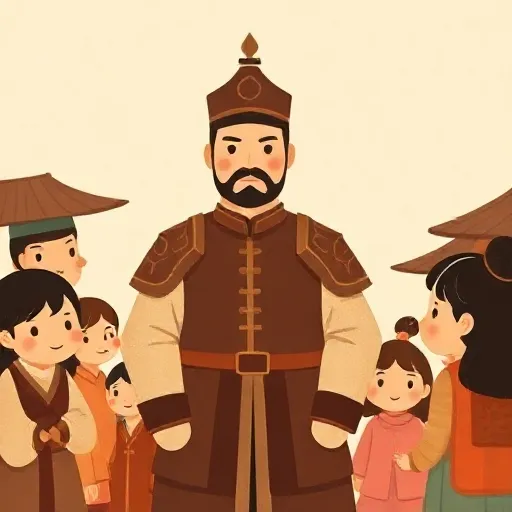
Three centuries later, another brilliant Confucian came to see things very differently. Wang Yangming (1472–1529) was a celebrated general, administrator, and calligrapher. Like Zhu, he had studied Buddhism and Daoism in his youth and trained in Zhu Xi’s orthodoxy. But over a dramatic life — he was once beaten, exiled, and forced to survive in a remote province — Wang grew convinced that the standard bookish path was not working. The truth, he thought, was too close to be found only in a library.
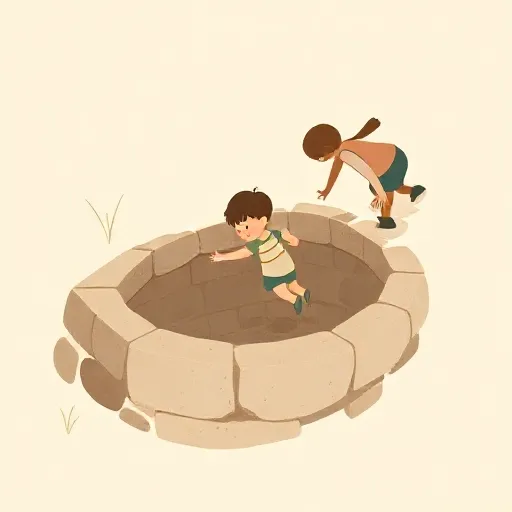
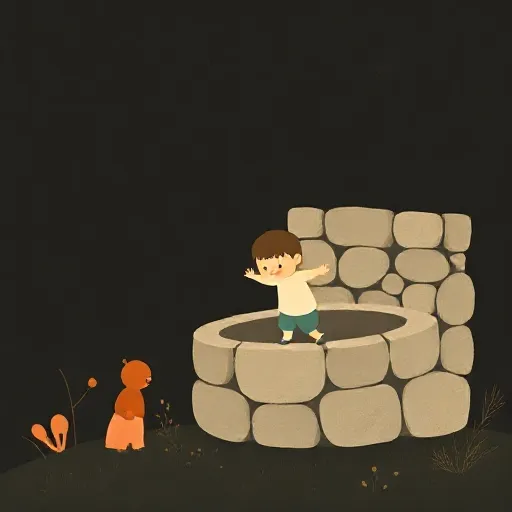
Wang’s key idea was liangzhi (良知), often translated as “pure knowledge” or “innate knowing.” He argued that every person has a fully-formed moral compass within the heartmind (xin). This is not just a little sprout that needs watering; it’s the whole compass already. When you see a child about to fall into a well, you instantly feel alarm and want to rush forward. You don’t pause to consult a book or reason through a theory. For Wang, that immediate response is knowledge in action. In fact, he insisted that knowledge and action are always united — just as you recoil the moment you smell something foul, without first thinking “This is rotten, I should pull back.”
So what is the job of self-cultivation? Not loading up on information, but sweeping away the selfish desires and self-centered thoughts that muffle your liangzhi. Wang once told his followers to hunt down selfish inclinations like robbers and wipe them out completely. He had little patience for endless, scholarly debates about a verse in a classical text if they didn’t touch your own life. Even uneducated farmers, he believed, could be sages by acting on the quiet voice of their authentic heart. This made his teachings popular and bold — but also unsettling to many who worried that too much trust in your own gut might let selfishness disguise itself as conscience.
The War Over Pattern: Is the Heartmind the Rulebook?
Underneath these two paths lay a deeper metaphysical fight. For Zhu Xi, Pattern (li) was something out in the world, not just something made up by your mind. The heartmind could learn to reflect Pattern, but it wasn’t the same thing. He often distinguished between the heartmind of the Way (Daoxin) — the state in which your thoughts track reality — and the human heartmind (renxin) — the state where selfish thoughts sneak in. If you made your heartmind the ultimate measure, Zhu worried, you might end up like some Chan Buddhists he criticized: following whatever felt right in the moment, with no fixed standard outside yourself.
Wang Yangming and his predecessors, such as Lu Xiangshan (1139–1193), turned this around. They said the heartmind is the Pattern. There isn’t a rulebook above and beyond your own deepest moral sense. This gave people enormous confidence in their everyday reactions. But critics asked: if everyone trusts their heart, how do you tell a genuinely moral impulse from a selfish one dressed up in noble robes? Wang’s own followers divided. The Taizhou school, named after the home region of one of Wang’s disciples, pushed further. Thinkers like Li Zhi (1527–1602) even praised the “child heartmind,” arguing that a small child’s unspoiled reactions are more authentically good than the calculated behavior of educated adults. That made many mainstream Confucians deeply uncomfortable.
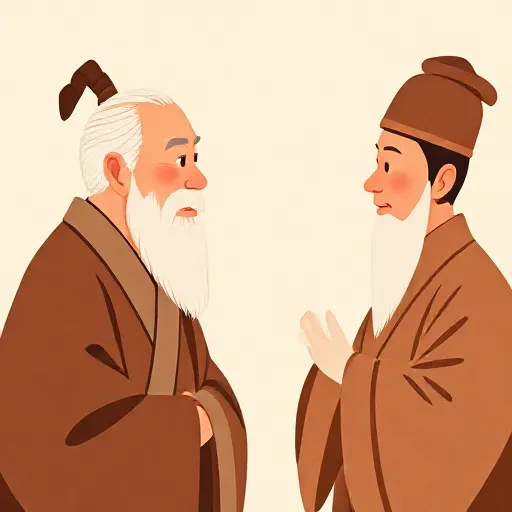
The dispute between the two camps — often called the “Learning of Pattern” (the Cheng-Zhu school) and the “Learning of the Heartmind” (the Lu-Wang school) — shaped Chinese philosophy for centuries. It wasn’t just about books versus feelings. It was about whether moral order is something you discover outside yourself, or something you recover inside yourself by peeling off layers of selfish dust.
Why It Still Echoes in Your Classroom
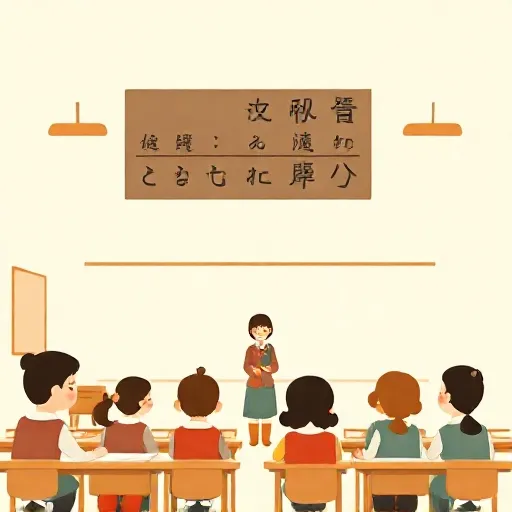
For nearly seven hundred years, Zhu Xi’s interpretation of the Confucian classics was the official textbook on China’s civil service exams. That meant millions of teenagers, just like you, memorized his commentaries to prove they were ready to govern. The idea that careful study of the right texts shapes a good person never fully went away. Today, in parts of East Asia, reformers still debate how much character training should come from reading canonical works versus inner reflection or hands-on experience.
And the old debate between the two schools remains alive. Modern philosophers called New Confucians often position themselves as continuing the work of Zhu Xi or Wang Yangming. The fundamental question—do you become good by looking outward and studying the world, or by turning inward and trusting the clarity already there?—is not just a dusty museum piece. It’s the question you face when you’re unsure whether to follow a code of conduct or listen to that quiet feeling in your stomach.
Maybe both. The Neo-Confucians never doubted that the bright mirror was under the grime. The argument was always about the best way to polish it. And the next time you feel a sting of shame for lying, or a sudden urge to help a crying classmate, you might be seeing a flash of something they thought was always there — a pearl shining in muddy water, waiting for the water to be still.
Think about it
- If you were sure you had a perfectly good moral compass inside, would you still want to study rules and stories about right and wrong? Why or why not?
- Imagine you see a classmate cheat on a test. Zhu Xi might say consult the school honor code; Wang Yangming might say your immediate feeling of disgust is enough. Which approach do you trust more, and when might it fail?
- Neo-Confucians thought selfish desires hide your good nature. Do you think social media today adds more “dust” to your mirror, or helps you wipe some of it away?