
Is It Always Wrong to Cover for a Family Member?
Two Stories About a Father
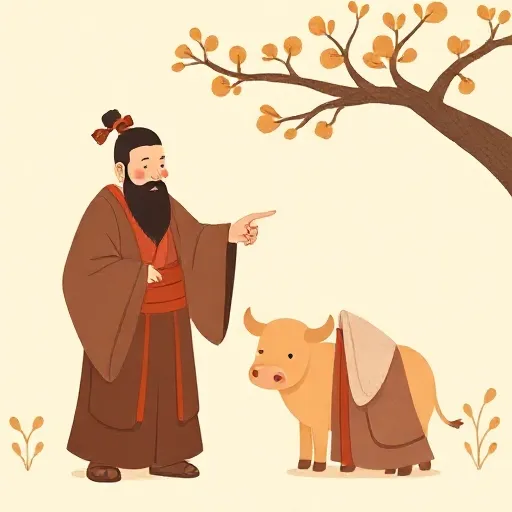
Around 500 BCE, the wise teacher Kongzi — known in the West as Confucius (6th–5th century BCE) — heard a story that troubled him. A governor bragged about a man in his village who had reported his own father for stealing a sheep. Confucius shook his head. In his village, he said, uprightness meant fathers and sons covering up for each other.
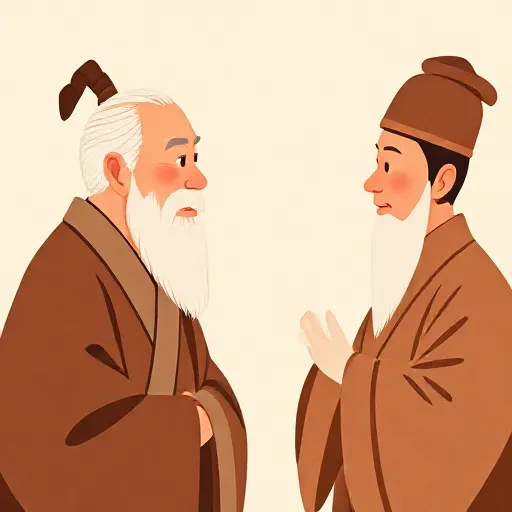
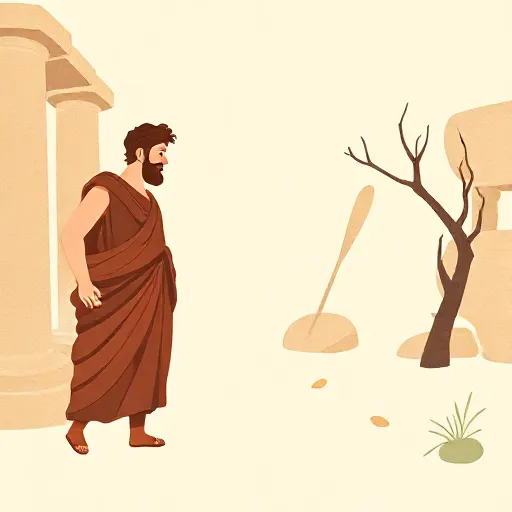
Roughly the same time, in Athens, a different kind of thinker named Socrates ran into a man called Euthyphro. Euthyphro was marching to court to charge his father with murder. Socrates didn’t tell him whether that was right or wrong. Instead, Socrates asked a cascade of questions — about the nature of piety, about what makes something holy — and left Euthyphro puzzled, with no practical answer.
These two stories show something important about how people approached morality. Socrates chased abstract definitions, the “essence” of goodness. Confucius stayed close to a messy, real‑life problem: what do you do when loyalty to your family fights against public justice? Chinese ethics, from Confucius onward, kept its eyes on that kind of practical difficulty, trying to guide how a person should live — not just how to define things.
The Confucian Toolkit: Virtue, Ritual, and Family
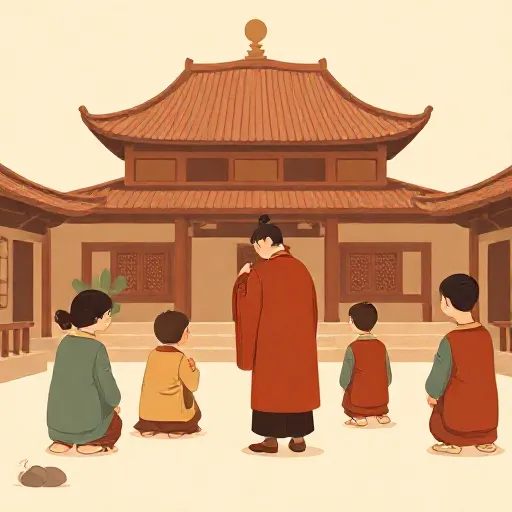
Confucius didn’t give his students a set of rules. He talked about shaping a whole person. The ideal was the junzi — originally “son of a prince,” but Confucius turned it into an exemplary person of ethical nobility, someone whose character makes the right action natural.
Two things filled that character. Ren — a word hard to translate, meaning something like humaneness, goodness, or caring for others — and li, which covers everything from formal ceremonies to the everyday customs of greeting someone, serving food to parents, or bowing before you enter a room. Confucius believed that li was not just a fancy wrapper for feelings that were already there. Practicing a respectful ritual, day after day, carved the feeling of respect into your heart the way a jade carver polishes rough stone.
That’s why family was the training ground. Filiality — the love and duty you owe your parents — was the root of all virtue. The child who learns to be tender and obedient at home, Confucians thought, is building the emotional muscle to care for people outside the family later. But it also meant that when family loyalty collided with a law or a ruler’s order, the family tie often won. Confucius was clear in the sheep‑stealing case: the son who turned in his father was not “upright” — he was cold.
The Challenge: Mozi’s Call for Impartial Love
Not everyone agreed. A thinker named Mozi (5th century BCE), who may have studied with Confucians, broke away in a loud way. Mozi looked at the wars, theft, and cruelty tearing China apart and saw one root cause: partial caring. When you care only for your own family, your own village, your own state, you end up stealing from and hurting outsiders. So Mozi proposed jian ai, often translated as “inclusive care” or “impartial care.”
His argument was surprisingly simple. He didn’t ask people to feel warm affection for every stranger. He asked them to follow a standard of usefulness. If everyone made a habit of benefiting others the way a carpenter measures with a square, then rulers wouldn’t overtax, strong wouldn’t bully the weak, and great families wouldn’t crush smaller ones. Mozi argued that Heaven nourishes everyone equally, and that sun and rain fall on both the good and the bad.
Thus Mozi questioned the Confucian attachment to elaborate ritual and music, saying they wasted resources that could feed the hungry. He also challenged the very idea that tradition is right simply because it’s old: every tradition was new once. Family loyalty, in his view, was fine only when it didn’t harm others.
Mencius Fires Back: The Sprouts Inside You

The Mohist movement forced Confucians to sharpen their case. The strongest defense came from Mencius (4th century BCE). He admitted that a person who extends kindness only to family and treats strangers like tools is no good. But instead of demanding equal care for all, Mencius pointed to what he called the “four beginnings” — natural sprouts of goodness already growing in every human heart.
He proved his point to a doubtful king one day. The king, Xuan, had spared an ox being led to sacrifice because the animal’s frightened eyes reminded him of an innocent man. Yet the same king was bleeding his own people with heavy taxes and pointless wars. Mencius pounced, saying that his heart already reached out to the ox, so he shouldn’t say he can’t care for his subjects — he simply hadn’t extended it.
Mencius offered a famous thought experiment, too: if you suddenly saw a toddler about to tumble into a well, you’d feel a jolt of alarm. You wouldn’t stop to calculate whether helping would win you favor. That raw, unlearned compassion was the sprout of ren. Shame at doing something lowly was the sprout of yi, or righteousness. A child’s instinct to be courteous to an elder was the sprout of li. And the gut feeling that certain acts are simply wrong was the sprout of wisdom.
From these sprouts, Mencius argued, we grow mature virtue, but growth happens unevenly. You naturally care more about your elder brother’s son than your neighbor’s baby. That’s not a failure — it’s simply a relevant feature of the situation, like noticing that a child about to fall into a well isn’t at fault for being there. Care with distinctions, not identical treatment for all, was Mencius’s answer.
No Easy Answers: Why It Still Messes With You

The debate between Confucians and Mohists didn’t end with a winner. In a way, both sides were right about something. Confucianism reminds us that morality starts in relationships, not in a list of rules. The everyday habits of being polite, sharing food, and comforting a sibling are not just manners — they actually shape who you are. Mozi forces us to ask whether our loyal circles ever become too tight, leaving outsiders to suffer.
Even within Confucianism, tensions remained. How much does ritual define goodness, and how much is it just a useful tool? Confucius himself sometimes changed old customs when the spirit behind them was more important than the form. And Mencius knew that even natural sprouts can wither without proper soil — good laws, fair rulers, and a full stomach.
Today you face the same knot that Confucius and Mozi argued about. If a friend does something wrong, do you cover for them out of loyalty? If you have extra lunch money, should you give it to your brother or to a kid you know is hungry in another class? The ancient Chinese story doesn’t hand you a final answer. It hands you something better: a picture of moral growth that is messy, practical, and full of real human feeling.
Think about it
- If your best friend cheated on a test and you saw it, would you tell the teacher? What would your own sense of loyalty require — and what would be fair to the rest of the class?
- Some people argue you should give the same amount of help to a total stranger as you would to your own sibling. Do you agree? What would Mencius say?
- Do you think practicing small respectful habits — like holding a door, or saying “thank you” even when you don’t feel like it — can slowly make you a kinder person? Why or why not?