Can Words Guide Right and Wrong? Ancient China's Debate
A Kingdom in Trouble: Why Confucius Wanted to Fix Words

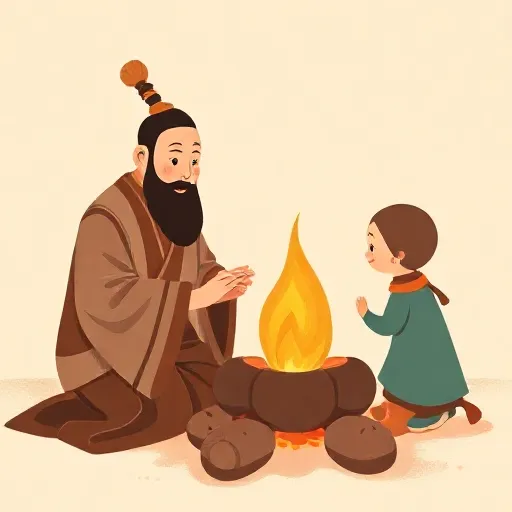
Imagine you are suddenly put in charge of a whole kingdom. Your friend asks, “What’s the very first thing you’d fix?” Most people might say food, walls, or an army. But the Chinese teacher Confucius (551–479 BCE) gave a startling answer: “Make sure names are used properly.” His student Zilu thought that was ridiculous — until Confucius explained.
When names aren’t used properly, he said, language stops working. When language stops working, nothing gets done right. Rituals and music fall apart. Laws miss their mark. People don’t know how to behave. So for Confucius, getting your words straight wasn’t just about dictionary definitions. It was about keeping society from crumbling.
Confucius called this the ordering of names (zheng ming). Using a name wasn’t just describing something; it was performing an action — pushing people to live up to what the name demanded. Call someone a ruler? Then that person had better act like one. Call a father “father”? He had a duty to be fatherly. Later Confucians even argued that killing a wicked king wasn’t really regicide, because someone who acts like a monster doesn’t deserve the name “king” at all. Words weren’t neutral labels; they were tools for shaping how people acted.
Confucius thought wise men and hallowed traditions could tell us which names fit which behavior. But his rivals were about to ask a tougher question: can you prove that, or is it just what your family has always said?
The Mohists: Using Models to Win Arguments
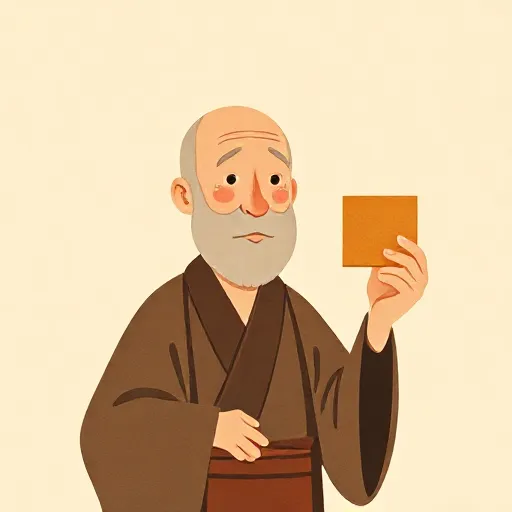
The Mohists, followers of the thinker Mozi, became the sharpest critics of Confucian certainty. In the 3rd century BCE they developed a full-blown art of disputation (bian) — a method of reasoning and debate meant to settle moral questions without leaning on custom. They asked: if traditions differ wildly from village to village, how can any single tradition tell us what’s really right?
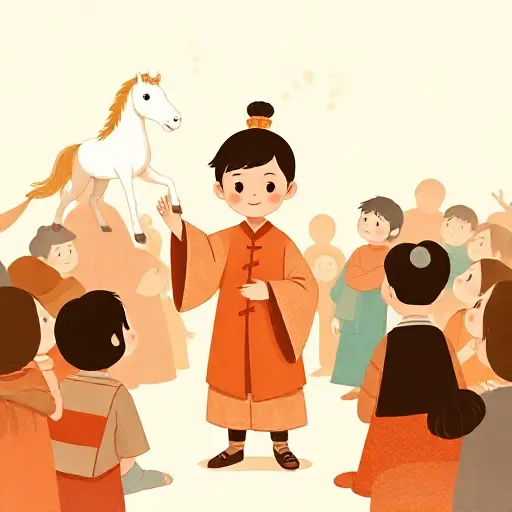
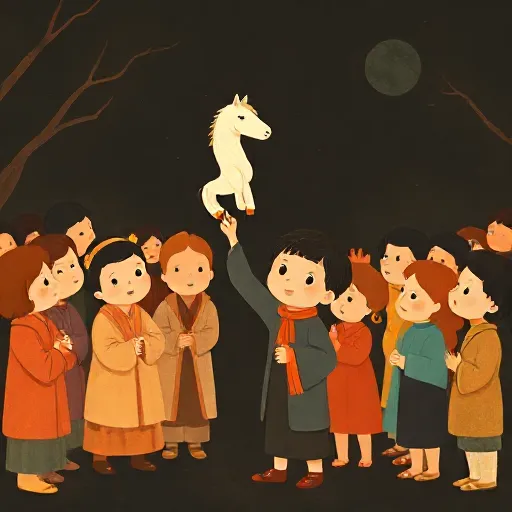
Their answer was to build logic on models (fa). A model is “that in being like which something is so.” If you want to know whether a thing is a horse, you pick a standard horse as a model. Anything that resembles it in the right way — mainly by shape, not by color — can be called a horse. The Mohists used this analogical reasoning across ethics too. To decide whether an act is good, you compare it to a model of good conduct, like a sage who brings benefit to everyone.
That’s where their big moral principles came in: utility (does it lead to good consequences?) and universal love (loving all people impartially). An action was justified if it made life better for all, without favoritism.
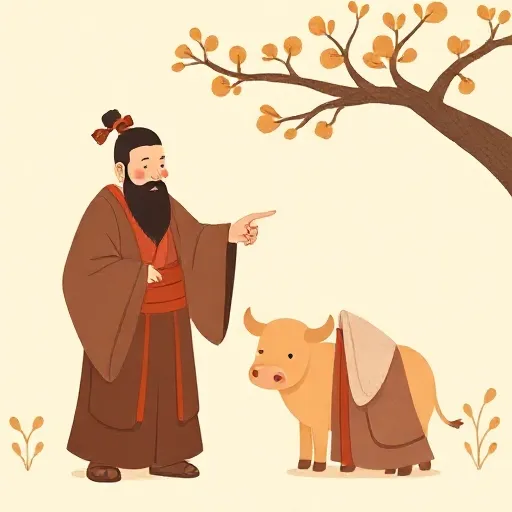
The Mohists also sorted names into three kinds: classifying names like “horse” that group many things, private names like “Jack” that stick to one person, and the unrestricted name “thing” that covers everything. They even sketched logical rules we’d recognize. They insisted that “ox” and “non-ox” cannot both fit the same object at the same time — an early version of the principle of non-contradiction. They didn’t think in terms of “truth” as a property of sentences, but in terms of whether a name fits the object, a notion closer to “admissible” or “correct to use.”
So the Mohists trusted ordinary people to see real similarities and differences and to reason from models. But soon they stumbled onto a deeper puzzle.
The Mohist Puzzle: When Words Don’t Add Up
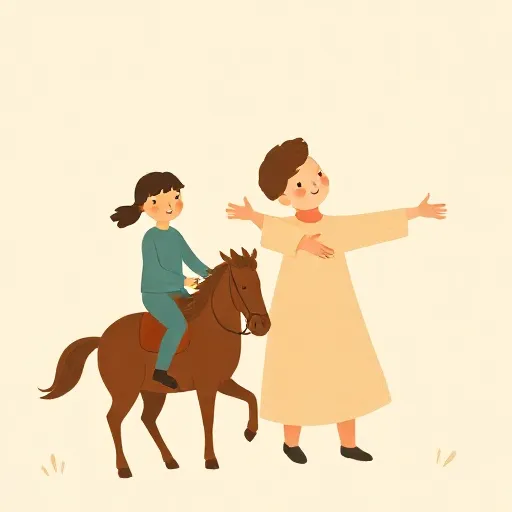
The more the Mohists studied language, the more they realized that simply matching grammatical form could lead you astray. Look at two phrases: “riding horses” and “loving people.” Their structure is similar. But the Mohists pointed out that “riding horses” only requires riding at least one horse, while “loving people”—if you take universal love seriously—requires loving every single person without exception. Not loving people doesn’t mean loving nobody; it just means failing to love all of them. Yet “not riding horses” definitely means riding no horses at all. Same surface grammar, completely different satisfaction conditions.
This discovery forced a sort of linguistic turn. The Mohists saw that complex phrases don’t always work like Lego bricks whose meanings add up neatly. Some combinations were idioms, almost like new words. Their most famous example: “Robbers are people, but killing robbers is not killing people.” In everyday speech, the phrase “killing robbers” functioned as an idiom meaning justified execution, while “killing people” meant murder. The Mohists used this to defend universal love: they could oppose murder while still allowing punishment of criminals, without contradicting themselves.
Other examples piled up: “A boat is wood, but entering a boat is not entering wood” (where “entering wood” was understood as dying). “Her younger brother is a handsome man, but loving her younger brother is not loving a handsome man” (because the first love is familial, not romantic). The Mohists were noticing what modern philosophers call intensionality — the way meaning can depend on context and hidden associations, not just on the dictionary meanings of the parts.
They remained confident that careful analysis could uncover these quirks and still keep reasoning reliable. But not everyone agreed.
Zhuangzi’s Wheelwright: What Can’t Be Put Into Words
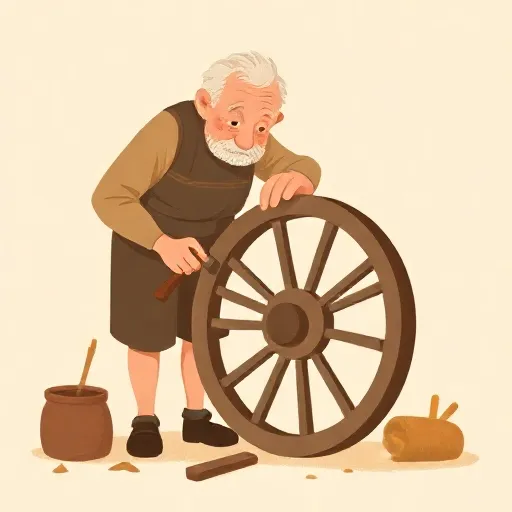
The Daoist thinker Zhuangzi (4th century BCE) watched the Mohists’ endless disputes and grew deeply skeptical. He told a story about a wheelwright named Pian. Pian shaped wheels with incredible skill. If his mallet was too gentle, the chisel slipped. If too hard, it bit and stuck. “Not too gentle, not too hard,” he said, “you can get it in your hand and feel it in your mind, but you can’t put it into words. I can’t even teach it to my son. So what the old sages wrote down must be nothing but chaff and dregs.”
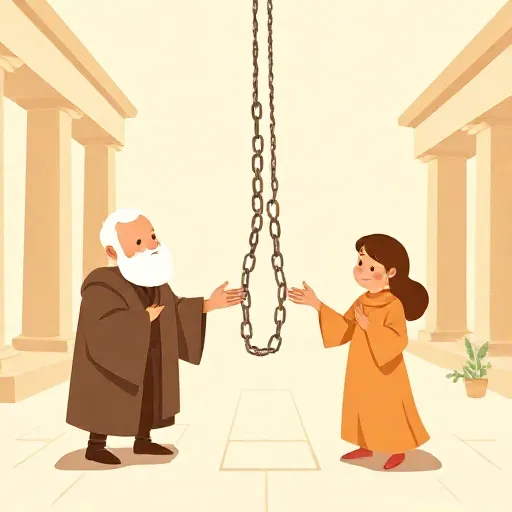
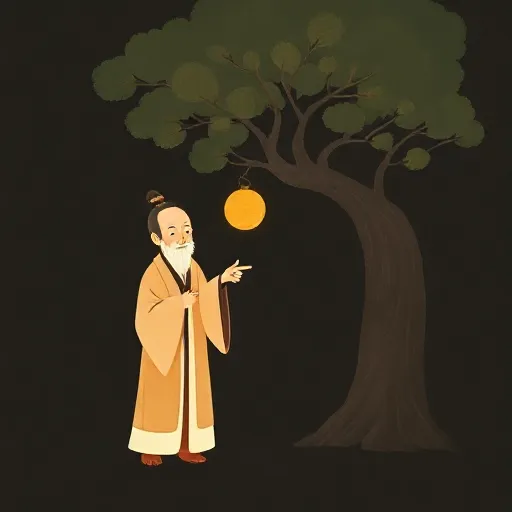
Zhuangzi argued that all language is like that. When you point to something and call it “this,” someone across from you sees the same thing and calls it “that.” The words “this” and “that” shift with perspective. He believed the Mohists’ hunt for fixed ways of telling when things truly resemble a model would never succeed, because what counts as “the right way” changes depending on where you stand. No set of definitions can lock meaning down once and for all.
This wasn’t an attack on reason itself. Zhuangzi still used sharp arguments and paradoxes — he just thought language was too crude to capture the Way (Dao), the natural order we should follow. The deepest know-how, like Pian’s touch, can’t be squeezed into names. So arguments about ethics would go on forever, each side just talking past the other.
Xunzi’s Solution: Let the Kings Decide
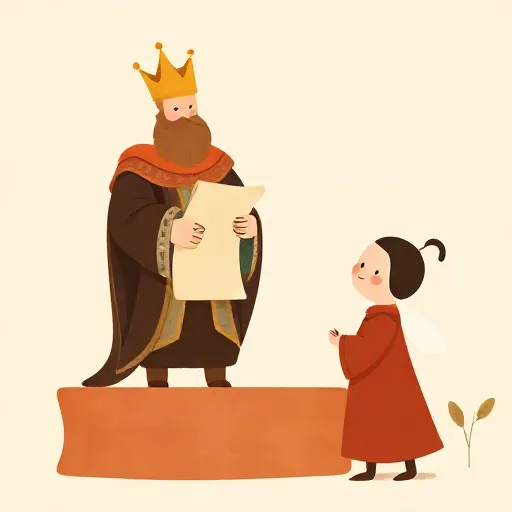
Xunzi (c. 310–235 BCE) was a Confucian who had listened carefully to both sides. He agreed with Zhuangzi that names don’t come with built-in correctness; they are set by convention. But he pushed the idea in a very un-Mohist direction: since conventions are, at bottom, something humans invent, they should be fixed by authority — by sage-kings who know how to run a society. Common people aren’t allowed to go around redefining words on their own. Doing so, Xunzi said, was as bad as counterfeiting money.
Yet Xunzi still believed in ordinary reasoning. Once the king has settled what “mountain” and “abyss” mean, your senses can tell you that mountains and abysses are not level. That’s evidence (yuan) supplied by perception. You use the same analogical method the Mohists loved: compare objects to the settled model and judge whether they resemble it in the right way. “White horse is a horse” works because color isn’t part of the relevant shape standard. Xunzi even rejected the Mohists’ quirky semantics: for him, “killing robbers is killing people” was simply a true, compositional sentence — no need to treat it as a special idiom.
The big shift was ethical. For Mohists, reason alone could discover which actions are good by calculating benefit to all. For Xunzi, the models of right conduct came from tradition and authority; reason’s job was only to apply them, not to justify them from scratch. In the end, this left an awkward gap: on what grounds do the sages themselves choose conventions? Xunzi never quite closed that circle.
Why This Ancient Fight Still Matters
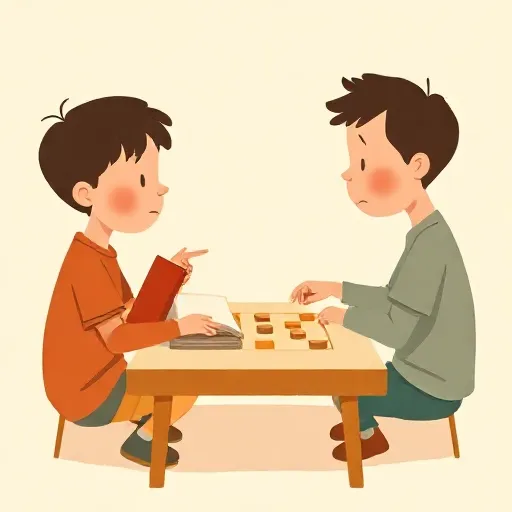
If you’ve ever argued about whether something counts as “cheating” in a game, or whether a punishment is “fair,” you’ve inherited the same tangle. Do you look for a perfect definition, comparing the situation to a clear model of cheating — like the Mohists? Do you think the word just distorts a messy reality and that no rule can capture every situation — like Zhuangzi? Or do you turn to an authority, a referee or a parent, and say the meaning is whatever they decide — like Xunzi?
These thinkers weren’t just puzzling over dusty texts. They were wrestling with how human beings can talk to each other about right and wrong without the whole conversation collapsing into noise. Their disagreements show that even the simplest-sounding question — “What does that word really mean?” — is actually about power, perception, and the limits of reason itself. And the debate is still wide open.
Think about it
- If two people can’t agree on what counts as “stealing” in a video game, does the argument ever end just by checking the definitions, or does someone have to be the final judge?
- The Mohists thought “loving people” meant loving everyone. Can you love all people in the same way you love your best friend, or does the word “love” change its meaning so much that the Mohists were asking for something impossible?
- If a king announces the official meaning of “kindness,” can a subject still say the king is being cruel — or does the king’s definition make that impossible? Who gets to decide?