Would a World Government End War, or Start a Global Tyranny?
A War-Scarred World Asks: Can We Banish War Forever?
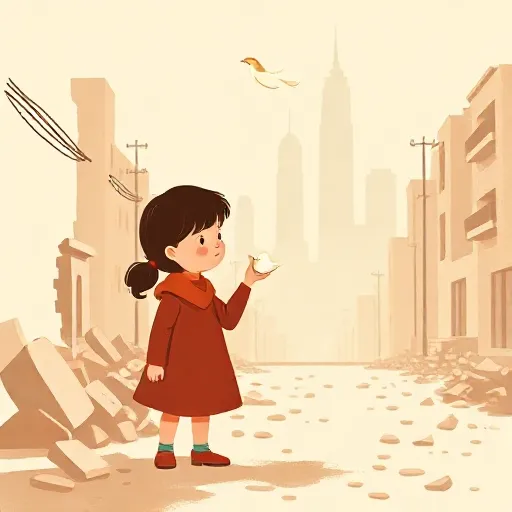
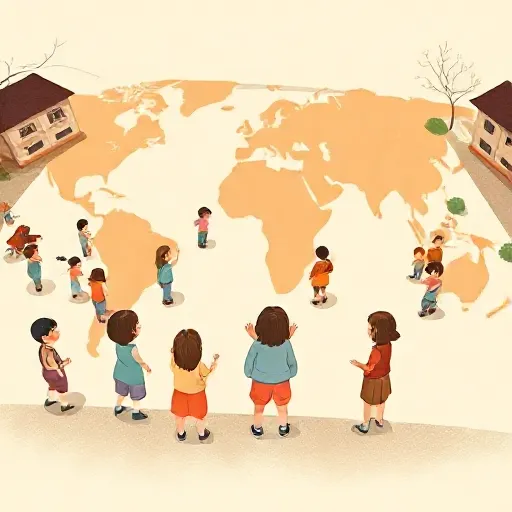
In 1945, a war that killed over fifty million people finally ended. Leaders from around the globe scrambled to build a new international order. They created the United Nations, hoping to settle arguments between countries before they turned into bombs and bullets. Even then, some dared to dream bigger — what if we scrapped the whole system of separate nations and put one government in charge of everyone? If the whole planet answered to a single authority, would war disappear?
That question was not new. The dream of a universal community — all humanity living together in peace — goes back to ancient thinkers in China, India, and the Mediterranean world. But the precise shape it should take has always been fiercely debated. The central puzzle is simple to ask and enormously hard to answer: would a world government bring lasting safety and fairness, or would it become a monster too big to escape?
Dante’s Solution: One Emperor to Rule Them All
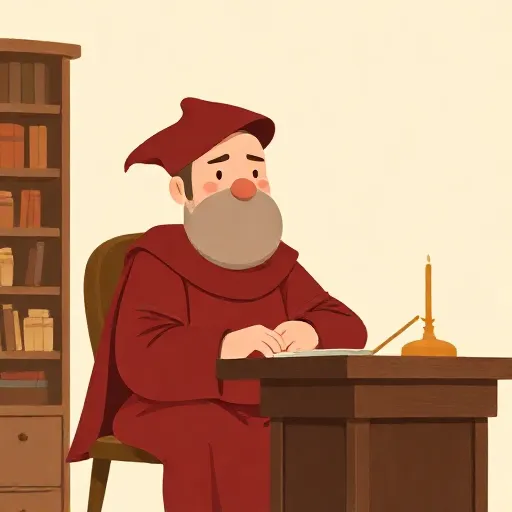
Seven hundred years ago, the Italian poet and philosopher Dante Alighieri (1265–1321) gave one of the most vivid answers. Imagine, he said, that one single ruler owned the whole earth. Because this universal monarch already possessed everything, he would never have to envy or attack anyone. He would keep every smaller king peacefully inside their own borders, like a referee who answers to nobody and has nothing to gain from one side winning.
Dante’s argument went deeper than that. He believed all human beings share one purpose: to grow their minds and understand the world. That shared goal, he said, requires peace — but peace is impossible as long as humanity is split into rival camps. Even worse, when two kings clash and there is no one above them, the dispute simply spirals into violence. A universal monarch would be the “first and supreme judge,” settling every conflict directly or indirectly. Ruled that way, humanity would mirror God’s own perfect unity. (Dante did insist that the emperor’s power should work hand in hand with the Pope’s, not fight it.)
For Dante, the Roman Empire had been God’s chosen instrument for this very job. His vision was majestic — and also a little frightening. Who gets to decide what the “one purpose” of all people is? And what if the all-powerful judge turns out to be a tyrant?
The Dark Side of World Government: A Graveyard of Freedom
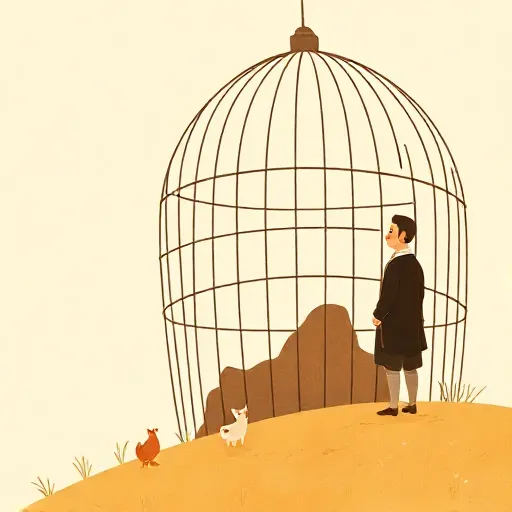
The German philosopher Immanuel Kant (1724–1804) saw both sides of the dream more clearly than anyone else. Kant believed that reason points humanity toward a world republic — a single global state where all people are free and equal citizens. That was his ultimate ideal. But he also believed that forcing that ideal too soon would be a catastrophe.
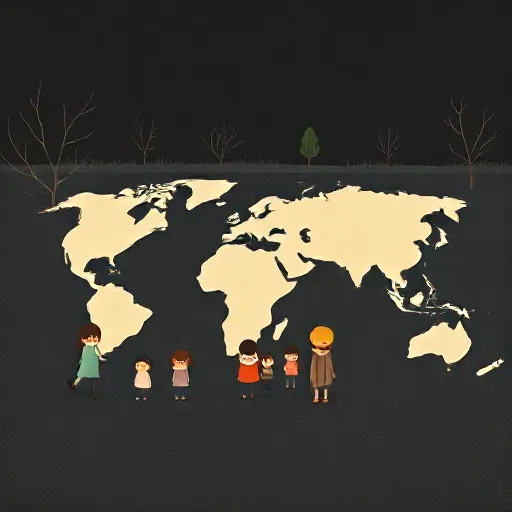
Kant’s nightmare was a universal monarchy — a world government run by one all-powerful ruler. In a monarchy, there are no real citizens, only subjects. Kant argued that such a government would slowly crush “the germs of goodness” inside every person. Laws would grow weaker the farther they stretched from the center. The result? Either a “soulless despotism” or anarchy, ending in what he called the “graveyard of freedom.” As an alternative, Kant proposed a pacific federation of independent republics — nations that agree to settle disputes peacefully and respect each other’s borders, without forming a single superstate. That, he said, was a realistic first step.
Around the same time, the French philosopher Jean-Jacques Rousseau (1712–78) raised a different worry. Even if a full world government were desirable, getting there would be a disaster. “It would perhaps do more harm in the moment than it would guard against for ages,” he wrote. You can imagine trying to stuff dozens of snarling cats into one small crate — the process itself might cause more scratches than the cats ever would apart.
Why Rawls Rejected a World State — But Didn’t Settle for Chaos

In the last generation, the American thinker John Rawls (1921–2002) revived Kant’s caution. A world government, he said, would “either be a global despotism or else would rule over a fragile empire torn by frequent civil strife.” Rawls was not defending the mess we have today — a world of extreme poverty, inequality, and powerful states doing as they please. He simply argued that the choice between “sovereign states with no boss” and “one global central government” is a false one.
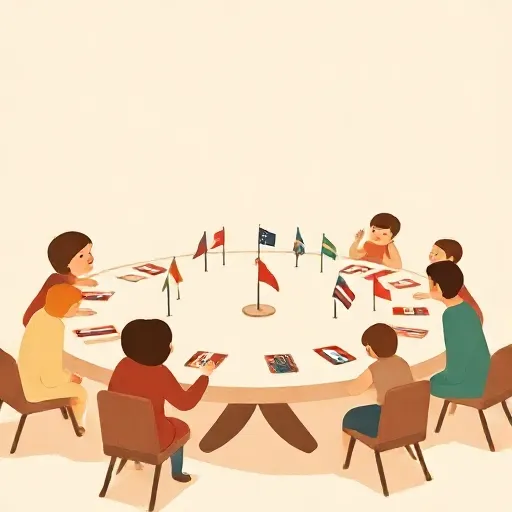
Rawls and other modern liberal thinkers call for a middle path. They imagine a system where sovereignty — the final legal authority — gets split up vertically. Some powers over trade, environment, or human rights could move upward to global institutions, while other decisions stay local. The goal is not a planet with one supreme police force, but a dense network of laws and courts that even the most powerful states must obey.
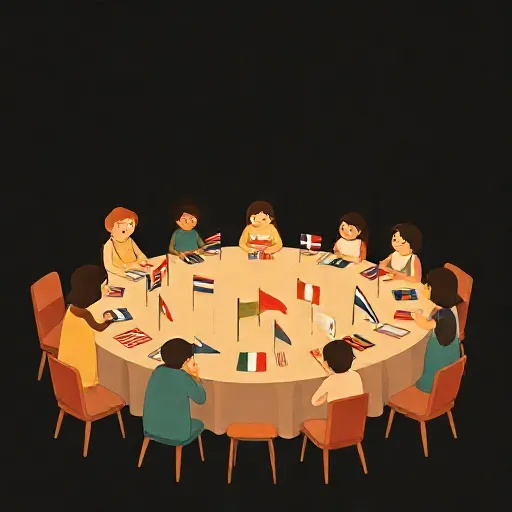
This leaves a pressing question unanswered: who would force the powerful to obey if there is no global supercop? Yet liberals point out that the United Nations, the World Trade Organization, and regional federations like the European Union already pool sovereignty in ways that would have stunned Dante. A total world leviathan may never be needed — but the current patchwork, they insist, is deeply broken.
Is a World Government Already Here — And Whose Interests Does It Serve?
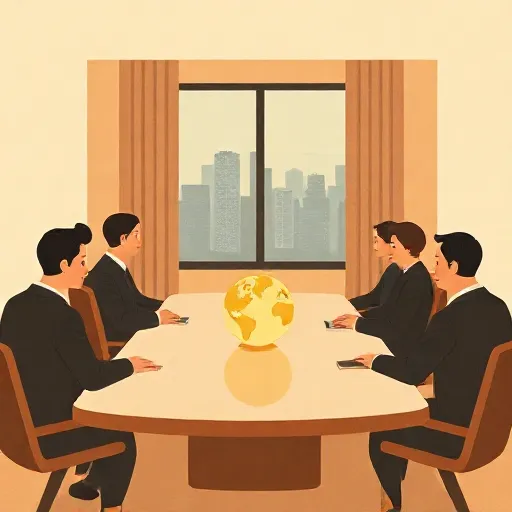
Not everyone agrees that a world government is a thing of the future. Some scholars argue it is already forming, and that is precisely the problem. The Indian legal theorist B.S. Chimni describes a nascent global state: a web of international economic institutions like the International Monetary Fund, the World Bank, and the World Trade Organization that, together, have taken over decisions about trade, debt, and development from elected governments. This invisible global state, he says, serves a transnational class of wealthy investors and powerful Northern states — not the billions of poor people in the global South.
Think of it like a school where the hall monitors write all the rules, but only the rich kids get a vote. Decisions get made behind closed doors, and there is almost nowhere to appeal. This is a world government of a kind, but it is concentrated domination, not shared freedom.
Indigenous thinkers push the critique even further. Audra Simpson and Glen Coulthard, for example, argue that the settler colonial state — whether at the local or global level — has always been a machine for taking land and erasing peoples. From their perspective, simply scaling that machine up to cover the whole earth would multiply the injustice. The real need, they argue, is to build entirely new relationships, not a bigger cage.
Why an 800-Year-Old Argument Matters to You Right Now

You do not have to be a medieval poet or a 20th-century president to feel the weight of this question. A virus can sweep the planet in weeks. Carbon pumped into the air in one country heats the entire atmosphere. The global economy lifts some families out of poverty and traps others in desperate jobs. None of these problems respect national borders, and none can be solved by a single country acting alone.
So the argument returns, sharper than ever. Some say that without a true world government — an authority that can actually enforce clean energy standards, tax global corporations, and stop wars — our patchwork of treaties will fail. Others reply that a world government, given human nature, would simply become the biggest bully on the block, with no exit door. And if the critics are right that an elite global state already exists, the task is not to build a world government but to take back the one that is quietly assembling itself.
The medieval dream of one peaceful flock under one shepherd is still alive. The terror of a global prison is just as real. Much of the debate now turns on whether we can imagine a third thing altogether — a form of global cooperation that is powerful enough to act, divided enough to be safe, and just enough to deserve loyalty from Beijing to Buenos Aires. The answer has not been found. But your generation will be the one that has to keep looking.
Think about it
- If the whole world were ruled by a single government, what is the biggest thing you personally would gain, and what is the biggest thing you might lose?
- Is it better to have a patchwork of different systems that sometimes clash, or one unified system that might get things wrong for everyone at once?
- When you hear that powerful international organizations already control big decisions, does that feel like progress or like something that needs to be resisted — and why?